The Hundred-Aircraft Ceiling Cracks: Northrop Accelerates B-21 Raider Production

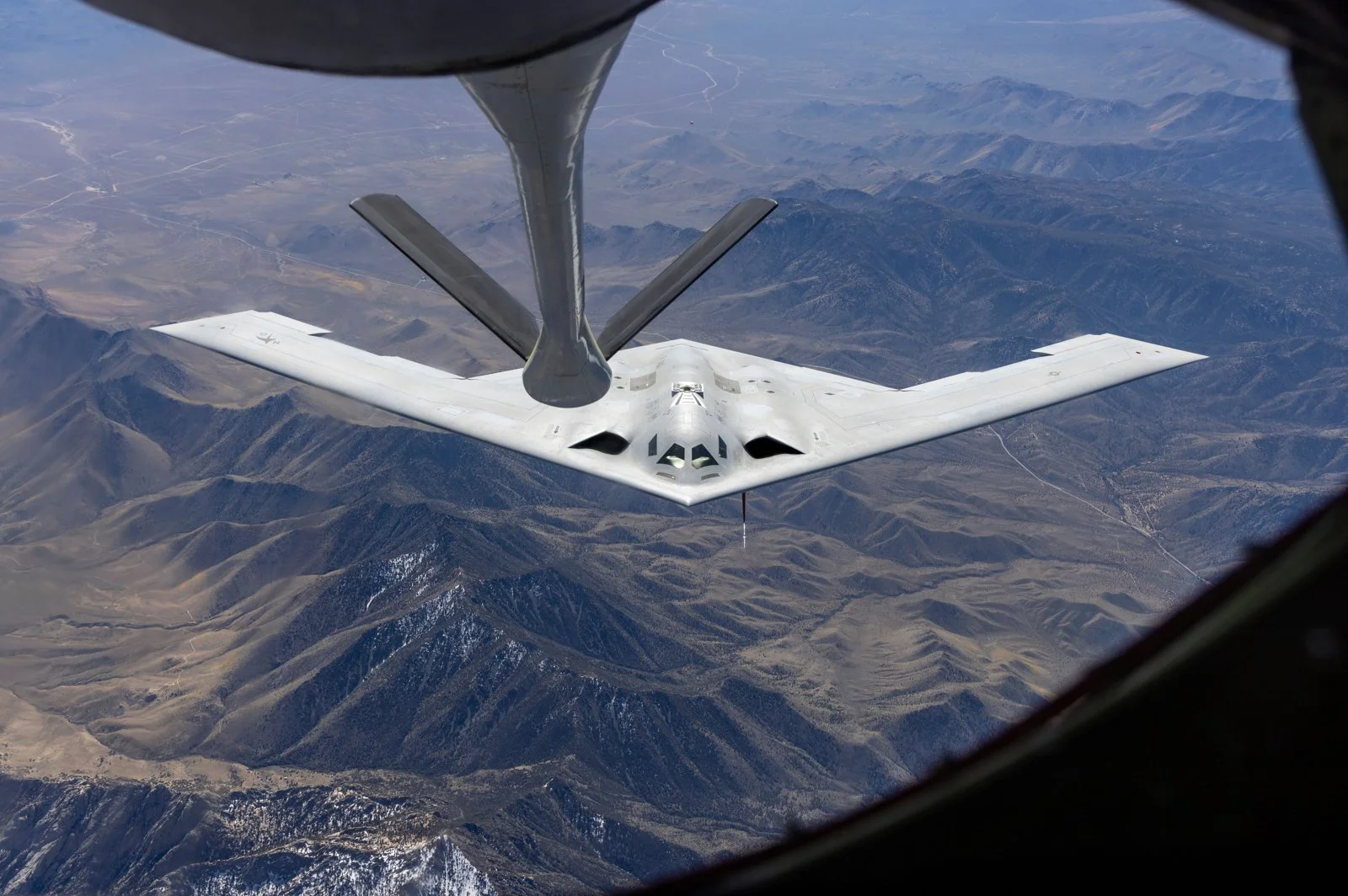
Northrop Grumman chief executive Kathy Warden says the company’s agreement with the US Air Force allows the service to consider accelerating B-21 production into a larger program of record. The firm has now sunk more than $5 billion into the programme’s engineering and manufacturing base, with 2026 capital spending running to $1.85 billion. An Air Force analysis of a bigger fleet is expected to conclude by the end of the year.
At a Glance
- What happened: Northrop Grumman raised its investment in B-21 production infrastructure in second-quarter results, while the US Air Force reviews both fleet size and production rate.
- The money: more than $5 billion invested to date; capital expenditure expected to reach $1.85 billion in 2026.
- The number in question: the program of record stands at 100 aircraft — the Air Force is studying a larger fleet and faster output, with analysis due by the end of 2026.
- Revenue effect: Aeronautics Systems sales rose 13% in Q2 2026; the full-year outlook was lifted to $14 billion.
- Schedule: the first B-21 remains on track to arrive at Ellsworth Air Force Base in 2027.
- Industrial base: final assembly at Palmdale, California; more than 400 suppliers across 40 states and over 8,000 personnel.
The hundred-aircraft ceiling is being tested
Since it was unveiled, the B-21 Raider programme has been organised around a single figure: at least 100 aircraft. That number underwrote the budget planning and sized the industrial base built to serve it. The language Kathy Warden used in Northrop Grumman’s second-quarter review suggests the ground beneath it is moving. “The agreement we reached with the Air Force does allow them to consider accelerating production into a larger program of record,” the chief executive said.
What matters in that sentence is that it describes a contractual mechanism rather than a wish. In long-run defence programmes, raising the production rate after the fact is usually an expensive renegotiation: tooling, jigs and supplier capacity are all sized to an agreed tempo from the start. Warden’s account implies the flexibility was written in at the outset. The Air Force analysis weighing a larger fleet and accelerated rates is expected to wrap up by the end of 2026.
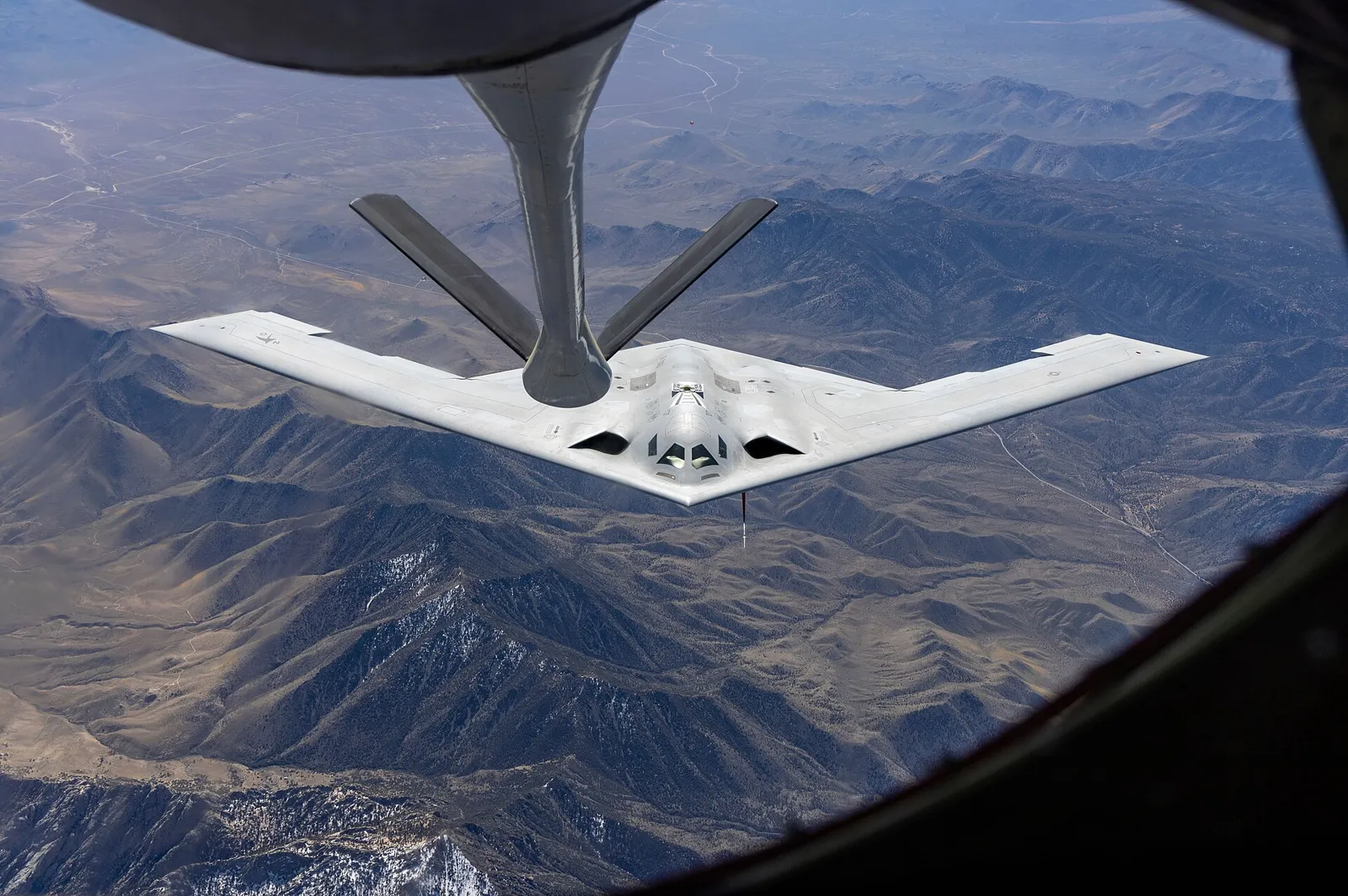
Behind the review sits the renewed premium on long-range strike. As long-range air defences proliferate, the distance at which a conventional strike aircraft can safely operate keeps shrinking; a low-observable bomber, by contrast, still claims the ability to work inside those defences and reach targets in depth. In a theatre defined by distance, the combination of range and payload offers something fighters cannot.
The financials support the picture. Northrop’s Aeronautics Systems sales climbed 13% in the second quarter of 2026, driven largely by higher Raider volumes, and the full-year outlook for the segment was raised to $14 billion on an accelerating B-21 production ramp. Put plainly, output is already rising independently of any decision to expand the fleet.
A five-billion-dollar bet on the factory
The quieter half of the programme is not the aircraft but the system built to produce it. Northrop Grumman says it has invested more than $5 billion in digital engineering and manufacturing infrastructure for the B-21. Capital expenditure is expected to reach $1.85 billion in 2026 and to run at roughly 4.5% of sales in both 2027 and 2028 — an unusually high ratio for a defence prime.
The digital engineering claim has been central to the programme’s story since rollout: the aircraft’s design, production process and sustainment architecture were modelled virtually before metal was cut, with the aim of removing the classic surprises that appear on the way from prototype to serial production. Whether that has genuinely worked will only become clear as the rate climbs, because most programmes stumble not at first flight but when the line speeds up.
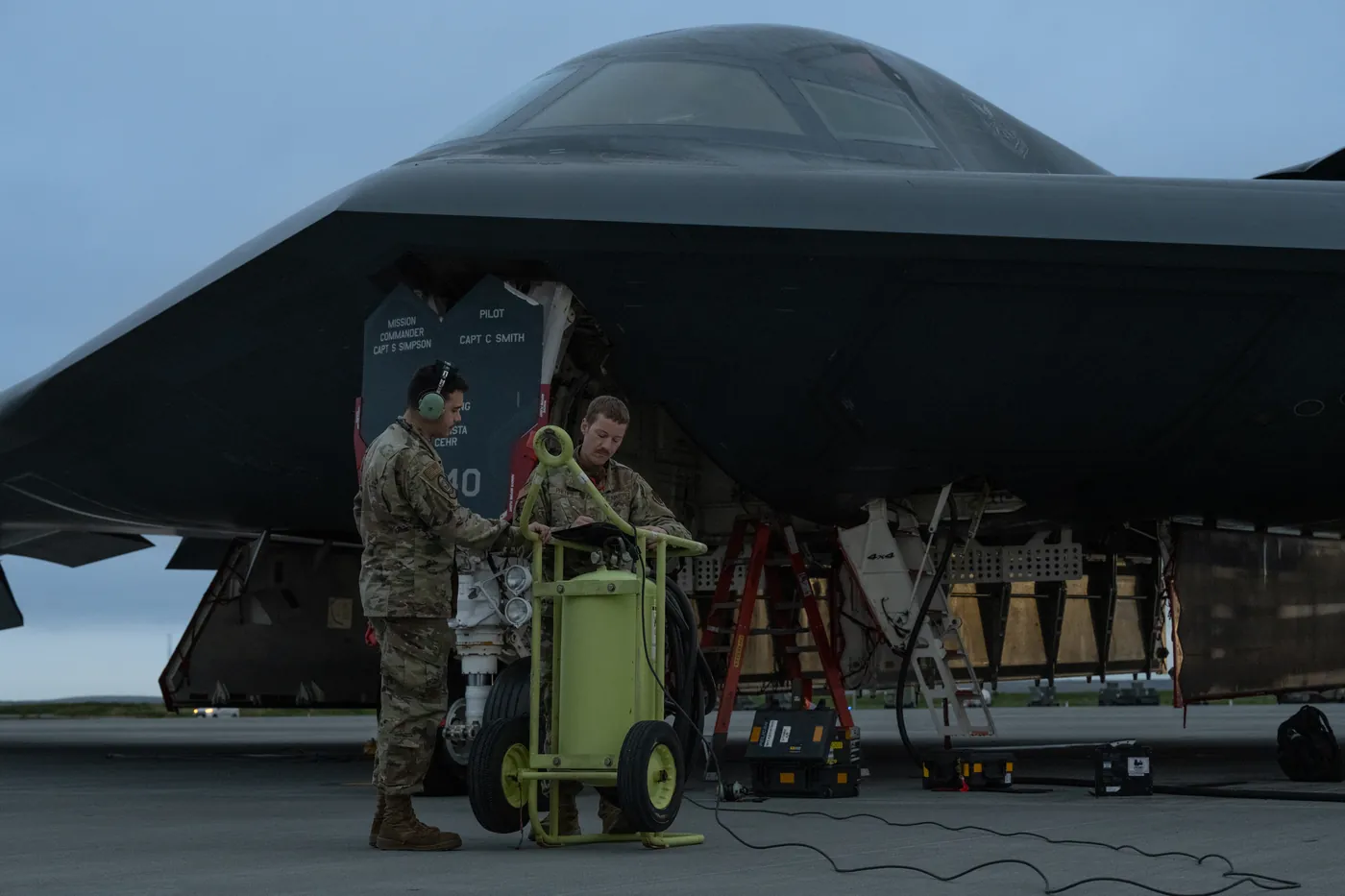
The industrial footprint is deliberately broad. Final assembly takes place at Palmdale in California, while manufacturing is spread across more than 400 suppliers in 40 states. Counting Northrop Grumman staff, suppliers and Air Force personnel together, more than 8,000 people work on the programme. That dispersion widens the political base — and it also means any decision to raise the rate lands on hundreds of suppliers simultaneously.
On schedule, the first aircraft is still expected to arrive at Ellsworth Air Force Base in South Dakota in 2027. The base is being prepared as the fleet’s first home, with infrastructure work sequenced to finish ahead of the aircraft. The fleet-size decision should firm up toward the end of the year, and it will determine not only how many bombers are bought but the tempo the production line is built to hold.
| Manufacturer | Northrop Grumman |
| Program of record | 100 aircraft (minimum) |
| Under review | US Air Force; larger fleet plus accelerated production, analysis due end-2026 |
| Infrastructure investment | More than $5 billion (digital engineering and manufacturing) |
| 2026 capital expenditure | $1.85 billion |
| 2027–2028 capital expenditure | Approximately 4.5% of sales |
| Aeronautics Systems sales | Up 13% in Q2 2026; full-year outlook raised to $14 billion |
| Final assembly | Palmdale, California |
| Supplier base | More than 400 suppliers across 40 states |
| Programme workforce | More than 8,000 (company, suppliers and Air Force) |
| First basing | Ellsworth Air Force Base, South Dakota — 2027 |
The Raider: the B-2’s successor, on different logic
The B-21 Raider is the low-observable bomber developed to renew the US Air Force’s long-range strike capability. It shares the flying-wing configuration of its predecessor, the B-2 Spirit, but the programme logic differs sharply. The B-2 was planned at 132 aircraft as the Cold War closed and finished at 21, leaving it with one of the highest unit costs in aviation history. The lesson drawn for the B-21 was to design an aircraft that could actually be produced in series and sustained affordably.
The other distinguishing feature is the emphasis on open systems architecture. The mission systems are said to be structured so they can be updated without redesigning the platform — a critical choice for an aircraft expected to serve for decades in a period when electronic warfare and sensor technology age quickly.
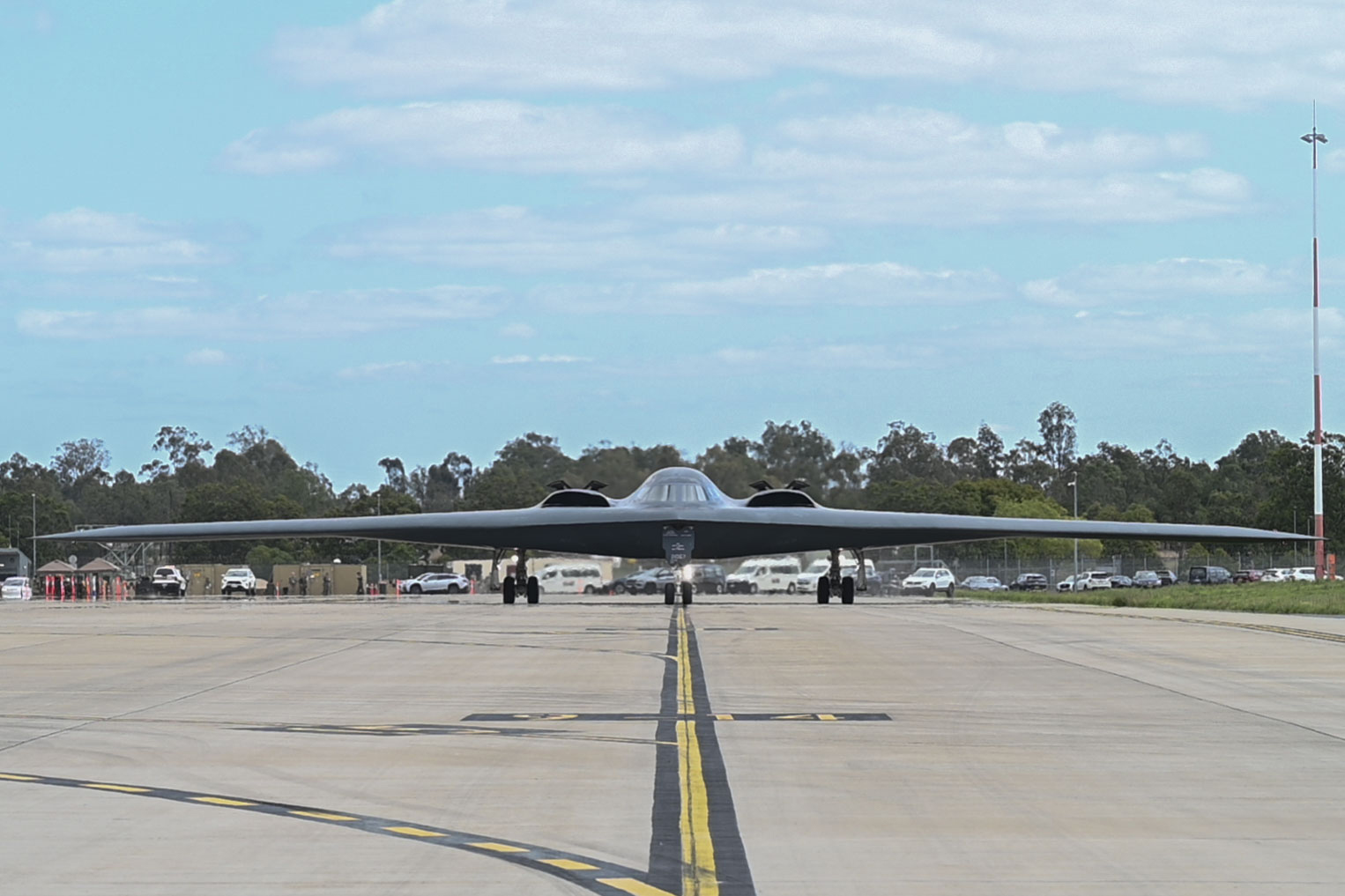
The argument over production scale for low-observable platforms is not uniquely American. Across fifth- and sixth-generation programmes, the binding constraint tends to appear in manufacturing tempo rather than design: engines, composite materials and electronic components all run on longer lead times than the airframe itself. Türkiye’s KAAN programme faces a version of the same equation, where flying a prototype and standing up a line able to deliver meaningful numbers each year are two distinct achievements. That Northrop spent more than $5 billion on the factory before the fleet arrived is a fair measure of how expensive the second one is.
Sources
- Defence Industry Europe — “Northrop Grumman boosts B-21 Raider production investment amid U.S. Air Force review of faster output and larger sixth-generation stealth bomber fleet”, August 2026
- Northrop Grumman second-quarter 2026 results commentary
- US Air Force programme releases