India wants to build its own heart: Reliance and Rolls-Royce move on a sovereign AMCA engine

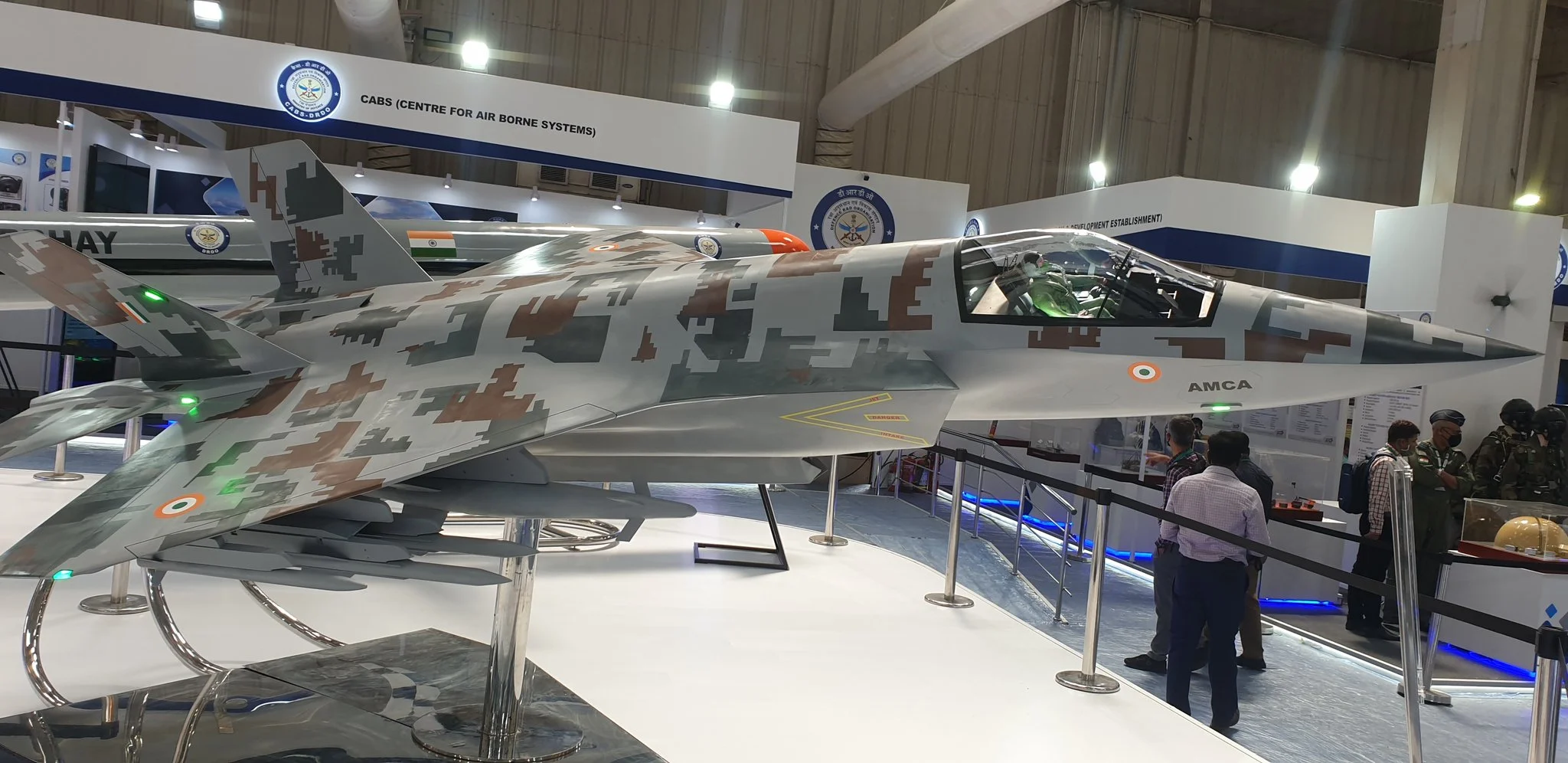
Reliance Industries, India’s largest private industrial group, and British engine maker Rolls-Royce have announced their intent to jointly develop a combat engine for the Advanced Medium Combat Aircraft, India’s fifth-generation fighter programme. The plan goes beyond a single powerplant: the partners also want to stand up an Aerospace Gas Turbine Complex on Indian soil, covering everything from design to through-life support.
At a Glance
- What happened: Reliance Industries and Rolls-Royce announced their strategic intent to co-develop a sovereign combat engine for AMCA.
- When: 14 August 2026.
- Scope: Joint design, development, manufacture and delivery of the engine in India, plus a proposed Aerospace Gas Turbine Complex.
- The aircraft: AMCA — Advanced Medium Combat Aircraft, India’s twin-engine, low-observable fifth-generation fighter.
- The requirement: Block 1 flies on the GE F414; Block 2 needs a clean-sheet engine in the 110–120 kN class.
- The rival bid: France’s Safran, working with state agency GTRE, on a package worth roughly $7 billion with full technology transfer.
- The claimed schedule: Rolls-Royce says a decision this year could yield ground testing by 2032 and first flight by 2034.
- Wider context: The same problem Türkiye is working through with TEI on the KAAN engine — airframe solved, powerplant pending.
Four decades of the same missing piece
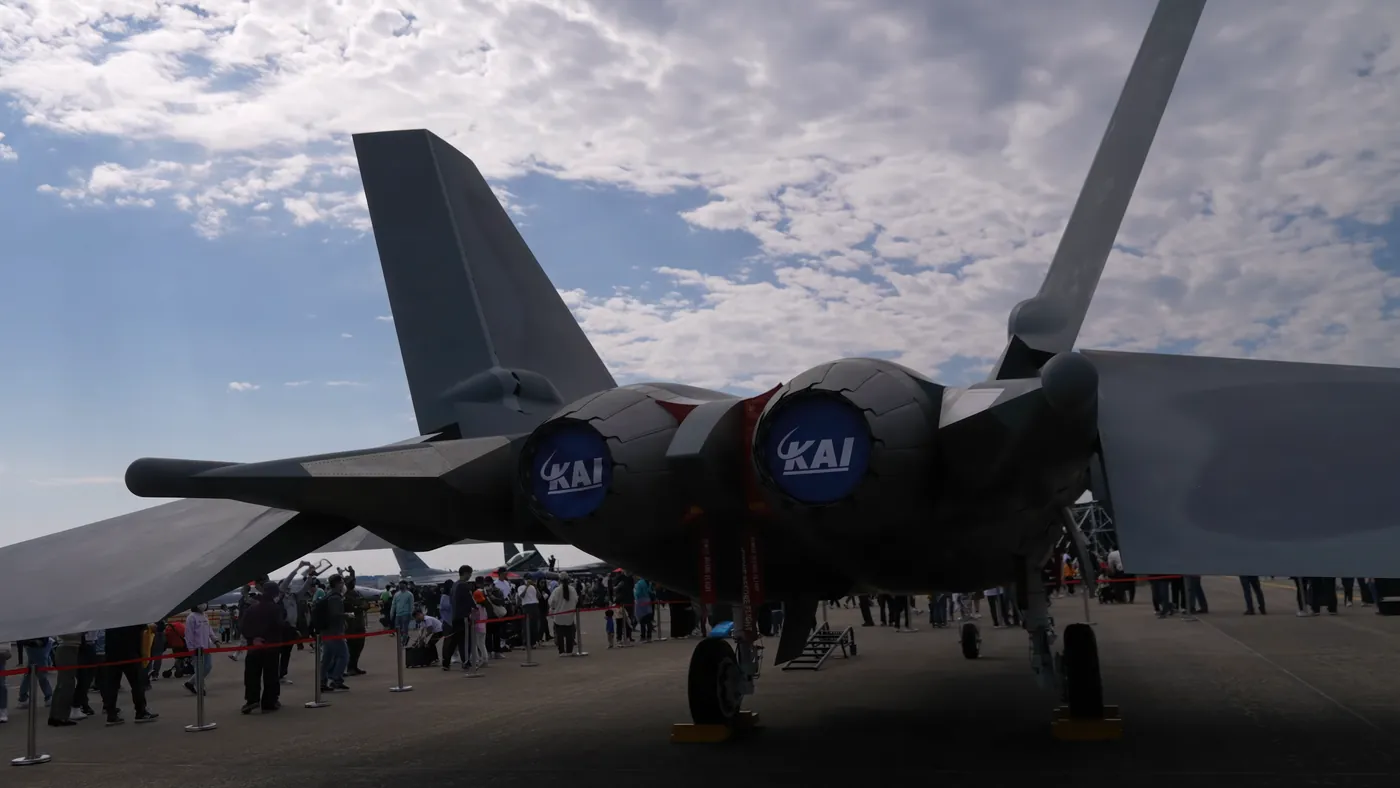
India has learned how to build a fighter. The Tejas light combat aircraft is in service, AMCA mock-ups tour the airshow circuit, and domestic competence in composite structures and radar keeps climbing. One gap has refused to close: the engine. The heart of the aircraft still arrives from abroad.
For years that gap had a name — Kaveri. The indigenous turbofan launched by state agency GTRE in the 1980s never reached its thrust and temperature targets, was decoupled from Tejas, and eventually found a second life powering unmanned aircraft rather than fighters. Four decades on, India has mastered the airframe but not the powerplant. Tejas flies on the American GE F404, its upgraded variants on the F414, and AMCA’s first blocks are committed to that same F414.
The problem is as political as it is technical. An air force dependent on a foreign engine supplier is also dependent on that supplier’s export licences, delivery schedules and right to say no. Delays in GE’s F404 deliveries, which slowed Tejas serial production, remain a fresh memory in New Delhi. The Reliance–Rolls-Royce announcement of 14 August lands squarely on that wound.
What the deal contains — and what it doesn’t
This is a statement of strategic intent, not a signed contract. But its shape differs markedly from a conventional licence-production arrangement. The two sides speak of designing, developing, manufacturing and delivering the engine in India. Alongside that sits an infrastructure commitment: an Aerospace Gas Turbine Complex bringing design, development, manufacturing, testing, production and through-life support under one roof.
That second element may matter more than the first. The real bottleneck in fighter propulsion is not the drawing. It is single-crystal turbine blade casting, coatings, high-temperature materials and, above all, thousands of hours of test infrastructure. A country can design an engine; without the facilities to break it and rebuild it a thousand times, it cannot certify one. Capital-intensive depth is precisely what Reliance is offering to fund.
Anant Ambani, Executive Director at Reliance Industries, framed the partnership around the argument that “India’s strategic autonomy requires sovereign capability in critical technologies,” pairing Rolls-Royce’s propulsion expertise with Reliance’s “technology, manufacturing, scale and execution capabilities.” Tufan Erginbilgiç, Chief Executive of Rolls-Royce plc, spoke of bringing the company’s “century-long heritage in advanced engineering” together with homegrown Indian industrial leadership.
What is absent is as telling as what is present. No thrust class. No split of intellectual property. No figure. Those are exactly the clauses where engine negotiations are actually won and lost — normal to leave blank at the intent stage, but a reminder that nothing is settled.
AMCA Programme Profile
| Programme | AMCA — Advanced Medium Combat Aircraft |
| Country / lead | India / ADA (Aeronautical Development Agency) with HAL |
| Class | Fifth-generation, low-observable, twin-engine medium fighter |
| Mk1 engine | GE F414, roughly 98 kN with afterburner, imported |
| Mk2 engine target | Clean-sheet turbofan in the 110–120 kN class with supercruise capability |
| Contender 1 | Safran – GTRE: full technology transfer, roughly $7 billion |
| Contender 2 | Rolls-Royce – Reliance: co-design and manufacture in India, sovereign IP claim |
| Claimed timeline | Decision in 2026 → ground test 2032 → first flight 2034 |
| Policy frame | Atmanirbhar Bharat (self-reliant India) |
Two bidders, two definitions of sovereignty
India now has two roads in front of it. Both are labelled “indigenous engine.” They do not mean the same thing.
Safran’s offer, developed with state agency GTRE, emerged from a competitive evaluation: a package of roughly $7 billion, full technology transfer and Indian ownership of the resulting intellectual property. It is the classic model — government to government, with the public R&D establishment at the centre.
The Reliance–Rolls-Royce axis moves the work into the private sector. India’s deepest-pocketed industrial group supplies capital and plant; Rolls-Royce brings turbomachinery experience running from the EJ200 to the Trent family. The schedule floated from the Rolls-Royce side is ambitious: contract closure within 2026, an engine ready for ground test in 2032, first flight in 2034. Given that fighter engines typically take fifteen to twenty years, that timeline only holds if the design builds on a mature existing core.
New Delhi’s real gain this week came before any signature. It now has two credible suppliers competing for the same requirement. In engine negotiations the most expensive commodity is not the engine — it is having no alternative. India just stopped paying that price.

The same exam, taken in a different order
India’s dilemma is not unique. Türkiye’s KAAN flies its first blocks on an imported engine as well — the General Electric F110 — while TEI works the indigenous powerplant. Both countries sit the same exam: the airframe is done, now build the heart.
The approaches differ. Türkiye built a ladder through TEI, fielding unmanned aircraft engines first, maturing test infrastructure and supply chain on those products, and only then climbing toward the fighter class. India attempted the top rung directly with Kaveri, and after that stumble is restarting with a foreign partner. Which route delivers faster is a question for the 2030s. So far, climbing has tripped fewer people than jumping.
One footnote worth recording: the Rolls-Royce chief executive signing this partnership, Tufan Erginbilgiç, is an Istanbul-born engineer. A Turkish-origin executive occupying one of the top seats in global aerospace draws less comment than the engine itself — but it says something about where the industry is drawing its talent.
Sources
- Rolls-Royce plc press release, 14 August 2026: “Reliance Industries and Rolls-Royce announce strategic intent to partner and develop India’s indigenous combat engine for the AMCA programme”
- Defence Industry Europe — “Rolls-Royce and Reliance plan sovereign AMCA fighter engine partnership”, 15 August 2026
- Reliance Industries corporate statements
- Wikipedia — HAL AMCA, GTRE GTX-35VS Kaveri, General Electric F414