Sweden wants a Gripen back in the air in ten minutes: six people, a highway strip and a running engine

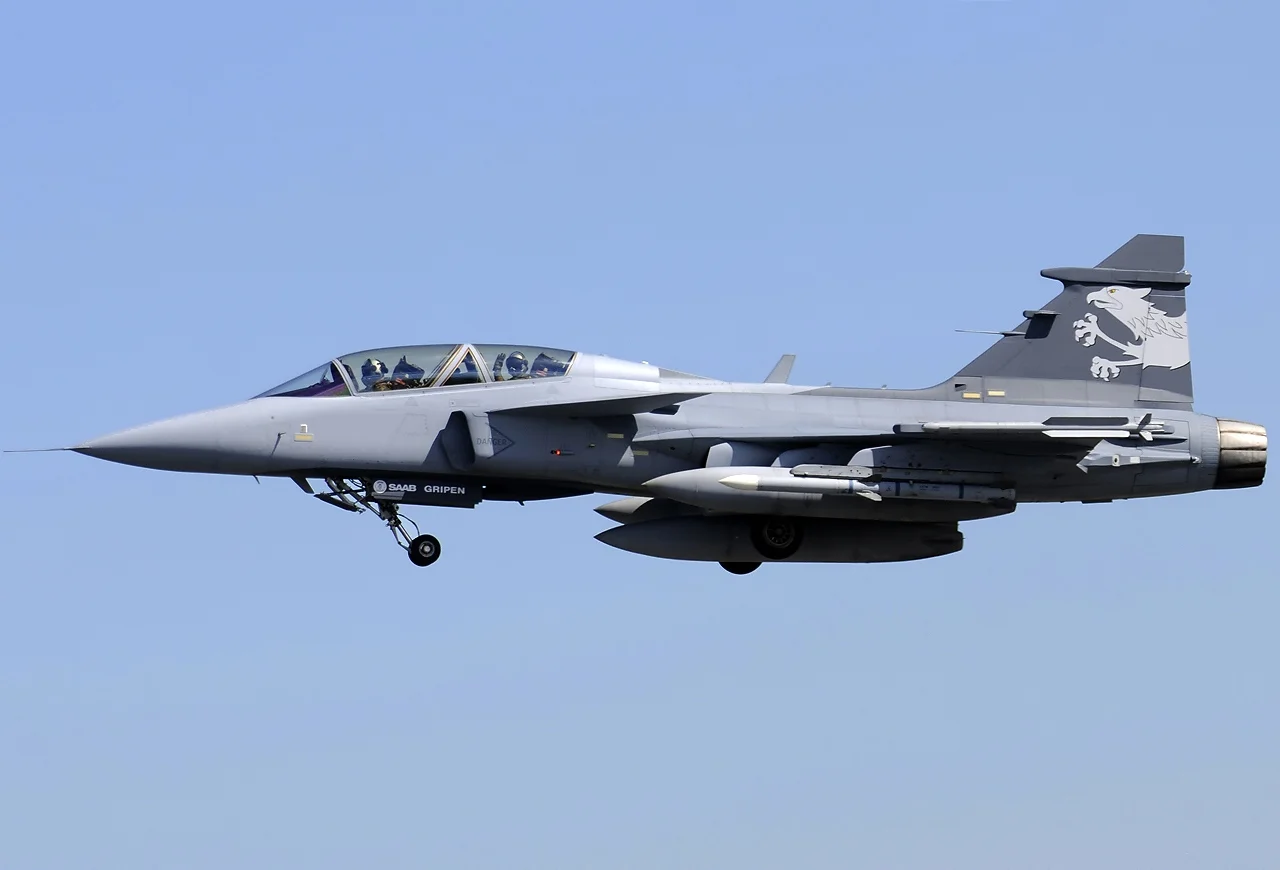
The Swedish Air Force wants to refuel and rearm a Gripen in under ten minutes in the field. Today a ground crew of one officer and five conscripts needs 15 to 20 minutes for an air-to-air sortie – and the service is now trialling refuelling and arming with the engine still running.
At a Glance
- The target: Cut turnaround for an air-to-air sortie from 15-20 minutes to under ten
- Ground crew: One officer and five conscripts – six people in total
- New method: Engine-running refuelling and arming currently under trial
- Current practice: Turnarounds are performed with the engine shut down
- Source: Swedish Air Force chief Maj. Gen. Jonas Wikman
- In the field: F7 Satenas aircraft land on closed highway strips during annual exercises
- Rationale: The dispersed basing concept is being updated against increasingly precise Russian targeting
A fighter’s most fragile minutes
In modern air warfare an aircraft is at its most exposed on the ground, not in the air. During refuelling and weapons loading both the jet and its crew are pinned to a fixed point. That is why dispersed basing – spreading aircraft across highway strips and minor runways instead of concentrating them on a handful of main bases – is back in fashion. But the concept only works if turnaround is fast. The longer a jet sits, the more of the dispersal advantage evaporates.
Maj. Gen. Jonas Wikman, who heads the Swedish Air Force, put numbers on the current state of play: a ground crew of one officer and five conscripts readies a Gripen for an air-to-air sortie in 15 to 20 minutes. The goal is to get that below ten. Today the work is done with the engine shut down; the service is trialling engine-running refuelling and arming. The technique is widely used across NATO air forces, but it is delicate work that has to be certified aircraft type by aircraft type and weapon by weapon.
The jet was built for this
Sweden can set that target because of how the Gripen was conceived. During the Cold War Swedish planners assumed air bases would be struck in the opening hours, and shaped the aircraft accordingly: short field performance, simplified maintenance, and a ground support architecture that does not demand a large technical cadre. This is a system designed so that conscripts, after a few months of training, can turn a fighter around on a stretch of road.
That inheritance is still visible in practice. Aircraft from F7 Satenas land on closed highway lanes during annual exercises, get serviced by six-person crews and launch again. Since Sweden joined NATO the method has stopped being a national curiosity; within alliance planning around the Baltic, dispersed operations are discussed as a way to cut dependence on fixed airfields.
Why now
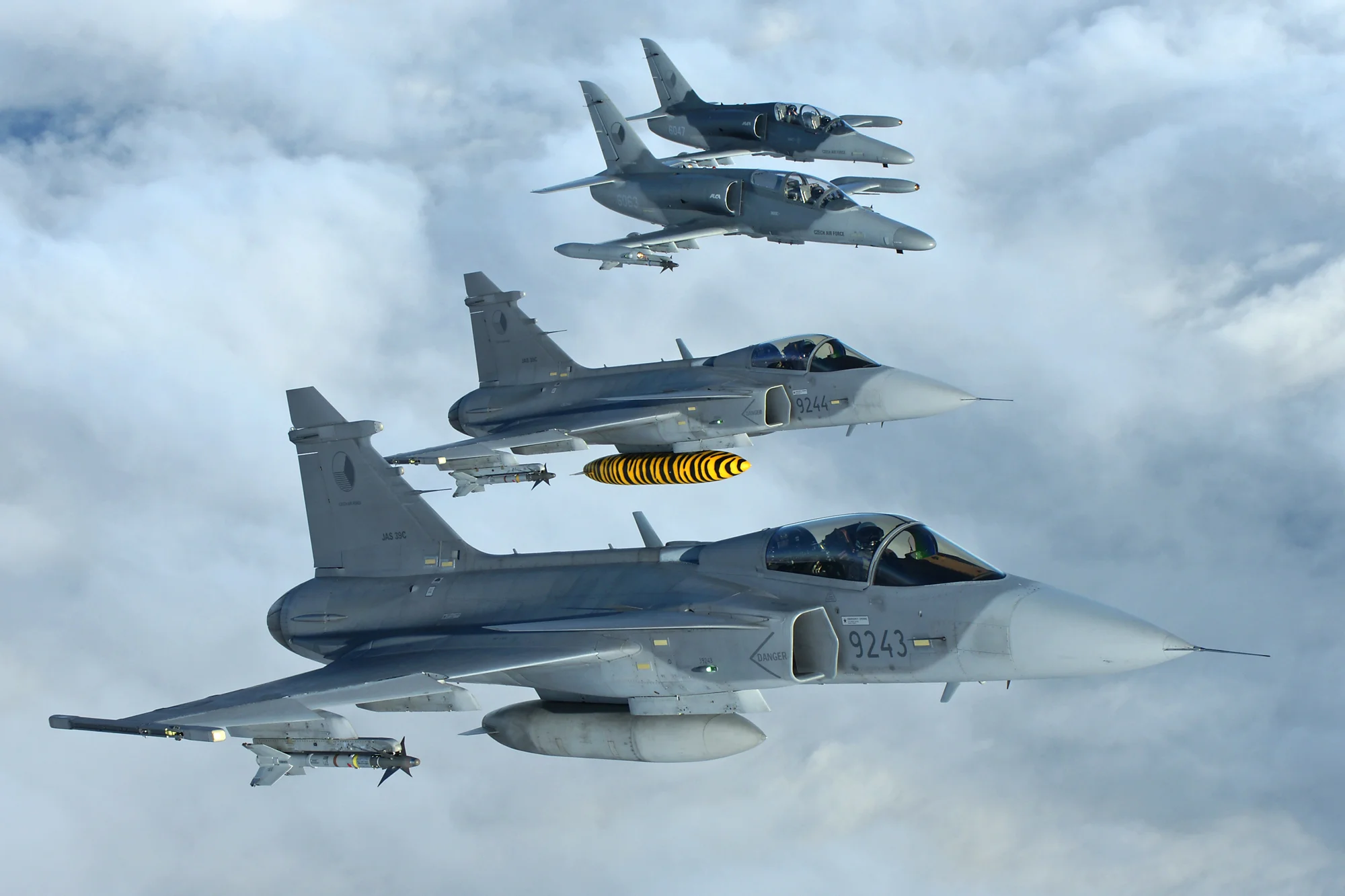
Sweden is not pushing this threshold out of technical curiosity. Ukraine has shown what long-range precision strike means for static airfields: a dispersal area identified by satellite imagery can be hit within hours by a cruise missile or a one-way attack drone. The answer is either layered air defence or a target that never stops moving. Sweden is investing in the second.
Sweden’s turnaround target
| Current time | 15-20 minutes (air-to-air sortie) |
| Target | Under ten minutes |
| Ground crew | One officer plus five conscripts |
| Current method | Refuel and rearm with engine shut down |
| Under trial | Engine-running refuelling and arming |
| Operating environment | Closed highway strips and dispersed reserve runways |
| Reference unit | F7 Satenas |
| Source | Maj. Gen. Jonas Wikman, Swedish Air Force chief |
Gripen: small-country arithmetic
Saab’s single-engine multirole fighter entered service in the 1990s and is now produced to the E/F standard. Its pull on the export market has always owed less to flight performance than to operating cost and field flexibility: it can be flown with a thin technical cadre and thin infrastructure. Brazil, the Czech Republic, Hungary, Thailand and South Africa all cite the same logic, and Ukraine’s moves toward the type were on the agenda this year.
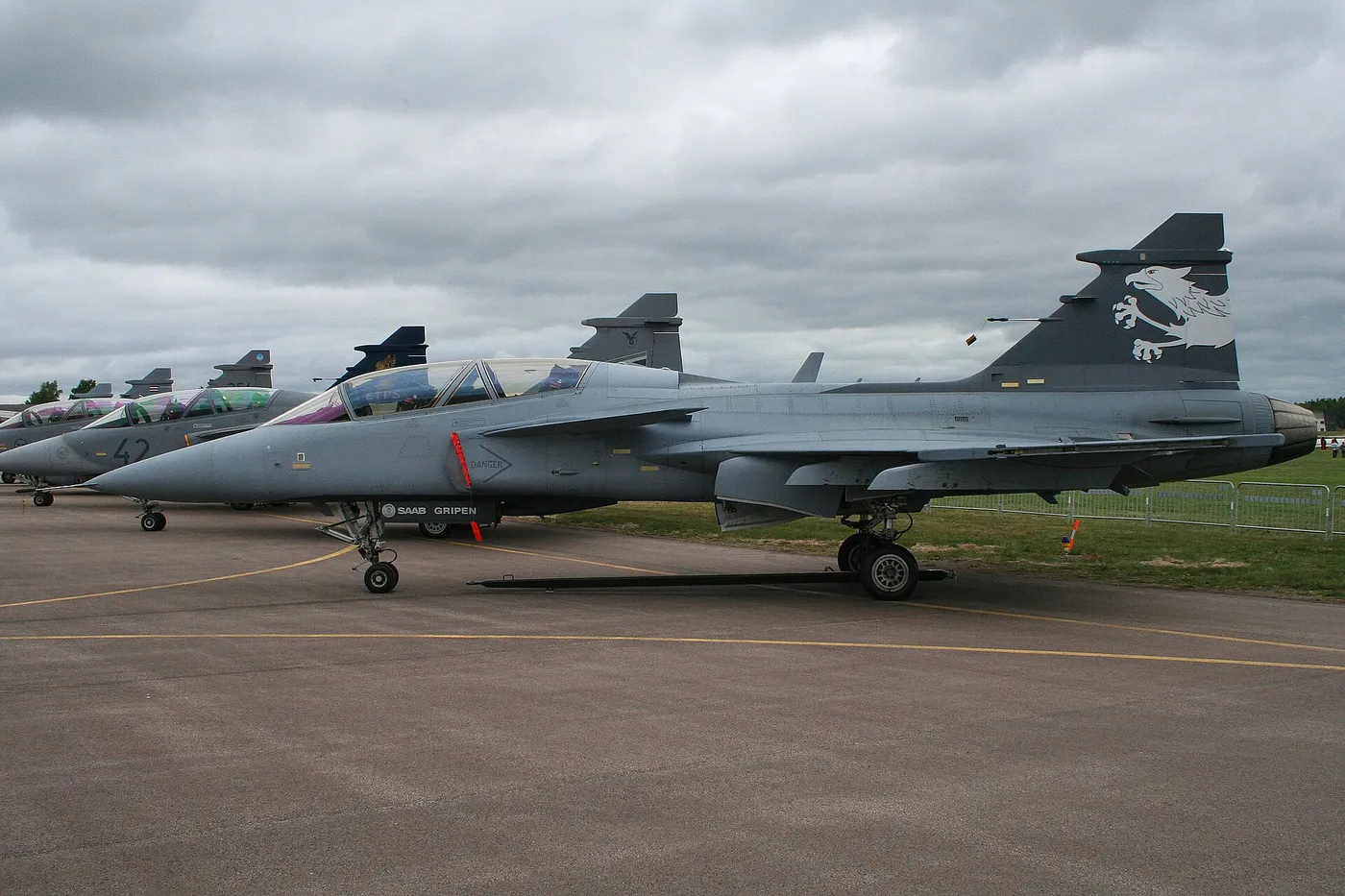
Sortie generation is a subject Turkish planners are also spending more time on. As HURJET moves toward serial production and the logistics behind the KAAN programme take shape, the question is not only how many aircraft are bought but how many sorties each one can produce in a day. The Swedish case is a reminder that maintenance doctrine and ground crew training weigh as heavily in that equation as the airframe itself.
Sources
- Aviation International News – Swedish Air Force Eyes Expedited Saab Gripen Fighter Turnaround Times (12 August 2026)
- Aviation Week – Swedish Air Force To Shorten Turnaround Times For Dispersed Basing
- Defense Express / en.defence-ua.com – Sweden Cuts Gripen Turnaround (15 August 2026)
- FlightGlobal – How Sweden’s austere basing system influenced the Gripen
- NATO – Swedish Gripen highway landing exercises