The carrier’s unmanned tanker is four years late — and the MQ-25 bill has reached $19.4 billion

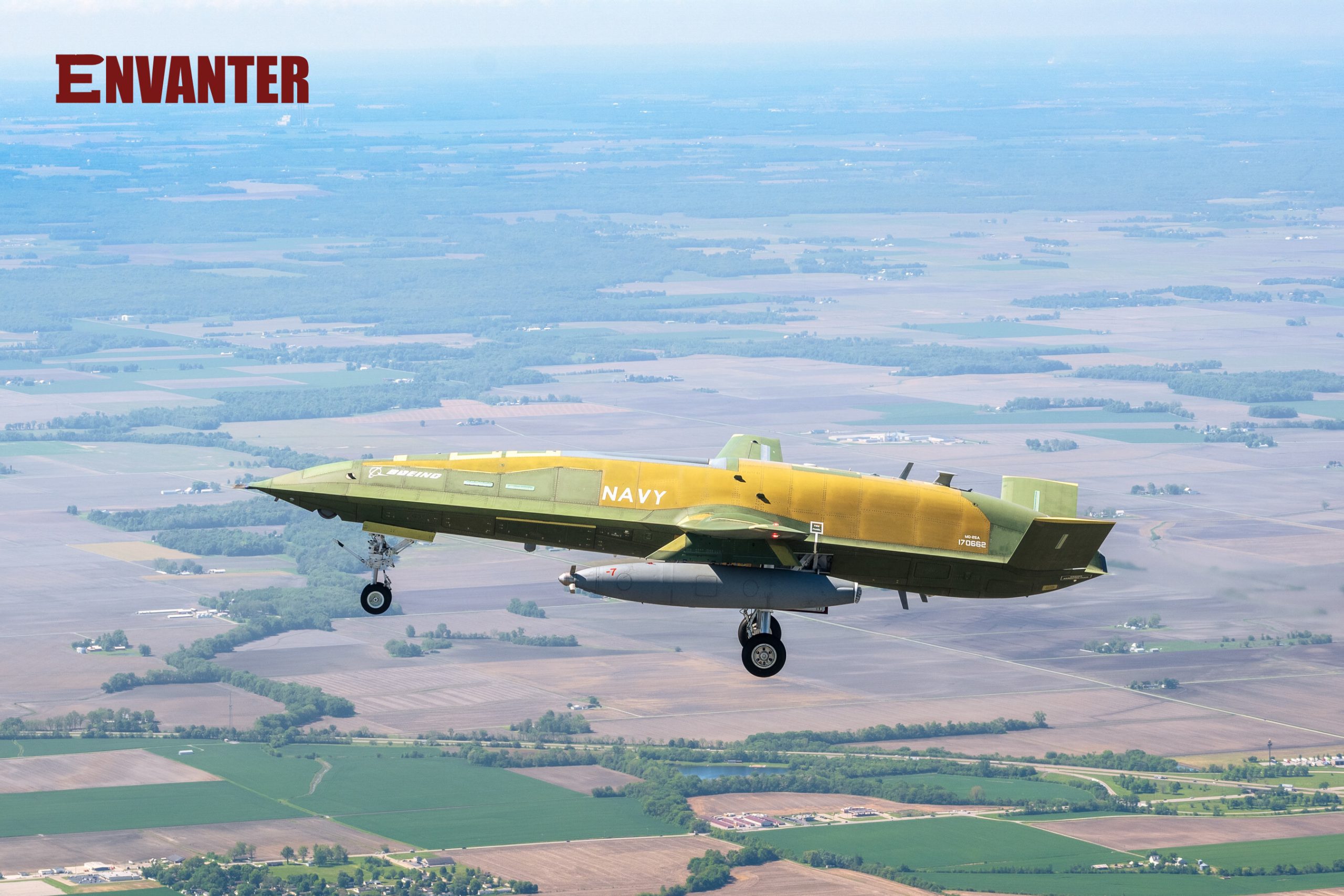
The first unmanned aircraft meant to operate from a US carrier deck has slipped four years. The MQ-25A Stingray now carries a $19.4 billion programme price tag and a unit acquisition cost of $255.8 million, and government auditors warn that starting production before testing finishes could push the bill higher still.
At a Glance
- New schedule: Initial operational capability has moved to 2029 — four years later than originally planned.
- Cost: The Pentagon puts the programme at $19.4 billion with a unit acquisition cost of $255.8 million. The Government Accountability Office, excluding military construction, calculates $16.6 billion and $218 million per aircraft.
- Growth: GAO records a 4 percent increase over its 2025 assessment, attributed in part to “work to replace or manage obsolete components.”
- The core warning: “Production could outpace testing.” Low-rate production began before testing of production-representative aircraft was complete, raising the risk of costly retrofits.
- Milestones: First flight April 2026 (originally 2021); low-rate production approval May 2026; flight testing to conclude at the end of fiscal 2029.
- Causes: Technical risk, production difficulties, schedule revisions and labour strikes; operating costs also exceed earlier estimates.
A first that arrived four years late
The MQ-25A Stingray is the first unmanned aircraft the US Navy intends to make a permanent fixture of the carrier deck. Its job is unglamorous but decisive: aerial refuelling. Today F/A-18E/F Super Hornets fly that mission, and every jet assigned to the tanker role is a jet not flying strike. Estimates put roughly a quarter of the fighter fleet’s sorties in that category. Stingray’s promise is to hand those aircraft back to the air wing while extending the group’s reach.
The schedule, however, kept moving. First flight was planned for 2021 and happened in April 2026. Low-rate initial production was approved in May 2026. Initial operational capability is now expected in 2029, and flight testing is due to wrap up at the end of the same fiscal year — meaning production and test will run almost in parallel.
Where the money went
The cost picture depends on who is counting. The Pentagon’s own figures put the programme at $19.4 billion with a unit acquisition cost of $255.8 million. GAO, leaving military construction out, arrives at $16.6 billion and $218 million per aircraft. The gap is methodological — but either number is extraordinary for a tanker.
GAO logs a 4 percent rise against its 2025 assessment, part of it traced to “work to replace or manage obsolete components.” That is the standard penalty for long development: parts age out before the programme finishes, supply chains shift and design work reopens. Operating costs have also drifted above forecast as maintenance expense and manpower estimates were revised.
Congress’s real objection: sequence, not price
The risk highlighted in the Congressional Research Service assessment is not the total but the order of events. The Navy entered low-rate production before testing of production-representative aircraft was complete. GAO’s language is blunt: production could outpace testing. In practice, a defect surfacing late means retrofitting aircraft already rolling off the line — always the most expensive way to fix anything.
The argument is familiar in American procurement; the concurrency bill from the F-35 programme is still being paid. On Stingray the exposure looks narrower — the programme is comparatively small and the aircraft has one primary mission. But the Navy’s longer-term plans lean on it heavily: the roadmap toward unmanned combat and reconnaissance platforms assumes that unmanned deck operations become routine first.
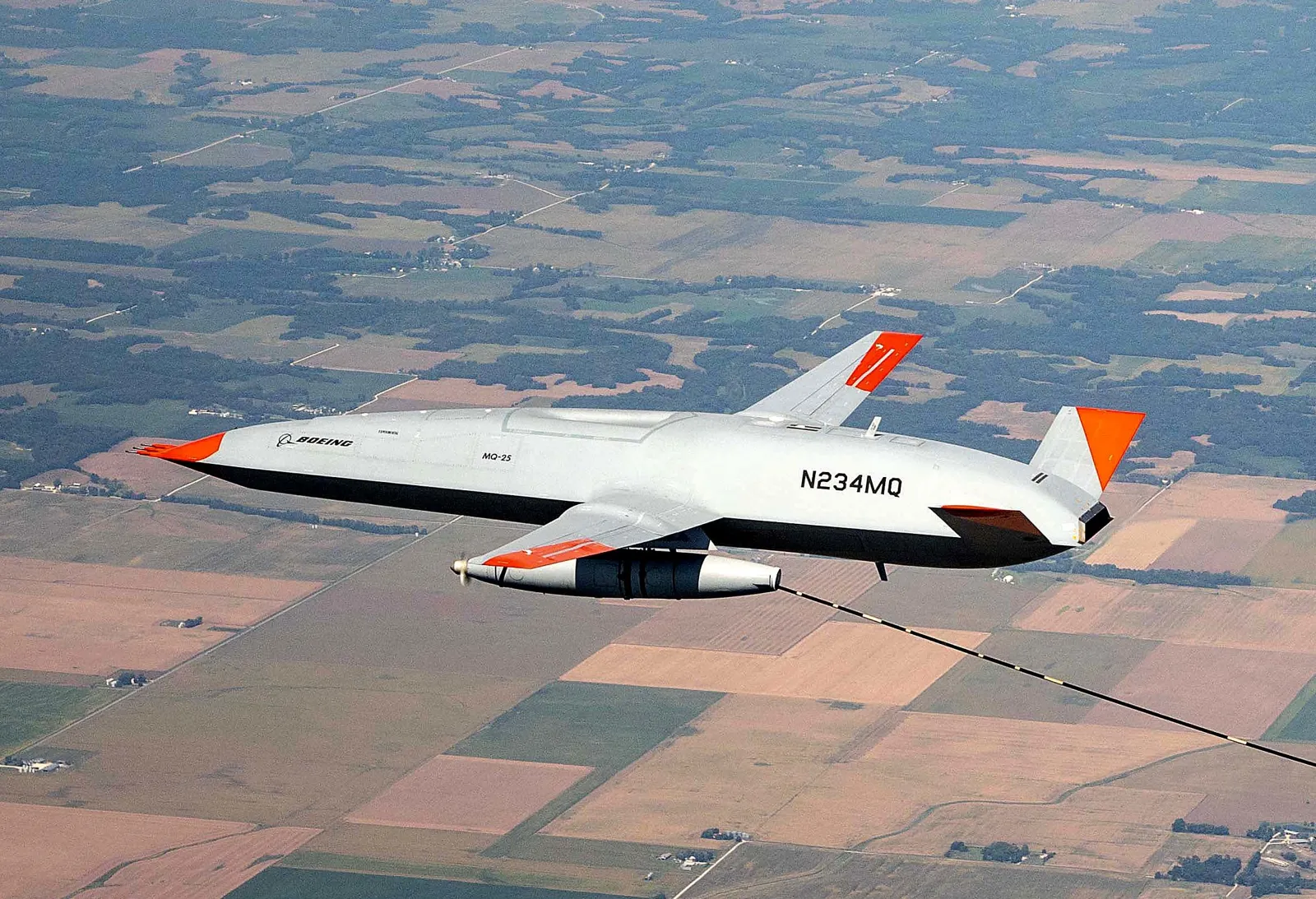
MQ-25A Stingray — Programme Snapshot
| Manufacturer | Boeing |
| Mission | Carrier-based unmanned aerial refuelling; secondary ISR |
| First flight | April 2026 (originally planned 2021) |
| Low-rate production approval | May 2026 |
| Initial operational capability | 2029 (four-year slip) |
| Flight testing complete | End of fiscal 2029 |
| Programme cost (Pentagon) | $19.4 billion |
| Programme cost (GAO, excl. milcon) | $16.6 billion |
| Unit acquisition cost | $255.8 million (Pentagon) / $218 million (GAO) |
| Cost growth | 4 percent over the 2025 assessment |
| Main causes of delay | Technical risk, production issues, schedule revision, labour strikes |
Why MQ-25 matters
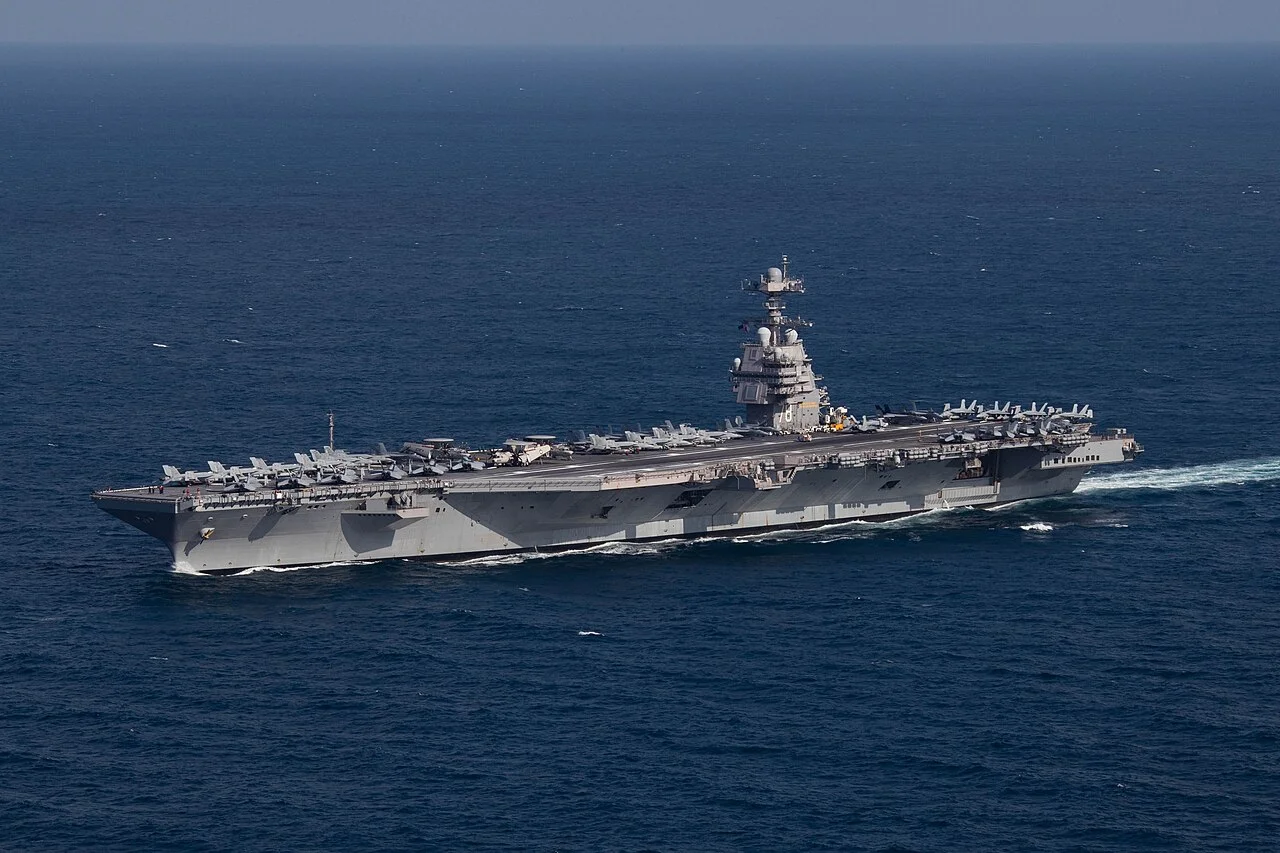
Range is the carrier air wing’s binding constraint. The current Super Hornet and F-35C pairing simply cannot reach far enough for a navy trying to hold its ships outside an adversary’s missile envelope. Aerial refuelling is the only practical lever — but the tanker has to launch from the ship too. Stingray was designed for exactly that gap: an unmanned tanker able to deliver a useful fuel load at around 500 nautical miles and recover aboard.
Its second function is cultural. Routine launch and recovery of an unmanned aircraft trains the deck crew and the operational cycle to work with autonomy. The Navy describes it openly as a door-opener; the unmanned combat platforms that follow depend on that door being open.
The same question, on a smaller deck
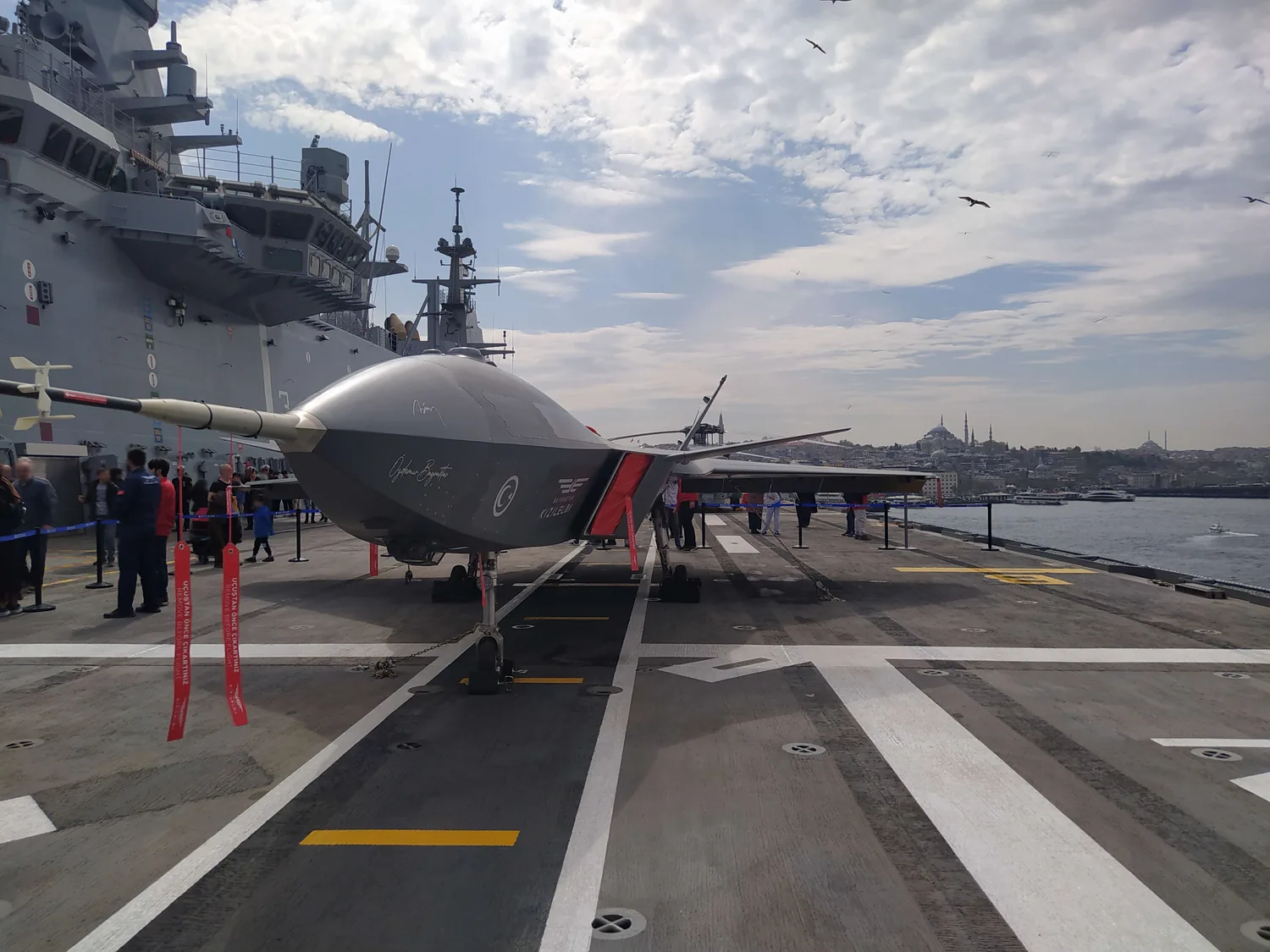
Short-deck unmanned operations are not solely an American preoccupation. Work aboard TCG Anadolu with the Bayraktar TB3 and KIZILELMA demonstrated that fixed-wing unmanned flight from a short deck is achievable. The scale and the mission differ, of course: Stingray is a heavy tanker sized for a full carrier, while TB3 is a reconnaissance and strike platform adapted to an amphibious assault ship. The underlying test is identical — folding an unmanned aircraft cleanly into the deck cycle, and doing it without the budget running away.
Sources
- US Government Accountability Office annual weapon systems assessment
- Congressional Research Service MQ-25 report
- Pentagon Selected Acquisition Report data
- Defence Industry Europe