US Navy’s uncrewed submarine covers 1,000 nautical miles alone as Orca crosses a Pacific threshold


The US Navy has pushed its Boeing- and HII-built Orca extra-large uncrewed undersea vehicle more than 1,000 nautical miles across the eastern Pacific. The transit, completed in July and disclosed on 15 August, is the longest voyage in the programme’s history – and the first hard evidence behind the Pacific Submarine Force’s plan to fold uncrewed platforms into the operational fleet.
At a Glance
- What happened: Orca XLUUV transited more than 1,000 nautical miles in the eastern Pacific in July 2026, a programme first
- Disclosure: The Navy made the mission public on 15 August
- Mission set: ISR, mine warfare, seabed warfare and expeditionary support
- Platform: Roughly 26 m long, about 85 tons, 6,500 nm range on hybrid-electric propulsion
- Payload bay: Around 10 m of modular volume, up to eight tons of mission payload
- Next up: The Hunter expeditionary mining payload in late 2027 or early 2028, plus a standoff heavyweight torpedo launch system
- Competition: DIU’s Combat Autonomous Maritime Platform project is shaping the next-generation XLUUV, with Anduril’s Dive-XL among the contenders
Why a thousand miles matters
Uncrewed undersea vehicles have been showing up in exercises for years. Most of them work within a few hours of a mother ship and get recovered at the end of the day. What Orca did in July is a different proposition: it covered more than 1,000 nautical miles under its own power. On Pacific distances that is the threshold that counts, because a vehicle able to reach an operating area without a submarine or surface escort stops being an accessory and starts being part of the plan.
Rear Adm. Chris Cavanaugh, commander of Submarine Force Pacific Fleet, framed it plainly: the force “is heavily investing in unmanned capabilities to augment our manned submarines.” The sentence sounds routine, but there is a doctrinal choice inside it. Virginia-class deliveries have run behind plan for years while Chinese yard capacity keeps growing. Against that arithmetic, a relatively cheap platform that can stay out for weeks without a crew is one of the few realistic ways to close a numbers gap.
The vehicle itself: a payload bay that swims
Orca grew out of Boeing’s Echo Voyager demonstrator and was developed alongside Huntington Ingalls Industries. At roughly 26 metres and 85 tons, its hybrid-electric plant delivers around 6,500 nautical miles of range – enough, on paper, to cross an ocean. The defining feature, though, is not size but the roughly ten-metre modular payload bay amidships. With capacity for up to eight tons, that volume commits the vehicle to a swappable mission set rather than a single job.
The class’s second boat, XLE2, was christened at Boeing’s Huntington Beach facility in March 2026 and entered service this year. The Navy is now working to load combat capability into the design. First in line is Hunter, an expeditionary mining payload with an acquisition timeline set for late 2027 or early 2028. Second is a system able to launch a heavyweight torpedo from standoff range – which, if it matures, turns Orca from a sensor into a shooter.
The successor is already in competition
Even as Orca enters service its replacement is taking shape. The Defense Innovation Unit’s Combat Autonomous Maritime Platform project is hunting for a next-generation XLUUV, with Anduril’s Dive-XL among the contenders. That is the Pentagon pattern of the last few years in miniature: rather than lock onto a single platform, run several vendors at the same requirement and scale whichever design matures first.
Orca XLUUV – Technical Summary
| Builders | Boeing / Huntington Ingalls Industries |
| Derived from | Echo Voyager demonstrator |
| Length | Approximately 26 m (85 ft) |
| Displacement | About 85 tons |
| Propulsion | Hybrid-electric |
| Range | 6,500 nautical miles |
| Payload bay | ~10 m long, up to eight tons |
| Missions | ISR, mine warfare, seabed warfare, expeditionary support |
| Second boat | XLE2, christened March 2026, in service the same year |
| Payloads in work | Hunter expeditionary mining; standoff heavyweight torpedo launch |
The seabed as a layer of the fight
The phrase “seabed warfare” in Orca’s mission list points at a problem that has grown loud over the past two years. Severed data cables and damaged pipelines in the Baltic exposed how little protection critical undersea infrastructure enjoys. Assigning a crewed submarine to that work is expensive and risky; an uncrewed vehicle can loiter on the same spot for weeks, record what passes and intervene when needed.
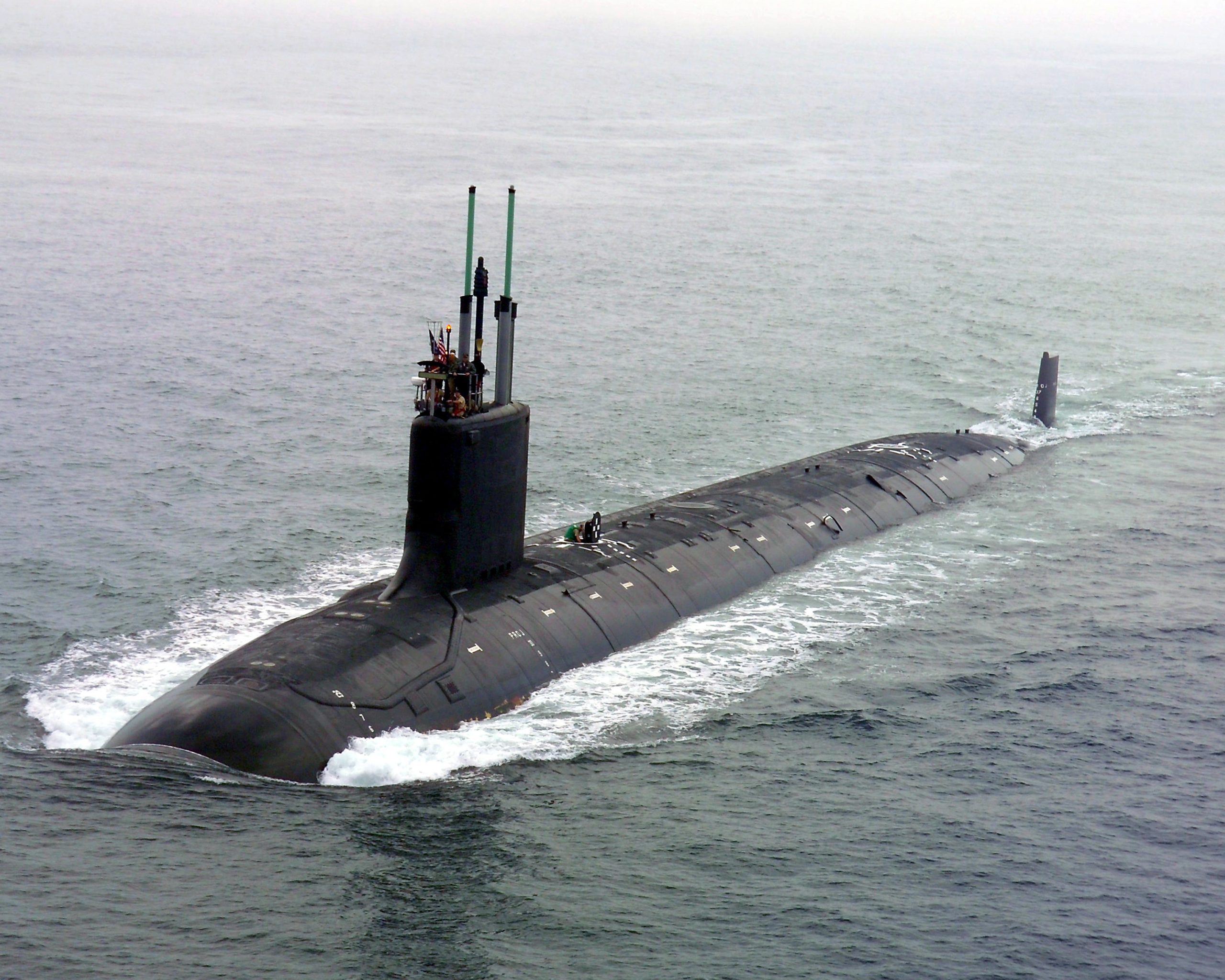
Turkiye faces a narrower version of the same question in the eastern Mediterranean and the Black Sea, where energy lines, data cables and transit routes crowd the same stretch of seabed. STM’s ULAQ family and its undersea developments cover part of that ground, while MILDEN is aimed at a sovereign submarine design capability. Orca’s July run is a reminder that those two lines – crewed boat and autonomous platform – increasingly belong in the same plan.
Sources
- Naval News – U.S. Navy Orca XLUUV Completes 1,000-Mile Pacific Transit (15 August 2026)
- Naval News – Boeing Christens Second Extra-Large Orca Submarine Drone (March 2026)
- Boeing – XLUUV programme page
- Naval Technology – Orca XLUUV project file
- US Navy Submarine Force Pacific Fleet statements