Two Marine Protector Cutters Head to the Philippine Coast Guard

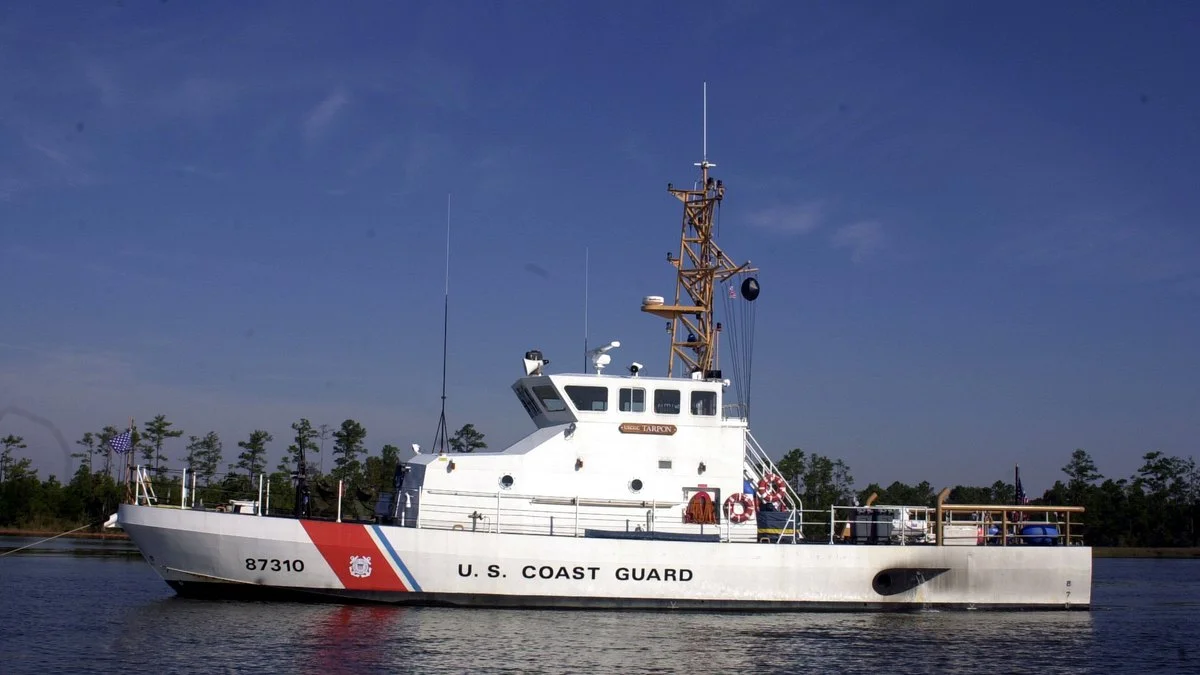
The Philippine Coast Guard expects to receive two Marine Protector-class patrol boats transferred from the United States in October 2026. The vessels will serve as BRP Pag-asa (PATS-2701) and BRP Patag (PATS-2702). Training for the crews concluded with a graduation ceremony on 20 August 2026.
PCG spokesperson Commodore Noemie Cayabyab said the platforms will support the service’s Organized National Engagement (ONE) at Sea strategic concept. Neither the transfer mechanism — Excess Defense Articles or Foreign Military Sales — nor a value has been stated publicly.
What the class is
The Marine Protector class is the US Coast Guard’s 87-foot (roughly 26.5 m) coastal patrol boat, built with a steel hull and aluminium superstructure. Maximum speed is 26 knots, with fuel consumption of about 165 gallons per hour at full throttle. Crews run 10 to 12 across five berthing spaces.
Its defining feature is the integrated stern launch and recovery ramp. The arrangement lets a rigid-hull inflatable boat be put into the water and recovered while the cutter is under way, which cuts reaction time sharply in smuggling interdiction, search and rescue and fisheries enforcement. It is both faster and safer in higher sea states than a davit-and-crane arrangement.
What they will do
The PCG says the boats will work the country’s exclusive economic zone on maritime safety operations, fisheries enforcement and marine environmental hazard management, and will feature in the service’s iCARE campaign.
That official language points, as it usually does, at the tension underneath. In the waters Manila calls the West Philippine Sea, close encounters with Chinese coast guard vessels have become the most frequently repeated incident type of the past two years. What the Philippines needs there is not a large warship but enough patrol hulls to stay continuously at sea.
A fleet that has been growing
The Philippine Coast Guard has expanded rapidly over the past decade. Japanese-built 44- and 97-metre multirole vessels, new shipbuilding agreements with France and transferred American platforms are the main components. Two Marine Protectors add little in tonnage, but low operating cost and simple maintenance make the class well suited to dispersed basing across an archipelago.
The second-hand transfer model
Transferring used coast guard and naval hulls to allies is a decades-old American practice, and the Philippines is one of its heaviest users — the Navy’s Hamilton-class cutters came the same way. The advantage is cost; the disadvantage is remaining service life and dependence on US spare-parts channels.
The Marine Protector is relatively favourable on that second count. Its hull derives from Damen’s Stan Patrol 2600 design and it uses engines and auxiliary systems common in commercial shipping, which means spares are not wholly tied to a military supply chain.
The regional picture
Coast guards have moved ahead of warships in the South China Sea. Because none of the parties wants escalation to a military threshold, encounters are deliberately kept at coast guard and fishing fleet level. What decides this grey-zone contest is sustained presence: hull count, days at sea and replenishment infrastructure. Manila’s fleet expansion is aimed directly at that equation.
Sources
- Philippine Coast Guard statements; PCG spokesperson Commodore Noemie Cayabyab
- Military Leak, 25 August 2026