Zimbabwe’s Military Strength: Tanks, Aircraft and Helicopters in the Inventory (2026)

Zimbabwe’s military inventory belongs to one of southern Africa’s mid-sized armed forces — and to the one whose resource squeeze is most visible. Global Firepower’s 2026 list places the country 105th among 145 militaries, showing 60 tanks, 80 aircraft and 1,248 armoured vehicles. The real story behind those figures, however, is not the size of the inventory but how much of it works: open sources report that more than half of the tanks and armoured vehicles are out of service because spare parts, fuel and training ammunition cannot be sourced. This article works line by line through the land, air and air-defence holdings of the Zimbabwe Defence Forces, based on open sources.
At a Glance
- Active personnel: ≈ 29,000 active plus ≈ 21,800 paramilitary (Global Firepower 2026)
- Main battle tanks: ≈ 60; the bulk is Chinese Type 59 and Type 69, a significant share out of service
- Military aircraft (total): ≈ 80; fighters: 9 Chengdu J-7
- Attack helicopters: 6 Mil Mi-35 — the heaviest firepower in the inventory
- Navy: None — landlocked; patrol duty on Lake Kariba and the Zambezi rests with police units
- Defence budget: Sources diverge sharply: Global Firepower 2026 gives ≈ $1.98 billion, independent compilations ≈ $166 million
Note: The inventory figures below are approximate values drawn from open sources such as Global Firepower, the IISS Military Balance and SIPRI.
About the Zimbabwe Armed Forces
The Zimbabwe Defence Forces were established on 18 May 1980 and comprise two components: the Zimbabwe National Army and the Air Force of Zimbabwe. The country is landlocked, so there is no third service and no navy. The organisation emerged after independence from the merger of three separate armed structures: the Rhodesian Army, the 20,000-strong ZANLA and the 15,000-strong ZIPRA. A British military assistance and training team ran the technical side of that integration until 2000.
The command layer changed recently. President Emmerson Mnangagwa is commander-in-chief; Oppah Muchinguri-Kashiri holds the Defence and War Veterans portfolio. General Emmanuel Matatu was appointed Commander of the Defence Forces on 19 November 2025 and took up the post on 21 November 2025. A ZIPRA fighter in the liberation war who trained at the Zambia Military Academy, Matatu had commanded the National Army between March and November 2025; he moved to the top post when the term of his predecessor, General Philip Valerio Sibanda, ended.
Zimbabwe has no conscription; the forces are raised on a volunteer basis. The upper age limit is 22 for candidates with a secondary education and 26 for those holding a tertiary qualification. Global Firepower’s 2026 data reads 29,000 active, 21,800 paramilitary and zero reserve — a total structure of 50,800. For a country of more than 17 million people, that is below the regional average.
The budget line is the most contested item in this inventory. Global Firepower’s 2026 list gives Zimbabwe a defence budget of $1.98 billion, while independent compilations put the same year at around $166 million; Wikipedia records $1.7 billion for 2022 and 2.16% of GDP for 2018. The gulf is largely a currency question: the budget is announced in local currency, and converting it to dollars produces answers that differ by up to an order of magnitude depending on the rate used. This line should be read as a range, not as a single number.
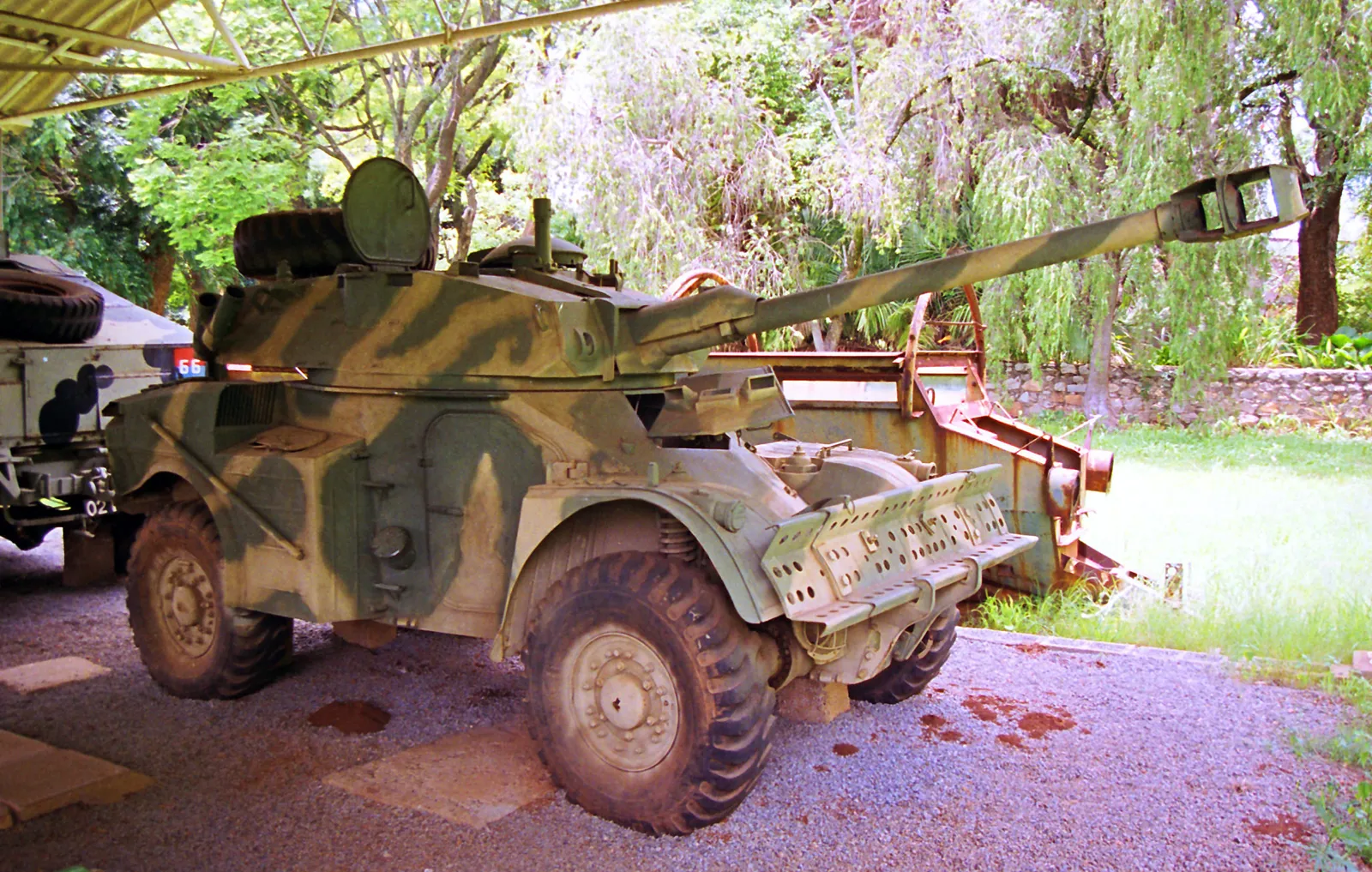
The backbone of the land inventory is Chinese. The tank column holds around 30 Type 59s, around 10 Type 69s and some 20 T-54/55s of uncertain status, pointing to a total near 60. Procurement diversity is clearer among armoured cars: some 80 Brazilian-built EE-9 Cascavels (given a substantial refurbishment in 2014), around 20 Eland Mk7s of South African lineage and some 15 British Ferret scout cars sit side by side.
The armoured personnel carrier column contains French ACMAT TPK 420 BLs (≈ 55), Chinese Type 63s (≈ 30) and VTT-323s (≈ 22) alongside locally produced UR-416 derivatives (≈ 14). To these are added 50-60 mine-protected vehicles of the Crocodile family inherited from the Rhodesian era; dated by today’s standards, they are among Africa’s longest-serving examples of the first-generation MRAP concept. Global Firepower’s figure of 1,248 armoured vehicles rests on a broad definition; the number of combat armoured units is far lower.
Artillery is the weakest link in the inventory. On the rocket side, only 6 of the Czechoslovak-built RM-70 systems are reported operational, accompanied by 16-18 Chinese 107 mm Type 63 light rocket launchers. The towed howitzer and mortar column holds a mixed stock of Soviet, Chinese and British generations, but open sources give no firm figure; Global Firepower’s 2026 list shows both the towed and the self-propelled artillery columns as empty, which should be read as a data gap rather than a true zero.
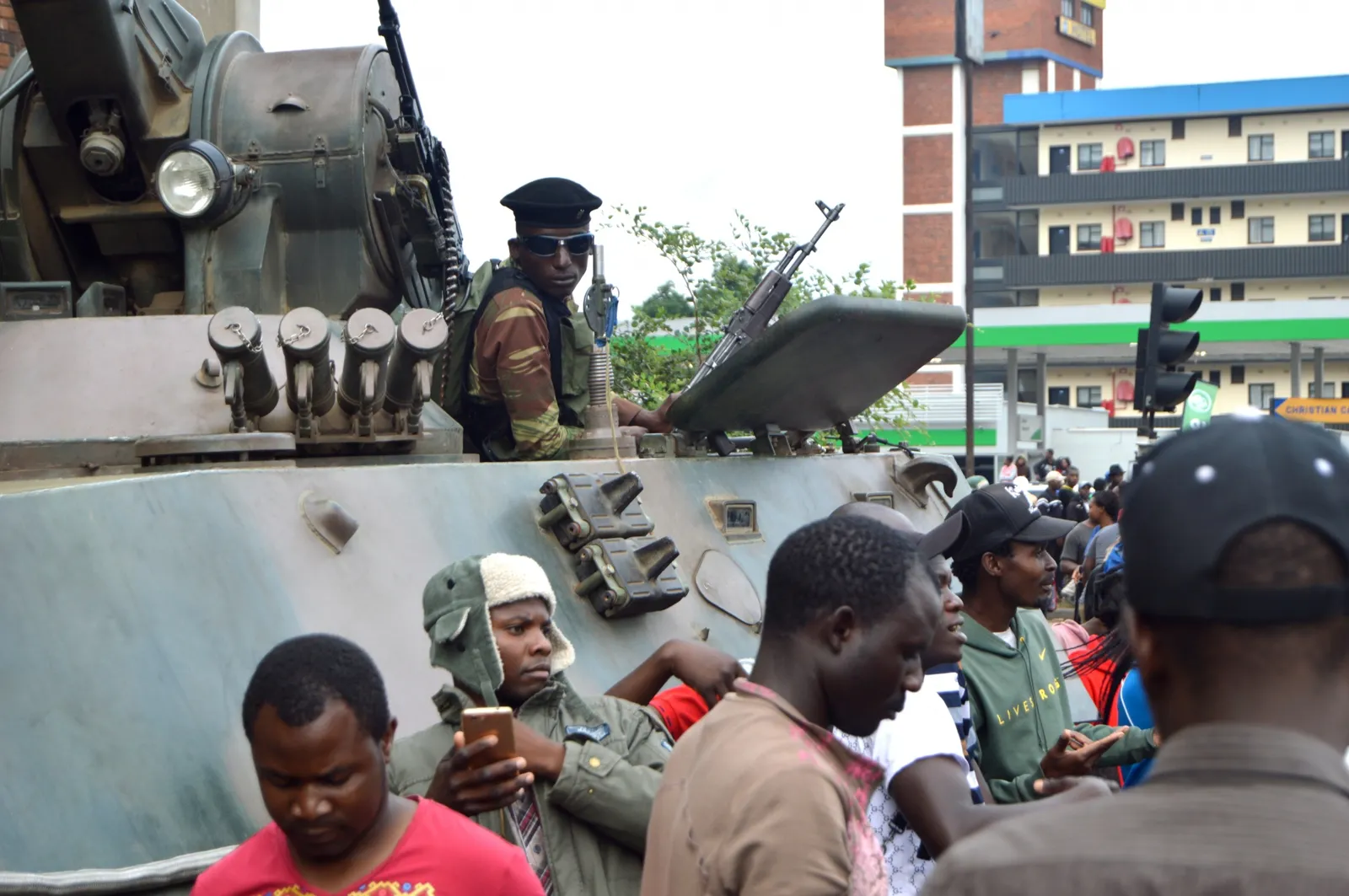
The most telling figure in this inventory is not a quantity but a serviceability rate. Open sources state that more than half of the army’s tanks and armoured vehicles are out of service because spare parts, fuel and training ammunition cannot be obtained. Two causes lie behind this: budget constraints and the European Union arms embargo in force since February 2002. The embargo is renewed annually; in the renewal of 18 February 2025 the Union delisted the last remaining entity, the state arms maker Zimbabwe Defence Industries, and in its decision of 17 February 2026 it lifted the travel bans and asset freezes while extending the arms embargo by a further year, to 20 February 2027.
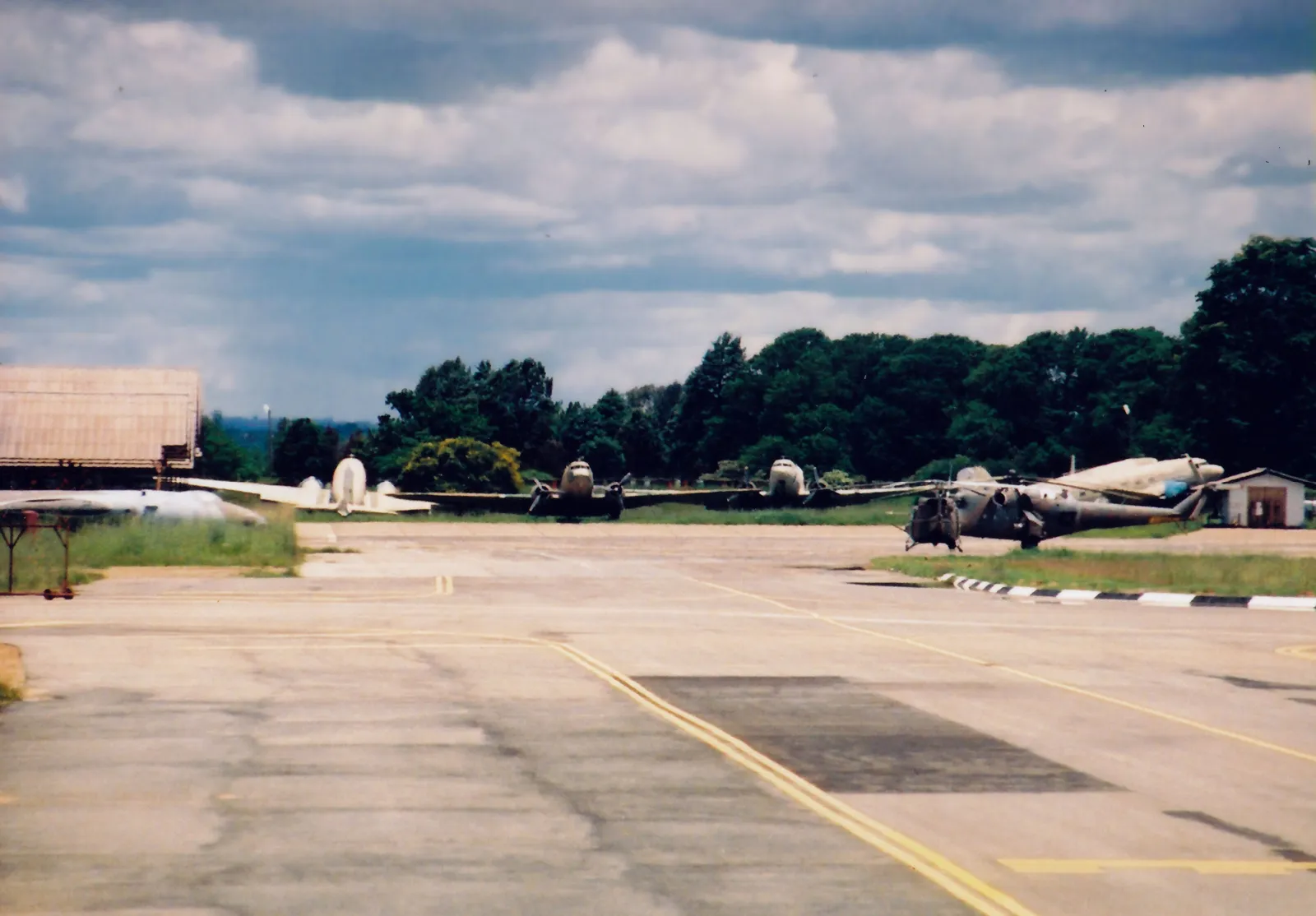
The air picture is tidier than the land one, but the technology generation is equally old. Global Firepower’s 2026 list shows 80 aircraft. The fighter fleet consists of 9 Chengdu J-7s and 2 FT-7 trainer variants — the Chinese-built derivative of the 1960s MiG-21 design, which by today’s yardstick sits on the edge of the third generation. The light attack task falls to Italian-built SIAI-Marchetti SF.260 propeller aircraft: around 9 attack variants and 6 trainers are on the books.
The training arm is comparatively healthy. The air force took delivery of its first Hongdu K-8 Karakorum jet trainers in 2006, and the type filled the gap left by the grounded British BAE Hawks; around 12 K-8s are in service today. The Hawks did not disappear entirely: 4 aircraft were returned to flight in 2022-2023. On the basic training side there is an order for 12 Pakistani-built PAC MFI-17 Mushshaks, a concrete output of the military training relationship between Zimbabwe and Pakistan. The transport arm operates around 9 CASA C-212 Aviocars and some 5 BN-2 Islanders.
The rotary-wing element holds the heaviest firepower in the inventory. The air force operates 6 Mil Mi-35 attack helicopters, used both in the Congo campaign and on internal security tasks. The utility fleet comprises around 13 Alouette IIIs, some 8 AB-412s, one Mi-17 and an AS332L Cougar — about 22 helicopters in total. Retired platforms include the Hawker Hunter fighters and the English Electric Canberra bombers; one of the Canberras was presented to China by Robert Mugabe and is on display today at the Datangshan aviation museum near Beijing. The air force’s main bases are Manyame near Harare and Thornhill at Gweru.
Air defence is the weakest heading in the inventory, and it is less a shortfall than an absence. The country has neither a fixed nor a mobile surface-to-air missile battery; the ballistic and cruise missile column is empty as well. The task rests entirely on ZPU-series 14.5 mm, ZU-23-2 23 mm and 37 mm anti-aircraft guns and Soviet-generation Strela-2 man-portable launchers. No integrated air-defence network or modern early-warning radar infrastructure is confirmed in open sources. Nor is there any unmanned aerial vehicle in service — a distinctly unusual position in today’s African defence market.
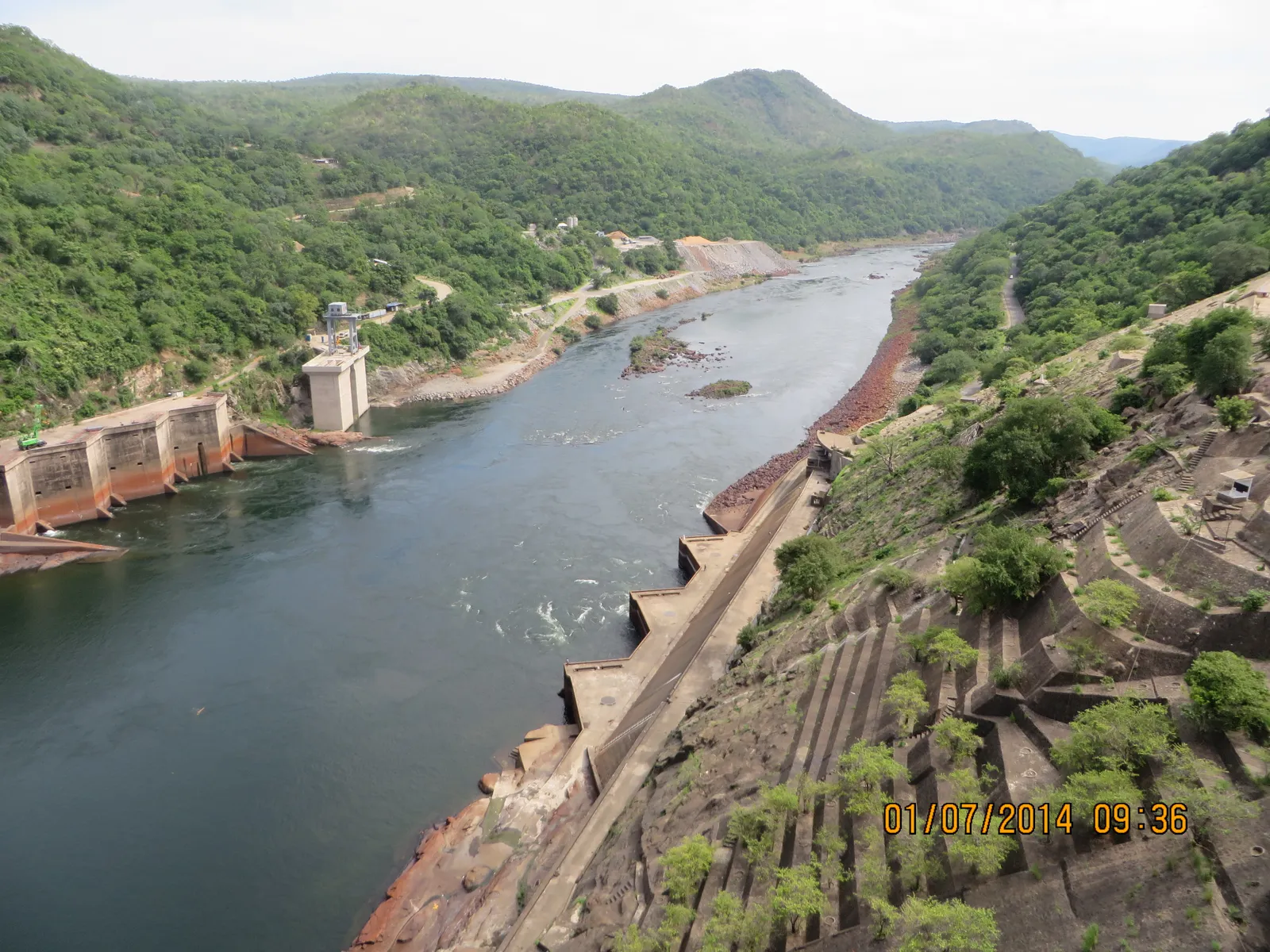
Being landlocked, Zimbabwe has no navy; Global Firepower classifies the country directly as landlocked. Its only major body of water is Lake Kariba, formed on the Zambezi river along the Zambian border; patrol duty there falls to police and national parks units rather than to a military service. Access to the sea runs through the Beira and Maputo corridors in Mozambique, which means that military logistics, not just trade, depend on an external route.
The operational record explains much of the inventory’s present wear. Through the 1980s and 1990s the army supported the FRELIMO government in Mozambique’s civil war and took responsibility for the security of the Beira corridor. The Second Congo War of 1998-2002 was the heaviest engagement; Zimbabwe deployed thousands of troops alongside the Kinshasa government, and that campaign is remembered as the item that broke the army’s back in both materiel and budget terms. Operation Restore Legacy in November 2017 ended with Robert Mugabe’s departure from office, and the tanks on the streets of Harare made the army’s weight in domestic politics visible.
In recent years the emphasis has shifted to regional multilateral tasks. Zimbabwe contributed a 304-strong instructor cadre to the Southern African Development Community’s Mission in Mozambique (SAMIM), deployed on 15 July 2021; after nearly three years in Cabo Delgado the mission began withdrawing on 5 April 2024. The army also takes part in multinational events run by US Africa Command: Zimbabwe National Army personnel attended the Africa Logistics and Communications Symposium in Addis Ababa on 27-28 July 2026, and the country’s observers joined the Southern Accord 2026 exercise in Gaborone on 13 August 2026.
Land Forces Inventory
| System type | Est. quantity |
|---|---|
| Main battle tanks (Type 59, Type 69, T-54/55) | ≈ 60 (≈ 30 Type 59 + ≈ 10 Type 69 + ≈ 20 T-54/55 of uncertain status) |
| Armoured cars (EE-9 Cascavel, Eland Mk7, Ferret) | ≈ 115 (≈ 80 Cascavel refurbished in 2014 + ≈ 20 Eland + ≈ 15 Ferret) |
| Armoured personnel carriers (ACMAT TPK 420 BL, Type 63, VTT-323, UR-416) | ≈ 120 |
| Mine-protected vehicles (Crocodile and derivatives) | ≈ 50-60; a generation inherited from the Rhodesian era |
| Rocket artillery (RM-70, Type 63 107 mm) | ≈ 22-24 (≈ 6 RM-70 operational + ≈ 16-18 Type 63) |
| Howitzers and mortars (mixed Soviet, Chinese and British generations) | No firm figure in open sources; Global Firepower 2026 shows an empty towed-artillery column |
| Total armoured vehicles (GFP 2026, broad definition) | ≈ 1,248 |
| Serviceability | More than half of the inventory is unserviceable for lack of spares, fuel and training ammunition |
Air Force Inventory
| Platform | Est. quantity |
|---|---|
| Total military aircraft | ≈ 80 |
| Fighters (Chengdu J-7 II/N + FT-7) | 9 plus 2 trainer variants; the sole fighter fleet, of Chinese origin |
| Light attack / trainer (SIAI-Marchetti SF.260) | ≈ 9 attack variants + ≈ 6 trainers |
| Jet trainers (Hongdu K-8 Karakorum, BAE Hawk Mk60) | ≈ 12 K-8 (first delivered in 2006) + 4 Hawks (returned to flight in 2022-2023) |
| Basic trainers (PAC MFI-17 Mushshak) | 12 on order, from Pakistan |
| Transport aircraft (CASA C-212 Aviocar, BN-2 Islander) | ≈ 9 + ≈ 5 |
| Attack helicopters (Mil Mi-35) | 6 |
| Utility helicopters (Alouette III, AB-412, Mi-17, AS332L Cougar) | ≈ 22 |
| Unmanned aerial vehicles | No system in service is confirmed in open sources |
Missile and Air-Defence Systems
| System | Type / Note |
|---|---|
| Long- and medium-range surface-to-air missiles | None — the inventory contains no fixed or mobile missile battery |
| Man-portable air-defence missiles (Strela-2 / SA-7) | Soviet generation, in limited numbers |
| Anti-aircraft guns (ZPU series 14.5 mm, ZU-23-2 23 mm, 37 mm) | The de facto backbone of air defence; Soviet and Chinese generations |
| Ballistic or cruise missiles | None |
| Integrated air-defence network | Not confirmed in open sources; radar infrastructure is limited |
| Anti-tank systems | Recoilless guns and Soviet-generation guided missiles; no modern item is confirmed |
Naval Power
| Class / Type | Est. quantity |
|---|---|
| Naval forces | None — Zimbabwe is landlocked |
| Inland waters | Lake Kariba and the Zambezi river, which form the border with Zambia |
| Waterborne patrol duty | Carried out by police and national parks units, not a military service |
| Access to the sea | The Beira and Maputo corridors through Mozambique; military logistics also depend on this route |
The Turkey Angle: Turkish Defence Industry
Unlike many countries in this series, Zimbabwe has a genuine military framework agreement signed with Türkiye. There is, however, no Turkish-built platform in the inventory yet; the relationship stands at a stage where the legal ground has been laid but the procurement phase has not begun. This section is not an account of a completed sale; it is a reading of what the framework is and what it opens onto.
The diplomatic ground was laid on 21 June 1982. Türkiye’s embassy in Harare opened on 30 April 2011; Zimbabwe’s embassy in Ankara was formally inaugurated on 22 June 2021 by the then foreign ministers Mevlüt Çavuşoğlu and Frederick Shava. High-level traffic accelerated from 2021: Speaker of Parliament Jacob Francis Mudenda visited Türkiye on 4-10 July 2021, and Foreign Minister Çavuşoğlu travelled to Zimbabwe on 10-11 January 2023, meeting Vice-President Constantino Chiwenga.
The defence counterpart to that traffic arrived in the summer of 2023. Zimbabwe’s Defence and War Veterans Minister Oppah Muchinguri-Kashiri met Minister of National Defence Yaşar Güler on 27 July 2023 on the margins of the IDEF international defence industry fair in Istanbul, and the two countries signed a Military Framework Agreement. Muchinguri-Kashiri was the first Zimbabwean minister to attend IDEF, held since 1993. Framework agreements are umbrella instruments setting out which headings defence cooperation will cover and by what procedures; they carry no procurement commitment in themselves, but they provide the legal basis for subsequent training, technical cooperation and sales talks.
Contact continued after 2023. Foreign Minister Frederick Shava attended the 4th Türkiye-Africa Economy Forum on 12-13 October 2023 and the 3rd Antalya Diplomacy Forum on 1-3 March 2024. The economic side remains modest: bilateral trade came to $44.367 million in 2024, of which $20.609 million was Turkish exports and $23.758 million imports. Education has produced a more durable tie: 174 Zimbabwean students have enrolled under the Türkiye Scholarships programme to date, 96 had graduated by 2024, and 19 new scholarships were awarded for 2024-2025.
Two structural factors shape Zimbabwe’s procurement behaviour. The first is the embargo: the European Union arms embargo in force since 2002 was extended by the decision of 17 February 2026 to 20 February 2027. It binds EU member states and effectively closes off Western European supply options; the Chinese weight in the country’s inventory is largely a consequence of that. The second is the budget: with a defence budget that ranges, depending on the source, from $166 million to $1.98 billion, large-scale cash purchasing capacity is limited.
The map of gaps in the inventory, meanwhile, overlaps strikingly with the areas in which Turkish industry is strong. There is no missile layer in air defence at all; no unmanned aerial vehicle is in service; the fighter fleet amounts to 9 aircraft built on a 1960s design; more than half of the armoured fleet is immobile for want of spare parts; and the mine-protected vehicle requirement is still being met with Rhodesian-generation Crocodiles. The Turkish defence industry’s product range in tactical-class unmanned aerial vehicles, short- and medium-range air-defence systems, mine-protected armoured vehicles and modernisation packages answers almost every one of those gaps.
Precedents on the continent show that Turkish industry can do business in this geography. Türkiye has signed military framework or defence industry cooperation agreements with a substantial share of African states; the links built with countries such as Nigeria, Kenya, Rwanda, Somalia, Morocco and Tunisia demonstrate models that work across different budget scales. In Zimbabwe’s case there is also ground on the local production side: the state arms maker Zimbabwe Defence Industries was removed from the European Union’s asset freeze list in February 2025. The ammunition lines MKE established in Jordan and Mongolia showed that in low-budget markets a model built on joint production rather than outright sales can work; Zimbabwe’s profile sits closer to that model than to a cash purchase.
In short, Zimbabwe occupies a position rarely seen in this series from the point of view of the Turkish defence industry: a market whose legal framework was established in 2023 and whose requirement map largely overlaps with the Turkish product range, but whose ability to pay is narrow. No known contract is on the table today. Against that, a signed Military Framework Agreement, direct contact established at ministerial level and the closure of Western European sources by embargo stand as three concrete reasons to keep this relationship under watch.
Frequently Asked Questions
How many tanks does Zimbabwe have? Global Firepower’s 2026 list shows around 60 tanks. Roughly 30 are Chinese-built Type 59s, some 10 are Type 69s and around 20 are T-54/55s of uncertain status. The decisive figure, however, is not the count but the serviceability rate: open sources report that more than half of the tanks and armoured vehicles are out of service because spare parts, fuel and training ammunition cannot be obtained.
Does Zimbabwe have fighter aircraft? Yes, but in limited numbers. The only fighter fleet in the inventory consists of 9 Chengdu J-7s and 2 FT-7 trainer variants — the Chinese-built derivative of the 1960s MiG-21 design. The light attack task is carried out by around 9 SIAI-Marchetti SF.260 propeller aircraft. The heaviest firepower in the inventory is a flight of 6 Mil Mi-35 attack helicopters.
What is Zimbabwe’s air defence? The country has no missile layer in its air defence: there is neither a fixed nor a mobile surface-to-air missile battery, and the ballistic and cruise missile column is empty as well. The task rests on ZPU-series 14.5 mm, ZU-23-2 23 mm and 37 mm anti-aircraft guns and Soviet-generation Strela-2 man-portable launchers. No integrated air-defence network is confirmed in open sources.
Does Zimbabwe have a navy? No. Zimbabwe is landlocked and the Defence Forces consist only of the National Army and the Air Force. The country’s sole major body of water is Lake Kariba on the Zambian border; patrol duty there falls to police and national parks units rather than to a military service. Access to the sea runs through the Beira and Maputo corridors in Mozambique.
Is there a defence agreement between Zimbabwe and Türkiye? Yes. A Military Framework Agreement was signed on 27 July 2023 on the margins of the IDEF fair in Istanbul between Zimbabwe’s Defence and War Veterans Minister Oppah Muchinguri-Kashiri and Minister of National Defence Yaşar Güler. It is an umbrella instrument establishing the legal ground for cooperation and carries no procurement commitment in itself. There is no Turkish-built platform in Zimbabwe’s inventory today.
Bottom Line
Zimbabwe’s inventory shows clearly what an army under embargo looks like. The 60 tanks, 80 aircraft and 1,248 armoured vehicles on paper are not trivial at regional scale; but more than half of that inventory cannot move because spare parts, fuel and training ammunition cannot be found. Zimbabwe’s problem, in other words, is not the size of the inventory but the inability to sustain it. The second defining feature is the one-directional narrowing of the supply line: because the European Union arms embargo in force since 2002 and extended to 20 February 2027 closes off Western European sources, the inventory has settled into a Chinese-weighted structure — from the fighter fleet to the rocket artillery, from the armoured personnel carriers to the jet trainers, the decisive items are of Chinese origin. The third is that air defence is effectively negligible; the absence of a missile layer and of any unmanned aerial vehicle in service is an unusual picture in today’s African defence market. What will shape this inventory in the coming period is not a new tank or a new fighter but three questions: will the existing Chinese-generation platforms be kept alive through modernisation, can a missile layer be added to air defence, and will the reconnaissance requirement be met with unmanned aerial vehicles? That these three headings fall precisely where the Turkish defence industry is strong, and that a Military Framework Agreement was signed between the two countries in 2023, makes a relationship that has yet to produce a procurement worth watching.