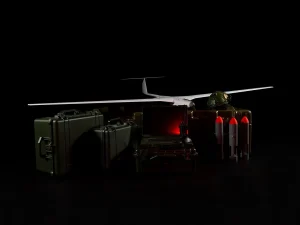
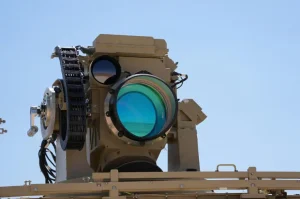
IAI Heron 1: The Workhorse MALE UAV That Defined a Generation of Persistent Surveillance Doctrine

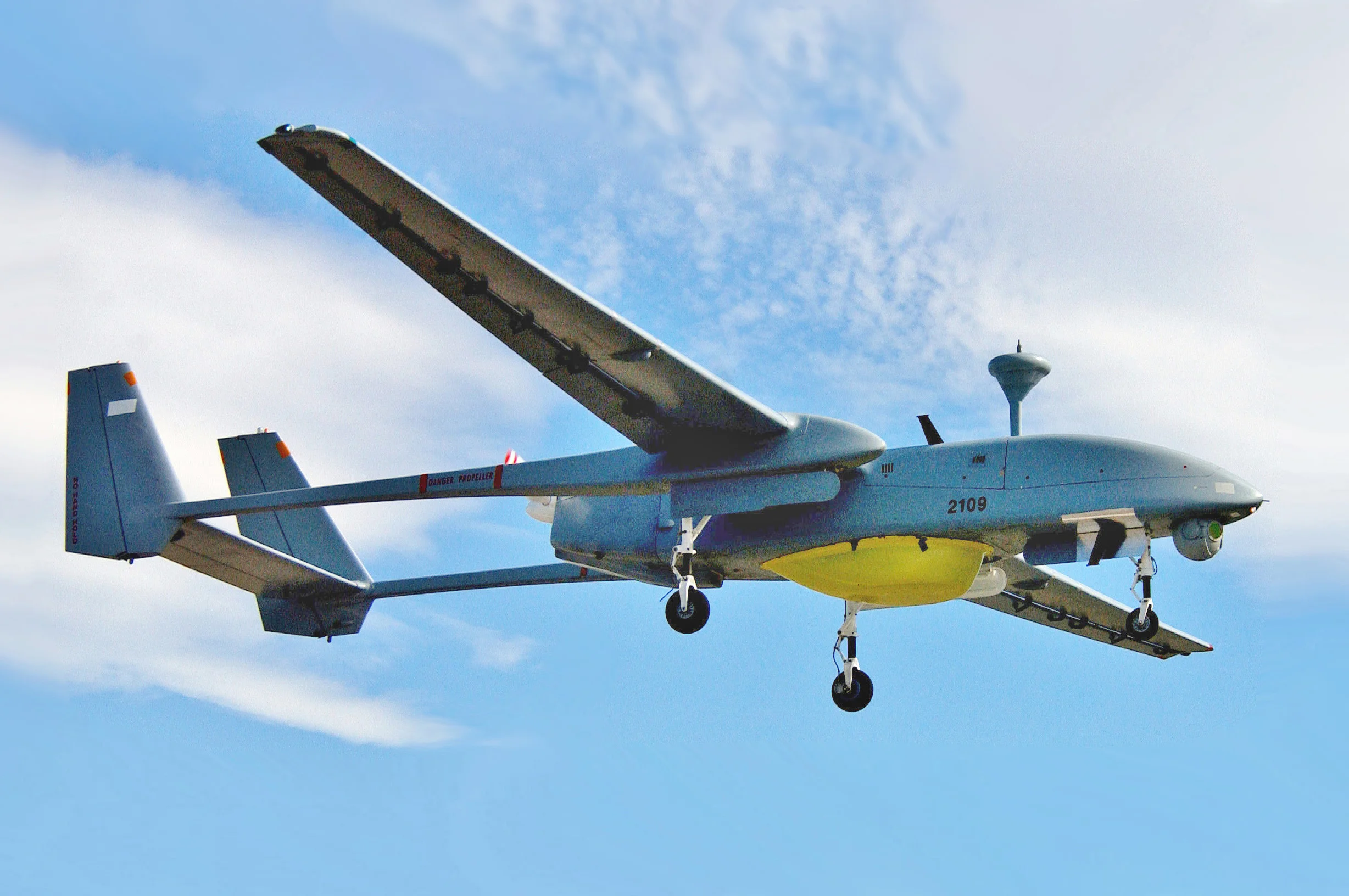
Before Bayraktar TB2 made headlines, before MQ-9 Reaper became the public face of drone warfare, the IAI Heron 1 was quietly reshaping how militaries thought about persistent aerial surveillance. Developed by Israel Aerospace Industries in the 1990s, Heron 1 was among the first MALE (Medium Altitude Long Endurance) UAVs exported at scale — and its operational footprint, spanning more than 45 nations, remains unmatched among non-American platforms in its class.
The MALE UAV Concept: Why Endurance Matters
Surveillance effectiveness is a product of presence multiplied by resolution. A high-resolution sensor that stays on station for 52 hours continuously provides fundamentally different intelligence value than one that orbits for 4 hours. Heron 1 was designed around this principle. Its Rotax engine, optimized fuel management, and aerodynamic efficiency allow it to maintain constant coverage over an area the size of a mid-size country for over two days on a single mission.
Technical Specifications
| Parameter | Value |
|---|---|
| Wingspan | 16.6 m |
| Length | 8.5 m |
| MTOW | 1,100 kg |
| Payload capacity | 250 kg |
| Engine | Rotax 914F (100 HP) |
| Service ceiling | 9,145 m (30,000 ft) |
| Endurance | 52 hours |
| Operational range | 200 km (LOS) / Satellite-linked (global BLOS) |
| Cruise speed | 180 km/h |
| Payload types | EO/IR, SAR/GMTI, SIGINT, COMINT, maritime patrol |
NATO Deployments: Lessons from Afghanistan
Canada operated Heron 1s over Kandahar Province, Afghanistan (2009-2011) in support of NATO ISAF operations. The systems provided persistent day/night surveillance of IED emplacers, compound activity monitoring, and pattern-of-life intelligence for kinetic targeting. The Canadian experience validated Heron 1’s value in Counter-Insurgency (COIN) operations and directly informed Canada’s subsequent MALE UAV acquisition strategy.
Germany operated a leased version for ISR missions in Afghanistan (2010-2013), but chose not to arm the platform due to constitutional and political constraints — a decision that sparked years of domestic debate about the militarization of German foreign policy. This episode illustrated an underappreciated dimension of MALE UAV procurement: the platform itself is rarely the bottleneck; the political authorization to use it is.
India: The Largest Export Relationship
India has been the most significant Heron 1 operator outside Israel. The Indian Army and Navy have used Heron 1s along the Line of Actual Control (LAC) with China and for maritime patrol in the Bay of Bengal and Arabian Sea. Following the 2020 Galwan Valley clash, India fast-tracked additional Heron TP procurement. India’s experience demonstrates Heron 1’s utility in high-altitude terrain (operational ceiling 9,145 m handles the Ladakh plateau), where alternative platforms face aerodynamic and operational limitations.
Comparison: Heron 1 vs Modern MALE Alternatives
| UAV | Country | Endurance | Payload | Armed variant |
|---|---|---|---|---|
| Heron 1 | Israel | 52 hrs | 250 kg | Limited |
| Bayraktar TB2 | Turkey | 27 hrs | 150 kg | Yes (MAM-L/C) |
| Bayraktar Akinci | Turkey | 24 hrs | 1,350 kg | Yes (SOM-A, MAM, TEBER) |
| MQ-9 Reaper | USA | 27 hrs | 1,360 kg | Yes (Hellfire, GBU-12) |
| Wing Loong II | China | 32 hrs | 480 kg | Yes (multiple) |
Editorial Assessment — Envanter Media
Heron 1 achieved something rare in defense technology: it created a market category and dominated it for two decades. The platform’s longevity reflects careful engineering choices — the decision to optimize for endurance over speed, for operational simplicity over sensor sophistication, for exportability over performance ceiling. In an era when drone programs routinely promise transformative capability and deliver cost overruns, Heron 1’s 30-year operational record is the ultimate performance metric.