Trump orders EMALS ripped out of the next Ford carrier — steam catapults are coming back

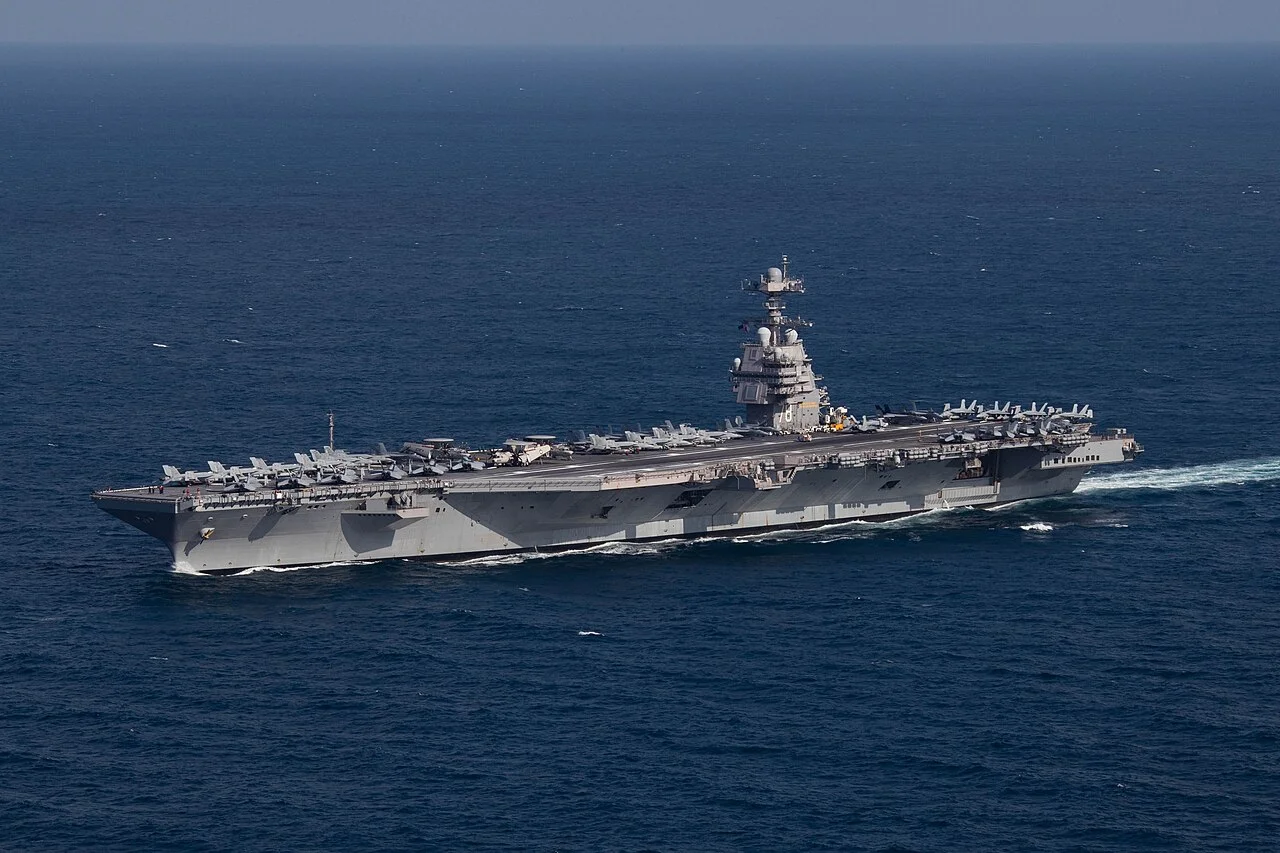
President Donald Trump has signed a national security presidential memorandum reversing the most contested piece of technology on the US Navy’s newest carriers. The August 13 document orders the electromagnetic aircraft launch system and advanced weapons elevators stripped from the under-construction USS Doris Miller and replaced with steam catapults and hydraulic lifts. Two further provisions — permission to build warships in foreign yards and a fifth public shipyard for submarine repair — may prove more consequential still.
At a Glance
- Instrument: National security presidential memorandum, signed August 13, 2026.
- Ship affected: CVN-81 USS Doris Miller, fourth Ford-class carrier, under construction at Newport News.
- Coming out: EMALS electromagnetic catapults and advanced weapons elevators.
- Going in: Steam catapults and hydraulic elevators of the Nimitz pattern.
- Deadline: The Secretary of War, with the Navy Secretary, owes the President a plan in 60 days.
- Untouched: CVN-78 Ford, CVN-79 John F. Kennedy and CVN-80 Enterprise keep EMALS.
- Second headline: The Navy gets a path to building ships in foreign yards.
- Third headline: A fifth public shipyard for submarine repair, proposal due in 120 days.
A twenty-year argument settled with one signature
Trump’s distrust of the electromagnetic catapult is not new. Speaking aboard USS George Washington last October, he promised an executive order mandating steam, and he has called EMALS too complicated to fix more times than the Navy would care to count. The August 13 memorandum turns that campaign line into a tasking.
The language leaves little room: within 60 days, the Secretary of War, in consultation with the Secretary of the Navy, must give the President a plan covering the measures, timelines and resources needed to replace the electromagnetic aircraft launch system and advanced weapons elevators with steam and hydraulic systems in the construction of CVN-81.
The distinction matters. Ford, Kennedy and Enterprise will all enter service with the electromagnetic system. If Doris Miller and her successors get steam, the Ford class effectively splits in two and a new sub-class is born — with all the training pipelines, spare parts and maintenance doctrine that a divided class implies over a fifty-year service life.
Industry’s first answer: half the production is already done
General Atomics, which builds EMALS, went straight to the arithmetic: with roughly 50 percent of production complete, changing course now would introduce significant cost, schedule and integration risk. That is not merely a vendor defending its programme. A catapult is not a module bolted on late; it is wired into the ship’s power architecture.
Bryan Clark of the Hudson Institute made the same point from the outside. Restoring steam lines, he noted, would require extensive redesign, and no supplier has built a steam catapult in more than twenty years — meaning the production base would have to be stood up again from scratch. The last Nimitz-class carrier commissioned in 2009; those lines closed long ago.
What EMALS buys, and what steam gives up
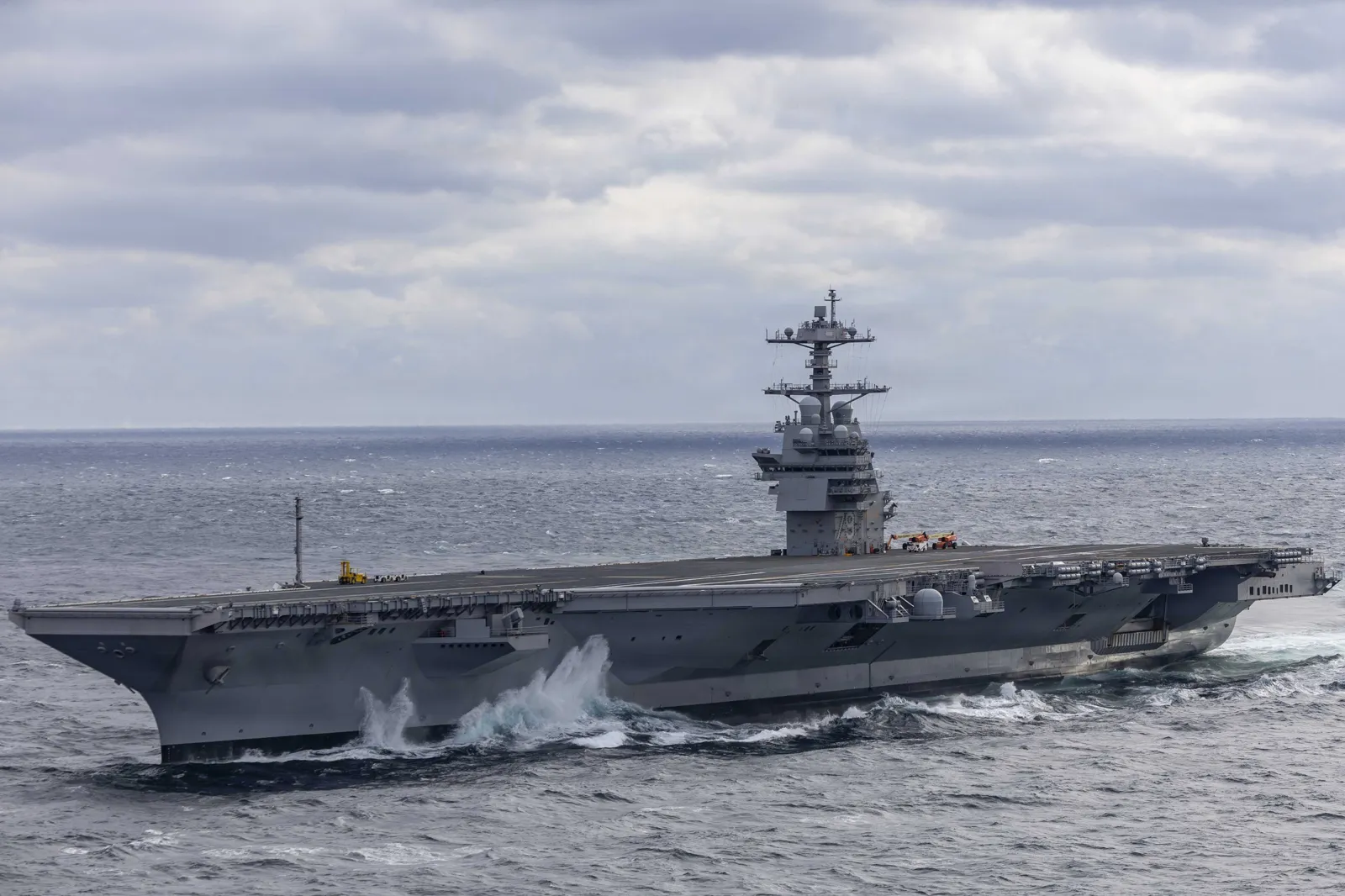
A steam catapult drives a piston with high-pressure steam tapped from the ship’s reactors. It is proven and it is blunt: the acceleration curve is sharp, airframes take a beating, and every shot consumes a meaningful quantity of fresh water.
EMALS uses a linear induction motor, and its thrust profile is set in software. That is what allows the same catapult to throw a heavy strike fighter and, at the other end of the scale, a light unmanned aircraft. Much of the Ford class’s promised sortie-generation advantage rested on that flexibility. The counter-argument has always been reliability — early availability figures were poor, and a fault could take more than one catapult offline at once.
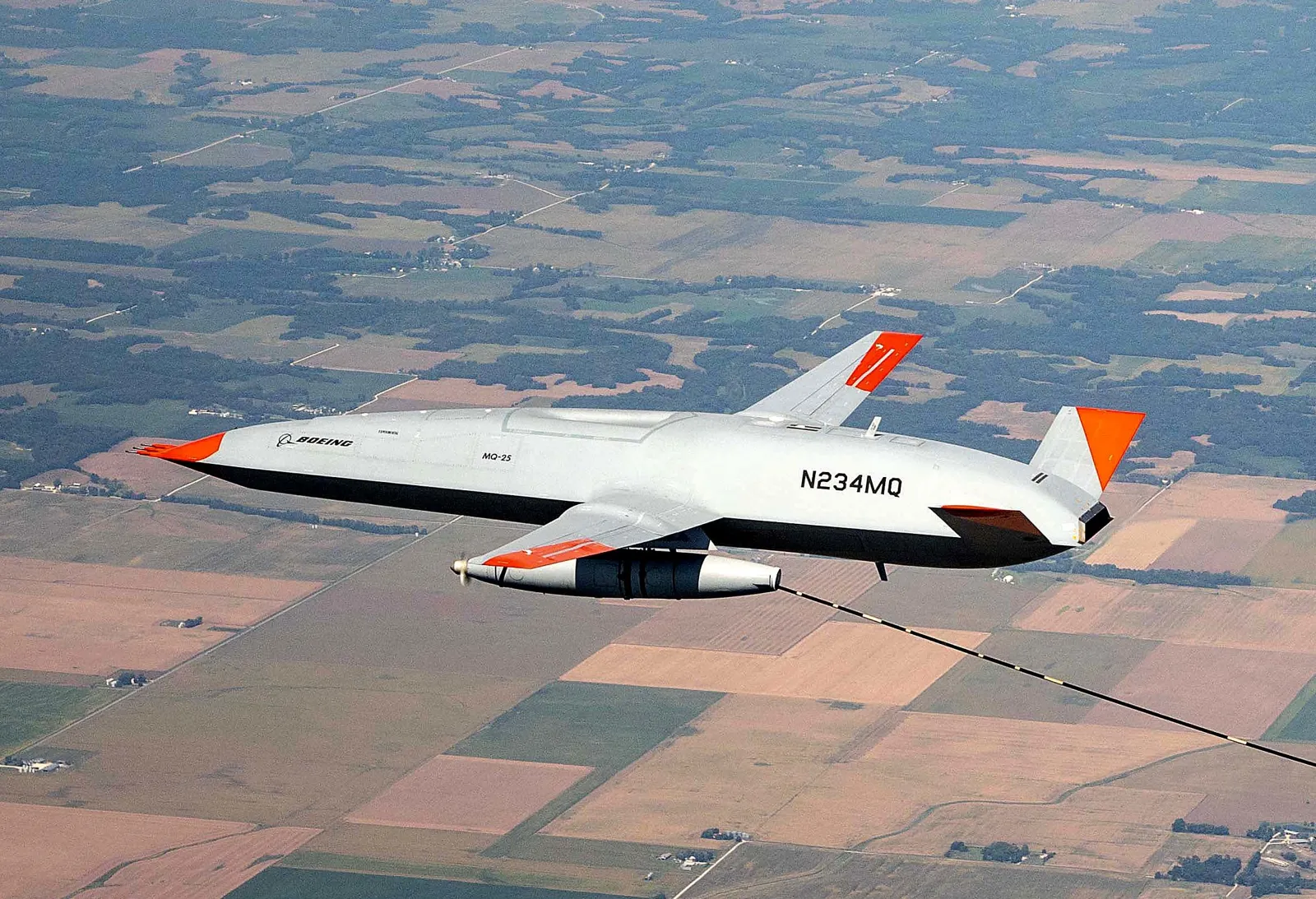
This is where the order becomes genuinely contentious. The Navy’s flight deck of the 2030s is meant to include the MQ-25 Stingray and, after it, unmanned combat aircraft. Launching a light unmanned platform on steam is harder precisely because the energy cannot be trimmed as finely. The memorandum may cure today’s reliability headache at the cost of constraining tomorrow’s air wing.
EMALS versus Steam Catapult
| Working principle | EMALS: linear induction motor — Steam: high-pressure steam piston |
| Launch energy control | EMALS: tuned in software — Steam: fixed, sharp acceleration curve |
| Light UAV launch | EMALS: well suited — Steam: limited |
| Airframe fatigue | EMALS: lower — Steam: higher |
| Manning and upkeep | EMALS: designed for smaller crews — Steam: heavy piping and steam-line maintenance |
| Maturity | EMALS: new, troubled early years — Steam: proven over 50+ years |
| Supply chain | EMALS: in production — Steam: none built in over 20 years |
| In service with | EMALS: Ford class, China’s Fujian — Steam: Nimitz class, Charles de Gaulle |
The two provisions nobody is talking about
The catapult has taken the headlines, but the memorandum’s other two directives are likelier to reshape American shipbuilding.
The first opens a route for the Navy to have warships built in foreign yards. Domestic construction of US warships has been close to untouchable for decades. Loosening it, against a backdrop of full order books and chronic delays at American yards, amounts to a historic opening for allied builders — South Korea and Japan first among them.
The second targets the submarine maintenance backlog. The Secretary of Defense has 120 days to propose a fifth public shipyard, sited near the Pacific Fleet — the continental United States, Alaska, Hawaii or the territories — with up to three new drydocks able to take every current and projected submarine class. Public-private financing is explicitly on the table, alongside a new component repair centre meant to cut repair delays.
The question that decides it
The memorandum asks for a plan, not a demolition order. The next 60 days will produce the cost and schedule tables that go in front of the President. Once the bill for threading steam lines through a half-built hull at Newport News sits beside the bill for fixing EMALS, the argument is likely to move from engineering to accounting.
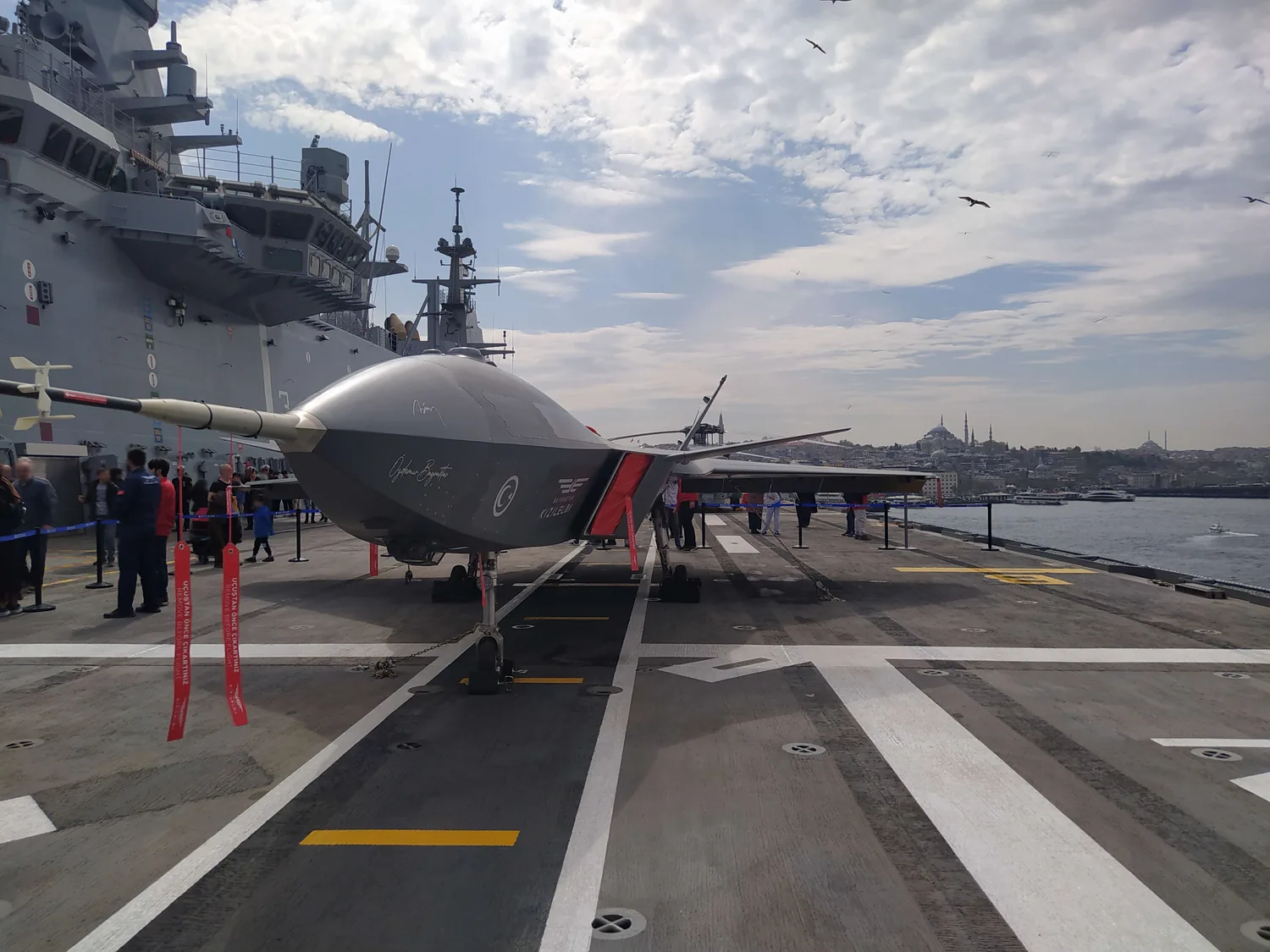
Seen from outside Washington, the debate carries a practical lesson. Türkiye chose a different answer with TCG Anadolu — a short deck and a ramp, with the KIZILELMA unmanned fighter proving the concept from that deck. Which launch architecture the national carrier programme eventually adopts remains open, and the cost and maturity risk now being argued over in the United States is exactly the data point such a decision turns on.
Sources
- Breaking Defense — “Trump orders return of steam catapults on carriers, fifth public shipyard”, 13 August 2026
- USNI News — “New White House Memo Calls for Foreign-Built Warships, Return to Steam Catapults on Ford Carriers”, 13 August 2026
- The White House — Fact sheet on the national security presidential memorandum, 13 August 2026
- Navy Lookout — “Full steam in reverse: Trump orders US Navy back to old-style aircraft catapults”
- Statements by General Atomics and Bryan Clark (Hudson Institute)