US Navy quietly trades 28 Tomahawk cells for a seabed spy module

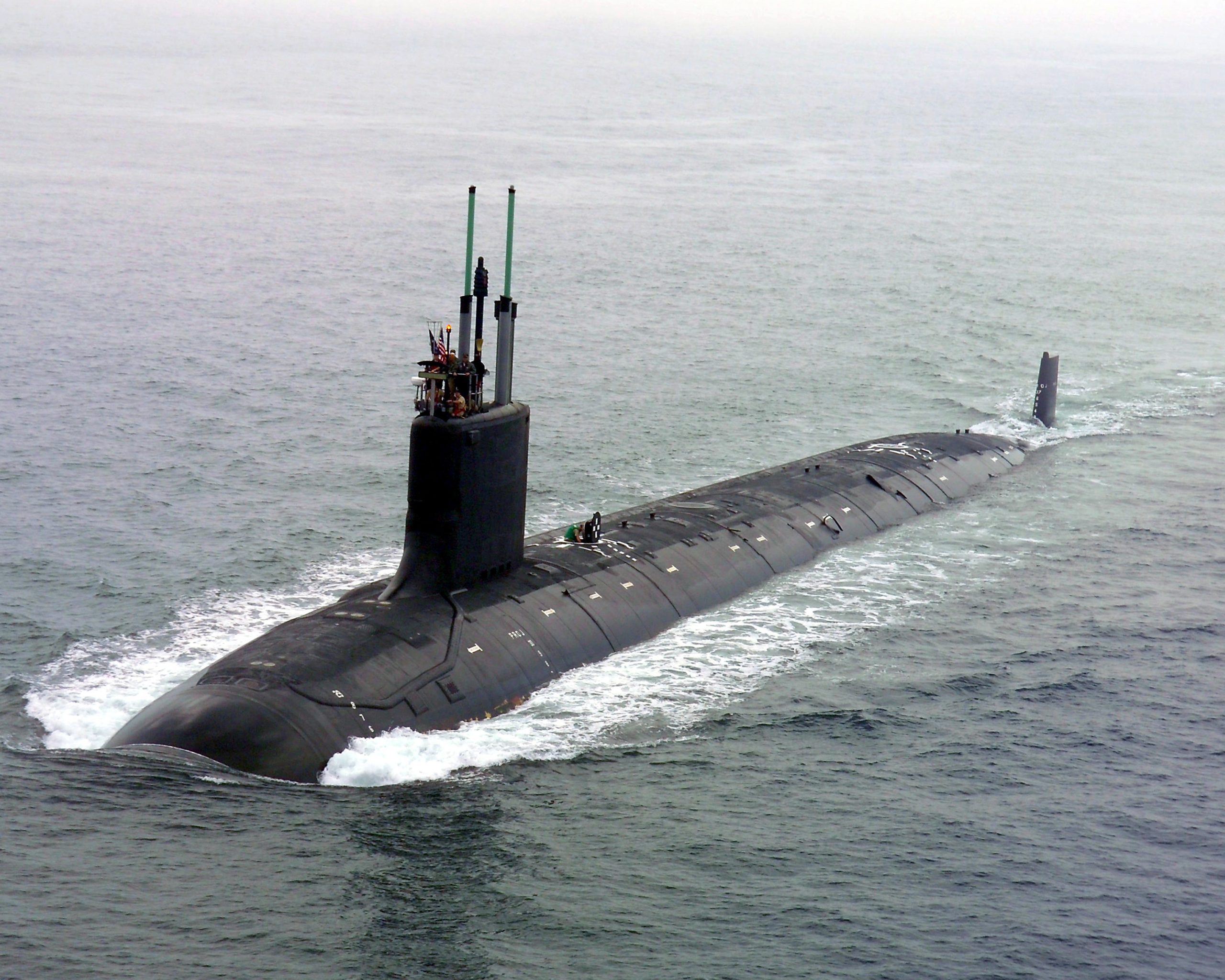
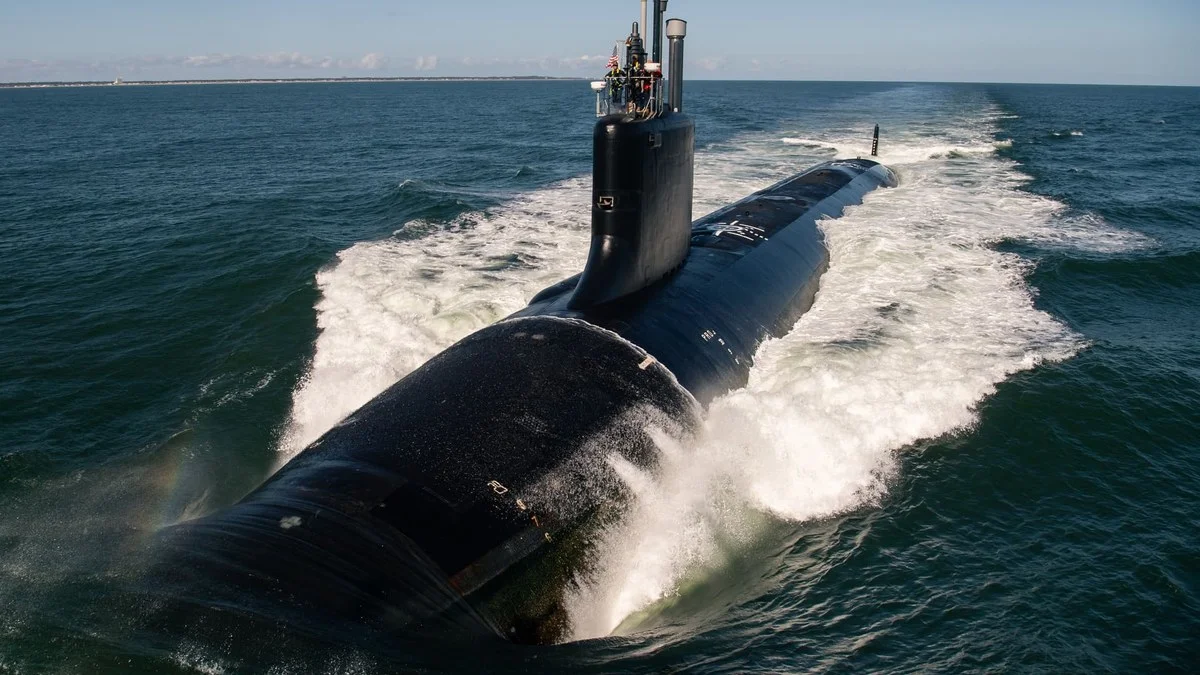
The US Navy has confirmed that one of its Virginia-class Block V submarines will be built without the hull plug that carries 28 Tomahawk cells. In its place goes a classified module built for work on the ocean floor — tapping and cutting fibre-optic cables, reaching pipelines and lifting objects off the seabed. The boat will eventually take over from USS Jimmy Carter, on station since 2005.
At a Glance
- What happened: A Navy spokesperson confirmed that a later Block V Virginia will be delivered without the Virginia Payload Module and configured as a Subsea and Seabed Warfare (SSW) platform.
- What it replaces: The VPM is an 84-foot hull section housing four large vertical launch tubes and 28 Tomahawk cells. On the SSW boat that volume goes entirely to mission equipment.
- Which hull: One of Block V hulls 804-813. The Navy will not name it, but has ruled out USS Oklahoma (SSN-802) and USS Arizona (SSGN-803).
- What it will do: Interface with — and if required sever — undersea fibre-optic cables, work pipelines, recover and examine objects from the seafloor, and carry unmanned undersea vehicles.
- Predecessor: The Seawolf-class USS Jimmy Carter (SSN-23), commissioned in 2005 with a 100-foot Multi-Mission Platform, is today’s seabed spy boat.
- Timeline: Block V deliveries run from 2028 through 2034.
Firepower traded for a secret
Block V was supposed to be the Virginia programme’s answer to a looming firepower problem. A baseline Virginia carries 12 vertical launch cells; insert the 84-foot Virginia Payload Module and four more large tubes push that figure to 40. In practical terms one boat gains 28 additional Tomahawk cruise missiles per salvo — the arithmetic meant to soften the retirement of the four converted Ohio-class guided-missile submarines.
Now the Navy says one of those modules will never be fitted. Asked about the plan, a service spokesperson told The War Zone that “a later Block V submarine will not have VPM and will be a Subsea and Seabed Warfare focused platform.” The space earmarked for missile tubes is being handed to an entirely different line of work: intelligence gathering on the ocean floor.
The Navy is not saying which boat has been chosen. What is known is that it sits somewhere in hulls 804 to 813 and that it is neither USS Oklahoma nor USS Arizona. That reticence is standard practice — seabed missions sit among the most tightly held files in the American submarine force.
Cables, pipelines and what lies on the bottom
The mission set follows from the space the VPM would have occupied. The boat is described as able to connect to and cut undersea fibre-optic cables, act against pipelines, raise and study objects from the seafloor, and deploy and recover unmanned undersea vehicles. Inside, a reconfigurable command centre and cargo compartment let the layout be rearranged as the task changes.
On paper that reads as an engineering footnote. The strategic logic behind it is anything but. The overwhelming majority of the world’s internet traffic runs through submarine cables, and energy lines form a fragile lattice from the Baltic to the eastern Mediterranean. Two years of severed cables and damaged pipelines in northern European waters turned the seabed into a recognised theatre. NATO members stood up dedicated task groups; the US Navy spent 2026 openly using the phrase “seabed superiority.”

A line that runs from Halibut to Jimmy Carter
American seabed espionage has a long pedigree. USS Halibut is remembered for placing a recording pod on a Soviet military telephone cable in the Sea of Okhotsk in the 1970s. The Sturgeon-class USS Parche that followed became the most decorated submarine in US Navy history, most of its record still classified. The torch passed to USS Jimmy Carter, third and final boat of the Seawolf class.
Commissioned in 2005, Jimmy Carter differs from her sisters by a 100-foot Multi-Mission Platform spliced into the hull, allowing unmanned vehicles to slip out quietly and divers to work. Her whereabouts are rarely disclosed; the Jolly Roger occasionally flown on return to port is the traditional signal that something was accomplished. But the boat is now two decades old and the Seawolf class supply chain keeps narrowing. The new Virginia SSW hull inherits that portfolio — with Jimmy Carter expected to soldier on alongside her for some time.
Technical Comparison
| Base platform | Virginia-class Block V nuclear attack submarine |
| Baseline Virginia VLS cells | 12 |
| Block V with VPM | 40 cells (28 added) |
| VPM hull section | ~84 ft / ~25.6 m, four large vertical tubes |
| VPM on the SSW variant | None — replaced by a dedicated seabed mission module |
| Primary tasks | Cable interface/cutting, pipeline work, seafloor object recovery, UUV carriage |
| Internal layout | Reconfigurable command centre and cargo compartment |
| Candidate hulls | Block V 804-813 (SSN-802 and SSGN-803 ruled out) |
| Predecessor | USS Jimmy Carter (SSN-23), Seawolf class, 2005 |
| Delivery window | 2028-2034 (Block V programme overall) |
What Virginia Block V is
The Virginia class was conceived after the Cold War as an affordable alternative to Seawolf and now forms the backbone of the US attack submarine force. Each block changed something: Block III redesigned the bow and swapped 12 individual Tomahawk tubes for two large Virginia Payload Tubes; Block IV chased cost and maintenance-interval efficiencies; Block V added the payload module. General Dynamics Electric Boat and HII Newport News share construction.
The programme’s problem is not technology but tempo. American yards have consistently missed the two-boats-a-year target, and the hulls promised to Australia under AUKUS come off the same line. Against that backdrop, handing one Block V hull to intelligence work instead of firepower is a measurable statement about where the Navy’s priorities sit.
Everyone is looking at the seabed now
Seabed warfare has been the fastest-growing line item of the past two years. Russian special-mission boats under GUGI are routinely tracked along Atlantic cable routes; Chinese survey ships with commercial paperwork map the same waters in the Pacific. In Europe, critical-infrastructure patrols in the North Sea and Baltic have become permanent fixtures.
The debate is not abstract for Türkiye either. The Black Sea and eastern Mediterranean are laced with energy pipelines and communications cables, and while deliveries of the Reis-class boats continue, the MİLDEN programme is preparing the move to a nationally designed submarine. Protecting seafloor infrastructure marks an era in which undersea platforms are no longer thought of purely as torpedo and missile carriers.
Sources
- The War Zone (TWZ) — US Navy spokesperson statement
- Defense Express — assessment of the Block V SSW variant
- US Navy Virginia-class programme information
- Congressional Research Service submarine programme reports