Cameroon’s Military Power: How Many Armoured Vehicles, Helicopters and Ships Are in the Inventory? (2026)

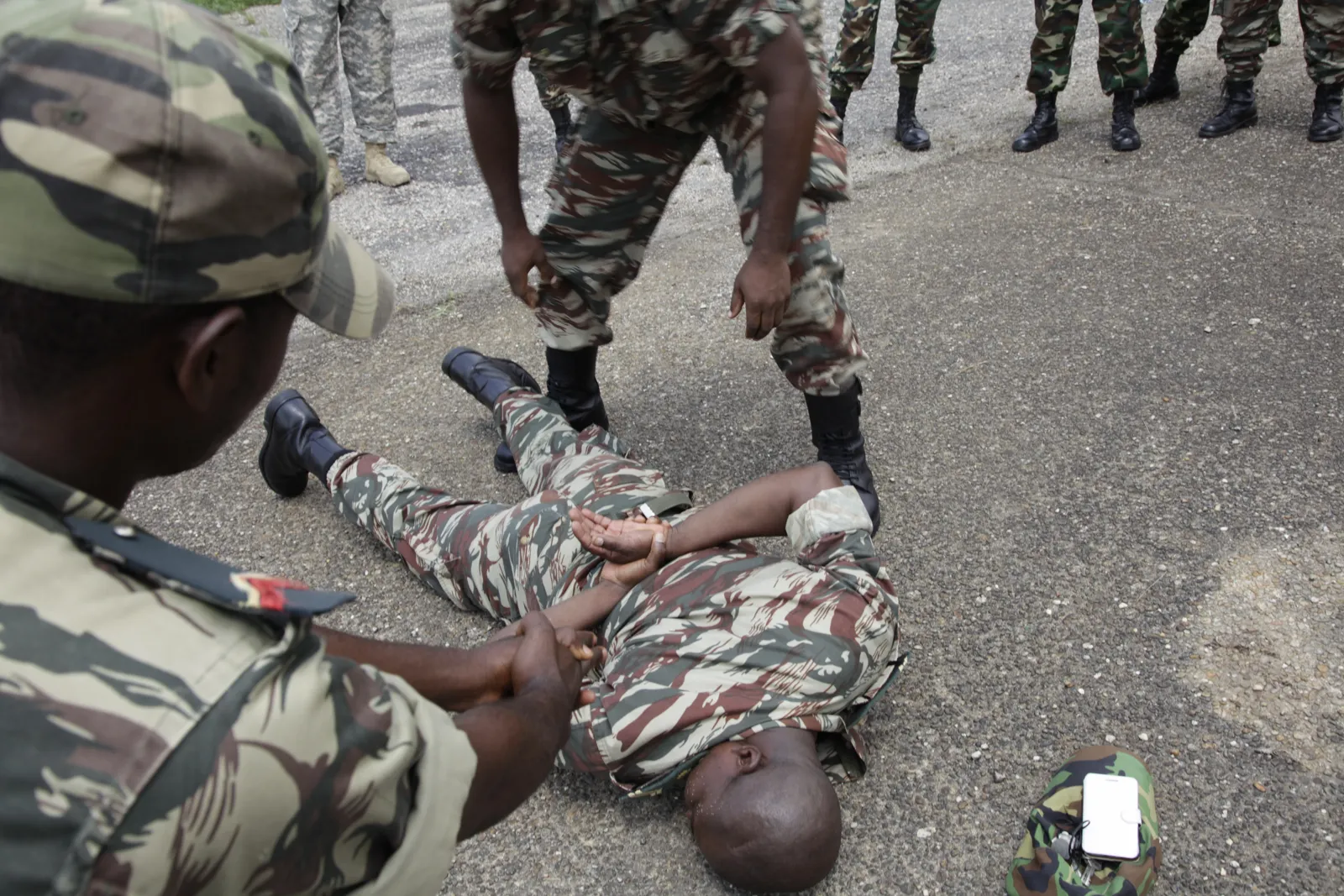
Cameroon’s military inventory shows how the army of one of Central Africa’s most populous countries has been shaped by three simultaneous internal security fronts: Boko Haram and ISIS-linked groups in the north, the separatist conflict in the north-west and south-west, and piracy and smuggling in the Gulf of Guinea. Because these threats call for rapid-intervention capability, wheeled armour and patrol boats rather than heavy armour, the country operates no main battle tanks; the inventory, filled over the years with small lots from France, China, Israel, the United States and South Africa, is fragmented and hard to sustain. Türkiye does not yet appear in the inventory, but the framework agreements built since 2018 and the financial cooperation arrangement of summer 2026 prepare the ground.
At a Glance
- Active personnel: Global Firepower counts 38,000 active personnel and 9,000 paramilitary (gendarmerie), with no reserves listed; the army makes up the great majority of the force
- Main battle tanks: Zero. The Cameroonian army operates no tanks; heavy firepower rests on wheeled armour such as Chinese-made WMA301 tank destroyers, AMX-10 RCs and Panhard AML-90s
- Armoured vehicles: Global Firepower counts 860 armoured vehicles (about 473 ready, broad definition); the core is V-150 Commandos, ACMAT Bastions, Gaia Thunders, PKSV MRAPs and a few Chinese-built Type 07Ps
- Artillery and rocket launchers: GFP counts 18 self-propelled guns, 52 towed guns and 20 rocket launchers; open sources list 18 ATMOS 2000 (155 mm) and more than 20 BM-21 Grads
- Military aircraft: GFP counts 35 aircraft (about 12 ready): zero fighters, 6 trainer/light attack jets, 6 transports and 21 helicopters; the fleet is constrained by maintenance shortfalls
- Defence budget: Global Firepower shows about $836 million; Wikipedia gives FCFA 324 billion (about 1 percent of GDP)
Note: The inventory figures below are approximate values drawn from open sources such as Global Firepower, the IISS Military Balance and SIPRI.
About the Cameroon Armed Forces
The Cameroon Armed Forces (Forces Armées Camerounaises) consist of the Army, Navy, Air Force and the Gendarmerie. Head of State and Commander-in-Chief is Paul Biya and the Minister of Defence is Joseph Beti Assomo; according to Wikipedia the Chief of Staff is René Claude Meka. The land force comprises a Headquarters Brigade in Yaoundé, the three-battalion Rapid Intervention Brigade (BIR) and five motorised infantry brigades, with the country divided into military regions. It serves heavily against Boko Haram in the north within the Multinational Joint Task Force (MNJTF) and against separatist groups in the north-west and south-west.
In the Global Firepower 2026 count Cameroon ranks 99th of 145 with a Power Index of 2.1689. Active personnel number 38,000, no reserves are listed and paramilitary forces total 9,000; Global Firepower puts total military personnel at about 47,000. The defence budget is about $836 million according to GFP, while Wikipedia gives FCFA 324 billion, around 1 percent of GDP. The gap between the two figures comes from methodology; most spending goes to personnel and operating costs, leaving new platform purchases limited.
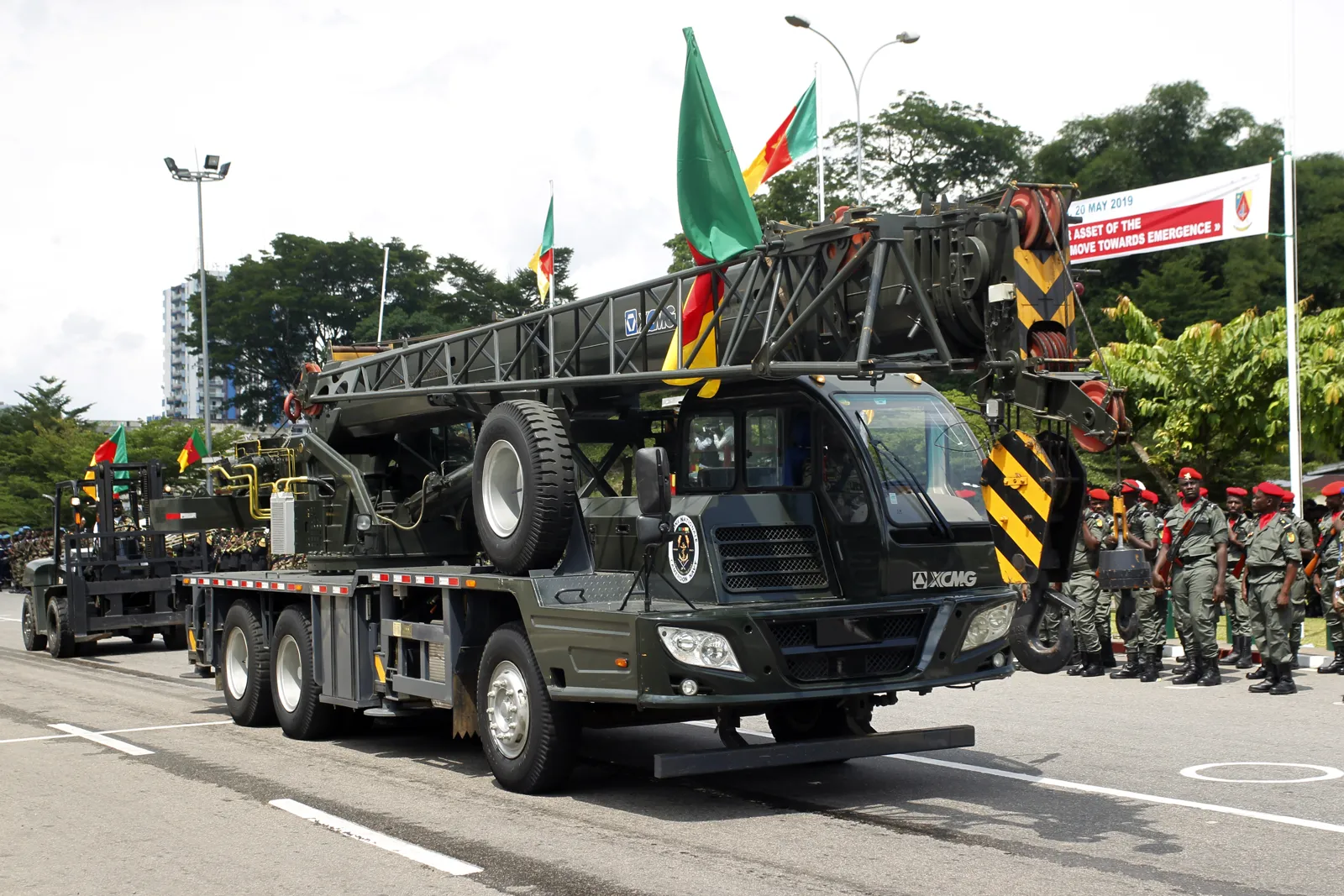
The land inventory has no tanks. Twelve Chinese-built WMA301 Assaulter tank destroyers, 31 Panhard AML-90s, 6 AMX-10 RCs and 12 South African Ratel 20s supply the main firepower; on the carrier side there are 43 Cadillac Gage V-150 Commandos, 38 ACMAT Bastions, 16 Israeli-built Gaia Thunders, 27 PKSV and 6 Cougar H MRAPs, and 2 Panthera T6s from the United Arab Emirates (approximate IISS/Wikipedia figures). Global Firepower counts 860 armoured vehicles in total with about 473 considered ready, meaning roughly half the fleet is usable in the field.
The standout artillery item is 18 Israeli-built ATMOS 2000 155 mm self-propelled guns; alongside are 8 Soltam M-71 155 mm, 20 M101 105 mm, 12 Romanian-origin M1982 and 12 Chinese-built Type 59 130 mm towed howitzers, more than 20 BM-21 Grads and 18 Cardom and 16 MO-120-RT 120 mm mortars. The anti-tank side is old: 24 TOW launchers delivered in 1990, MILAN and recoilless rifles. The structure reflects a need for mobility and medium-range fire support against asymmetric threats, but the renewal requirement is plain.
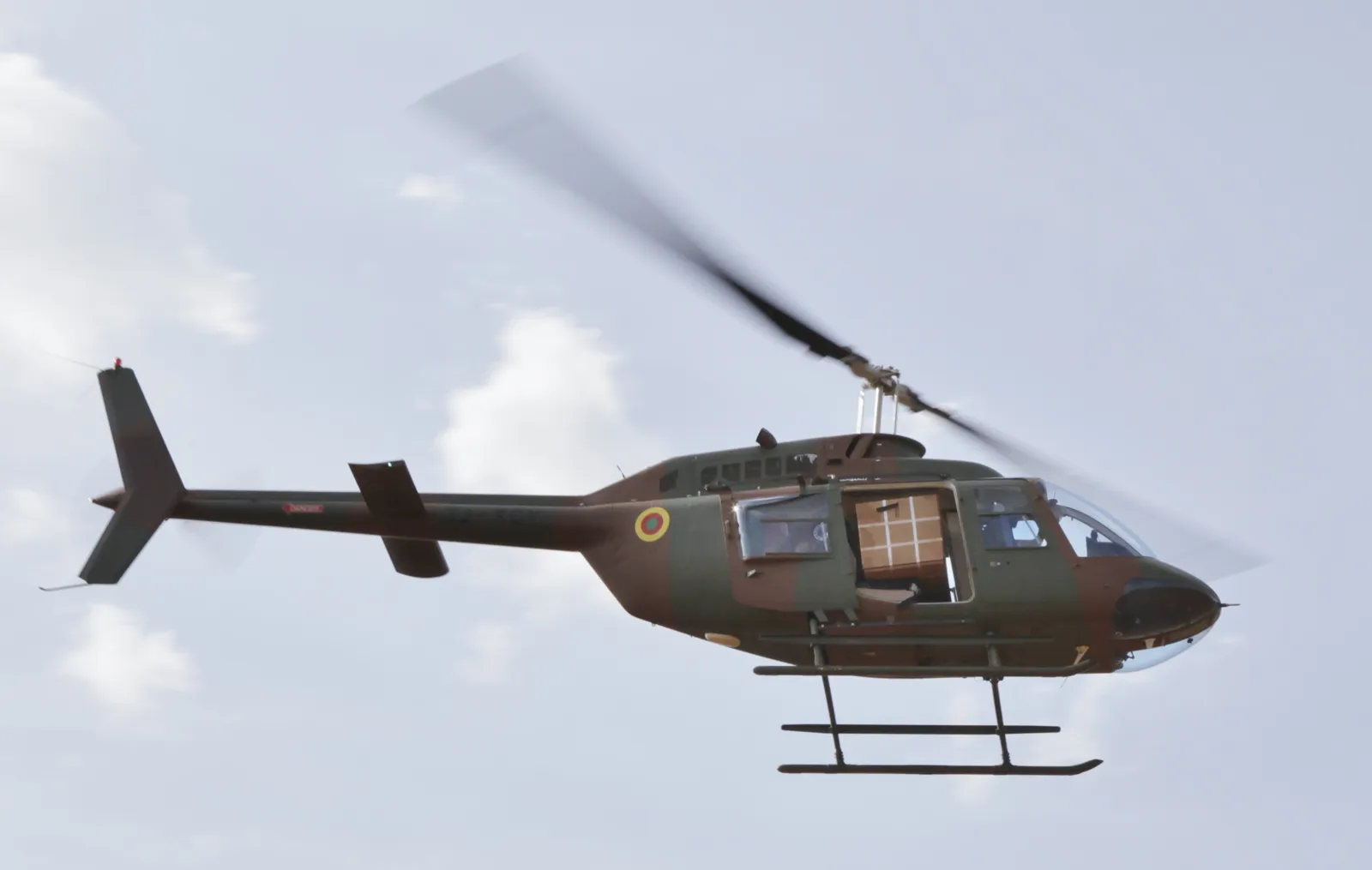
The Air Force operates no combat aircraft. Global Firepower counts 35 aircraft in total with about 12 ready: 21 helicopters, 6 transports, 6 trainers and 2 special-mission aircraft. The jet fleet is about 6 Alpha Jet MS2s, with sources noting some may be unserviceable; on the helicopter side Mi-24, Mi-17, Z-9WE and Bell 412EP are reported in service. A 2022 analysis reported aircraft falling into disrepair because maintenance could not be paid for.
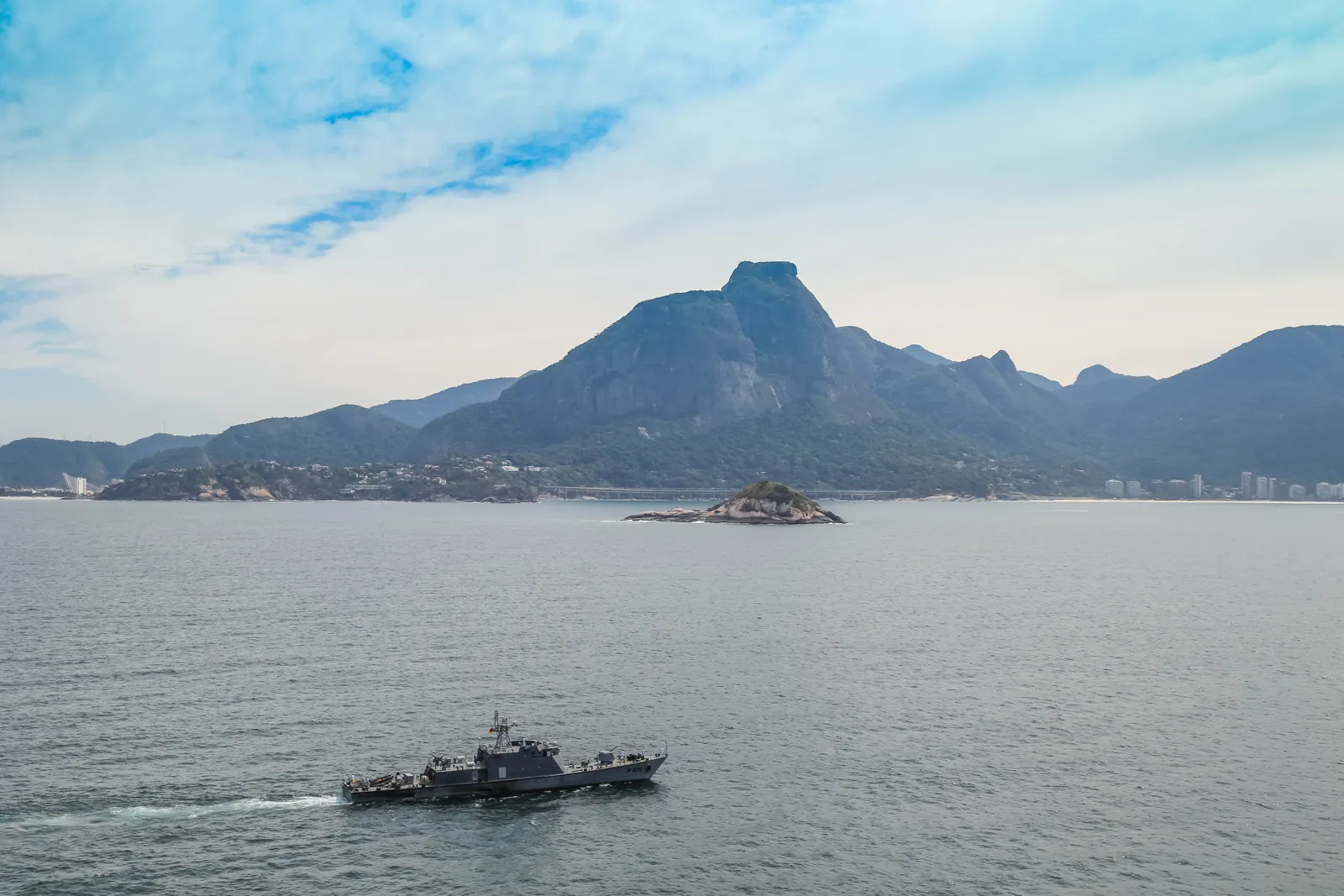
The Navy is based at Douala with about 1,500 personnel and includes three marine battalions. Global Firepower counts all 19 naval assets as patrol craft, while Wikipedia lists 14 patrol and coastal vessels and 5 landing craft. There are no frigates, corvettes or submarines. Navy and Rapid Intervention Battalion boats work against piracy, smuggling and illegal fishing in the Gulf of Guinea, and the country takes part regularly in exercises such as Obangame Express and Guinex.
Land Forces Inventory
| System type | Est. quantity |
|---|---|
| Main battle tanks | None. Cameroon has no main battle tanks in service; asymmetric threats such as Boko Haram and the separatist conflict are met with wheeled armour and rapid-intervention units |
| Armoured combat vehicles | 12 WMA301 Assaulter tank destroyers (China), 31 Panhard AML-90s, 6 AMX-10 RCs, 12 Ratel 20s and 8 Type 07Ps (approximate IISS/Wikipedia figures); plus ageing Ferret, M8 Greyhound, RAM Mk3 and VBL armoured scouts |
| APCs and MRAPs | 43 Cadillac Gage V-150 Commandos (22 with 20 mm and 90 mm guns), 38 ACMAT Bastions (delivered 2015-2017), 16 Gaia Thunders (Israel), 2 Panthera T6s (UAE, 2018, for the BIR), 27 PKSV and 6 Cougar H MRAPs, 12 M3 half-tracks |
| Artillery and mortars | 18 ATMOS 2000 155 mm self-propelled guns (Israel), 8 Soltam M-71 155 mm, 20 M101 105 mm, 12 M1982 and 12 Type 59 130 mm, 20+ BM-21 Grads; 18 Cardom and 16 MO-120-RT 120 mm mortars |
| Anti-tank and small arms | BGM-71 TOW (24 launchers, delivered 1990), MILAN, 13 Type 52 and 40 M40 recoilless rifles; standard weapons are the Zastava M21, M16, AK-47 and IWI Galil, with Tavor CTAR, MP5 and Negev in special forces; most long-range systems are old |
Air Force Inventory
| Platform | Est. quantity |
|---|---|
| Total military aircraft | 35 (Global Firepower; about 12 ready): zero fighters and attack aircraft, 21 helicopters, 6 transports, 6 trainers and 2 special-mission. The main base is the 201st Air Base at Douala, with Yaoundé and Garoua also used |
| Armed helicopters | Mi-24 (Russian-made), Mi-17 and Chinese-built Z-9WE helicopters are reported in limited service; Global Firepower officially lists zero attack helicopters, which points to a classification and readiness problem |
| Light and multirole helicopters | Bell 412EP and Bell 206 (B-206) light helicopters operate from Koutaba, Garoua and Douala; they have flown paratroop-drop and evacuation sorties in joint exercises such as Central Accord 2014 |
| Trainers and light attack jets | About 6 Alpha Jet MS2s (Dassault/Dornier); Wikipedia and aviation sources note some may be unserviceable. This is Cameroon’s only jet fleet and is not counted as fighters |
| Transports and UAVs | About 6 transports including the C-130H (GFP; readiness is low), light transport and special-mission aircraft; an armed UAV inventory is not confirmed in open sources |
Missile and Air-Defence Systems
| System | Type / Note |
|---|---|
| Man-portable air-defence missiles | There is no publicly verified MANPADS count; because Cameroon’s air threat is limited, shoulder-fired missiles are not a prominent line in the inventory |
| Anti-aircraft guns | 18 Chinese-built Type 58 (ZPU) 14.5 mm towed guns, 18 Oerlikon GDF-002 35 mm guns (Switzerland) and Israeli-built RBY Mk 1 vehicles with quad TCM-20 20 mm mounts |
| Airspace surveillance | The inventory lists one British Watchman surveillance radar delivered in 1984; at that age it provides no modern air picture, and coastal and border surveillance relies largely on joint and regional programmes |
| Medium- and long-range air defence | None. Cameroon has no SAM batteries, interceptor aircraft or integrated air-defence network; its airspace is in practice undefended |
| Ballistic and cruise missiles | None. There is no ballistic or cruise missile inventory; the longest-range system is the 155 mm ATMOS 2000 self-propelled gun |
Naval Power
| Class / Type | Est. quantity |
|---|---|
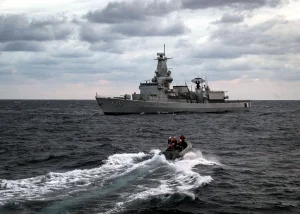
| Offshore patrol vessels | No frigates, corvettes or submarines; Global Firepower counts all 19 naval assets as patrol craft. Among the larger units is the patrol ship Le Ntem, seen in the Guinex III exercise with Brazil in 2022 |
| Patrol and coastal boats | Wikipedia lists 14 patrol and coastal vessels and 5 landing craft; boats of the Rapid Intervention Battalion (BIR) patrol the coast off Douala, the hub of river and coastal operations |
| Retired or transferred vessels | A large part of the navy’s inventory came from small deliveries over many years from France, China and Israel; the readiness of many boats is limited by maintenance and spare-parts constraints |
| Marines and special units | About 1,500 navy personnel and three marine battalions; the Special Amphibious Battalion (BSA) trains in boarding, search and seizure and takes part regularly in Gulf of Guinea exercises such as Obangame Express and Guinex |
| Bases and missions | The navy is headquartered at Douala; its main tasks are counter-piracy, anti-smuggling and illegal-fishing patrols, surveillance of the Bakassi peninsula and Nigerian-border estuaries, and Gulf of Guinea security |
The Turkey Angle: Turkish Defence Industry
The military link between Türkiye and Cameroon rests on an institutional framework, and no confirmed Turkish platform is in the inventory. According to the Turkish parliament’s records, the two countries signed a Military Framework Agreement and a Military Training Cooperation Agreement in Ankara on 30 January 2018; areas covered include training, reciprocal visits, exercises, the defence industry, logistics support and information sharing. A separate security cooperation agreement was also handled in the Turkish parliament under Report No. 117 of the 28th term.
The latest step came in June 2026. According to a Milliyet report of 19 June 2026, a Military Financial Cooperation Agreement and a Cash Assistance Implementation Protocol were signed during Cameroonian Defence Minister Joseph Beti Assomo’s visit to Türkiye; Defence Minister Yaşar Güler called Cameroon a strategic partner at the Cameroonian embassy’s National Day reception in Ankara and said training, personnel exchange and institutional cooperation would grow. The monetary value and scope of the agreements were not made public.
On the market side, Cameroon’s requirement profile is familiar to Turkish industry: ageing AML-90, V-150 and ACMAT Bastion fleets, a need for armoured personnel carriers and MRAPs for the asymmetric threat in the north, border and coastal surveillance, and gaps in small arms and UAVs. Turkish firms have African references in these areas; but there is no announced contract or delivery for Cameroon and no confirmed information that a Turkish-made system is in service. What is described here is therefore a potential market and precedent framing, not a completed procurement.
The competitive picture should also be read realistically: Cameroon’s current inventory rests on systems from China, France, Israel, the United States, the UAE and South Africa, and these suppliers have established maintenance and training ties. Türkiye’s advantages stand out as budget-friendly pricing, fast delivery, maintenance and training packages and cooperation without political conditions; the 2018 framework and the 2026 financial cooperation arrangement prepare the infrastructure that could turn this door into a concrete contract.
Frequently Asked Questions
How many tanks does Cameroon have? Zero. The Cameroonian army operates no main battle tanks; the land force rests on wheeled armour such as 12 WMA301 tank destroyers, 31 Panhard AML-90s, 6 AMX-10 RCs and 43 V-150 Commandos.
Does Cameroon have fighter jets? No. Global Firepower lists zero fighters and attack aircraft. The Air Force works with about 6 Alpha Jet MS2 trainer/light attack jets, 21 helicopters and 6 transports; only about 12 aircraft in the fleet are ready.
What military equipment has Cameroon received from Türkiye? Open sources do not confirm any Turkish system in Cameroon’s inventory. The relationship runs through the 2018 Military Framework and Military Training Cooperation agreements and the Military Financial Cooperation Agreement signed in June 2026.
Is there a military agreement between Türkiye and Cameroon? Yes. A Military Framework Agreement and a Military Training Cooperation Agreement were signed in Ankara on 30 January 2018; Defence Minister Güler announced that a Military Financial Cooperation Agreement and a Cash Assistance Implementation Protocol were signed in June 2026.
How many ships does the Cameroonian Navy have? Global Firepower counts 19 naval assets, all patrol-class; Wikipedia lists 14 patrol and coastal vessels and 5 landing craft. There are no frigates, corvettes or submarines.
Bottom Line
Cameroon’s inventory shows an army shaped by the threat on the ground but held back by budget and maintenance: no tanks or fighters, wheeled armour, patrol boats and light helicopters in front, and readiness around half. For Türkiye the relationship is advancing through an institutional framework and the June 2026 financial cooperation arrangement is a fresh step; armoured-vehicle renewal, MRAPs, small arms, UAVs and patrol boats offer a realistic potential market for Turkish industry. That market has not yet turned into a contract, and the article keeps verified items and potential areas separate to preserve this distinction.