Uganda’s Military Strength: How Many Tanks, Aircraft and Missiles Are in the Inventory? (2026)


Uganda’s military inventory shows an unusual imbalance by East African standards: on land, roughly 259 tanks including 44 T-90S give it one of the region’s heaviest armoured forces, while its air defence remains stuck in 1960s and 1970s Soviet technology and it has no navy at all. A continuous operational tempo stretching from Somalia to the Congo turns this inventory from a list on paper into a stock that is visibly wearing down.
At a Glance
- Active personnel: ≈ 45,000 active plus 10,000 paramilitary (Global Firepower 2026); the reserve column is zero
- Main battle tanks: ≈ 259, of which 142 are ready; with 44 T-90S it is one of East Africa’s most modern armoured cores
- Military aircraft (total): ≈ 51, of which 26 are ready; the fighter fleet is a single type: 6 Su-30MK2
- Air defence: The missile layer amounts to just 4 S-125 batteries and shoulder-launched Strelas; there is no modern medium- or long-range system
- Navy: None — Uganda is landlocked; naval power is limited to marine units on Lakes Victoria, Albert and Kyoga
- GFP ranking: 107th among 145 militaries (PwrIndx 2.3252); defence budget $1.5 billion (GFP) versus $1.1 billion official for 2024 (1.8% of GDP)
Note: The inventory figures below are approximate values drawn from open sources such as Global Firepower, the IISS Military Balance and SIPRI.
About the Uganda Armed Forces
The Uganda People’s Defence Force (UPDF) comprises the Land Forces, the Air Force, the Special Forces Command and the Reserve Forces. Global Firepower’s 2026 data places it 107th among 145 militaries with 45,000 active personnel and 10,000 paramilitaries; its power index is 2.3252. The reserve column reads zero.
The force structure rests on five division headquarters, an armoured brigade (Masaka), a motorised infantry brigade (Nakasongola), a tank battalion, the Presidential Guard Brigade, an engineer brigade, a commando battalion and five infantry divisions comprising 16 brigades. To this are added the Field Artillery Division at Masindi and the Air Defence Division at Nakasongola.
President Yoweri Museveni is commander-in-chief; General Muhoozi Kainerugaba has served as Chief of Defence Forces since 22 March 2024. The defence portfolio changed hands in June 2026: after Jacob Oboth-Oboth was elected Speaker of Parliament on 25 May 2026, Kiryowa Kiwanuka took over the Ministry of Defence and Veteran Affairs.
Defence spending varies by source. Global Firepower gives a figure of $1.51 billion for 2026, while the official outlay recorded in open sources for 2024 is $1.1 billion, or 1.8 per cent of gross domestic product.
What distinguishes the UPDF from its regional peers is that the inventory is permanently in action. The force has kept combat units in Somalia for years under successive African Union missions (from AMISOM to ATMIS and on to AUSSOM); it has run Operation Shujaa in eastern Democratic Republic of the Congo since November 2021; it has been deployed in South Sudan since December 2013; and it maintains a military training and mentoring team in Equatorial Guinea.
Land Forces Inventory
| System type | Est. quantity |
|---|---|
| Main battle tanks (T-90S) | 44; acquired from Russia in 2011, the most modern armoured element in the inventory |
| Main battle tanks (T-72A / T-72B1) | ≈ 50 (40 T-72A + 10 T-72B1) |
| Medium tanks (T-54 / T-55) | ≈ 140; these actually saw combat during AMISOM operations in Somalia |
| Main battle tanks (Type 85-II-M) and amphibious light tanks (PT-76) | 5 Type 85-II-M (China) + 20 PT-76 |
| Infantry fighting vehicles (BVP-2, BMP-2) | ≈ 72 (41 BVP-2 from the Czech Republic + 31 BMP-2 from Ukraine, both in 2003) |
| Armoured reconnaissance (Eland-90, Alvis Saladin, BRDM-2, Ferret) | ≈ 191 (100 BRDM-2 + 40 Eland-90 + 36 Saladin + 15 Ferret) |
| Armoured personnel carriers (BTR-60, OT-64, Mamba, RG-31, Buffel) | ≈ 66; mostly South African-sourced, some assembled in Uganda as ‘Nyoka’ and ‘Chui’ |
| Mine-resistant vehicles (Katmerciler Hızır) | 30; Turkish-sourced, the 2019 order was delivered in 2020 — the Hızır’s first export contract |
| Mine-resistant vehicles (Casspir) | 42; earmarked for peacekeeping missions |
| Self-propelled howitzers (ATMOS 2000 155 mm) | 6; Israeli-sourced, the only modern artillery system in the inventory |
| Towed guns (M-46 130 mm, M-30 122 mm) | 26 (8 M-46 from Bulgaria + 18 M-30 from Libya) |
| Rocket artillery (BM-21 Grad, RM-70) | 12 (6 + 6) |
| Mortars (Elbit Cardom 120 mm, Type 53) | 18 Cardom plus an unknown number of Type 53; the SPEAR Mk.2 mortar system is integrated on the SandCat vehicle |
| Anti-tank missiles (9M133 Kornet-E, 9M14 Malyutka) | ≈ 1,000 Kornet-E; the highest-volume modern weapon line in the land inventory |
| Total armoured vehicles (GFP 2026, broad definition) | ≈ 9,702, of which 5,336 are counted as ready |

Air Force Inventory
| Platform | Est. quantity |
|---|---|
| Total military aircraft | ≈ 51; 26 of them ready |
| Multirole fighters (Su-30MK2) | 6; ordered in May 2011 for about $740 million, the first two delivered in July 2011 |
| Jet trainer / light attack (L-39ZA Albatros) | 12; eight were modernised at Gulu Air Base under a programme begun in 2018 and completed in March 2020 |
| Transport and liaison (Cessna 208, King Air 350, Short Skyvan) | ≈ 3-4; the heavy transport column is empty |
| Attack helicopters (Mi-24 / Mi-35) | 5; one was lost on 2 July 2025 |
| Attack helicopters (Mi-28N) | 4; the first delivery came from Russia in June 2022, with 2 more on order |
| Utility helicopters (Mi-17) | 10; the backbone of operational lift |
| Utility helicopters (Bell 206, UH-1H) | ≈ 10; the UH-1Hs were donated by the United States |
| Unmanned aerial vehicles (Elbit Hermes 900) | In the inventory since 2019 according to open sources; its presence became public in February 2022, the number is unverified |
| Unmanned aerial vehicles (Delair UX11) | 6; a contract signed with France in December 2025 for tactical reconnaissance and surveillance |
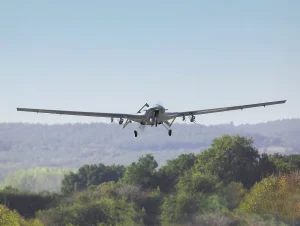
| Armed unmanned aerial vehicles | None; all UAVs in the inventory are in the reconnaissance and surveillance role |
| Main bases | Entebbe (headquarters), Gulu Air Base (training), Nakasongola (Air Force Academy and Air Defence Division) |
Missile and Air-Defence Systems
| System | Type / Note |
|---|---|
| Medium-range air defence (S-125 Neva / Pechora) | 4 batteries; Soviet-generation, the only fixed air-defence system in the inventory |
| Short-range air defence (9K31 Strela-1) | Numbers undisclosed; vehicle-mounted, 1970s technology |
| Shoulder-launched missiles (9K32 Strela-2) | In the inventory; the main element of low-altitude defence |
| Anti-aircraft guns (61-K 37 mm) | 20; numerically the largest air-defence line item |
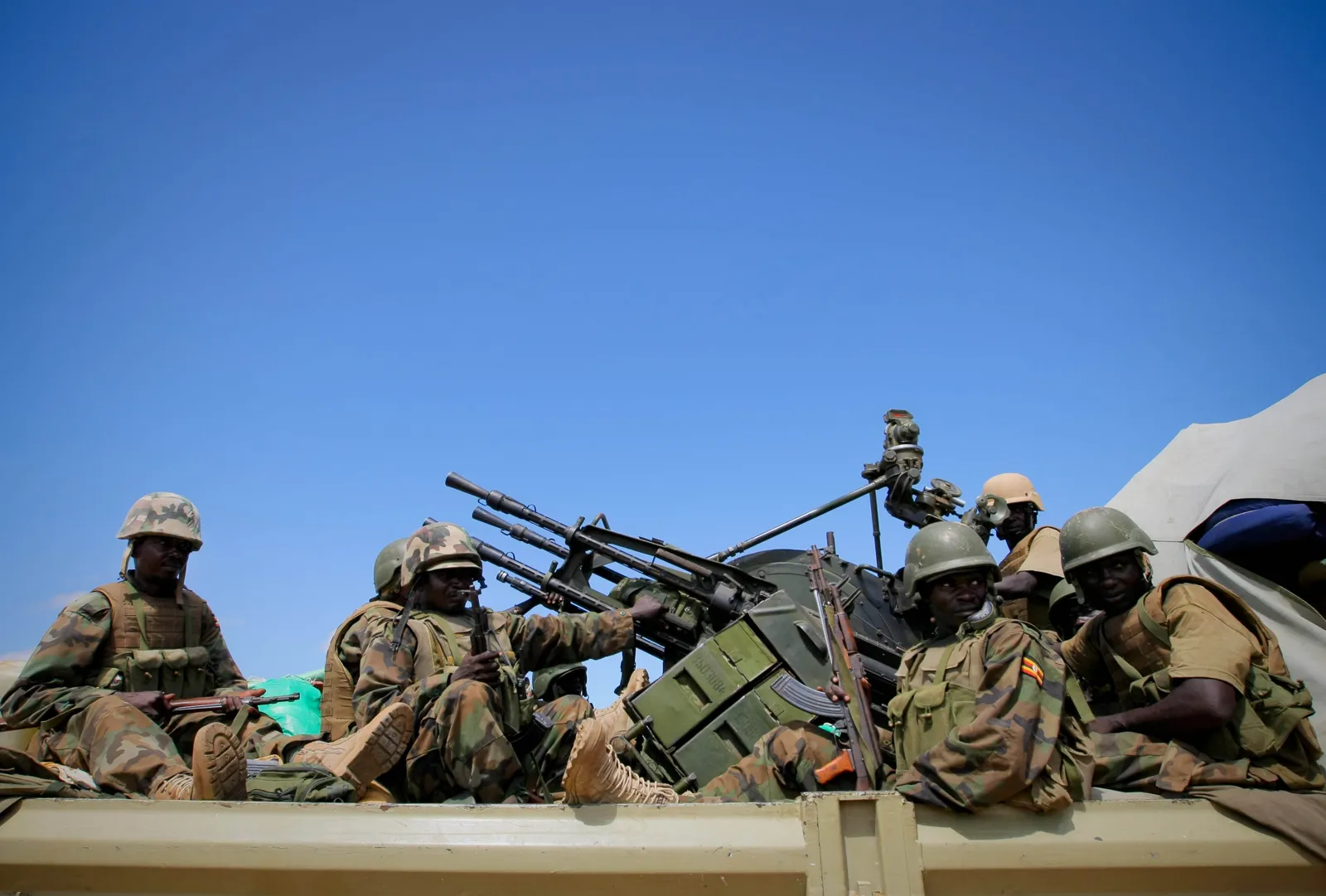
| Anti-aircraft guns (ZU-23-2, ZPU-4) | 5 ZU-23-2 plus an undisclosed number of ZPU-4; largely truck-mounted |
| Long-range air defence | None |
| Ballistic and cruise missiles | None; both columns are entirely empty |
| Anti-ship missiles | None; the country has no sea coast |
| Anti-tank missiles (9M133 Kornet-E) | ≈ 1,000; the overwhelming majority of the missile inventory sits in this line |
| Organisation | The Air Defence Division is at Nakasongola; the Air Defence and Artillery School is at Olilim (Katakwi); two air-defence battalions sit in the land force structure |
Naval Power
| Class / Type | Est. quantity |
|---|---|
| Total naval platforms (GFP 2026) | 0; Uganda is classed among landlocked states |
| Sea coastline | None; foreign trade and military logistics depend on Mombasa in Kenya and Dar es Salaam in Tanzania |
| Lake forces | UPDF Marine elements are deployed on Lakes Victoria, Albert and Kyoga, operating light patrol craft |
| Marine battalion | A 155-strong battalion has been formed, focused on lake security and protecting fishermen |
| Combatants (corvette, frigate, submarine) | None; there is not a single combatant platform in the inventory |
| Operations | Patrols on Lake Albert against militia attacks from the Congolese side; an armed clash took place near Senjojo landing site in November 2025 |
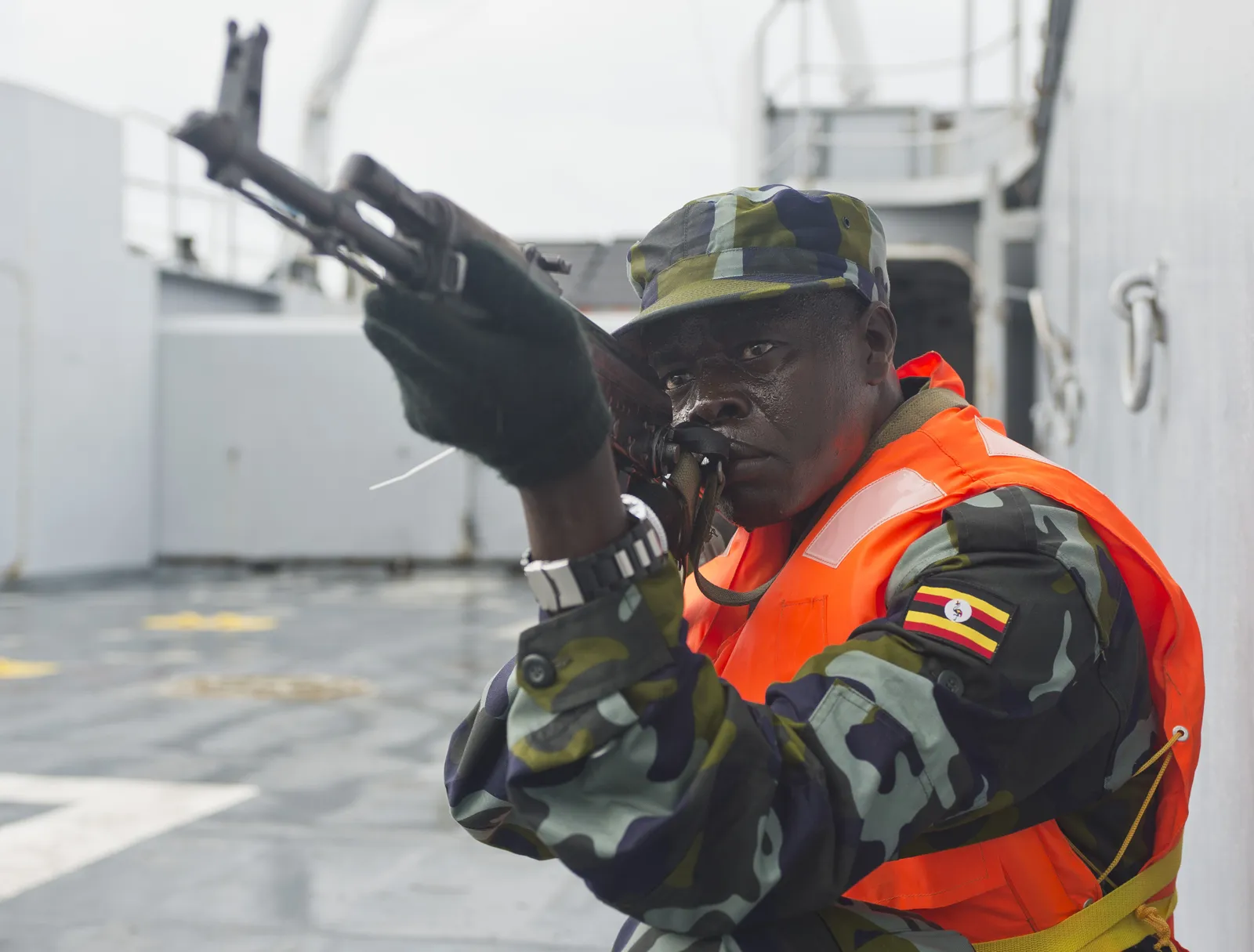
| Maritime security training | Ugandan personnel take part in US Africa Command’s Cutlass Express exercises with boarding and search training |
The Turkey Angle: Turkish Defence Industry
For the Turkish defence industry Uganda is one of the rarer African files: there is both a signed framework agreement and a platform that has actually entered service. The Uganda People’s Defence Force operates 30 Hızır 4×4 mine-resistant armoured vehicles built by Katmerciler. The order was placed in 2019 and delivery completed in 2020, making it the Hızır’s first export contract. The vehicles were first shown publicly in January 2021 as part of pre-election security preparations.
The institutional groundwork is older still. President Recep Tayyip Erdoğan’s visit to Kampala on 31 May-1 June 2016 was the first presidential visit from Turkey to Uganda, and a defence industry cooperation agreement was signed during it. The agreement covers the production, procurement, maintenance and modernisation of defence industry goods alongside technical support, logistics, information sharing and research. A Military Training Cooperation Agreement signed in 2022 adds exchange programmes and specialist training in countering improvised explosive devices, cyber defence and intelligence.
The fourth Uganda-Türkiye Defence Industries Cooperation meeting was held in Kampala in December 2024. According to assessments reported afterwards, the Ugandan side has been trying to persuade Ankara to establish a defence manufacturing hub in the country, including for drone and artillery components. Contacts continued through 2026: a trade mission of more than 60 Turkish companies visited Kampala on 21-25 July 2026 with a focus on military uniforms and textiles, and on 5 August 2026 Defence Minister Kiryowa Kiwanuka received Turkey’s military attaché to Uganda, Colonel Caner Sağlam, at the ministry headquarters in Mbuya. The minister stressed that continuous training for UPDF officers remained a priority.
The economic base is not marginal either. Bilateral trade stood at roughly $63 million in 2020, $94 million in 2022 and about $75 million in 2024. Turkey’s embassy in Kampala opened in 2010 and Uganda’s embassy in Ankara in 2011. Turkish Airlines operates three weekly return services on the Istanbul-Kigali-Entebbe route, and 365 Ugandan students studied in Turkey on Türkiye Scholarships between 1992 and 2019. In October 2024 the Turkish contractor Yapı Merkezi signed a €2.7 billion contract for the Kampala-Malaba standard gauge railway section.
One point deserves clarity: Uganda does not appear on Baykar’s African customer list, and there is no armed Turkish drone in its inventory. What exists today is not a broad armament programme flowing from a framework, but a signed legal basis and a single verifiable commercial relationship realised on one platform.
When the gaps in the inventory are mapped, they align with the fields in which the Turkish defence industry is strong. The missile layer of the air defence amounts to four S-125 batteries and shoulder-launched Strela-2s; Roketsan’s SUNGUR is the direct counterpart to those ageing missiles, while Aselsan’s KORKUT is the contemporary equivalent of the 37 mm and 23 mm gun layer. The armed drone column is entirely empty; the Hermes 900 and Delair UX11 in service are reconnaissance and surveillance assets only, whereas the Bayraktar TB2 and TUSAŞ ANKA serve with several militaries in West and East Africa. The attack helicopter fleet is wholly Russian (Mi-24/35 and Mi-28N) and its supply chain sits under sanctions pressure; the T129 ATAK is one of the known alternatives for that column. On the armour side the case is more direct: for an army that already fields 30 Hızır vehicles and has set up a local assembly line at Nakasongola, Katmerciler, Otokar, Nurol Makina and BMC are the natural interlocutors.
In short, Uganda is for the Turkish defence industry neither a virgin market nor a completed reference, but something between the two: a file whose first step has already been taken. The relationship began in 2020, its institutional channel was built by the 2016 and 2022 agreements, and the other side is openly asking for a production partnership. That the file is not closed is evident from a cooperation mechanism that has convened four times in as many years.
Frequently Asked Questions
How many tanks does Uganda have? Global Firepower’s 2026 data indicates about 259 tanks, of which 142 are counted as ready. The core is the 44 T-90S acquired from Russia in 2011, joined by 50 T-72A/B1, some 140 T-54/T-55, 5 Chinese-built Type 85-II-M and 20 amphibious PT-76. The T-55s actually saw combat during African Union operations in Somalia.
Which combat aircraft does Uganda operate? The Ugandan Air Force’s only fighter type is the six Su-30MK2 ordered in May 2011 for about $740 million. Beyond that, the only armable platform is a fleet of 12 L-39ZA Albatros trainers, eight of which were modernised at Gulu Air Base between 2018 and 2020. Of 51 aircraft in total only 26 are ready, and the heavy transport column is empty.
Does Uganda have a navy? No. Uganda is landlocked and its naval platform count on the Global Firepower list is zero. Its maritime power consists of UPDF Marine elements on Lakes Victoria, Albert and Kyoga; a 155-strong marine battalion has been formed. Patrols run on Lake Albert against militia attacks from the Congolese side, and an armed clash took place near the Senjojo landing site in November 2025.
What is Uganda’s air defence like? This is the weakest link in the inventory. The missile layer is limited to four S-125 Neva/Pechora batteries, vehicle-mounted 9K31 Strela-1 systems and shoulder-launched 9K32 Strela-2 missiles, all of Soviet vintage. The gun layer comprises 20 37 mm 61-K pieces, 5 ZU-23-2 and an undisclosed number of ZPU-4. The long-range air defence, ballistic missile and cruise missile columns are entirely empty.
What has Uganda bought from the Turkish defence industry? The only Turkish platform in the inventory is a batch of 30 Hızır 4×4 mine-resistant armoured vehicles built by Katmerciler. The order was placed in 2019 and delivery completed in 2020 — the Hızır’s first export contract. The vehicles were shown publicly in January 2021. The institutional basis consists of the defence industry cooperation agreement signed during Erdoğan’s 31 May-1 June 2016 visit and the Military Training Cooperation Agreement of 2022. There is no Turkish-built drone in Uganda’s inventory.
Bottom Line
Uganda’s inventory reflects a priority order that runs contrary to most militaries in its region: investment has gone into land power, while the air and air-defence layers have been left behind. The land firepower built around 259 tanks and roughly 1,000 Kornet-E anti-tank missiles is serious by East African standards; against that, a single fighter squadron of six aircraft, a four-battery missile defence and a wholly Russian attack helicopter fleet produce structural fragility. That choice is largely consistent with what the UPDF actually does: armour-supported operations against irregular forces in Somalia, cross-border action in eastern Congo, militia patrols on the lakes. But the constant tempo wears the inventory down, as readiness rates hovering near half the total show — 142 of 259 tanks, 26 of 51 aircraft. The loss of an Mi-24 on 2 July 2025 signals that fleet age is no longer an administrative matter but an operational one. The direction of modernisation is not unclear: six Delair UX11 reconnaissance drones were bought from France in December 2025, an armoured assembly line has been set up at Nakasongola, and in December 2024 Turkey was asked to build a defence manufacturing hub in the country. The Turkish defence industry does not view this picture from outside: with 30 Katmerciler Hızır vehicles it is already in the inventory, user experience dates from 2020, and two separate agreements keep the institutional channel open. What comes next will be decided by whether Uganda can finance its modernisation, and whether it takes its relationship with a supplier it already uses beyond the armour column — into air defence, unmanned systems and artillery.