KORKUT Deliveries & Inventory: How Many Delivered, Who Operates It? (2026)
Summary Not Found.
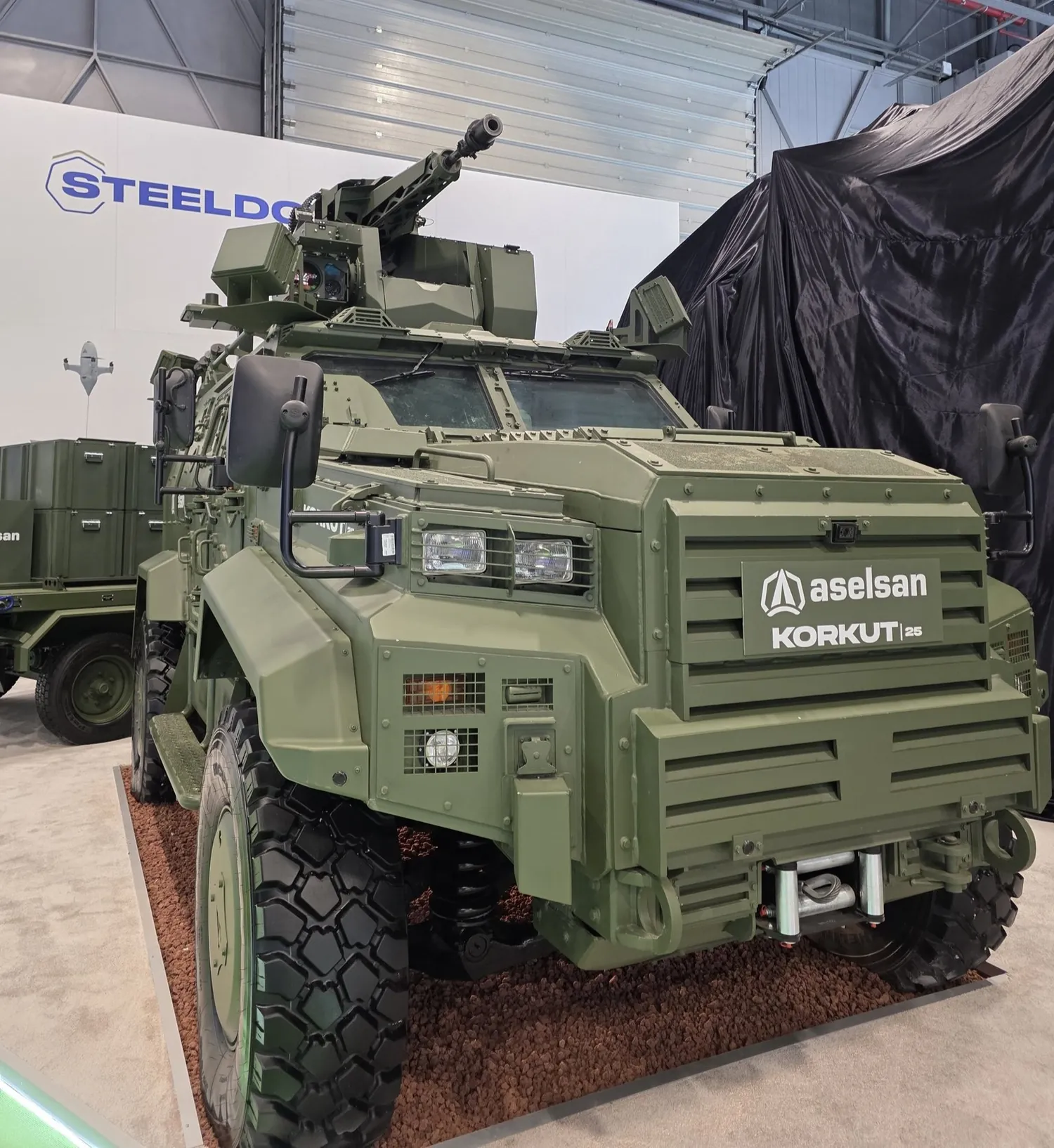
ASELSAN KORKUT 35 mm self-propelled low-altitude air defense system (FNSS ACV-30 platform). Source: Wikimedia Commons (CC BY-SA 4.0).
KORKUT is a 35 mm twin-barrel self-propelled low-altitude air defense system developed by ASELSAN and FNSS. Its first batch was delivered to the Turkish Armed Forces in 2016, and a May 2016 contract put it into serial production as 40 weapon systems and 13 command-control vehicles. With its ATOM smart airburst ammunition, it provides short-range defense against aircraft, helicopters, UAVs and cruise missiles.
This dossier compiles KORKUT’s delivery timeline, operator, ATOM ammunition and technical data from open sources and is updated regularly.
2016
First delivery
40 + 13
Weapon systems + C2 (contract)
35 mm
Twin barrel (1,100 rpm)
ATOM
Airburst ammunition
Contents: Tap each heading to expand — what KORKUT is, how many, first delivery, ATOM ammunition, timeline, specs, peer comparison, manufacturer and FAQ.
What is KORKUT?
KORKUT is a ground-based short-range air defense system that protects field units against modern air threats. Built on the FNSS ACV-30 tracked vehicle, its 35 mm twin gun can destroy low-flying targets at 1,100 rounds per minute.
Its amphibious capability makes it one of the few medium-caliber air-defense systems able to fire on the move and cross natural obstacles like rivers — positioning KORKUT as a mobile ‘sky shield’ accompanying armored units.
Which institution operates it, and how many?
KORKUT’s sole operator is the Turkish Land Forces Command. The table summarises the contract and delivery status.
Operator
Units
Status
Turkish Land Forces
40 weapon systems + 13 command-control vehicles (contract)
Delivered from 2016/2018; production continues
The May 2016 contract covered 40 weapon systems and 13 command-control vehicles; 13 systems had been delivered by 2019, with deliveries ongoing.
First delivery and serial production
KORKUT was unveiled at IDEF in May 2013. The first batch (1 command-control vehicle and 2 weapon vehicles) was delivered to the Turkish Armed Forces in 2016, and serial production began in March 2017.
The system has been used actively in operations in Syria and Libya. This field experience proved KORKUT’s effectiveness against low-altitude air threats in real conditions.
ATOM ammunition and fire control
At the heart of KORKUT’s firepower is the ATOM 35 mm smart airburst round, developed by ASELSAN and TÜBİTAK-SAGE. The round splits into many sub-projectiles at the computed closest point to the target, achieving high kill probability even against small, fast threats.
Note: Very few countries can produce smart airburst ammunition like ATOM; this capability placed Türkiye in that select group. The system can detect and engage targets autonomously with its search/track radar and fire control.
Delivery and use timeline
Date
Event
Party
Source
May 2013 (IDEF)
System unveiled
ASELSAN / FNSS
Army Technology
2016
First batch (1 C2 + 2 weapon vehicles) delivered
Land Forces
Army Recognition
May 2016
Contract for 40 weapon systems + 13 C2 vehicles
Land Forces
Army Technology
Mar 2017
Serial production begins
ASELSAN / FNSS
Defence iQ
2018
First serial-production batch delivered
Land Forces
Open source
2019
13 systems delivered in total
Land Forces
AA
Ongoing
Operational use in Syria and Libya
Land Forces
official source
Technical specifications
Feature
Value
Type
Low-altitude air defense system / self-propelled (SPAAG)
Platform
FNSS ACV-30 tracked, amphibious
Armament
2 × 35 mm autocannon
Rate of fire
1,100 rpm
Effective range
4 km
Ammunition
ATOM 35 mm smart airburst + standard
Speed
65 km/h (road); amphibious
Components
Weapon vehicle + command-control vehicle + search/track radar + fire control
Comparison with global peers
KORKUT competes with self-propelled air-defense guns like Germany’s Gepard and Italy’s Otomatic. Its 35 mm twin gun and airburst ATOM ammunition offer a far wider effective zone than older 20–23 mm systems.
Its edge is being fully indigenous, amphibious, and sharing the same gun/ammunition family with the naval GÖKDENİZ — giving logistics and cost advantages across land and naval air defense.
Manufacturer and future
KORKUT’s fire-control system, radar and ammunition come from ASELSAN, and its tracked platform from FNSS. The system is a concrete product of ASELSAN’s air-defense expertise.
KORKUT’s 35 mm gun and ATOM technology underpin the naval GÖKDENİZ and future air-defense projects — letting Türkiye localize low-altitude air defense end to end.
Why it matters for Türkiye
KORKUT gives armored units and critical facilities an indigenous protective layer against low-altitude aircraft, helicopters and especially UAV threats. As UAVs proliferate in modern warfare, this capability becomes ever more critical.
Being fully indigenous and sharing technology with GÖKDENİZ gives Türkiye both supply independence and an integrated air-defense industry.
Frequently Asked Questions
What is KORKUT?
KORKUT is a 35 mm twin-barrel low-altitude air defense system developed by ASELSAN and FNSS on the FNSS ACV-30 tracked vehicle. It provides short-range defense against aircraft, helicopters, UAVs and cruise missiles.
How many KORKUT were delivered?
In May 2016 the Land Forces ordered 40 weapon systems and 13 command-control vehicles. As of 2019, 13 systems had been delivered, with deliveries continuing under serial production.
When was KORKUT first delivered?
The first batch (1 command-control vehicle and 2 weapon vehicles) was delivered to the Turkish Armed Forces in 2016. Serial production began in March 2017.
What is ATOM ammunition?
ATOM is a 35 mm smart airburst round developed by ASELSAN and TÜBİTAK-SAGE. It splits into many sub-projectiles near the target, raising hit probability against small, fast threats.
What platform is KORKUT built on?
It is integrated on the FNSS-built ACV-30 tracked armored vehicle. The vehicle’s amphibious capability makes KORKUT one of the few air-defense systems able to fire on the move and cross water obstacles.
How is KORKUT related to GÖKDENİZ?
KORKUT’s 35 mm twin gun and ATOM ammunition technology formed the basis for ASELSAN’s naval version, the GÖKDENİZ CIWS — enabling common technology and ammunition across land and naval air defense.