What Is the ATAK (T129)? Türkiye’s Attack and Tactical Reconnaissance Helicopter

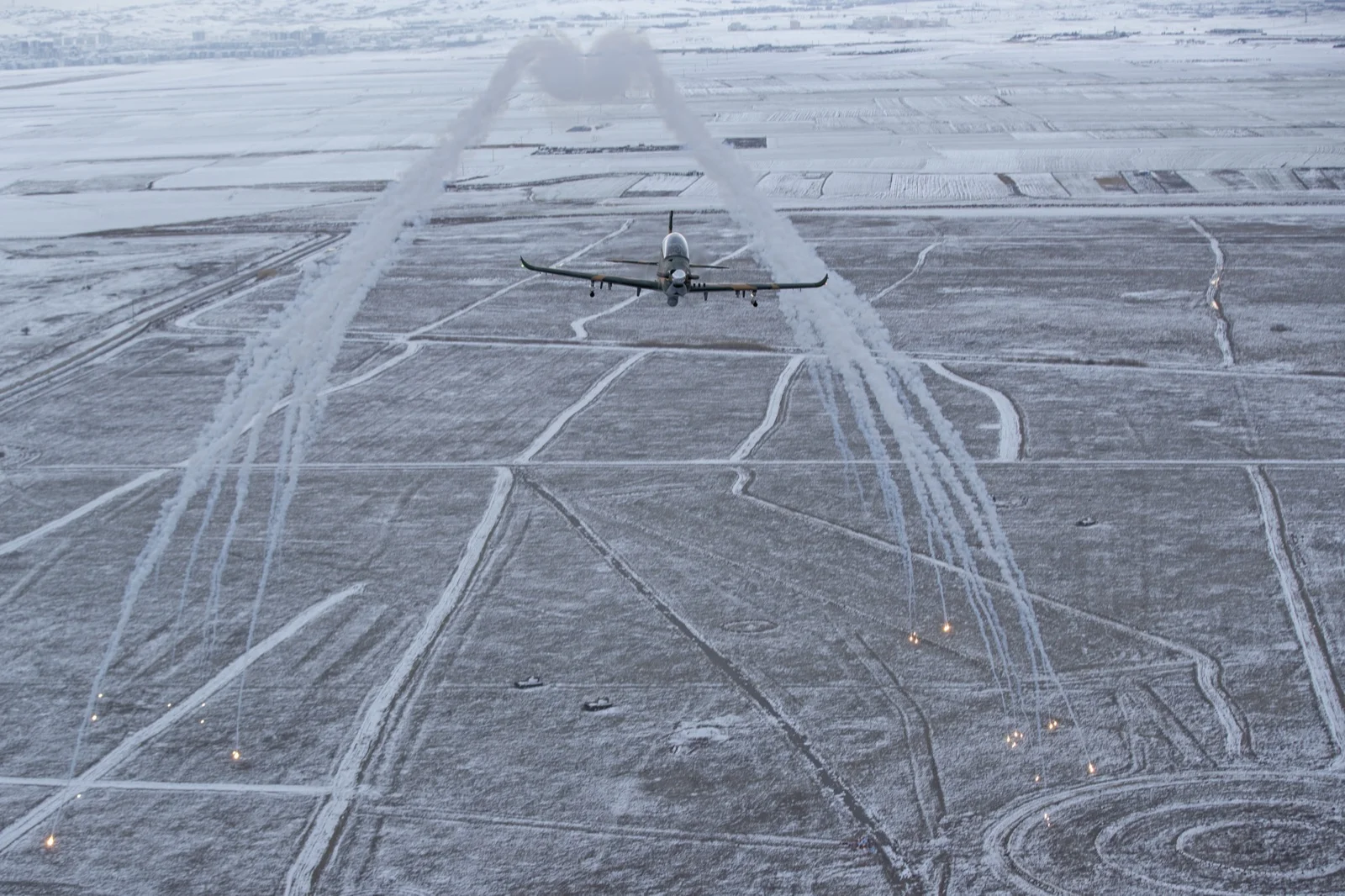
An attack helicopter is one of the most effective air support elements of land operations. Produced by Turkish Aerospace, the T129 ATAK is Türkiye’s indigenous solution in this area: an attack and tactical reconnaissance helicopter with a broad mission range, from armored targets to enemy positions, from reconnaissance to close air support.
What makes the ATAK stand out is both its firepower and its performance in difficult geographies. Its twin-engine structure and narrow, agile fuselage make it effective even in mountainous terrain and at high altitude. Being armed with Roketsan’s indigenous missiles makes the ATAK a platform not dependent on imports for munitions.
What Is the ATAK, and Why Does It Matter?
The T129 ATAK was developed based on the Italian-British AgustaWestland A129 Mangusta helicopter; but TUSAŞ largely localized this platform. With work done on engine, fuselage, avionics and weapons integration, the ATAK became an original helicopter adapted to Türkiye’s needs and geography.
Attack helicopters are among the most valuable air support elements of land forces. Flying at low altitude, they can strike armored vehicles, positions and enemy elements; conducting reconnaissance, they provide intelligence to units. The ATAK carries out these missions with Roketsan’s CİRİT laser-guided rockets and L-UMTAS long-range anti-tank missiles; it also has a 20 mm gun and unguided rockets.
Mountainous Terrain and ‘Hot-and-High’ Superiority
The ATAK’s most distinct advantage is its performance in difficult geographies. High-altitude and high-temperature conditions, described as ‘hot and high’, are among the most challenging environments for helicopters. While many helicopters’ performance drops in these conditions, the twin-engine ATAK can maintain its superior capability; this makes it ideal for operations in mountainous terrain.
This feature also made the ATAK stand out in the export market. For countries with similar geographic conditions, the ATAK is an attractive option. Indeed, the Philippines added ATAK helicopters to its inventory; talks with other countries continue. Turkish Army Aviation uses the ATAK intensively in border security and counterterrorism operations.
| Feature | Value |
|---|---|
| Type | Attack / tactical reconnaissance helicopter |
| Maker | Turkish Aerospace (TUSAŞ) |
| Base design | A129 Mangusta (localized) |
| Engine | Twin-engine |
| Main weapons | CİRİT, L-UMTAS |
| Gun | 20 mm cannon |
| Advantage | Mountainous / hot-and-high performance |
| Export | Philippines etc. |
Attack Helicopters and Army Aviation
Attack helicopters are like the ‘flying armor’ of land forces. Able to strike armored vehicles and positions from the air and provide close air support to units, these platforms are indispensable elements of modern land warfare. Like the US Apache and Russia’s Mi-28, the ATAK is a member of this select class.
Being able to produce an attack helicopter indigenously shows the advanced level of a country’s aviation and defense industry. Helicopter design requires complex areas such as aerodynamics, engine, rotor systems and weapons integration to work together. The ATAK is proof of the competence Türkiye has gained in these areas; it also laid the ground for projects such as GÖKBEY and ATAK-2.
What the ATAK Means for Türkiye
The T129 ATAK is the symbol of the Turkish defense industry’s rise in the helicopter field. Largely localizing an attack helicopter means gaining critical competencies such as engine, avionics and weapons integration. The ATAK gives Türkiye both operational power and munitions independence in army aviation; being armed with Roketsan missiles makes it possible for the system to offer an entirely national combat capability.
The ATAK is also part of an ecosystem. The experience gained was transferred to TUSAŞ’s multi-role GÖKBEY helicopter and the developing heavy-class ATAK-2. Thus Türkiye is building a holistic helicopter family reaching from light attack to heavy attack, from general purpose to reconnaissance. The ATAK is the first and most mature member of this family.
Finally, the ATAK carries Türkiye’s flag in exports too. Its superior performance in mountainous and hot-and-high conditions makes it attractive for countries with similar geographies. The Philippines export is the first concrete example of this potential; the ATAK is the representative in the helicopter field of the Turkish defense industry’s ‘produce indigenously, sell to the world’ model.
Frequently Asked Questions
What is the ATAK (T129)?
What weapons does the ATAK carry?
What makes the ATAK special?
Is the ATAK being exported?
Conclusion
The T129 ATAK is a platform symbolizing the Turkish defense industry’s competence in the helicopter field. Armed with Roketsan missiles and superior in mountainous and hot-and-high conditions, the ATAK is the backbone of the striking power of Turkish Army Aviation. As the experience gained is transferred to GÖKBEY and ATAK-2, the Philippines export makes the ATAK the success story of the ‘produce indigenously, sell to the world’ model in the helicopter field.