Beneath the Surface: Naval Helicopters and the Gulf’s Anti-Submarine Warfare Gap

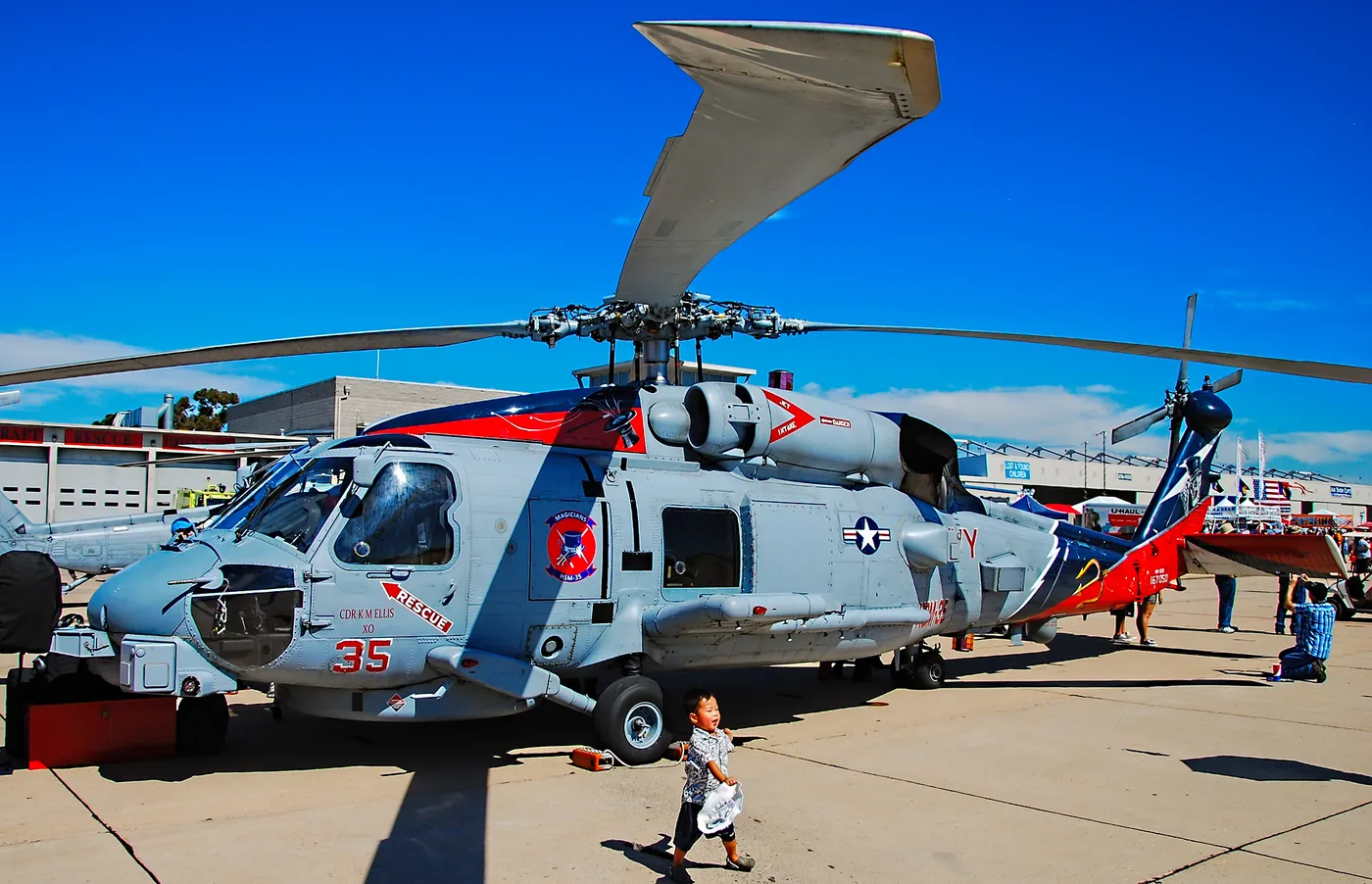
Gulf navies are entering a phase where surface combatants are multiplying faster than the organic aviation needed to give them a credible undersea picture. Saudi Arabia, the UAE, Qatar and Kuwait have committed tens of billions of dollars to new frigates, corvettes and offshore patrol vessels over the past decade, yet the anti-submarine warfare (ASW) helicopters meant to extend those hulls’ sensor reach into the water column remain the smallest and most unevenly distributed line item in the region’s naval modernisation. With Iran’s Ghadir-class midget submarines and Fateh-class boats operating routinely in the shallow, acoustically difficult waters of the Gulf and the Strait of Hormuz, the mismatch between hull numbers and rotary-wing ASW capacity has become one of the more consequential gaps in Gulf maritime posture.
Executive Summary
Only two Gulf Cooperation Council states currently operate a helicopter type purpose-built and sensor-equipped for anti-submarine warfare: Saudi Arabia, with ten Sikorsky MH-60R Seahawks delivered against a 2015 Foreign Military Sale, and Qatar, whose Leonardo NH90 NFH fleet has been building flight hours since 2022 in support of its Doha-class corvettes. The UAE, despite a modern surface fleet, has historically relied on the Eurocopter/Airbus AS565 Panther in a maritime-surveillance and light-strike role rather than a true ASW configuration, and Kuwait’s naval aviation remains a minor adjunct to its coast guard rather than a dedicated ASW arm. The result is a region where undersea domain awareness is concentrated in two air wings, both still growing into their mission sets, at precisely the moment Iranian submarine activity in the Gulf has intensified following the 2026 conflict. This report examines the platforms in service and on offer, the sensor and weapons packages that separate a genuine ASW helicopter from a maritime-utility one, and the procurement and sustainment choices facing Gulf navies as they decide whether to close the gap with further Western imports, licensed production, or a longer wait for indigenous options that are not yet mature.
Operational Context
The naval helicopter is not a peripheral accessory to a modern frigate or corvette; it is the platform’s principal means of prosecuting a submarine contact beyond the reach of hull-mounted or towed-array sonar. A dipping sonar lowered from a hovering helicopter, backed by a pattern of sonobuoys and cued by a maritime patrol aircraft or the ship’s own sensors, is what converts a passive detection into a firing solution against a diesel-electric or midget boat operating on batteries in shallow water — precisely the profile of Iran’s Ghadir class. Surface ships alone, even those fitted with modern hull sonars such as the Thales CAPTAS variable-depth systems specified for Saudi Arabia’s Project Tuwaiq multi-mission surface combatants, struggle to hold contact on a submarine that can sit motionless on the seabed in water depths of 20–40 metres common across much of the Gulf.
This is the capability context in which Gulf naval expansion has to be read. Saudi Arabia’s four Tuwaiq-class combatants, built at Fincantieri’s US yard under a program valued at roughly USD 11.25 billion, and the Royal Saudi Navy’s older Al Riyadh-class frigates are both designed to embark a single medium ASW helicopter, a role the ten MH-60Rs delivered from 2018 were acquired to fill. Qatar’s Fincantieri-built Doha-class corvettes and Al Zubarah-class OPVs were likewise sized around helicopter operations, and Qatar committed to 12 NH90 NFH airframes alongside 16 NH90 TTH battlefield-support helicopters as part of a broader Leonardo package that also included a naval operations centre. The UAE’s Baynunah-class corvettes carry a helicopter deck sized for the AS565 Panther already in Emirati service, but the Panther in UAE configuration is optimised for surface surveillance and light anti-surface strike rather than the sonar and torpedo fit of an MH-60R or NH90 NFH; UAE naval aviation’s ASW-specific capability has not been publicly confirmed to the same standard. Kuwait and Bahrain field small maritime helicopter detachments oriented toward coast guard and constabulary tasks rather than blue-water ASW.
Iran’s undersea order of battle gives this gap its urgency. Tehran’s roughly 28–30 submarines span three Kilo-class boats capable of longer-range patrols, an unknown but reportedly reduced number of Fateh-class boats after losses attributed to the 2026 conflict, and around 20 Ghadir-class midget submarines built explicitly for ambush and mine-laying in the confined, shallow waters where large Western sonar suites lose much of their effectiveness and where a hovering helicopter’s dipping sonar has a comparative advantage over towed or hull arrays. The IRGC Navy’s deployment of Ghadir boats into the Strait of Hormuz maritime security patrols through 2026 has been widely reported and is consistent with a strategy of contesting Gulf waters asymmetrically rather than through surface combat.
Comparative Analysis
The platforms available to or already in service with Gulf navies differ substantially in sensor maturity, weapons integration and industrial backing. The table below sets out the principal types relevant to current or plausible Gulf ASW procurement.
| Platform | Primary sensor fit | ASW weapons | Gulf status | Notes |
|---|---|---|---|---|
| Sikorsky MH-60R Seahawk | AN/APS-147 radar, ALFS dipping sonar, sonobuoys | Mk 54 lightweight torpedo, Hellfire (ASuW) | 10 in Royal Saudi Naval Forces service since 2018 | Only combat-proven, sensor-mature ASW type currently operating in the Gulf under a GCC flag |
| Leonardo NH90 NFH | Selex/Leonardo radar, FLASH dipping sonar, sonobuoys | MU90 torpedo, Marte ER anti-ship missile | Qatar: 12 ordered, deliveries ongoing since 2022 | Youngest ASW fleet in the Gulf; still accumulating operational hours and crew experience |
| Airbus AS565 Panther (UAE config.) | Surface-search radar, EO/IR turret | Air-to-surface missiles; no confirmed dipping sonar/torpedo fit | In UAE Navy service aboard Baynunah class | Maritime surveillance/light strike role; not a true ASW helicopter as configured |
| Leonardo AW159 Wildcat | Seaspray radar, optional dipping sonar | Sting Ray torpedo (export configs), Martlet/Sea Venom missiles | Exhibited at World Defence Show Riyadh 2024; no confirmed Gulf order | Marketed regionally but without a confirmed GCC contract as of mid-2026 |
| Sikorsky S-70B / SH-70 (Turkish-assembled) | Radar and sonobuoy processing; dipping sonar integration reported in progress | Mk 46/54-class torpedo (planned) | Not in Gulf service; Turkish Naval Forces operator only | Domestic dipping sonar (ASELSAN HELOSON) still in development; not yet offered as an export ASW package |
The gap between the MH-60R/NH90 pairing and everything else in the table is the central fact of Gulf ASW aviation. Both are mature, in-production types with combat-representative sensor suites already validated by the US Navy and multiple European operators, and both benefit from established sustainment pipelines. The AS565 Panther, by contrast, illustrates a broader pattern in Gulf naval aviation: platforms procured primarily for surface surveillance and constabulary missions that carry a helicopter deck sized for ASW work without the sonar and torpedo fit to use it. The Turkish S-70B/SH-70 case is worth noting for what it is rather than what regional marketing sometimes implies it to be — a licence-assembled airframe operated domestically by the Turkish Navy, with the indigenous dipping-sonar component (HELOSON) still described in Turkish industry roadmaps as under development rather than fielded, and with no confirmed export ASW package offered to a Gulf customer as of mid-2026.
Procurement Considerations
A Gulf navy weighing further ASW helicopter acquisition faces three linked decisions rather than a single platform choice. The first is fleet commonality: Saudi Arabia’s existing MH-60R fleet and its Black Hawk-family utility helicopters share a logistics and training pipeline with the US Navy, which lowers the marginal cost of expanding the ASW squadron but ties sustainment to US Foreign Military Sales timelines that have, in other recent Gulf programs, run years behind original delivery schedules. Qatar’s NH90 commitment carries the opposite trade-off — a smaller existing user base among Gulf states, but closer integration with the European industrial consortium behind its Doha-class corvettes and Naval Operations Centre, and Leonardo’s willingness to bundle helicopter, ship and shore-infrastructure contracts as a single package, which several GCC finance ministries have found administratively attractive even where it is not the cheapest option line by line.
The second decision is sensor currency. A dipping sonar and sonobuoy processing suite bought today will be judged against Iranian submarine quieting and countermeasure improvements a decade from now, which argues for platforms with an active software and sensor upgrade path — a criterion the MH-60R and NH90 NFH both satisfy through their parent navies’ continuing investment, and one that any newer entrant, Turkish or otherwise, would need to demonstrate through a fielded, exportable sonar rather than a roadmap commitment.
The third is the corvette-versus-frigate sizing question. Several Gulf OPV and corvette classes commissioned over the past decade were specified with a helicopter deck but without the below-deck maintenance, fuel and weapons-handling infrastructure that a full ASW helicopter requires, meaning the naval aviation gap identified here is partly a shipbuilding legacy problem rather than one that can be solved by helicopter orders alone. Gulf navies now specifying new corvette and frigate classes — including follow-on Tuwaiq-class orders under discussion in Riyadh and further Gowind or MEKO-derived designs elsewhere in the region — have begun writing full ASW helicopter interoperability into staff requirements from the outset, a corrective that will take a full shipbuilding cycle to show results.
Outlook
The most likely near-term trajectory is incremental rather than transformative. Saudi Arabia’s MH-60R fleet is expected to grow in step with Tuwaiq-class deliveries through the remainder of the decade, and Qatar’s NH90 NFH squadron will continue accumulating flight hours and crew proficiency as its corvette fleet matures — both processes measured in years rather than a single procurement announcement. The UAE presents the most open question: a surface fleet expanding faster than its confirmed ASW aviation capability, and a decision on whether to convert or supplement its Panther fleet with a dedicated ASW type that has not yet been made publicly. Whether that decision favours a further MH-60R order, an AW159 Wildcat contract of the kind Leonardo has pursued at successive Riyadh defence exhibitions, or a wait for a more mature Turkish offering once ASELSAN’s HELOSON sonar and its shipborne integration are demonstrated rather than announced, the underlying driver will remain the same: Iran’s shallow-water submarine force is not going away, and a frigate without a helicopter that can find it is, for ASW purposes, only half a ship.
FAQ
Which Gulf states currently operate a dedicated ASW helicopter?
Saudi Arabia (Sikorsky MH-60R Seahawk) and Qatar (Leonardo NH90 NFH) are the only GCC states operating a helicopter type equipped with dipping sonar and lightweight torpedoes for anti-submarine warfare as of mid-2026.
Why does Iran’s submarine fleet pose a particular challenge for Gulf ASW aviation?
Iran’s Ghadir-class midget submarines are designed to operate in the Gulf’s shallow, acoustically cluttered waters, where hull-mounted and towed sonar on surface ships lose effectiveness and a helicopter’s dipping sonar and mobility offer a comparative advantage.
Is a Turkish ASW helicopter available for export to Gulf navies?
Not yet in a fielded form. The Turkish Navy’s S-70B/SH-70 fleet is licence-assembled and domestically operated, and the indigenous ASELSAN HELOSON dipping sonar intended to equip future Turkish naval helicopters remains in development rather than combat-proven or offered as a Gulf export package.