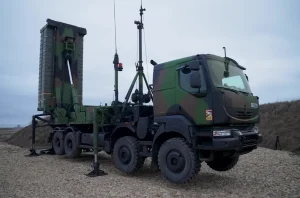
A hypersonic shot from an unmanned hull: Saronic and Castelion lay the Pacific’s new keystone

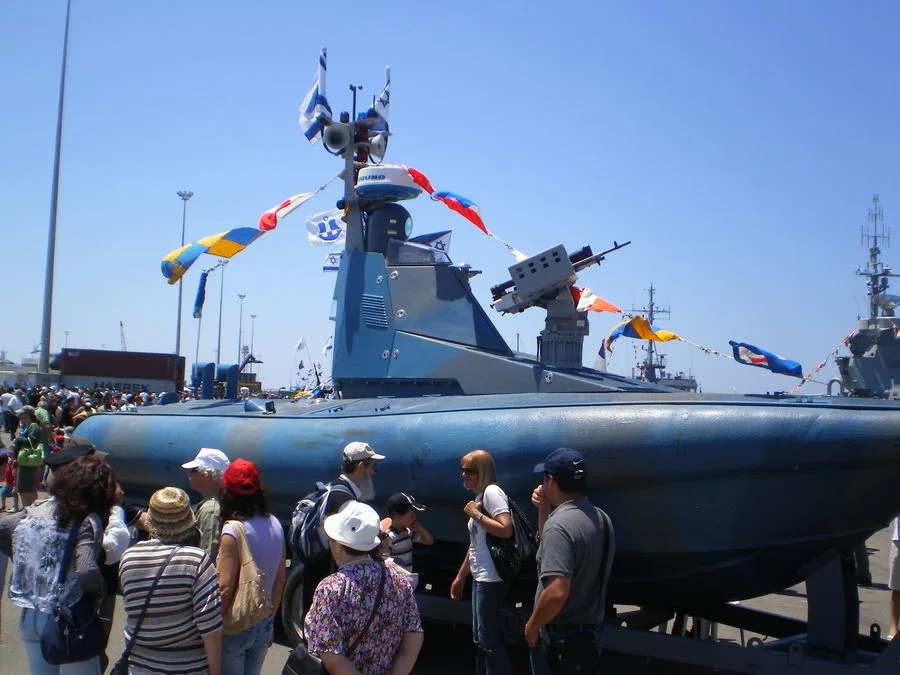
Two decisions announced on the maritime hypersonic stage last week, combined, have turned the page on naval warfare’s next chapter. Texas-based autonomous-vessel maker Saronic and hypersonic start-up Castelion announced that the US Navy’s Marauder unmanned surface vessel will be paired with the Blackbeard hypersonic missile. The Navy followed with a $23.4 million contract for 50 pre-production prototypes.
At a Glance
- What: Saronic Marauder USV + Castelion Blackbeard hypersonic missile integration
- When: 11 June 2026 (announcement) + 12 June (Navy contract)
- USV: Marauder, 55 metres, autonomous — Saronic Technologies
- Missile: Blackbeard, low-cost hypersonic — Castelion Corp.
- Contract: $23.4 million, 50 pre-production prototypes (by December 2027)
- First demonstration: 2027
- Production target: 20 Marauders per year by end of 2026
- Doctrine: distributed maritime strike network, forward launch node
Saronic and Castelion are two names that have risen sharply in the US defence scene over the past three years. Saronic Technologies, founded in late 2022 in Austin, builds autonomous vessels; Castelion Corp. is a start-up focused on low-cost hypersonic weapons. Their joint announcement of 11 June broke a long-standing assumption about the future of naval warfare: Castelion’s Blackbeard hypersonic missile will be integrated onto Saronic’s Marauder unmanned surface vessel. The next day, on 12 June, the US Navy awarded Castelion a $23.4 million contract for 50 pre-production Blackbeard prototypes to be delivered by December 2027. The first maritime hypersonic launch demonstration is targeted for 2027.
Marauder’s technical identity sits at the heart of the debate. It is a 55-metre, medium-class, fully unmanned surface vessel; Saronic moved it from design to water in under a year, a production-speed signature. Three additional hulls are under construction at its Franklin, Louisiana yard; a $300 million expansion of the same site targets 20 Marauders per year by end of 2026. That number is a production scale beyond three or four times a classical carrier battle group. Marauder’s real pitch is not size; it is range, payload capacity and the elimination of crew requirements. Paired with Blackbeard, the picture becomes “a forward strike node for distributed Pacific reach.”
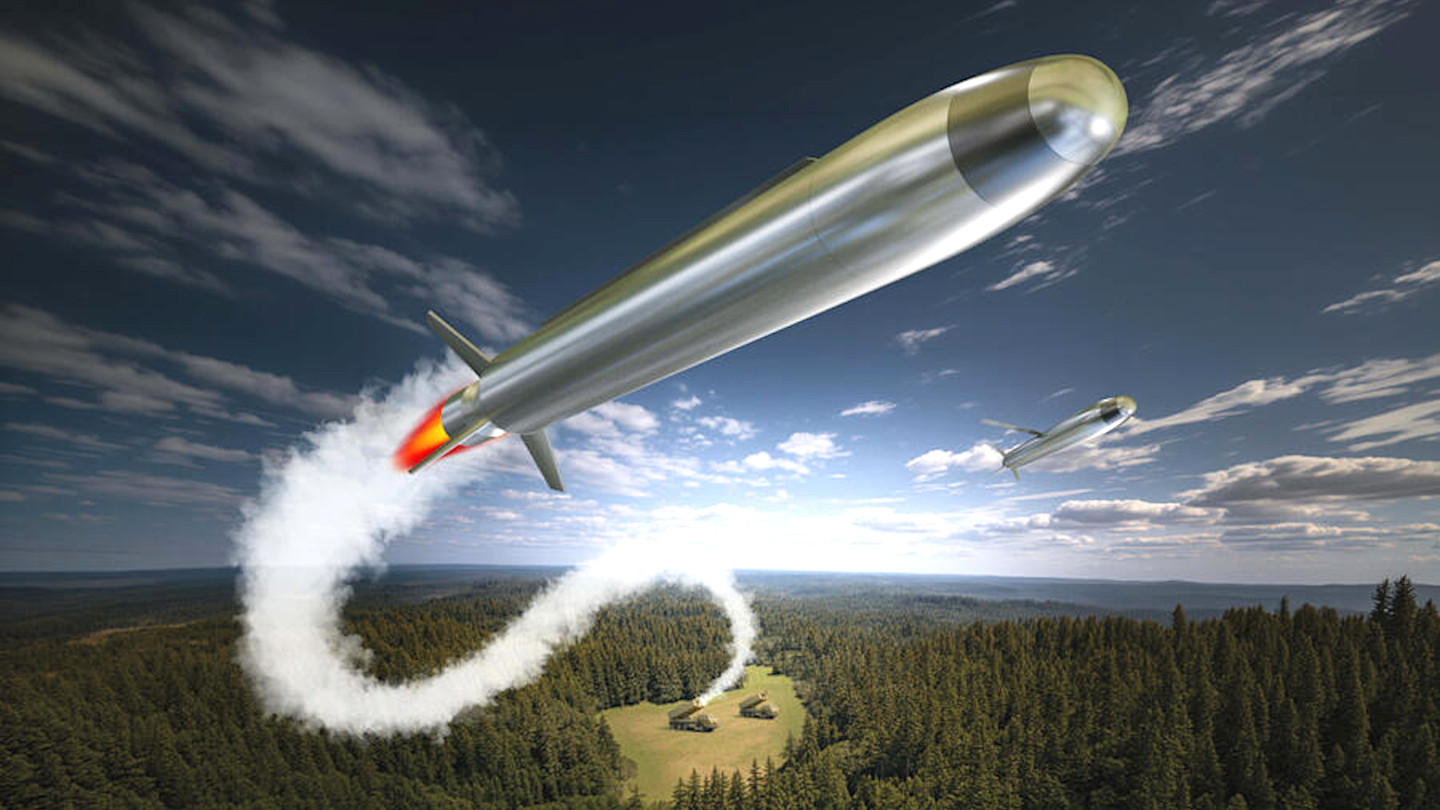
A fair question presses here: is Saronic-Castelion’s value only this specific contract, or a broader doctrinal shift? The answer is the second. Castelion’s Blackbeard stands as the first “low-cost hypersonic” entering serial production; while a traditional hypersonic missile (LRHW, ARRW) costs around $25-30 million per unit, Blackbeard at high volume could fall into the $2-3 million band. Add Marauder’s “any minute, any place” autonomous mobility and the US Navy gains a “distributed lethality” architecture far more aggressive than any single carrier approaching Chinese shores. That sharply erodes the value of China’s DF-21/DF-26 anti-ship ballistic missiles: targets become smaller, more numerous and faster.
Step back and this Navy investment complements the past three years of build-up in attack submarines, the FF(X) frigate and long-range strike. The single line is this: in the Pacific equation, the Navy is no longer leaning on a single carrier tier but on a distributed, unmanned strike layer. The Saronic-Castelion partnership reads as the first concrete industrial expression of that vision.
The Turkish angle: ULAQ, MARLIN and SANCAR — Turkey’s USV family looks at the same doctrinal corner
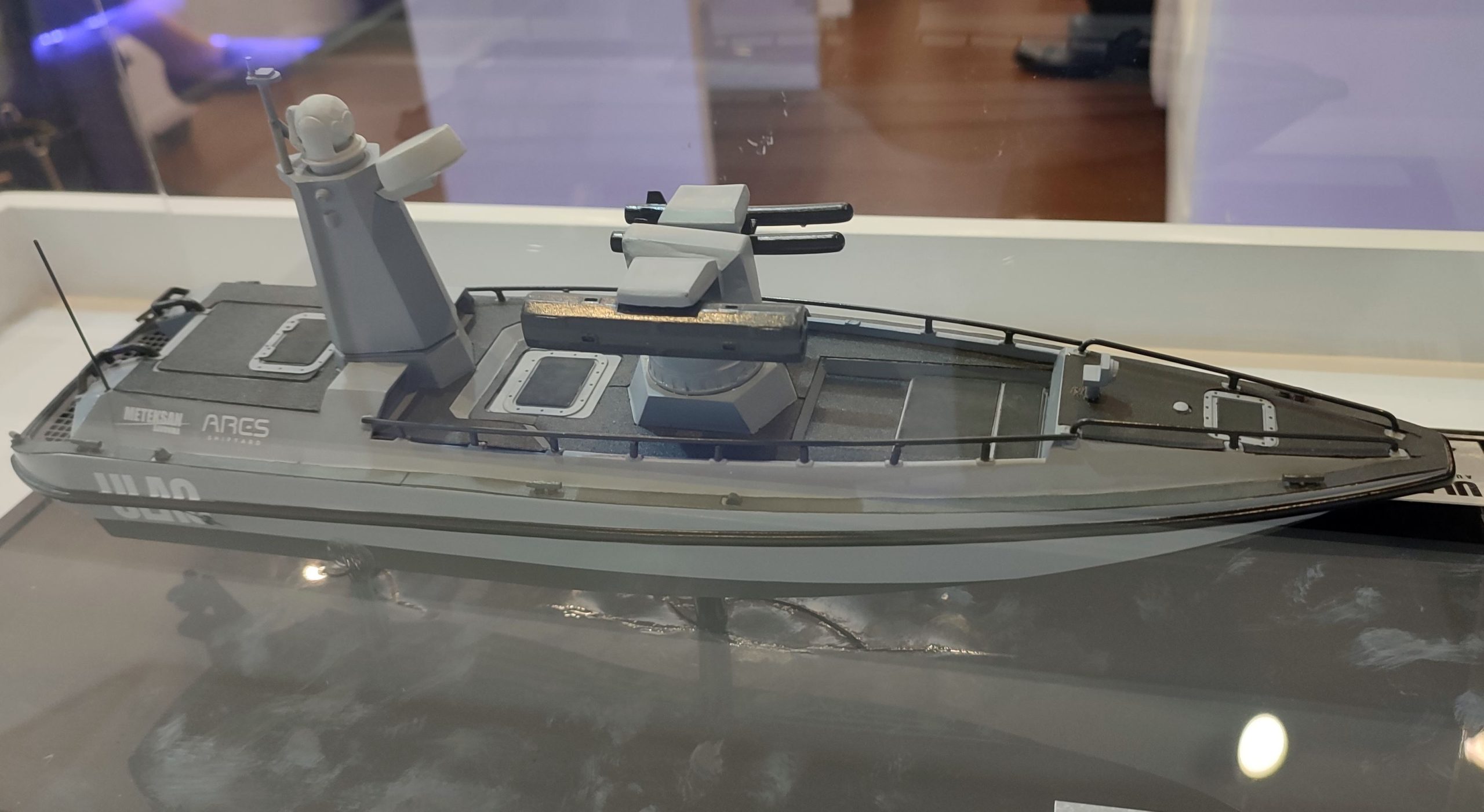
Turkey’s position in the unmanned surface vessel space is regularly described in international analyses as “leading and rapidly expanding.” The ARES Shipyard – Meteksan Savunma joint product ULAQ became one of the world’s first armed USVs when it hit the water in 2021 and successfully fired ROKETSAN’s CİRİT in 2023. The SEFİNE Shipyard MARLIN USV, integrated with the ASELSAN sensor and combat-management package, is a NATO-class mid-tonnage autonomous strike node. HAVELSAN SANCAR and SİDA are fielded for the small-tonnage swarm-operation concept. Compared to Saronic’s Marauder, the Turkish USV family’s real edge sits in NATO-compatible sensor integration, ROKETSAN anti-ship and cruise-missile packages, and an autonomous combat package combined with loitering munitions like ALPAGU/KARGU.
Worth remembering is that Turkey’s ATMACA anti-ship missile sits in the same class as NSM and Harpoon; SOM-J is ready for KAAN and F-16 integration; and the TAYFUN ballistic missile under development is the cornerstone of Turkey’s long-range precision strike. Applied to USVs, an Atmaca + CİRİT + loitering-munition trio mounted on the ULAQ or MARLIN hull is the direct Turkish counterpart of the concept Saronic-Castelion has now articulated. On the hypersonic side, TÜBİTAK SAGE’s quiet work and ROKETSAN’s next-generation solid-fuel propulsion development could put a Turkish “low-cost hypersonic” answer on the table within the next three to five years. The Saronic-Castelion stage is not a competitor for Turkish industry — it is the international validation of a concept Turkey has been carrying for years.
Sources
- Naval News — “Saronic and Castelion to Demonstrate First-of-Its-Kind Maritime Hypersonic Launch Capability”
- Breaking Defense — “Saronic, Castelion to pair Marauder MUSV with Blackbeard hypersonic capability”
- Defence Blog — “US Navy orders 50 prototypes of its cheap new hypersonic weapon”
- Castelion official statement
- Wikipedia — Saronic Technologies / Castelion / Hypersonic weapons
Related Coverage
- US Marines double down on unmanned anti-ship strike: Oshkosh wins record $70.6M ROGUE-Fires deal
- The US Navy calls the August card: F/A-XX sixth-generation race comes down to Boeing vs Northrop
- The US Navy’s new FF(X) frigate: a modular, containerized weapons payload