Kenya’s Military Strength: How Many Tanks, Fighter Jets and Missiles? (2026)

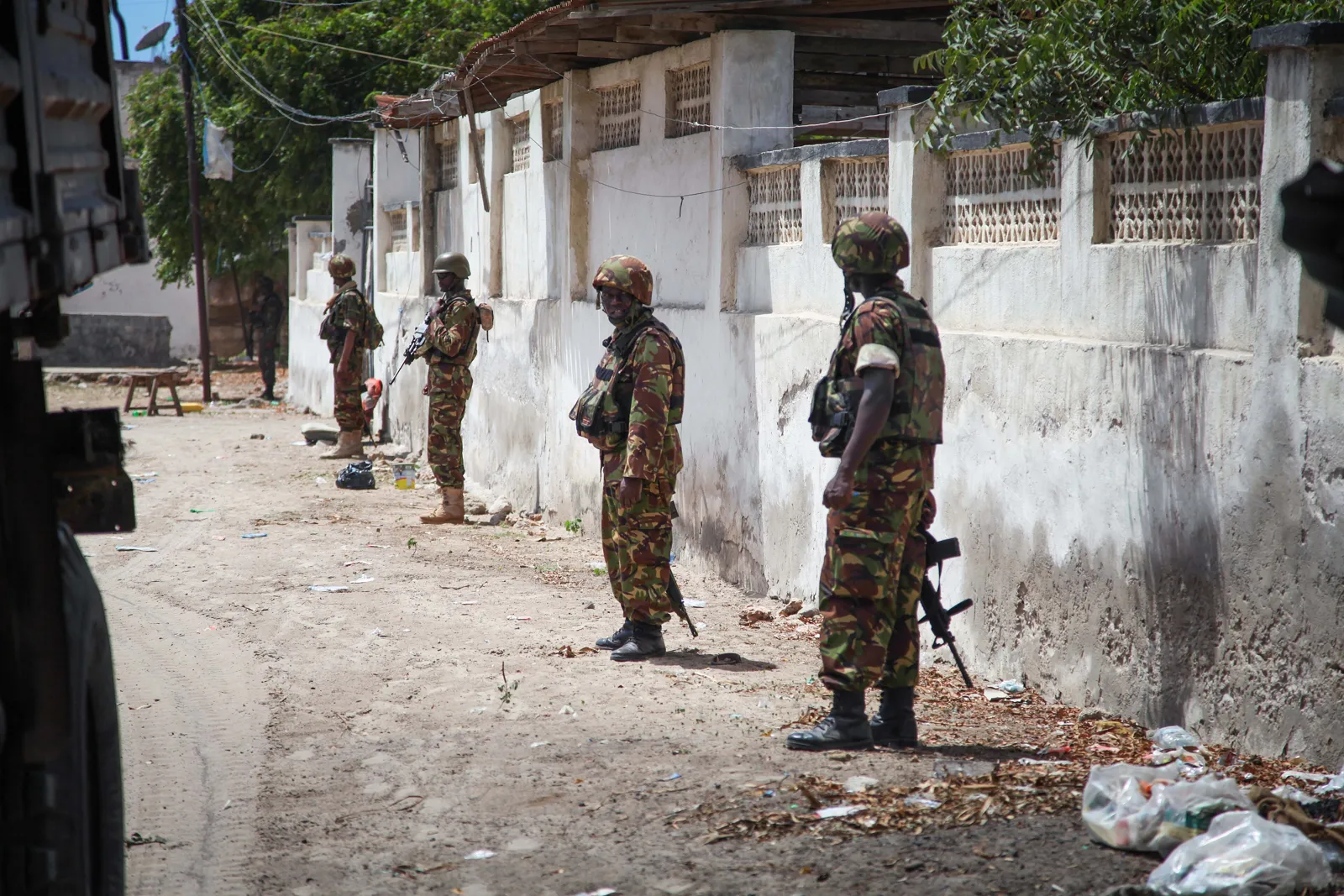
The Kenyan military inventory is a case in which the numbers can mislead. Global Firepower’s 2026 data places the country 84th among 145 militaries, with 50,000 active personnel, 188 tanks, 154 military aircraft and a defence budget of roughly US$1.65 billion. On paper that amounts to a serious armoured force by East African standards. The rest of the inventory, however, tells an entirely different story: there is not a single medium or long-range air-defence battery, the multiple rocket launcher count is zero, the navy holds no frigates, no corvettes and no submarines, and the air force’s only combat line consists of F-5s designed in the 1970s. The distance between those two pictures explains what the Kenyan military was built for. The country has been conducting uninterrupted cross-border operations in Somalia since 2011, and the line items that have grown over the past fifteen years are not tanks or fighters but protected wheeled vehicles, light attack helicopters and unmanned aircraft.
At a Glance
- Active personnel: ≈ 50,000 active troops and ≈ 25,000 paramilitary personnel; no registered mobilisation reserve
- Global ranking: 84th of 145 countries in the 2026 Global Firepower list (power index 1.8588); regarded as the strongest military in East Africa
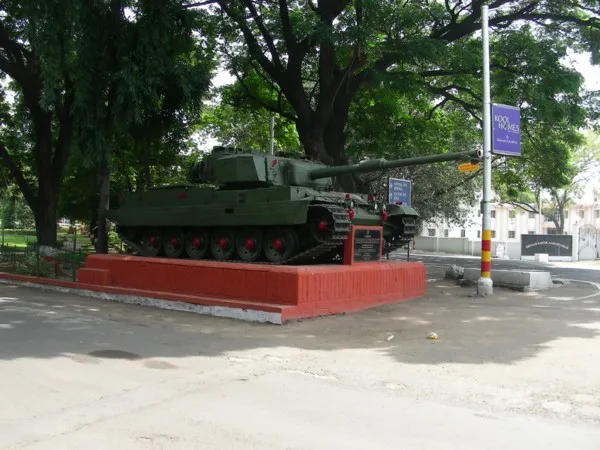
- Main battle tanks: ≈ 188 hulls: ≈ 78 British-built Vickers Mk 3 and ≈ 110 T-72AV acquired from Ukraine
- Combat aircraft: The sole combat line is the Northrop F-5 (F-5EM and F-5FM); open sources list ≈ 23 airframes while Global Firepower counts 17 serviceable fighters
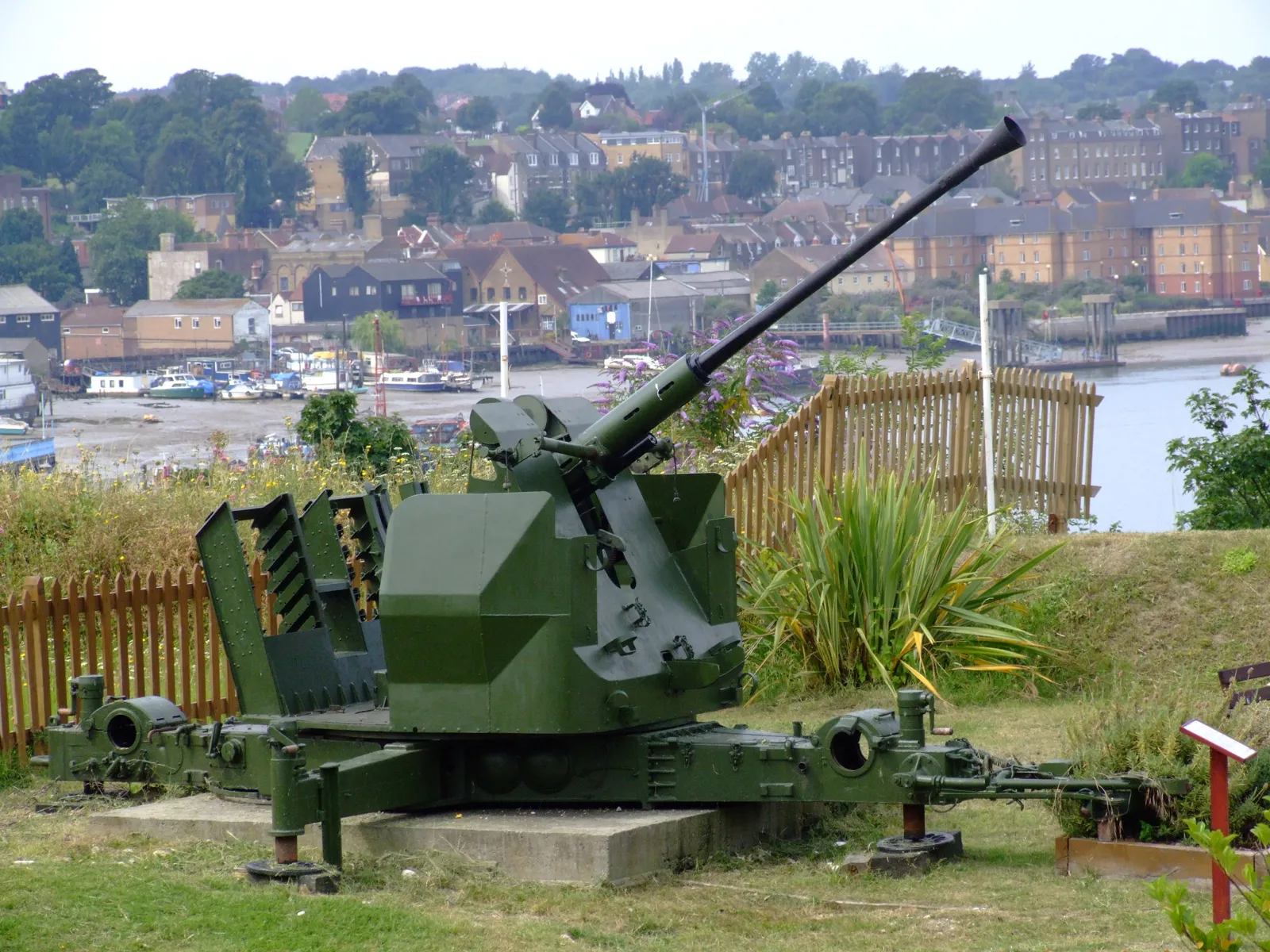
- Air defence: Not a single medium or long-range missile battery; the layer consists of roughly 13 Bofors 40 mm L/70 anti-aircraft guns
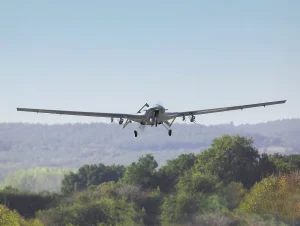
- Turkish-built systems: 118 Katmerciler Hızır 4×4 armoured vehicles (US$91.4 million) and Bayraktar TB2 unmanned aerial vehicles delivered in 2024
- Navy: ≈ 27 naval assets; no submarines, frigates or corvettes — the largest ship is the 85 metre KNS Jasiri
- Defence budget: ≈ US$1.65 billion (2026 estimate)
Note: The inventory figures below are approximate values drawn from open sources such as Global Firepower, the IISS Military Balance and SIPRI.
About the Kenya Armed Forces
The Kenya Defence Forces comprise three services — army, air force and navy — with total regular personnel of around 50,000, supplemented by 25,000 paramilitary personnel on the interior side. Open sources show no registered mobilisation reserve. The force rests on fully professional personnel rather than conscription, the first point on which it departs from its regional peers. The second is institutional continuity: Kenya is one of the few African states that has not experienced a military coup since independence and has kept its armed forces out of politics. Behind the assessment that this is the strongest military in East and Central Africa lies that institutional stability and sustainable logistics capability rather than platform counts.
The decisive factor shaping the inventory is threat definition. With Operation Linda Nchi launched in October 2011, Kenya undertook cross-border operations against al-Shabaab in Somalia; its troops were subsequently folded into the African Union mission and have remained deployed along the Kismayo axis ever since. Kenya is therefore among the few African militaries accumulating uninterrupted combat experience over fifteen years. The effect on the inventory is clear: because most losses have come from mines, improvised explosive devices and ambushes, the fastest-growing category has been the mine-resistant wheeled vehicle class. The same rationale explains why the army’s air cavalry battalion operates around 45 MD 500 Defender light attack helicopters, one of the largest fleets of its class in Africa. The tanks, by contrast, have largely stayed inside the country; the Vickers Mk 3 and T-72AV lines stand as instruments of conventional territorial defence rather than expeditionary operations.
The third factor is the procurement structure and partnerships. Kenya’s inventory is tied to no single source: British Vickers tanks and L118 guns, T-72AVs acquired from Ukraine, Chinese-built WZ-551 vehicles and Y-12 aircraft, Nora B-52 self-propelled howitzers and BOV M11 reconnaissance vehicles from Serbia, Italian C-27J transports, Spanish-built patrol vessels and Turkish-built Hızır armoured vehicles all sit side by side. Western partnerships are strong as well: American elements are stationed at the Manda Bay facility, and the United Kingdom maintains a long-standing training unit in the Nanyuki area. In June 2024 the United States designated Kenya a major non-NATO ally, making it the first sub-Saharan African state to hold that status. On the industrial side Kenya is not a producer; capability remains at the maintenance, sustainment and assembly level, and that is the underlying reason dependence on external suppliers persists.
Land Forces Inventory
| System type | Est. quantity |
|---|---|
| Main battle tanks (Vickers Mk 3, United Kingdom; delivered from the 1970s onward and the line that established the army’s first armoured backbone) | ≈ 78 |
| Main battle tanks (T-72AV; under a 2007 contract with Ukraine, 33 of which were delivered in February 2009) | ≈ 110 |
| Armoured reconnaissance vehicles (Panhard AML-60 and AML-90, France) | ≈ 72 |
| Mine-resistant vehicles (PUMA M26-15, South Africa) | ≈ 150 |
| Armoured combat vehicles (Katmerciler Hızır 4×4, Türkiye — a US$91.4 million contract, delivered 2022-2023) | 118 |
| Armoured personnel carriers (WZ-551, China) | ≈ 35 |
| Armoured personnel carriers (UR-416, Germany) | ≈ 52 |
| Armoured vehicles (ACMAT Bastion, France) | ≈ 12 |
| Armoured reconnaissance vehicles (BOV M11, Serbia) | ≈ 20 |
| Self-propelled howitzers (Nora B-52, Serbia, 155 mm — the army’s only self-propelled artillery line) | ≈ 18 |
| Towed guns (L118 light gun, United Kingdom, 105 mm) | ≈ 40 |
| Towed howitzers (M119, United States, 105 mm) | ≈ 6 |
| Towed howitzers (OTO Melara Mod 56, Italy, 105 mm) | ≈ 7 |
| Heavy mortars (MO-120-RT-61, France, 120 mm) | ≈ 12 |
| Multiple rocket launchers | None — the Kenyan land forces field no rocket artillery whatsoever |
| Total armoured vehicles (Global Firepower classification, including light tactical and protected vehicles) | ≈ 9.114 |
Air Force Inventory
| Platform | Est. quantity |
|---|---|
| Total military aircraft (including helicopters) | ≈ 154 |
| Fighters (Northrop F-5EM and F-5FM; airframes upgraded in Brazil — the air force’s only combat line) | ≈ 23 airframes; Global Firepower counts 17 serviceable |
| Attack aircraft | None — there is no dedicated attack aircraft line; air-to-ground tasks fall on the F-5s and helicopters |
| Unmanned aerial vehicles (Bayraktar TB2, Türkiye; delivered in 2024, at least six according to open sources) | At least 6 |
| Attack helicopters (Bell AH-1F Cobra; transferred as a grant from Jordan) | 2 |
| Light attack and armed scout helicopters (MD 500 Defender; the backbone of the army’s air cavalry battalion) | ≈ 45 |
| Utility helicopters (IAR 330 Puma, Romania and SA 330 Puma, France) | ≈ 13-19 |
| Utility helicopters (Harbin Z-9, China) | ≈ 6 |
| Utility helicopters (Bell UH-1H, United States) | ≈ 5 |
| Transport helicopters (Mil Mi-171, Russia) | ≈ 2 |
| Light helicopters (Eurocopter AS350, France) | ≈ 8 |
| Search-and-rescue helicopters (AgustaWestland AW139, Italy) | ≈ 3 |
| Tactical transports (Alenia C-27J Spartan, Italy) | ≈ 3 |
| Light transports (Harbin Y-12, China) | ≈ 8 |
| Special operations aircraft (C-145A Skytruck, the Polish-origin PZL M28) | ≈ 3 |
| Reconnaissance and utility aircraft (Cessna 208 Caravan; two in the reconnaissance configuration) | ≈ 4 |
| Trainers (Short Tucano, United Kingdom) | ≈ 11 |
| Trainers (Grob G 120A and G 120TP, Germany) | ≈ 13 |
| VIP and government transports (Fokker 70 and Bombardier Dash 8) | ≈ 4 |
Missile and Air-Defence Systems
| System | Type / Note |
|---|---|
| Bofors 40 mm L/70 (Sweden) | A towed anti-aircraft gun; the only organised air-defence element in the inventory and the entirety of the army’s low-altitude umbrella |
| Short-range air-defence missiles | None — open sources show no organised missile layer, including shoulder-launched systems |
| Medium and long-range air-defence systems | None — there is not a single Patriot, S-300 or HQ class battery; the country lacks any layered airspace defence capability |
| Ballistic and surface-to-surface missiles | None — Kenya fields no surface-to-surface missile line |
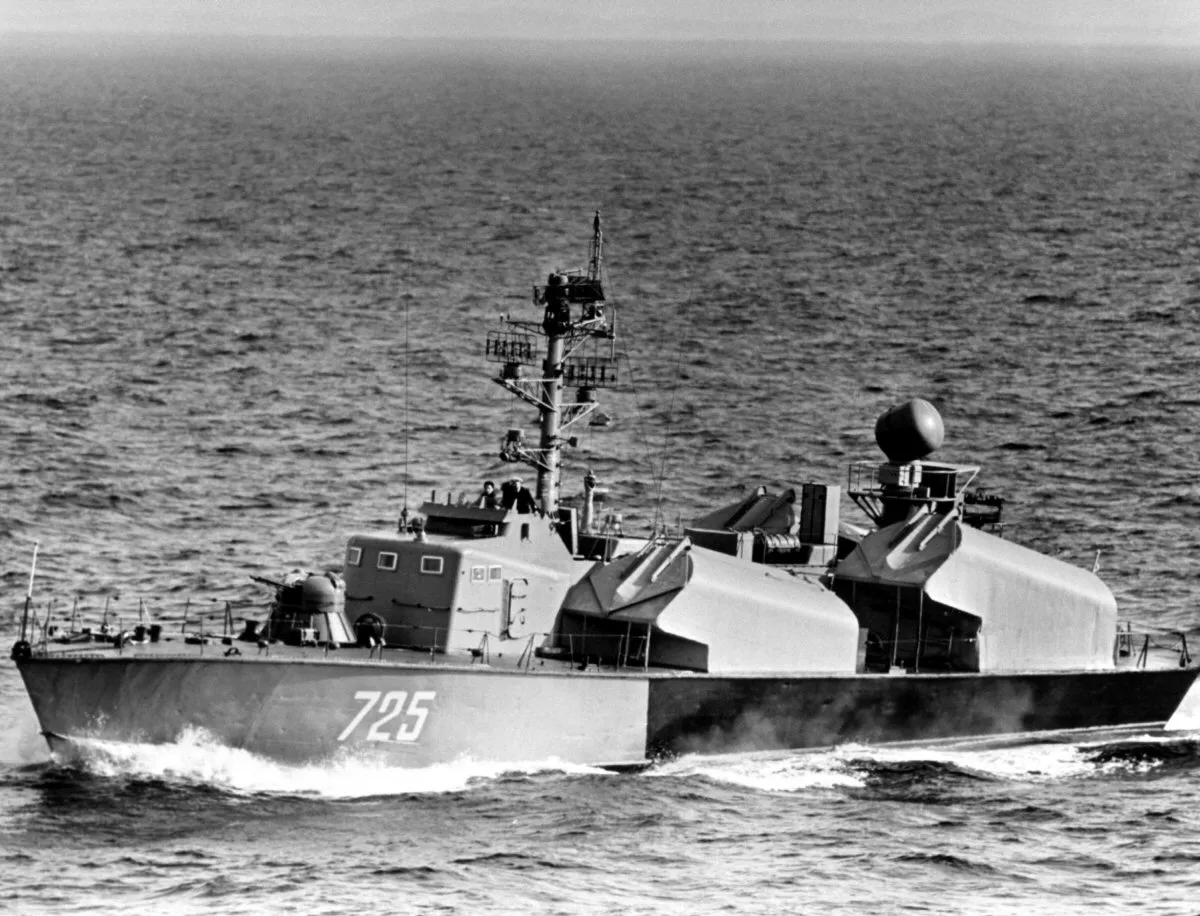
| Anti-ship missiles (Otomat Mk 2, Italy) | Carried on the two Nyayo class craft; this line holds the only guided-missile capability in the inventory |
| Anti-tank systems (the Milan line and anti-tank guns) | In limited numbers; because the army’s threat definition rests on counter-insurgency rather than armoured warfare, this class has not been a priority |
Naval Power
| Class / Type | Est. quantity |
|---|---|
| Submarines | None — the Kenyan navy has no sub-surface arm |
| Frigates and corvettes | None — both classes read zero in the Global Firepower classification; the force sits entirely at patrol vessel and fast attack craft level |
| Offshore patrol vessel (KNS Jasiri, P3124; built at the Gondan yard in Spain and commissioned in 2012 — at 85 metres the largest ship in the fleet) | 1 |
| Missile fast attack craft (Nyayo class; KNS Nyayo and KNS Umoja, Vosper Thornycroft, United Kingdom, 1987 — armed with Otomat anti-ship missiles) | 2 |
| Patrol vessels (Shupavu class; KNS Shujaa and KNS Shupavu, Spain, 1997 — with 76 mm and 30 mm guns) | 2 |
| Patrol vessel (P400 class KNS Harambee II; transferred by France for counter-piracy work) | 1 |
| Patrol vessel (Madaraka class KNS Mamba; delivered in 1976 and today in the offshore patrol role) | 1 |
| Logistics and landing ships (Galana class; KNS Tana and KNS Galana, Spain — unarmed) | 2 |
| Rigid inflatable and small patrol boats (Archangel, Defender and P101 classes; largely donated by the United States) | Numerous |
| Total naval assets (Global Firepower classification; 18 of them in the patrol class) | ≈ 27 |
| Main naval bases | The Mtongwe headquarters base near Mombasa and Manda Bay in the Lamu archipelago; plus stations at Shimoni, Msambweni, Malindi and Kilifi |
The Turkey Angle: Turkish Defence Industry
The Türkiye-Kenya defence relationship is one of the most concrete files in this series, and it runs through two distinct platforms. The first is a ground vehicle. Three companies bid in the tender opened by the Kenyan Ministry of Defence, but only Katmerciler met the user specification, and in January 2021 a contract was signed for 118 Hızır 4×4 armoured vehicles. Including spare parts and maintenance, the package was announced at a total value of US$91,415,000; it was the largest single export contract Katmerciler had ever signed. Deliveries began in 2022 and were completed in 2023. Kenya thereby became the third country to acquire armoured vehicles from Katmerciler.
The rationale for the purchase came straight from the Somali front. Kenya had lost a significant number of armoured personnel carriers in operations against al-Shabaab, and the tender specification was framed around closing gaps in force protection, firepower and mobility. The Hızır, with a hull carrying nine personnel and high levels of ballistic and mine protection, was designed to operate in both rural and urban terrain — meaning the design intent of the product matched the Kenyan requirement exactly. This is a recurring pattern for the Turkish defence industry in Africa: the selling argument is not price but the fact that the threat a vehicle was developed against is the same threat the buyer actually faces.
The second platform is unmanned aviation. Kenyan personnel completed Bayraktar TB2 training at Baykar’s flight training centre in Keşan, Türkiye, and Baykar announced their graduation on 23 August 2024. TB2s carrying Kenyan markings were observed in December 2024; open sources put the number delivered at at least six, and no official figure has been released. The significance for Kenya is considerable: an endurance of up to 27 hours combined with laser-guided munitions provides persistent surveillance and rapid targeting across the wide, sparsely populated terrain along the Somali border. No other system in the inventory could perform that task; beyond two AH-1F Cobras there are no attack helicopters at all, and no attack aircraft whatsoever.
The institutional framework has been completed as well. Türkiye and Kenya signed a Defence Industry Cooperation Agreement during the International Defence Industry Fair in Istanbul in 2023; alongside direct procurement it covers joint development, production, sales to third countries, maintenance and sustainment, modernisation and technology transfer. On 6 May 2026 Kenya’s Defence Cabinet Secretary Soipan Tuya and Turkish National Defence Minister Yaşar Güler signed a further agreement at the SAHA Istanbul exhibition covering capacity building, training and the exchange of defence technology, with cooperation on unmanned systems technology specifically highlighted. Together these mark a shift from one-off sales to a long-term framework.
What comes next should be read honestly. The gaps in Kenya’s inventory align closely with areas where Turkish industry holds products. The army’s air defence consists of roughly 13 Bofors 40 millimetre anti-aircraft guns and not a single missile battery; in low-altitude and counter-drone defence, KORKUT and GÜRZ class systems answer exactly that gap. Attack helicopters number just two, and those are ageing airframes received as a grant; the precedent the T129 ATAK established in the Philippines is a reference in this class. There is no rocket artillery line at all, a category covered by ROKETSAN’s T-122 Sakarya and TRG-300. On the naval side there are no frigates or corvettes and the largest ship is an 85 metre patrol vessel; given the Lamu Port project and expanding exclusive economic zone responsibilities, the work Turkish yards and ASFAT have carried out in Qatar and Jordan sets a precedent. None of these has a signed contract behind it; they are areas where requirement and capability intersect. The structural frame on the other side is equally clear: Kenya’s major non-NATO ally status and the American security assistance channel cover many line items through grants, while the budget sits in the US$1.65 billion band. The advantage Türkiye has built in this market is not price but the record established by two platforms that were delivered and then used in the field.
Frequently Asked Questions
How many tanks does Kenya have? Global Firepower data puts the total number of tanks in the Kenyan inventory at around 188, drawn from two separate lines. The first is the British-built Vickers Mk 3, with roughly 78 in service, delivered from the 1970s onward and forming the army’s first armoured backbone. The second is the T-72AV: Kenya signed a contract with Ukraine in 2007, 33 tanks under that arrangement were delivered in February 2009, and the total reached the 110 band. Neither line is new, and Kenya fields no third-generation main battle tank. More importantly, these tanks are not central to the operations the country actually conducts; in cross-border missions in Somalia the weight falls on protected wheeled vehicles and helicopters.
What fighter aircraft does Kenya operate? The only combat line in the Kenya Air Force is the Northrop F-5. The airframes in the inventory are F-5EM and F-5FM variants, aircraft that passed through an upgrade programme carried out in Brazil. Open sources list roughly 23 airframes while Global Firepower counts 17 serviceable fighters. Beyond them there is no separate attack aircraft line. Most of the roughly 154 total aircraft are helicopters, transports and trainers: Italian C-27J Spartan transports, Chinese-built Harbin Y-12s, C-145A Skytruck special operations aircraft, Short Tucano and Grob G 120 trainers fall into this group. The Bayraktar TB2 unmanned aerial vehicles that entered service in 2024 are the air force’s newest capability.
Which Turkish weapon systems are in Kenyan service? There are two main items. The first is the Katmerciler Hızır 4×4 armoured combat vehicle: a contract signed in January 2021 covered 118 vehicles along with spare parts and maintenance services, announced at a total value of US$91,415,000. Deliveries were completed between 2022 and 2023, and it was the largest single export contract Katmerciler had signed. The second is the Bayraktar TB2 unmanned aerial vehicle: Kenyan operators completed the programme at Baykar’s training centre in Keşan, Baykar announced their graduation on 23 August 2024, and TB2s with Kenyan markings were observed in December 2024. Open sources put the number at at least six. Layered on top are the Defence Industry Cooperation Agreement signed in 2023 and the capacity-building and defence technology agreement signed at SAHA Istanbul on 6 May 2026.
What air-defence systems does Kenya have? Kenya’s organised air defence is the weakest link in the inventory. The only element visible in open sources is a set of roughly 13 Swedish-built Bofors 40 millimetre L/70 towed anti-aircraft guns. There is not a single medium or long-range missile battery; no system from the Patriot, S-300 or Chinese HQ families appears in the inventory. Nor do open sources show an organised missile layer, including shoulder-launched short-range systems. That means the country lacks any capability to defend its airspace in layers. The only guided-missile capability in the inventory sits not on land or in the air but at sea: the Italian Otomat anti-ship missiles carried on the two Nyayo class fast attack craft.
How strong is Kenya’s navy, and does it have submarines? The Kenyan navy has no submarines, and no frigates or corvettes either. Of the 27 naval assets in the Global Firepower classification, 18 are in the patrol class. The largest ship in the fleet is the 85 metre KNS Jasiri, built at the Gondan yard in Spain and commissioned in 2012. The strike element consists of two Nyayo class fast attack craft built by Vosper Thornycroft in the United Kingdom in 1987 and armed with Otomat anti-ship missiles. Alongside them serve two Spanish-built Shupavu class patrol vessels, KNS Harambee II transferred by France for counter-piracy work, KNS Mamba delivered in 1976 and two unarmed Galana class logistics ships. Operating from the Mtongwe headquarters base near Mombasa and Manda Bay in the Lamu archipelago, the navy covers the Indian Ocean coast, with a mission set centred on counter-piracy, counter-smuggling and the protection of Lamu Port and the exclusive economic zone.
Bottom Line
The Kenyan inventory is a good illustration that military strength cannot be measured by platform counts. The country holds 188 tanks and more than 9,100 armoured vehicles; set against that, it has not a single air-defence missile, not one rocket launcher system, not one frigate and not one submarine. Reading that as a list of shortfalls would be misleading. The Kenya Defence Forces have been conducting cross-border operations in Somalia since 2011, and the line items that have grown over the past fifteen years are precisely what that mission demands: mine-resistant wheeled vehicles, light attack helicopters and unmanned aircraft. The reason this military is considered the strongest in East and Central Africa is not heavy platforms but institutional stability, the ability to sustain long supply lines and fifteen years of accumulated combat experience. Türkiye’s place in the picture becomes clear at exactly that point. Both platforms entered the inventory because each answered that mission definition directly: the 118 Katmerciler Hızır vehicles delivered under a US$91.4 million contract closed the force-protection gap against al-Shabaab’s mine and ambush tactics, while the Bayraktar TB2s that arrived in 2024 brought a capability the country had never held — persistent surveillance combined with rapid targeting. The two framework agreements signed in 2023 and 2026 show the relationship moving from one-off sales onto an institutional footing. The items in the window ahead are equally clear: air defence, attack helicopters, rocket artillery and naval platforms are the four largest gaps in the inventory, and Turkish industry holds products in all four. Yet the grant advantage of the American security assistance channel and a budget of US$1.65 billion suggest those gaps will not close quickly. The lesson of the Kenya file is that staying in the African market runs not through a broad product catalogue but through delivering, at the right moment, the product that answers the threat the buyer actually faces.