Tanzania’s Military Power: How Many Tanks, Aircraft and Warships Are in the Inventory? (2026)

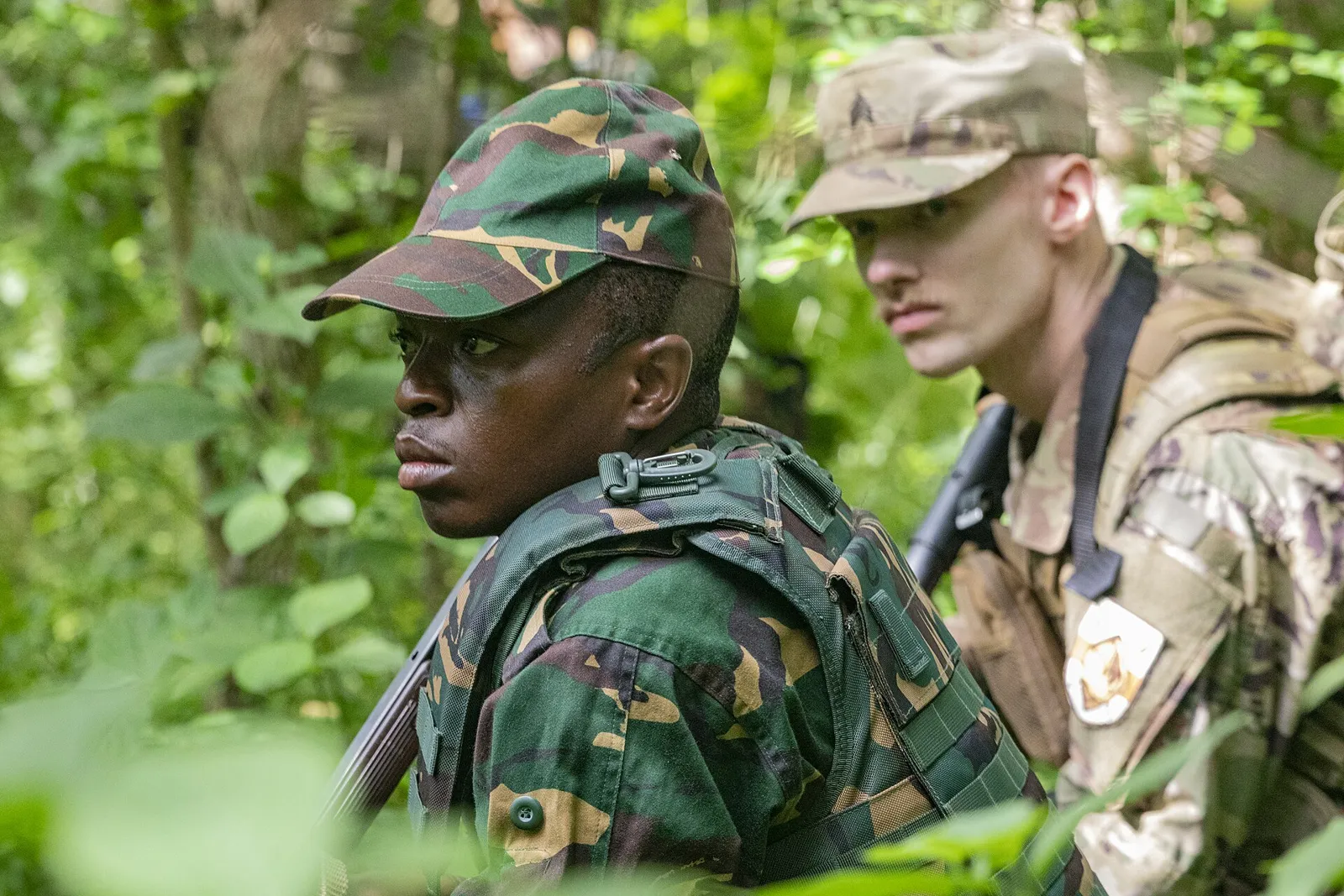
Tanzania’s military inventory describes an army that relies largely on Chinese and Soviet-sourced equipment but plays an active role in regional peace operations. About 25,000 active personnel, an armoured force of Type 59G and Type 62 tanks, a small air force with F-7 and K-8 aircraft and a navy built on patrol boats form the backbone of the Tanzania People’s Defence Force (TPDF).
At a Glance
- Active personnel: Roughly 25,000 active personnel (GFP; the IISS estimate is around 27,000), a large reserve pool and a small paramilitary element; Global Firepower power index of about 1.91
- Tanks: The GFP total is about 200 tanks; the figure covers Type 62 and Type 63A light tanks alongside Type 59G and T-54/55 main battle tanks (approximate value)
- Armoured vehicles: Soviet-era BTR-40/BTR-152 armoured vehicles, Chinese-origin wheeled armoured vehicles and MRAP-type vehicles acquired for peacekeeping missions
- Military aircraft: About 38 aircraft (GFP); Chengdu F-7/J-7 fighters, K-8 Karakorum trainer/light attack aircraft, Y-12 transports and a limited helicopter fleet
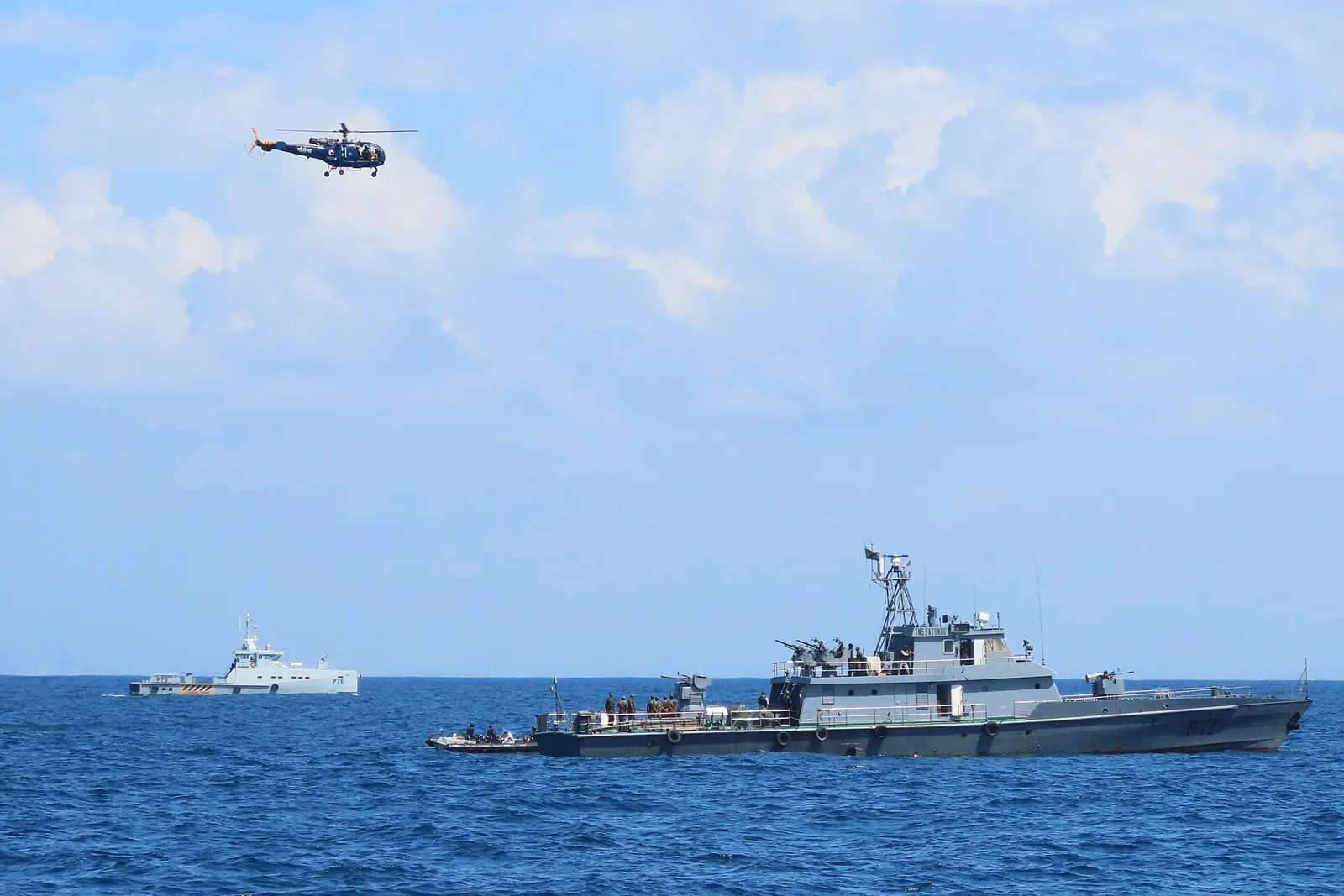
- Navy: About 12 naval units (GFP); Chinese-built patrol boats and patrol vessels such as TNS Fatundu and TNS Pengusi; no frigates, corvettes or submarines
- Defence budget: About 1.5 billion dollars according to GFP data; other sources give lower estimates (approximate value)
Note: The inventory figures below are approximate values drawn from open sources such as Global Firepower, the IISS Military Balance and SIPRI.
About the Tanzania Armed Forces
The Tanzania People’s Defence Force (JWTZ in its Swahili abbreviation) consists of the Land Forces, the Air Force Command and the Naval Command. GFP data put active personnel at about 25,000; the IISS estimate is around 27,000. With a power index of about 1.91 in the Global Firepower ranking, the country sits among sub-Saharan Africa’s top ten militaries. Figures are approximate.
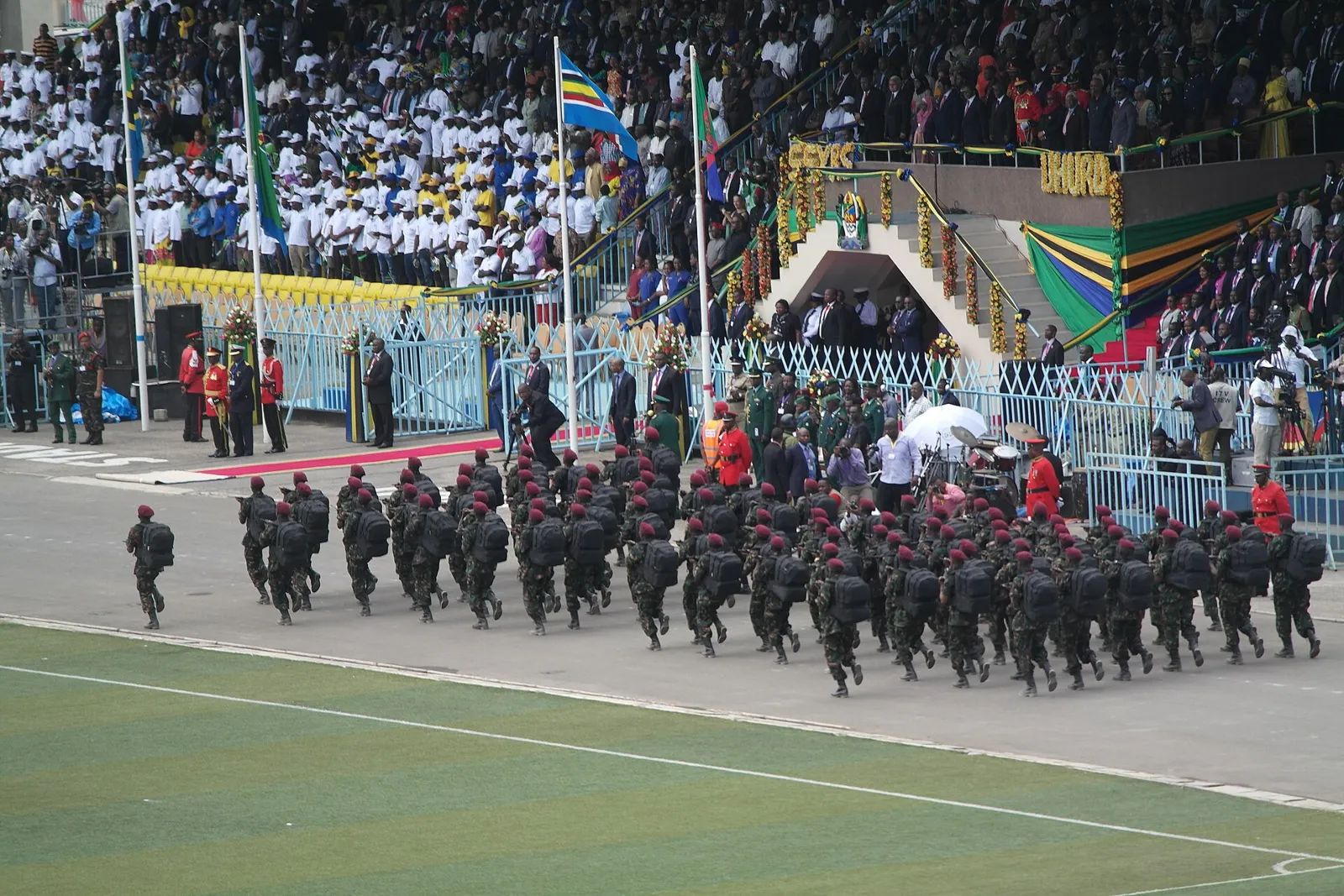
The TPDF’s operational record is deeper than that of many armies in the region. In the 1978-1979 Uganda-Tanzania War it was the Tanzanian army that toppled Idi Amin’s regime. It took part in the 2008 Anjouan operation in the Comoros, fought M23 in 2013 within the UN Force Intervention Brigade in the Democratic Republic of the Congo and served in SADC’s Cabo Delgado mission in Mozambique in 2021-2024. It also contributes troops to MINUSCA in the Central African Republic.
The land inventory is numerous but old. GFP’s total of about 200 tanks includes Type 62 and Type 63A light tanks alongside Type 59G and T-54/55 main battle tanks. Armoured personnel carriers include old Soviet BTR-40/BTR-152s and Chinese-origin wheeled vehicles; in artillery, D-30 and 130 mm towed guns and BM-21 Grad rocket launchers stand out.
Air power is small: GFP counts about 38 aircraft. Chengdu F-7/J-7 fighters and K-8 Karakorum trainer/light attack aircraft are the core of combat capability; Y-12 transports and Bell 205-derived helicopters handle support tasks. There are no attack helicopters.
Air defence relies on Soviet-era S-125 Pechora batteries, Strela-2 shoulder-launched missiles and anti-aircraft guns; the operational status of these systems is unclear. The navy consists of a small fleet patrolling the Indian Ocean coast and Lakes Victoria, Tanganyika and Nyasa; there are no frigates, corvettes or submarines.
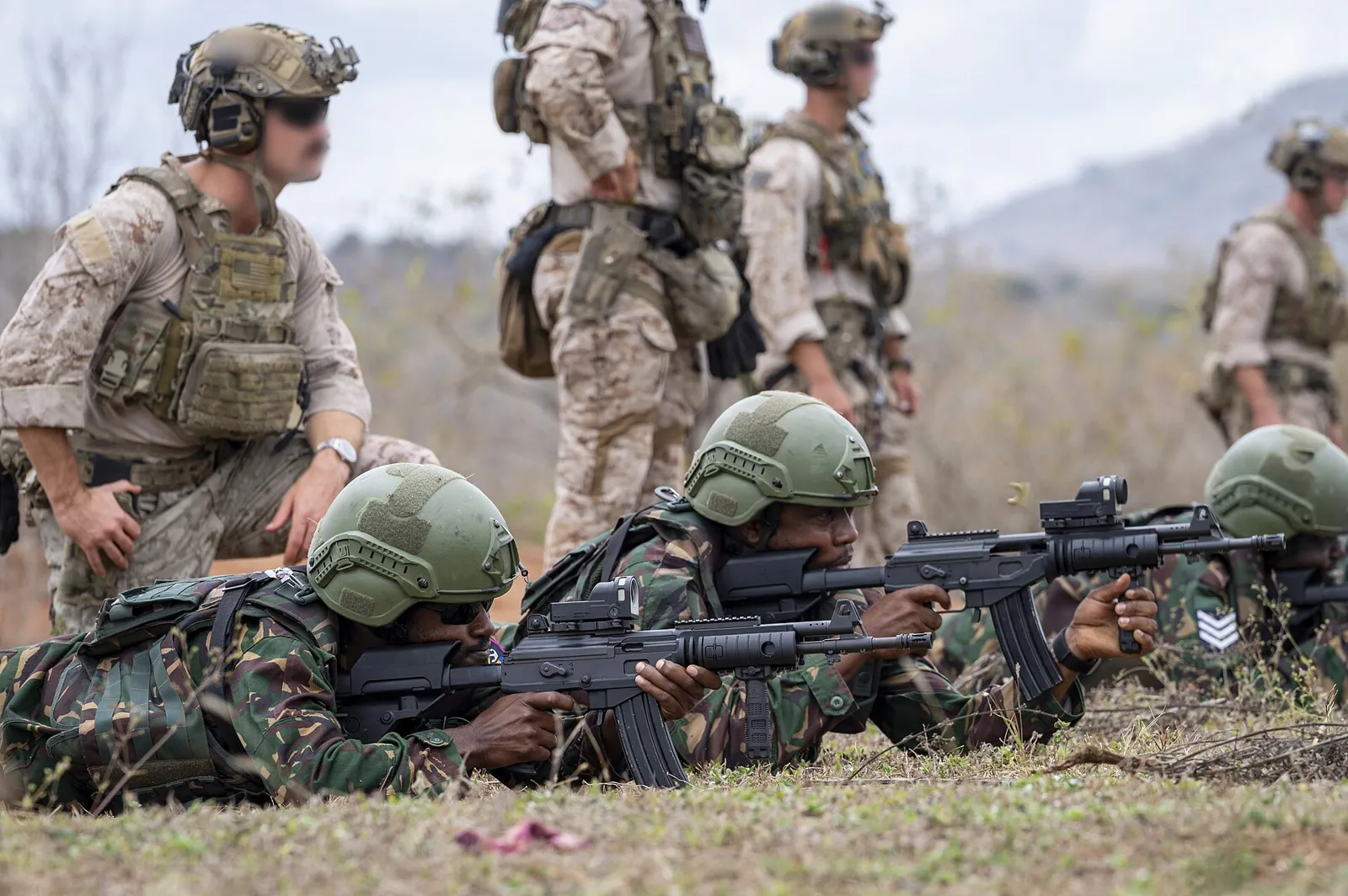
Tanzania’s training and exercise partners are diverse. The Justified Accord exercise with US Africa Command was held at Msata Military Training Base in Tanzania in 2025 and 2026, and the Indian Navy conducted a joint EEZ patrol with TNS Fatundu and TNS Pengusi in July 2023. In equipment supply, China is far in first place.
Land Forces Inventory
| System type | Est. quantity |
|---|---|
| Main battle tanks | Chinese-built Type 59G and Soviet-built T-54/55 tanks; in the IISS classification the main battle tank count is limited to a few dozen |
| Light tanks | Type 62 light tanks and the amphibious Type 63A; these light vehicles make up a significant share of GFP’s total of about 200 tanks |
| Armoured personnel carriers | Old Soviet armoured vehicles such as the BTR-40 and BTR-152, Chinese-origin wheeled armoured vehicles and MRAP-type vehicles for UN missions |
| Artillery and rocket launchers | 122 mm D-30 and 130 mm Type 59-1/M-46 towed guns, BM-21 Grad and 107 mm Type 63 multiple rocket launchers (approximate) |
Air Force Inventory
| Platform | Est. quantity |
|---|---|
| Total military aircraft | About 38 aircraft (GFP); the Tanzania Air Force Command operates a small fleet of largely Chinese origin |
| Combat and training aircraft | Chengdu F-7/J-7 fighters (about a dozen) and K-8 Karakorum trainer/light attack aircraft; the old MiG-21 and F-6 fleets have been retired |
| Transport and helicopters | Y-12 light transport aircraft and a limited helicopter fleet dominated by Bell 205 derivatives; no attack helicopters |
Missile and Air-Defence Systems
| System | Type / Note |
|---|---|
| Air defence | Soviet-era S-125 Pechora (SA-3) batteries and Strela-2 (SA-7) shoulder-launched missiles; their operational status is unclear (approximate) |
| Anti-aircraft guns | 14.5 mm ZPU, 23 mm ZU-23 and 37 mm Type 55 anti-aircraft guns; these carry the main burden of low-altitude defence |
| Tactical missiles | There is no ballistic or cruise missile inventory; long-range fire capacity is limited to rocket launchers |
Naval Power
| Class / Type | Est. quantity |
|---|---|
| Patrol vessels and boats | Chinese-built Shanghai-class (Type 062) derived patrol boats and patrol vessels such as TNS Fatundu and TNS Pengusi; the GFP total is about 12 naval units |
| Lake and coastal security | Patrols on Lakes Victoria, Tanganyika and Nyasa as well as the Indian Ocean coast; EEZ surveillance against piracy and illegal fishing |
| Major combatants | No frigates, corvettes or submarines; the navy builds capacity through joint EEZ patrols with India and the US and exercises such as Cutlass Express |
The Turkey Angle: Turkish Defence Industry
The defence relationship between Türkiye and Tanzania has an official basis. During President Recep Tayyip Erdoğan’s visit to Dar es Salaam in January 2017, nine agreements covering defence, economic development and health were signed. A defence industry cooperation agreement between the two governments also appears in the ratification records of the Turkish Grand National Assembly.
There is also a verifiable industrial item: Ömer Korkut, General Manager of the Turkish company SDT Space and Defence Technologies, said in an interview published in June 2025 that the company had exported RF jamming systems to Tanzania; the contract value was not disclosed. Tanzania’s Defence Minister also attended the IDEF fair in Istanbul in 2023.
Ties beyond defence feed the relationship as well. The Turkish company Yapı Merkezi is building a large part of Tanzania’s standard gauge railway (SGR), and Turkish Airlines flies to Dar es Salaam, Kilimanjaro and Zanzibar. Turkish diplomats openly state the goal of deepening cooperation through military dialogue meetings, training and military aid programmes.
Tanzania’s inventory is old and China-heavy; areas such as armoured vehicles, UAVs, border surveillance, patrol boats and air defence overlap with the strengths of the Turkish defence industry. There is no publicly known major platform contract today, but the existing agreement framework and the SDT export make Tanzania a concrete potential market for Turkish defence products in East Africa.
Frequently Asked Questions
How many tanks does Tanzania have? Global Firepower counts about 200 tanks for Tanzania; the total covers Type 62 and Type 63A light tanks alongside Type 59G and T-54/55 main battle tanks. Figures are approximate.
Does Tanzania have fighter jets? Yes. The Air Force Command operates Chengdu F-7/J-7 fighters and K-8 Karakorum trainer/light attack aircraft; the GFP total is about 38 aircraft.
Does Tanzania buy weapons from Türkiye? The two countries signed agreements covering defence in 2017, and the Turkish company SDT has said it exported RF jamming systems to Tanzania. There is no publicly known major platform contract.
Does Tanzania have submarines? No. The navy consists of patrol vessels and boats; there are no frigates, corvettes or submarines.
Which wars has the Tanzanian army fought? It toppled Idi Amin’s regime in the 1978-1979 Uganda-Tanzania War and took part in the 2008 Anjouan operation, the UN Force Intervention Brigade in the Congo in 2013 and the SADC mission in Mozambique in 2021-2024.
Bottom Line
The Tanzanian inventory shows a numerous but old, China-heavy army: about 200 tanks (including light tanks), a small air force centred on the F-7 and K-8 and a navy based on patrol boats. The TPDF’s real strength is its operational experience stretching from Kagera to the Congo. The 2017 agreements with Türkiye and the SDT export are a concrete start; as modernisation needs grow, Tanzania is a candidate to become one of the important potential markets in East Africa for the Turkish defence industry.