Moldova’s Military Power: Which Armoured Vehicles, Artillery and Aircraft Are in the Inventory? (2026)

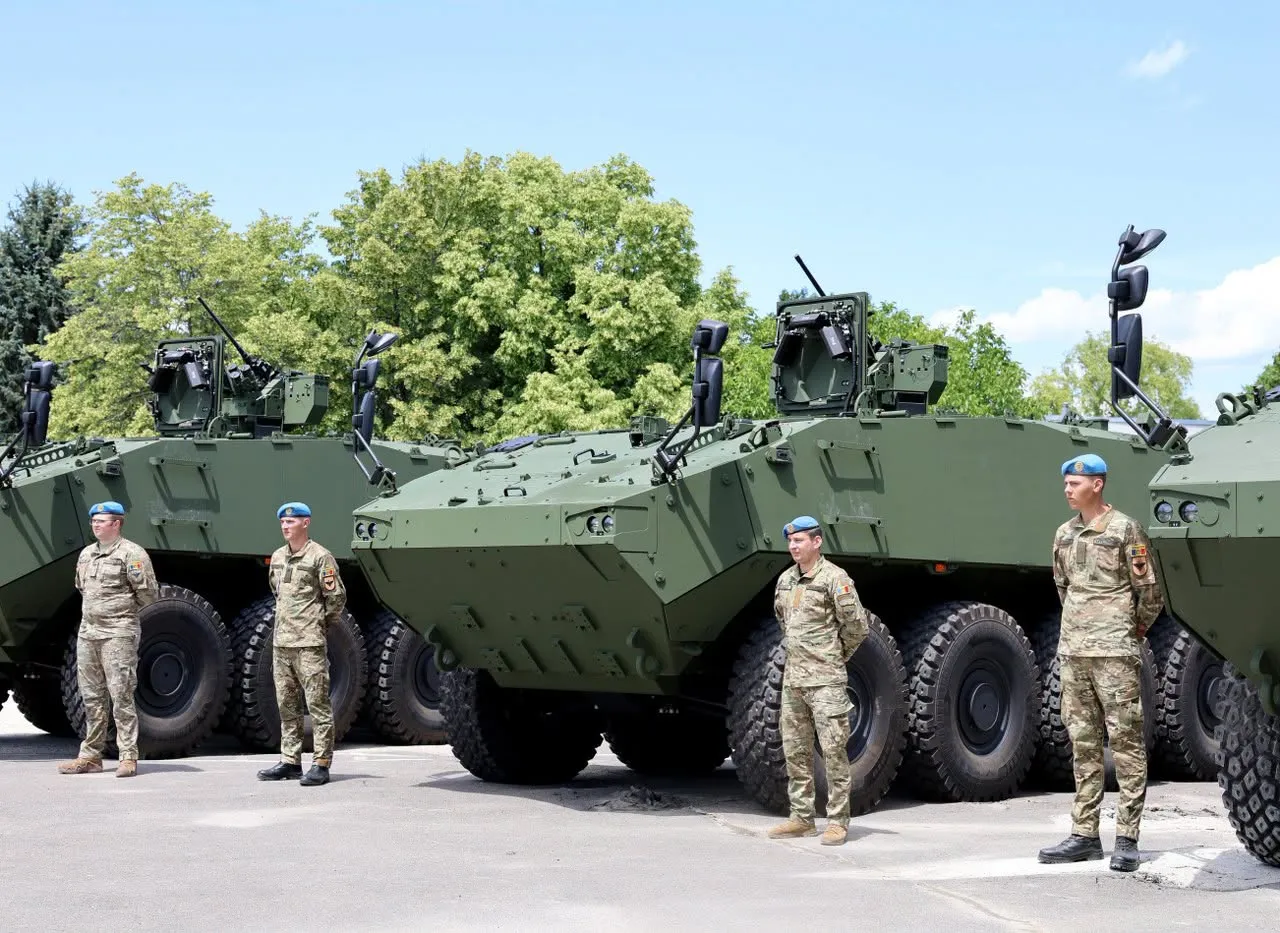
Moldova’s military inventory reflects a transition period in which Soviet-era armoured vehicles and guns stand alongside new platforms delivered in recent years with support from the European Union and Germany. Right next to the war in Ukraine, the country is keeping its constitutional neutrality while rebuilding the Moldovan National Army around air surveillance, armoured mobility and artillery modernisation.
At a Glance
- Active personnel: About 5,150 active personnel (IISS, approximate) and roughly 58,000 reservists, most of them in the land forces. Moldova sits in the lower part of the Global Firepower ranking
- Tanks: None; instead of tanks the army relies on BMD-1 infantry fighting vehicles, wheeled armoured vehicles and artillery
- Armoured vehicles: About 230: BMD-1 (44), MT-LB (53), BTR-D (9), BTR-80 (11), TAB-71 (about 90), Piranha IIIH from Germany (19) and the first five Piranha 5s delivered in June 2026 (approximate)
- Military aircraft: No combat aircraft; a small fleet of a few Mi-8/Mi-17 helicopters and An-2, An-26 and An-72 transports (about 10)
- Navy: None; Moldova is landlocked and reaches the Danube only through a short stretch of riverbank at Giurgiulești
- Defence budget: About 0.5-0.6 percent of GDP; the national defence strategy targets 1 percent by 2030. Much of the modernisation is funded by EU European Peace Facility (EPF) grants
Note: The inventory figures below are approximate values drawn from open sources such as Global Firepower, the IISS Military Balance and SIPRI.
About the Moldova Armed Forces
The Armed Forces of Moldova comprise the National Army with its Land Forces and Air Force. According to IISS, active personnel number about 5,150, with around 58,000 reservists. The core of the land forces is three motorised infantry brigades, an artillery brigade and special forces. Figures are approximate.
Article 11 of the 1994 constitution declares permanent neutrality, so NATO membership is not on the agenda, but Moldova takes part in joint exercises under the Partnership for Peace and contributes a small contingent to KFOR. It became an EU candidate in 2022 and accession negotiations opened in 2024. The defence minister is Anatolie Nosatîi.
A defining element of the security picture is the breakaway Transnistria region east of the Dniester. Around 1,500 Russian troops serve there in the Operational Group of Russian Forces, alongside the large Soviet-era Cobasna ammunition depot. Russian drones straying into Moldovan airspace and debris falling on its territory during the war in Ukraine exposed the gap in air surveillance.
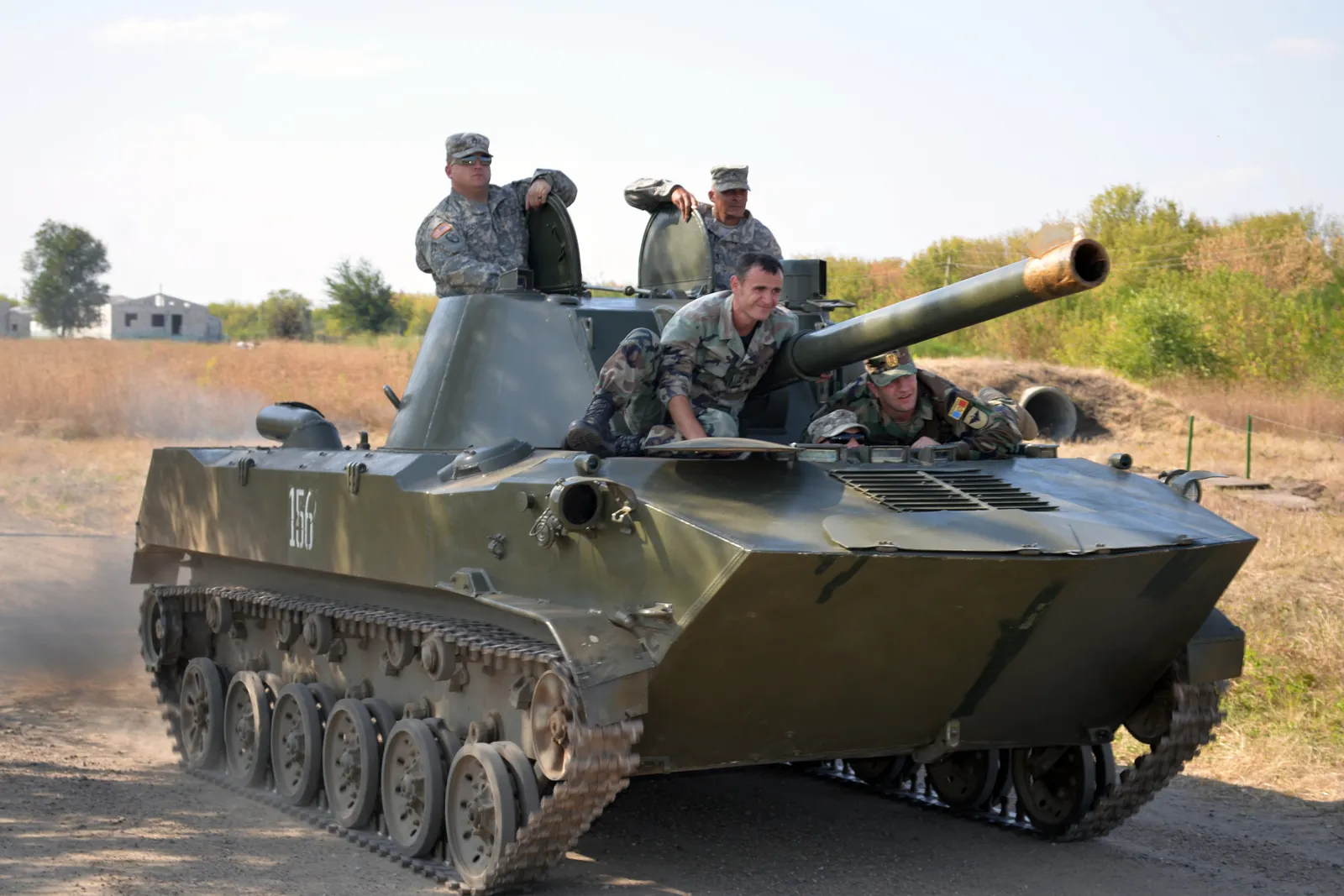
The land inventory is light and Soviet in origin. There are no main battle tanks; the army uses BMD-1 infantry fighting vehicles and MT-LB, BTR-80 and TAB-71 armoured carriers. Germany delivered 19 Piranha IIIHs in 2023 and the first five Piranha 5s in June 2026. In June 2026 a contract was signed for more than 100 Roshel Senator armoured vehicles funded by an EU European Peace Facility grant. Officials say about 90 percent of the equipment is still of Soviet origin.
Artillery is the army’s strongest component: 2A36 Giatsint-B and D-20 152 mm towed guns, 2S9 Nona self-propelled mortars and 11 BM-27 Uragan rocket launchers. Anti-tank assets include MT-12 Rapira guns and Fagot, Konkurs and Shturm missiles.
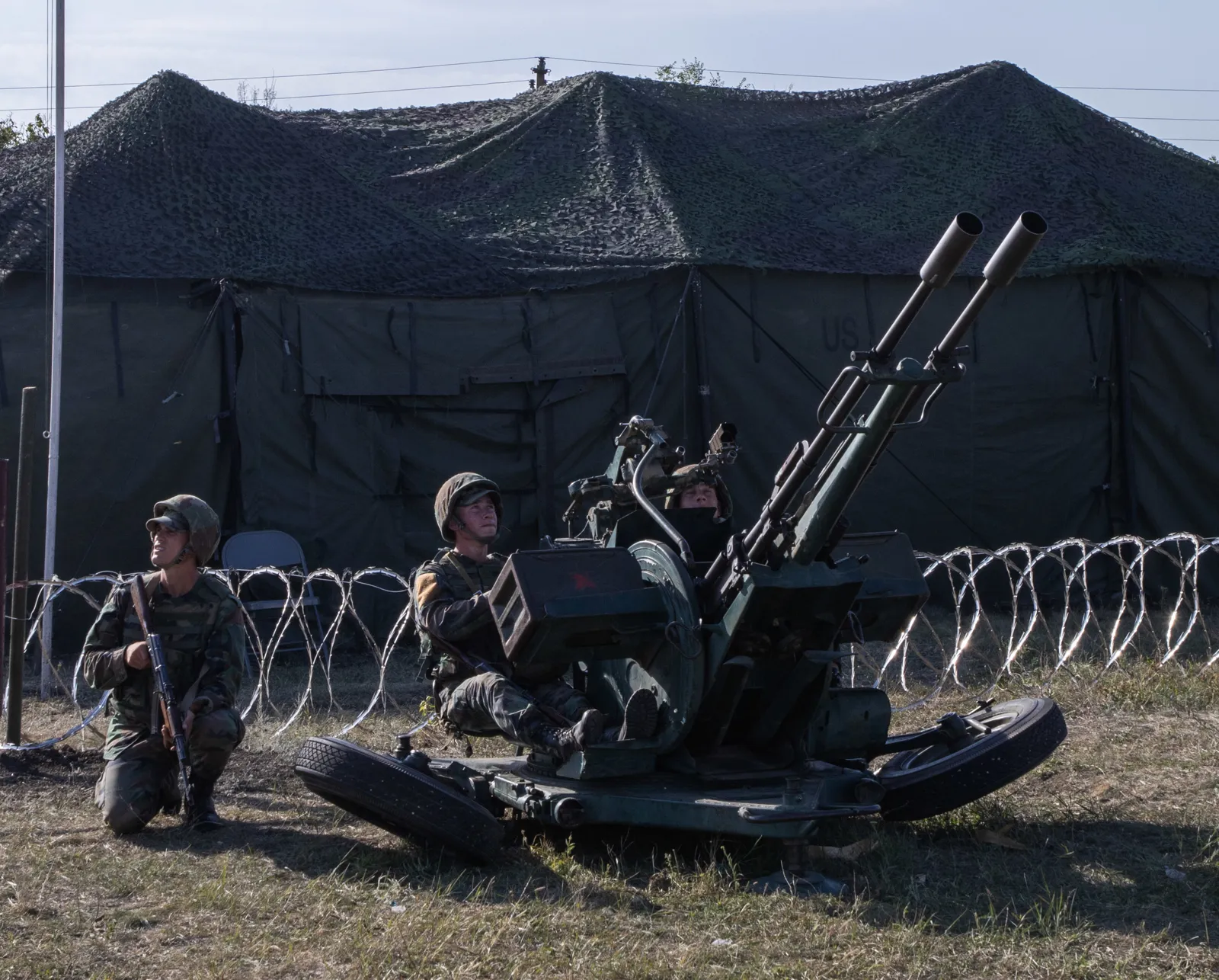
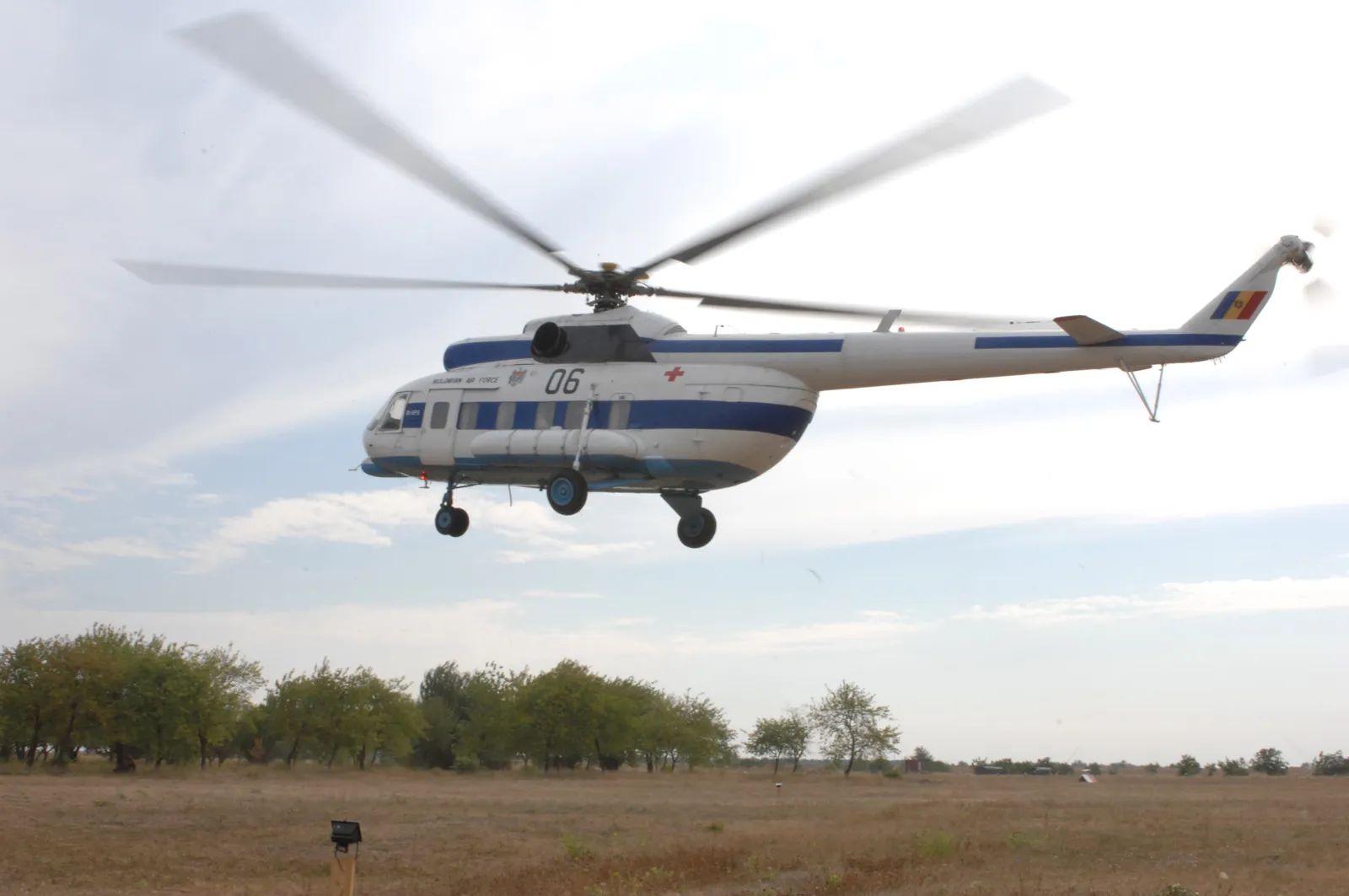
The Air Force consists of only a few Mi-8/Mi-17 helicopters and An-2, An-26 and An-72 transports; the country has not operated jet fighters since selling most of its MiG-29s to the United States in 1997. Air defence relies on ZU-23-2 and S-60 guns and Strela-2 missiles; a Thales Ground Master 200 radar arrived in 2023, and an EU-funded passive surveillance system is planned to enter service in 2026.
Land Forces Inventory
| System type | Est. quantity |
|---|---|
| Infantry fighting vehicles | BMD-1 airborne infantry fighting vehicles (44) and BTR-D (9); Soviet-era vehicles that form the army’s tracked armoured core (approximate) |
| Armoured personnel carriers | MT-LB (53), BTR-80 (11), TAB-71 (about 90), 19 Piranha IIIHs donated by Germany (2023) and Piranha 5s (first five in June 2026); five BRDM-2 reconnaissance vehicles (approximate) |
| Light tactical vehicles | About 30 HMMWVs from the United States (2025); in June 2026 a contract was signed for more than 100 Roshel Senator armoured vehicles under an EU EPF grant of over 50 million euros, with deliveries expected by May 2027 |
| Artillery and rocket launchers | 2A36 Giatsint-B 152 mm (21), D-20 152 mm (31) and M-30 122 mm (17) towed guns, 2S9 Nona 120 mm self-propelled mortars (9), BM-27 Uragan 220 mm rocket launchers (11) and 82/120 mm mortars (approximate) |
| Anti-tank | MT-12 Rapira 100 mm anti-tank guns (36), 9K111 Fagot, 9K113 Konkurs and 9K114 Shturm guided missiles and SPG-9 recoilless guns (approximate) |
Air Force Inventory
| Platform | Est. quantity |
|---|---|
| Combat aircraft | None; most of the MiG-29 fleet Moldova inherited from the Soviet Union was sold to the United States in 1997, and the country has not operated jet fighters since |
| Helicopters | A few Mi-8MTV-1/Mi-17-1V and Mi-8 transport and utility helicopters, used for search-and-rescue and medical evacuation (about 4-6) |
| Transport aircraft | An-2, An-26 and An-72 transports and a Yak-18 trainer; the operational status of part of the fleet is uncertain (approximate) |
Missile and Air-Defence Systems
| System | Type / Note |
|---|---|
| Air defence | Shoulder-fired 9K32 Strela-2 missiles, ZU-23-2 23 mm (26) and S-60 57 mm (11) anti-aircraft guns; in 2024 the EU approved a 9 million euro EPF package for short-range interceptors (approximate) |
| Air surveillance radars | A Thales Ground Master 200 radar delivered in December 2023; an EU-funded passive surveillance system from Czech company ERA is planned to enter service in 2026. Drones straying into the airspace during the war in Ukraine highlighted the radar gap |
| Tactical missiles | There are no ballistic or cruise missiles; the longest-range firepower comes from 11 BM-27 Uragan multiple rocket launchers |
Naval Power
| Class / Type | Est. quantity |
|---|---|
| Naval forces | None; Moldova has no coastline, and Giurgiulești port on the Danube is the country’s only waterway outlet |
| River security | Patrols on the Prut and Dniester (Nistru) rivers are the responsibility of the Border Police rather than a military service |
The Turkey Angle: Turkish Defence Industry
Defence relations between Türkiye and Moldova have entered a new institutional phase. According to Anadolu Agency, the first Türkiye-Moldova Defence Industry Cooperation Meeting was held in Ankara in July 2026. Talks with a delegation that included Defence Minister Anatolie Nosatîi covered production of military equipment, surveillance systems and defence technologies. Turkish Defence Industries Secretary Haluk Görgün said the meeting gave defence cooperation between the two countries an institutional foundation.
Open sources do not currently document any major Turkish-made platform in the Moldovan inventory; the army’s new vehicles come mainly through EU funds, Germany and the United States. Bilateral trade nonetheless exceeded 1 billion dollars in 2025, and the two sides agreed to expand their free trade agreement. The Autonomous Territorial Unit of Gagauzia, home to the Turkic-speaking Gagauz people, also serves as a cultural bridge in the relationship.
Moldova’s needs overlap with areas where the Turkish defence industry is strong: air surveillance and counter-drone systems, short-range air defence, tactical wheeled armoured vehicles, communications and electronic warfare, and unmanned aerial vehicles. The use of Turkish platforms by regional countries such as Romania, Poland and Ukraine offers Moldova a precedent close to home.
Frequently Asked Questions
How many tanks does Moldova have? There are no main battle tanks in the Moldovan inventory. Instead the army relies on about 44 BMD-1 infantry fighting vehicles and MT-LB, BTR-80, TAB-71 and Piranha armoured vehicles.
Does Moldova have fighter jets? No. Moldova sold most of the MiG-29s it inherited from the Soviet Union to the United States in 1997. Today the Air Force consists of a few Mi-8/Mi-17 helicopters and An-2, An-26 and An-72 transports.
How many soldiers does Moldova have? According to IISS, the Moldovan National Army has about 5,150 active personnel and around 58,000 reservists.
Is Moldova a member of NATO? No. Moldova’s constitution declares permanent neutrality. It takes part in the Partnership for Peace and has been an EU candidate since 2022.
Is there defence cooperation between Türkiye and Moldova? Yes. The first Türkiye-Moldova Defence Industry Cooperation Meeting was held in Ankara in July 2026, covering production of military equipment, surveillance systems and defence technologies.
Bottom Line
The Moldovan inventory shows a small, neutral army trying to renew its Soviet legacy on a limited budget. Artillery and anti-tank assets are relatively strong, but there are no tanks, combat aircraft or modern air defence. Piranha vehicles, the Roshel Senator order and EU-backed radars set the direction of modernisation. With the war in Ukraine next door, airspace security remains the most urgent issue. The defence industry dialogue launched in Ankara in July 2026 offers Türkiye a real basis for cooperation in areas such as surveillance and counter-drone systems.