What Is the Akash Air Defense System? India’s Indigenous BEL-Produced Surface-to-Air Missile Analyzed

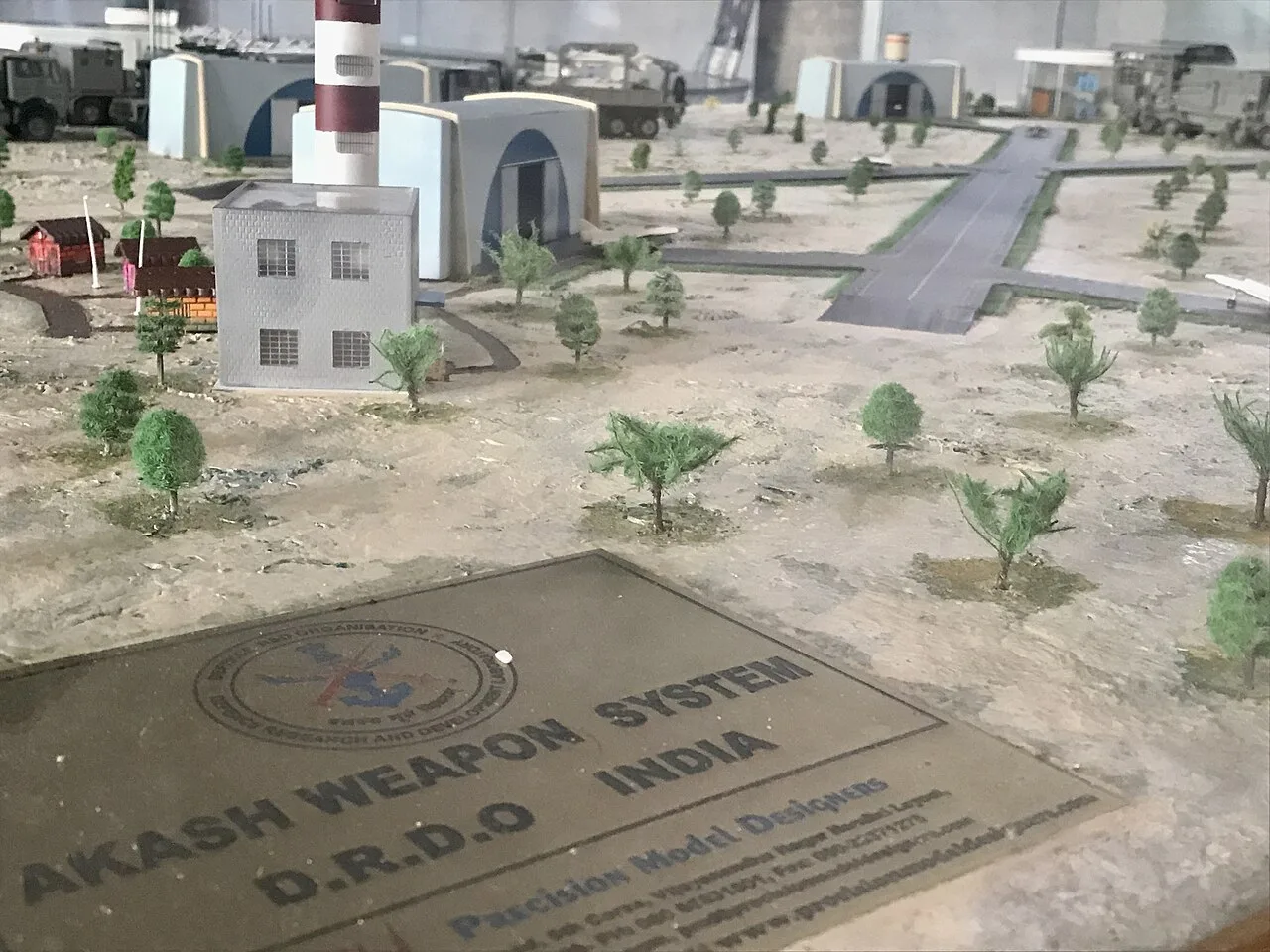
Akash is India’s medium-range, mobile surface-to-air missile system, designed by the Defence Research and Development Organisation (DRDO) and built by Bharat Dynamics Limited (BDL) and Bharat Electronics Limited (BEL). It has served with the Indian Air Force since 2012 and the Indian Army since 2015, and Armenia became its first confirmed export customer, receiving its first battery in November 2024.
What Is the Akash System?
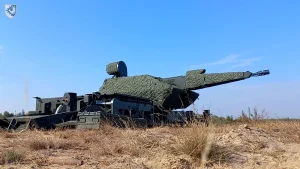
Akash (Hindi for “sky”) is a system, not just a missile. A battery combines launchers, a fire-control radar, a command post and support vehicles, all linked by data links. Its job is to defend air bases, army formations and key sites against fighter jets, helicopters, drones, cruise missiles and air-to-surface missiles. India has also tested it against unmanned targets in a missile-defence role.
Development began in the 1980s, and the first flight test took place in 1990, according to the published program history. A long series of trials followed, including 16 flight trials completed by August 2006 and Air Force user trials in December 2007.
How It Works
An Akash battery has four self-propelled launchers carrying three missiles each, a Rajendra 3D phased-array radar and a Battery Control Centre. The Rajendra radar can track up to 64 targets and guide missiles against up to 12 of them. Two batteries form an Air Force squadron, and up to four make an Army group (regiment). A Group Control Centre ties the batteries together and assigns targets, taking into account how many healthy missiles each battery has left.
The missile is powered by a solid-fuel booster followed by a ramjet sustainer motor, which lets it keep flying at supersonic speed (Mach 1.8 to 2.5) through the engagement. It carries a 60 kg high-explosive, pre-fragmented warhead with a proximity fuse that detonates near the target. The original version uses command guidance from the ground; newer versions add an onboard radar seeker.
Technical Specifications
| Parameter | Value (Akash Mk1 / 1S unless noted) | Note |
|---|---|---|
| Range | About 25 km (Mk1/1S), about 30 km (Akash Prime) | Akash-NG is rated higher; figures vary by source |
| Speed | Mach 1.8 to 2.5 | Roughly 2,200 to 3,060 km/h |
| Warhead | 60 kg high-explosive, pre-fragmented | Radio proximity fuse |
| Weight and length | About 720 kg, about 5.8 m | Diameter 30 to 35 cm |
| Ceiling | About 18 to 20 km | Altitude figures differ across sources |
| Guidance | Command guidance with data link; active radar seeker on 1S/Prime | Seeker adds accuracy against hard targets |
| Radar | Rajendra 3D phased-array (battery level) | Tracks up to 64 targets, engages up to 12 |
| Launch platforms | Tatra or BEML wheeled trucks, T-72 or BMP-2 tracked chassis | Mobile, can cover a moving convoy |
Variants
Akash Mk1 is the baseline missile. Akash 1S adds an indigenous radio-frequency seeker next to the original command guidance; DRDO tested it in May 2019. Akash Prime uses an improved seeker and offers 360-degree engagement; its first trial was on 27 September 2021, and in July 2025 DRDO and the Army fired it in Ladakh at more than 15,000 feet (about 4,600 m), scoring two direct hits on fast aerial targets. Akash-NG (New Generation) is a separate, longer-range design approved in September 2016 with 470 crore rupees in funding.
Orders and Users
| User | Details | Status |
|---|---|---|
| Indian Air Force | 8 Mk1 and 7 Akash 1S squadrons reported; first induction ceremony 3 March 2012 | In service |
| Indian Army | Regiments inducted from 5 May 2015; in March 2023 the Defence Ministry signed a contract with BDL worth more than 8,160 crore rupees for two Akash Prime regiments | In service, expanding |
| Armenia | 2022 deal with BDL reported at about 6,000 crore rupees, including Akash and 15 Ashwin air-defence systems; first battery delivered 12 November 2024 | In service |
| Other buyers | Philippines, UAE and others have been reported as interested; no confirmed contracts in sources checked | Unconfirmed |
India’s Cabinet Committee on Security cleared Akash exports on 30 December 2020. The Indian armed forces’ combined orders were reported at about 23,300 crore rupees as of 2014.
Operational Record
The Army deployed Akash along the Line of Actual Control in Ladakh in June 2020 during the stand-off with China. Indian forces also employed Akash systems during the May 2025 India-Pakistan conflict, and Indian officials credited the system with helping stop incoming missiles and drones. Independent confirmation of intercept counts is limited, so those claims should be read as official statements.
The record is not uniformly positive. A 2017 audit by India’s Comptroller and Auditor General said poor storage could shorten missile life and reported that 6 of 20 missiles from stock failed in testing. In March 2016 the Army said the original Akash did not meet its needs for defending strike corps in forward areas and chose Israeli-origin quick-reaction missiles for some requirements, before later ordering improved Akash Prime regiments.
Comparable Systems
| System | Origin | Class |
|---|---|---|
| Akash | India | Medium-range, mobile, ramjet missile |
| MRSAM / Barak-8 | India-Israel | Medium-to-long-range, vertically launched |
| S-125 Pechora | Soviet Union/Russia | Older medium-range system Akash was meant to replace in IAF service |
| NASAMS | Norway-US | Medium-range, uses AMRAAM-family missiles |
Turkish Alternatives
Turkey fields its own layered air-defence programs. HİSAR-A+ and HİSAR-O+, developed by Aselsan and Roketsan, are low- and medium-altitude systems in the same broad role, and Türkiye’s Siper family is aimed at longer ranges. They differ from Akash in guidance, radar integration and export terms, and direct performance comparisons are not available from public sources.
Frequently Asked Questions
Q: What is the range of the Akash missile?
A: Mk1 and 1S are listed at about 25 km, and Akash Prime at about 30 km. Some older reports cite up to 45 km for the system against aircraft, so figures vary by source.
Q: Who makes the Akash system?
A: DRDO designed it. BDL produces the missile and BEL produces radars and control centres. Tata Advanced Systems and Larsen & Toubro supply launchers and other subsystems, according to published program descriptions.
Q: Which countries use it?
A: India and Armenia are confirmed operators. Armenia received its first battery on 12 November 2024.
Q: What is the difference between Akash and Akash Prime?
A: Prime has an indigenous active seeker with 360-degree engagement and was tested at high altitude in Ladakh in 2025. The original relies mainly on ground command guidance.
Q: Is Akash the same as Akash-NG?
A: No. Akash-NG is a newer missile with a different design and longer range, approved in 2016.
Q: Has Akash been used in combat?
A: Indian forces deployed it during the 2025 India-Pakistan conflict. Detailed, independently verified engagement data has not been published.
Sources: DRDO, Bharat Dynamics Limited, Bharat Electronics Limited, India Ministry of Defence announcements, Comptroller and Auditor General of India, Indian Express, The Hindu, Wikipedia (cross-check)