Nepal’s Military Strength: Tanks, Aircraft and Armoured Vehicles in the Inventory (2026)

Nepal’s military inventory raises a different question from most countries in this series: can a force be described by what it does not have? In Global Firepower’s 2026 tables, Nepal’s tank column reads zero, its fighter column reads zero and its naval column reads zero. Yet the country sits at the top of the list of contributors to UN peacekeeping. This piece works through the Nepali Army’s land, air and air-defence inventory line by line from open sources, then examines the geography and doctrine that shaped it.
At a Glance
- Active personnel: ≈ 96,500 active troops (total military personnel ≈ 195,000)
- Main battle tanks: 0 — no tanks in the inventory
- Military aircraft (total): ≈ 17; fighters: 0
- Armoured vehicles: ≈ 1,100 (mostly MRAPs and wheeled APCs)
- Navy: None — the country is landlocked
- UN peacekeeping: World’s largest troop contribution: ≈ 5,900 personnel across 11 missions
Note: The inventory figures below are approximate values drawn from open sources such as Global Firepower, the IISS Military Balance and SIPRI.
About the Nepal Armed Forces
The Nepali Army is the country’s only combat service. There is no separate air force or navy; the small fleet of aircraft and helicopters is operated by the Nepalese Army Air Service within the army itself. The Nepal Police and the Armed Police Force are separate internal-security organisations. The force is built around eight divisions running from the Far West to the East, plus artillery, signals, engineer and air-defence brigades.
Global Firepower’s 2026 data place Nepal 124th of 145 countries, with active personnel between 96,500 and 98,500 and a defence budget of roughly $431 million. Nepal’s own FY2025/26 defence allocation was announced at around 62 billion rupees. Sources diverge on what share of GDP that represents; because the methodologies differ, the budget figure deserves caution when reading the inventory.
The defining feature of the inventory is its weight in armoured vehicles. With no main battle tanks at all, the army fields a mixed fleet of roughly 1,100 vehicles: Chinese WZ-551s and VN-4s, Indian-sourced Aditya mine-protected vehicles, South African Casspirs, Russian GAZ-2975 Tigrs and legacy British Ferret scout cars. That mix reflects both a refusal to depend on a single supplier and the sheer weight of donated and granted equipment.
Artillery is extremely thin. The 2026 Global Firepower listing shows only 14 towed pieces — Italian-built 105 mm OTO Melara Mod 56 pack howitzers. The self-propelled artillery and MLRS columns are entirely empty. Around 70 120 mm mortars form the de facto backbone of battalion-level fire support.
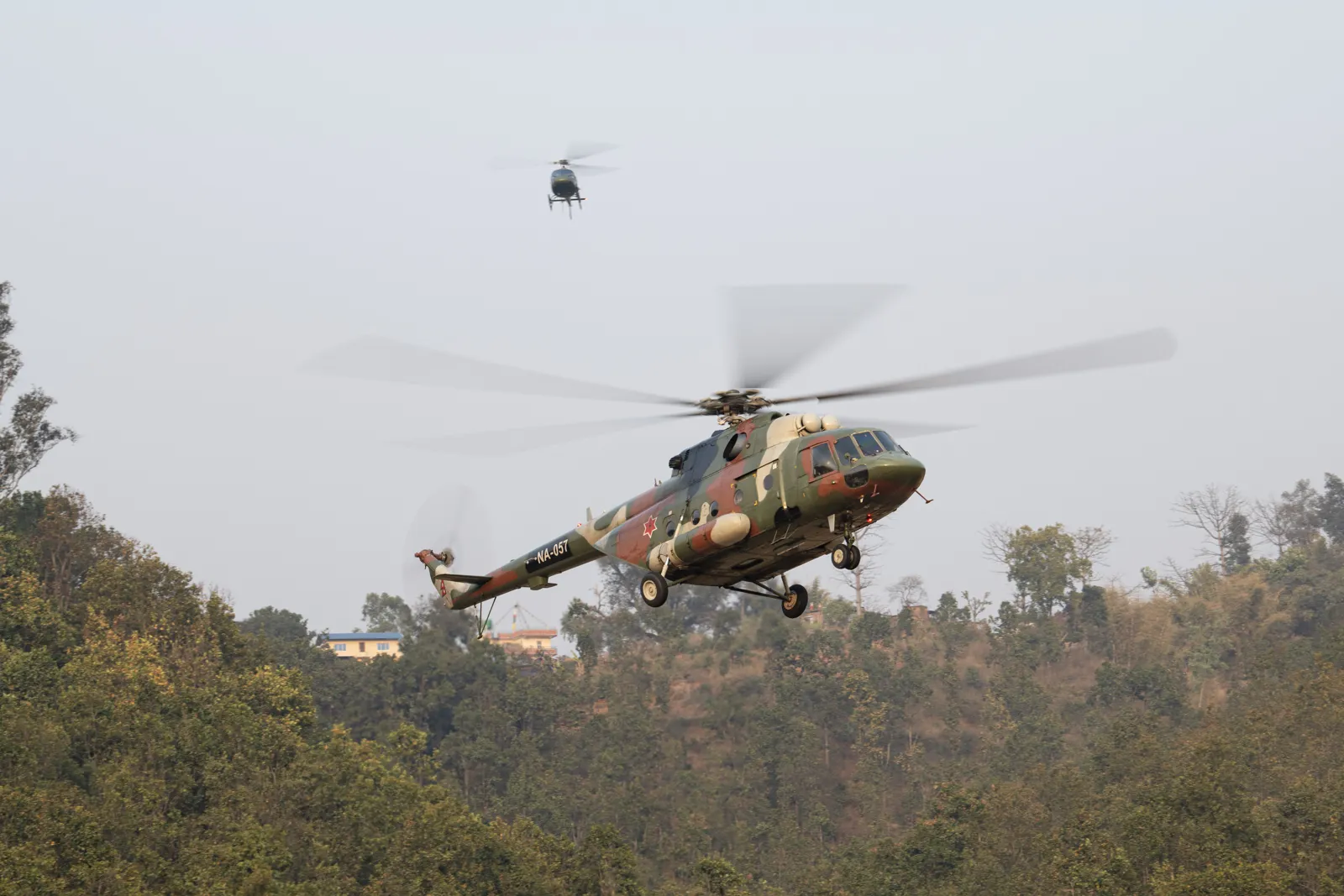
In the air the picture is simpler still. None of the 17 aircraft is a combat type. The fleet consists of CN-235-220, Y-12e and M28 Skytruck transports — the latter handed over under the US Foreign Military Financing programme in September 2025 — together with Mi-17/Mi-8 and Airbus H125 helicopters. Army sources in 2025 described a fleet of 7 aircraft, 15 helicopters and 40 pilots; the gap with Global Firepower’s total of 17 comes from counting methods and how non-operational platforms are treated.
Air defence is the weakest link in the inventory. Although the army maintains an air-defence brigade, no long- or medium-range surface-to-air missile is recorded in open sources. The layer rests on 40 mm Bofors L/70 anti-aircraft guns and WWII-generation 3.7-inch pieces now largely reduced to ceremonial and training roles. The ballistic and cruise missile column is likewise empty.
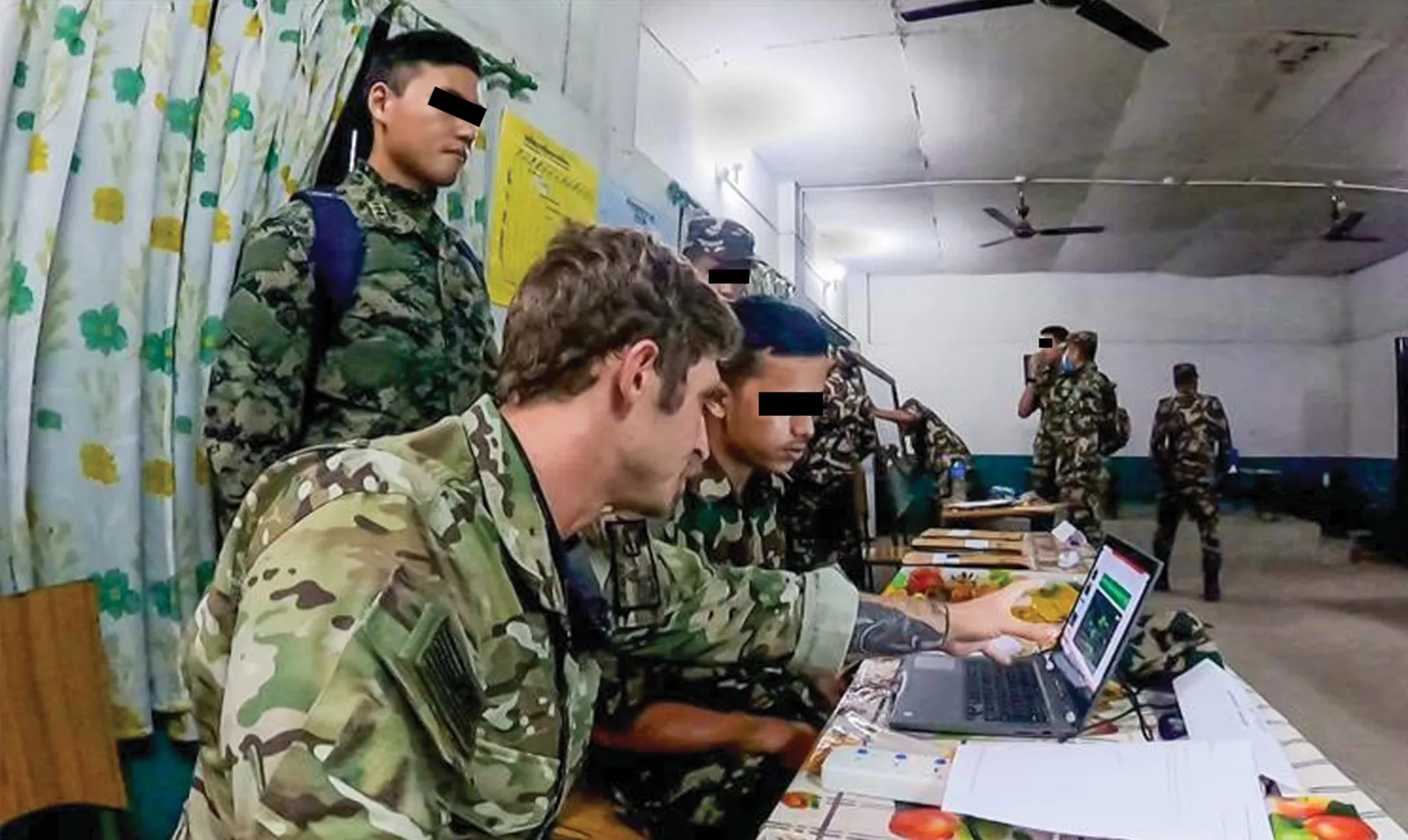
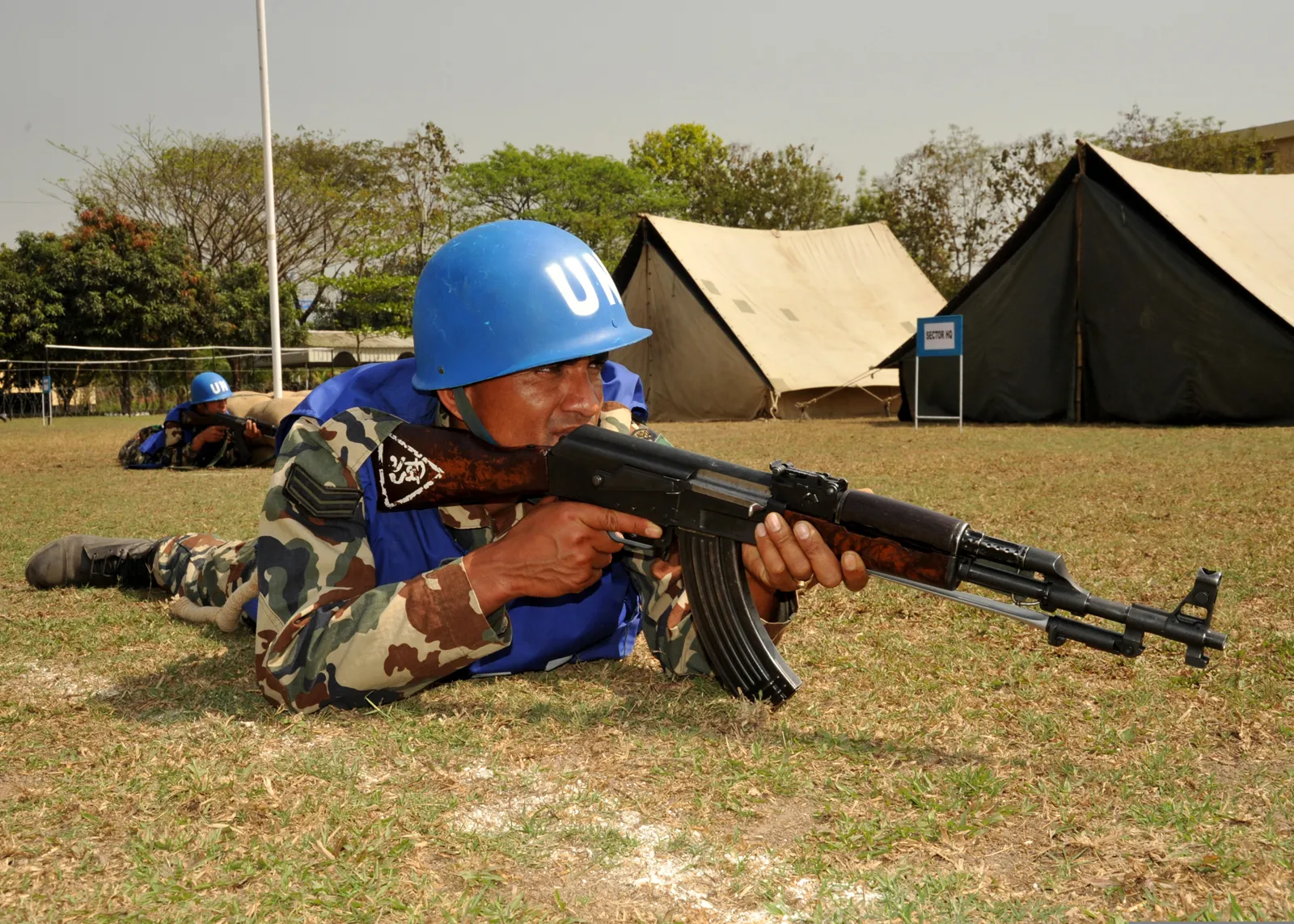
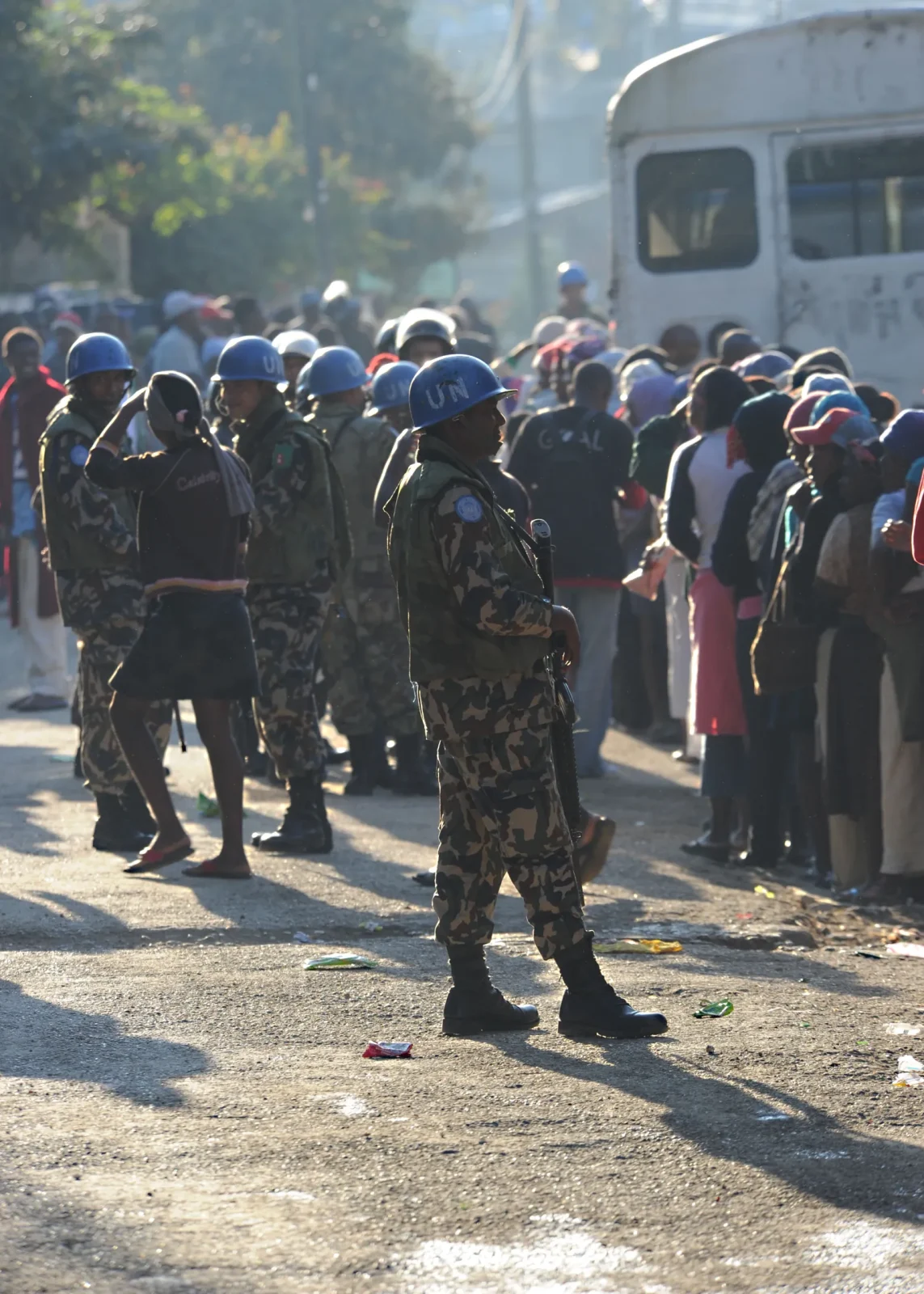
What actually defines Nepal’s military identity is not its inventory but its manpower. The country leads the list of troop contributors to UN peacekeeping: as of March 2025 some 5,900 Nepali soldiers were serving across 11 missions, 621 of them women. Nepal has pledged up to 10,000 personnel if the UN requires them. The Birendra Peace Operations Training Centre at Panchkhal, the institution that prepares them, hosted the multinational Shanti Prayas IV exercise in March 2024.
A second distinctive strand is the Gurkha tradition. Under the 1947 tripartite agreement, Nepali citizens serve both in the British Army’s Brigade of Gurkhas and in the Indian Army’s Gorkha regiments. But following India’s Agnipath recruitment reform in 2022, Kathmandu suspended Gurkha recruitment for the Indian Army — effectively pausing one of the oldest military ties between the two countries.
Recent procurement points in a telling direction. Nepal turned to China for 26 armoured personnel carriers and 72 tactical vehicles worth around 6 billion rupees, while Washington committed M28 transports and two Bell 412 helicopters through its military assistance programme. Kathmandu’s inventory is shaped as much by the balance of grants and donations as by commercial tender.
Land Forces Inventory
| System type | Est. quantity |
|---|---|
| Main battle tanks | 0 |
| Armoured vehicles (WZ-551, VN-4, Aditya MRAP, Casspir, GAZ-2975 Tigr, Ferret) | ≈ 1.100 |
| Towed howitzers (OTO Melara Mod 56, 105 mm) | ≈ 14 |
| Mortars (120-PM-43 and lighter classes) | ≈ 70 |
| Self-propelled artillery / MLRS | 0 |
Air Force Inventory
| Platform | Est. quantity |
|---|---|
| Total military aircraft | ≈ 17 |
| Fighters / attack aircraft | 0 |
| Transport aircraft (CN-235-220, Y-12e, M28 Skytruck) | ≈ 7 |
| Helicopters (Mi-17/Mi-8, Airbus H125/AS350) | ≈ 10-15 |
| Attack helicopters / UAVs | None in the inventory |
Missile and Air-Defence Systems
| System | Type / Note |
|---|---|
| Long- and medium-range SAM | None in the inventory |
| Man-portable air-defence missiles (MANPADS) | Not confirmed in open sources |
| Bofors L/70 40 mm anti-aircraft gun | Main weapon of the air-defence brigade |
| QF 3.7-inch anti-aircraft gun | ≈ 45 — WWII-generation, largely ceremonial/training |
| Ballistic or cruise missiles | None |
Naval Power
| Class / Type | Est. quantity |
|---|---|
| Total naval platforms | 0 |
| Coastline | None — landlocked between India and China |
| Naval personnel | 0 |
| Riverine and lake assets | Rescue boats tied to disaster response |
The Turkey Angle: Turkish Defence Industry
Nepal is one of the markets the Turkish defence industry has yet to enter. Open sources record no Turkish-built platform in the Nepali Army inventory and no defence-industry cooperation agreement between the two countries. This section should therefore be read not as an account of deliveries made, but as a market assessment mapping the limits of the current relationship and its possible points of contact.
The formal framework of the relationship sits in diplomatic and humanitarian territory. Türkiye and Nepal established diplomatic relations in 1962; Ankara is accredited to Nepal through its embassy in New Delhi, and Kathmandu to Türkiye through its embassy in Islamabad. In December 2022, in a telephone call between the two foreign ministers, it was agreed that Türkiye would open an embassy in Kathmandu. A memorandum of understanding on a political consultation mechanism between the two foreign ministries was signed in 2016.
Concrete cooperation has so far concentrated on disaster relief and development. After the April and May 2015 earthquakes Türkiye delivered humanitarian assistance and took part in search-and-rescue operations, and provided $2 million in development aid. TİKA funded a dormitory for Kathmandu University’s School of Management, and a Turkish school has operated in Kathmandu since 2002. On 26 August 2026 the Turkish Foreign Ministry issued a message of condolence over the flash floods and landslide in Nepal.
On procurement, the picture holds both opportunity and obstacle for Turkish industry. Nepal’s stated modernisation priorities — disaster-response capacity, armoured and tactical vehicles for UN deployments, unmanned aircraft for reconnaissance over rugged terrain, transport helicopters — map directly onto areas where Turkish industry is strong. Mine-protected vehicles such as the BMC Kirpi and Vuran, the Otokar Cobra and the Nurol Ejder are widely used on peacekeeping duty, and tactical-class UAVs sit in a cost band that low-budget inventories can absorb.
Against that, Kathmandu’s procurement behaviour is driven by price and grants. Buying 26 armoured vehicles from China and receiving transport aircraft through a US military assistance programme suggests Nepal moves according to the balance of donations and credit rather than its own purchasing power. For Turkish industry, competing in this market appears to depend less on product quality than on the financing model offered.
Regional precedent shows Turkish industry can break into South Asia. Bangladesh procured TRG-230 and TRG-300 guided rocket systems from Roketsan and signed an agreement in 2022 for Bayraktar TB2 drones. MKE’s overseas ammunition lines in Jordan and Mongolia illustrate a second model for entering low-budget forces. In Nepal’s case there is no contract on the table today; but the map of gaps in its inventory overlaps strikingly with the Turkish industry’s product range.
Frequently Asked Questions
How many tanks does Nepal have? None. Global Firepower’s 2026 listing shows zero main battle tanks. Its armoured strength consists entirely of wheeled armoured personnel carriers and mine-protected vehicles.
Does Nepal have fighter jets? No. All 17 aircraft are transports and helicopters; the fighter and attack columns read zero. Air assets belong not to a separate air force but to the Nepalese Army Air Service within the army.
Does Nepal have a navy? No. Nepal is landlocked between India and China; with no coastline, its naval personnel and vessel counts are zero. The boats on its rivers and lakes are rescue assets tied to disaster response.
Why does Nepal stand out in UN peacekeeping? Nepal leads the list of troop contributors to UN peacekeeping; as of March 2025 around 5,900 of its personnel were serving across 11 missions. It is both an institutional priority for the army and a choice that brings the country significant foreign currency and training.
Is there any Turkish-built system in Nepal’s inventory? Open sources confirm no Turkish platform in the Nepali Army inventory, and there is no defence-industry cooperation agreement between the two countries. The relationship today is limited to diplomatic, humanitarian and development strands.
Bottom Line
Nepal’s inventory is the clearest table of zeroes in this series: no tanks, no fighters, no surface-to-air missiles, no naval platforms. Reading it as a list of deficiencies would be misleading. For a country wedged between India and China with no access to the sea, military balance was never an attainable goal; Kathmandu invested not in deterrent platforms but in light infantry spread across eight divisions, a mine-protected vehicle fleet and disaster-response capacity. The army’s international standing was likewise built not by its inventory but by its first place in UN peacekeeping: the roughly 5,900 soldiers serving across 11 missions define Nepal by the people it sends rather than the weapons it holds. What will shape this inventory next is not a new tank or aircraft but three questions — whether the air-defence brigade moves beyond 40 mm guns, which supplier meets the armoured-vehicle requirement of UN deployments, and whether a UAV line opens for reconnaissance over rugged terrain. That all three fall in areas where Turkish industry is strong makes a relationship that currently stands at zero worth noting for the future.