US Army Cuts Its Next-Gen Command Network Assessment From Months to Two Weeks

The US Army is running two rival command-network prototypes in the hands of two active-duty divisions at the same time — and has cut the time it takes to judge how each performed from months to one or two weeks after a field exercise ends. The compression, reported by the service’s Test and Evaluation Command, is arguably the more consequential half of the Next Generation Command and Control (NGC2) story.
Two divisions, two architectures
At Fort Carson, the 4th Infantry Division has been using a stack led by Anduril Industries with Palantir and Microsoft, under a $99.6 million contract awarded in July 2025. The 25th Infantry Division has been working with a competing approach led by Lockheed Martin.
The Army is not treating them as sealed competitors. Soldier feedback and technical data from each division’s exercises — Ivy Sting and Ivy Mass for the 4th ID, Lightning Surge for the 25th — are being shared across both efforts. July’s Project Convergence Capstone 6 at Fort Irwin provided the broadest evaluation environment so far.
The clock is the capability
In conventional military testing, turning exercise data into an assessment can take months. For software-defined systems that is close to useless: by the time feedback reaches the developers, the build it describes is gone. ATEC’s one-to-two-week turnaround is an attempt to import continuous-integration rhythm into formal military evaluation.
It also changes the competitive dynamic. Pooling findings across two vendor teams raises the floor for both rather than producing a single winner in the dark.
The common data layer
In June 2026 the Army said it had settled on a shared data foundation that both teams will build on, with Anduril leading the common data layer baseline. The intent is to keep NGC2 out of any single vendor’s closed architecture and ensure sensors, firing units and headquarters software speak the same data model.
The stated near-term goal is to have two divisions synchronised on next-generation command and control by the end of the year.
Why it matters
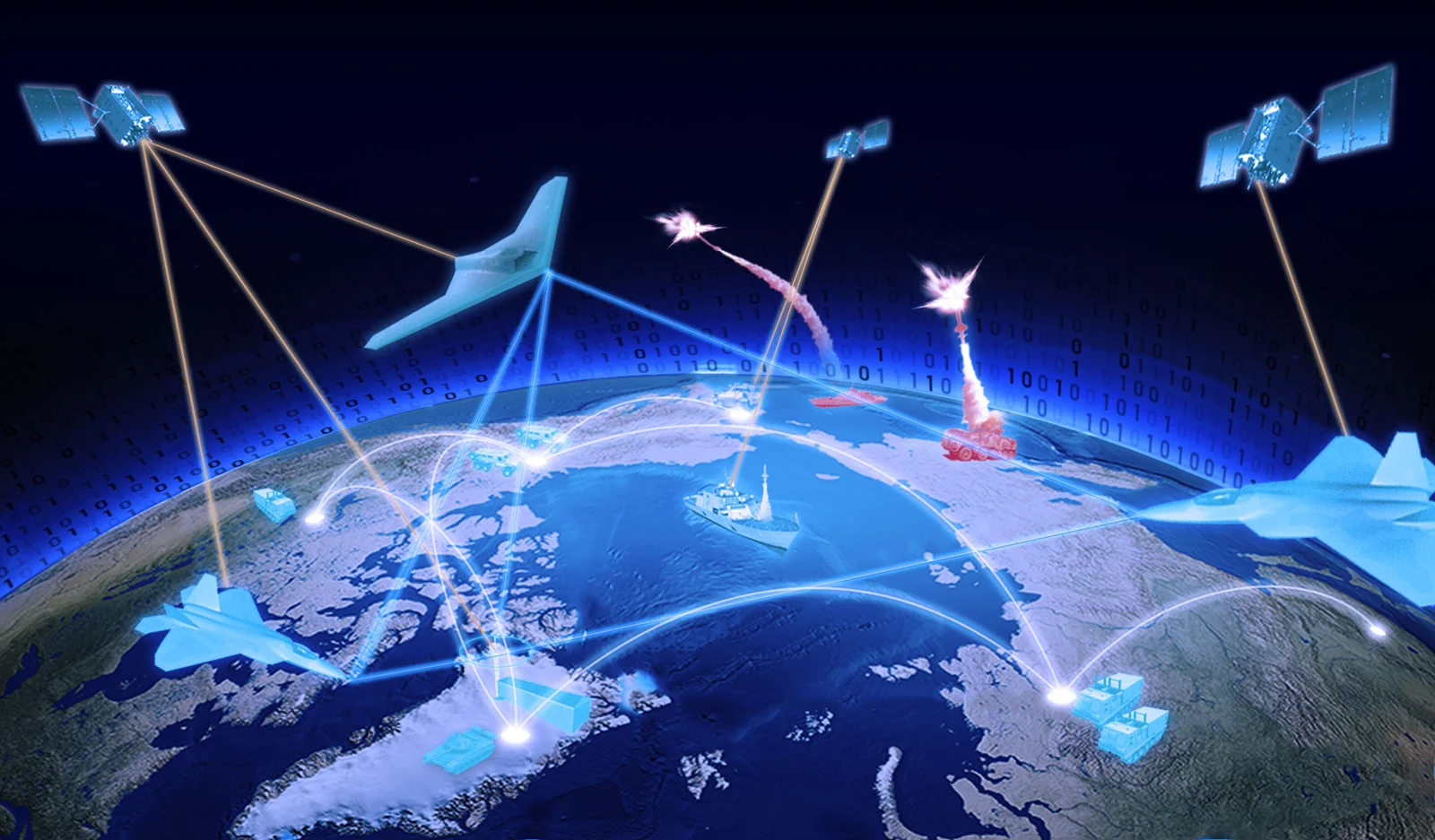
NGC2 is an attempt to collapse decades of accreted, awkwardly interconnected battle management systems onto one data backbone — pushing a common picture from division headquarters down to squad level and shortening sensor-to-shooter time.
The harder requirement is degraded operation. With electronic warfare and counter-space threats maturing, a network that only works when fully connected is a liability, a lesson Ukraine has delivered repeatedly. Running two architectures in parallel is partly insurance against betting early on the wrong assumption.
The same transformation is underway in Türkiye, where HAVELSAN and ASELSAN battle management, C2 and data link products are converging on a shared operational picture at brigade and division level. The procurement method on display here — rival architectures compared in the field, with a radically shortened assessment loop — is as exportable an idea as the software itself.
Sources
- US Army (army.mil) — ATEC’s continuous NGC2 evaluation at Project Convergence Capstone 6
- DVIDS — “ATEC transforms Test and Evaluation for NGC2”
- Defence Blog, 13 September 2026