China’s Fourth Carrier Type 004 Shows Possible Nuclear Signs: CSIS Flags Two 15×15-Meter Compartments

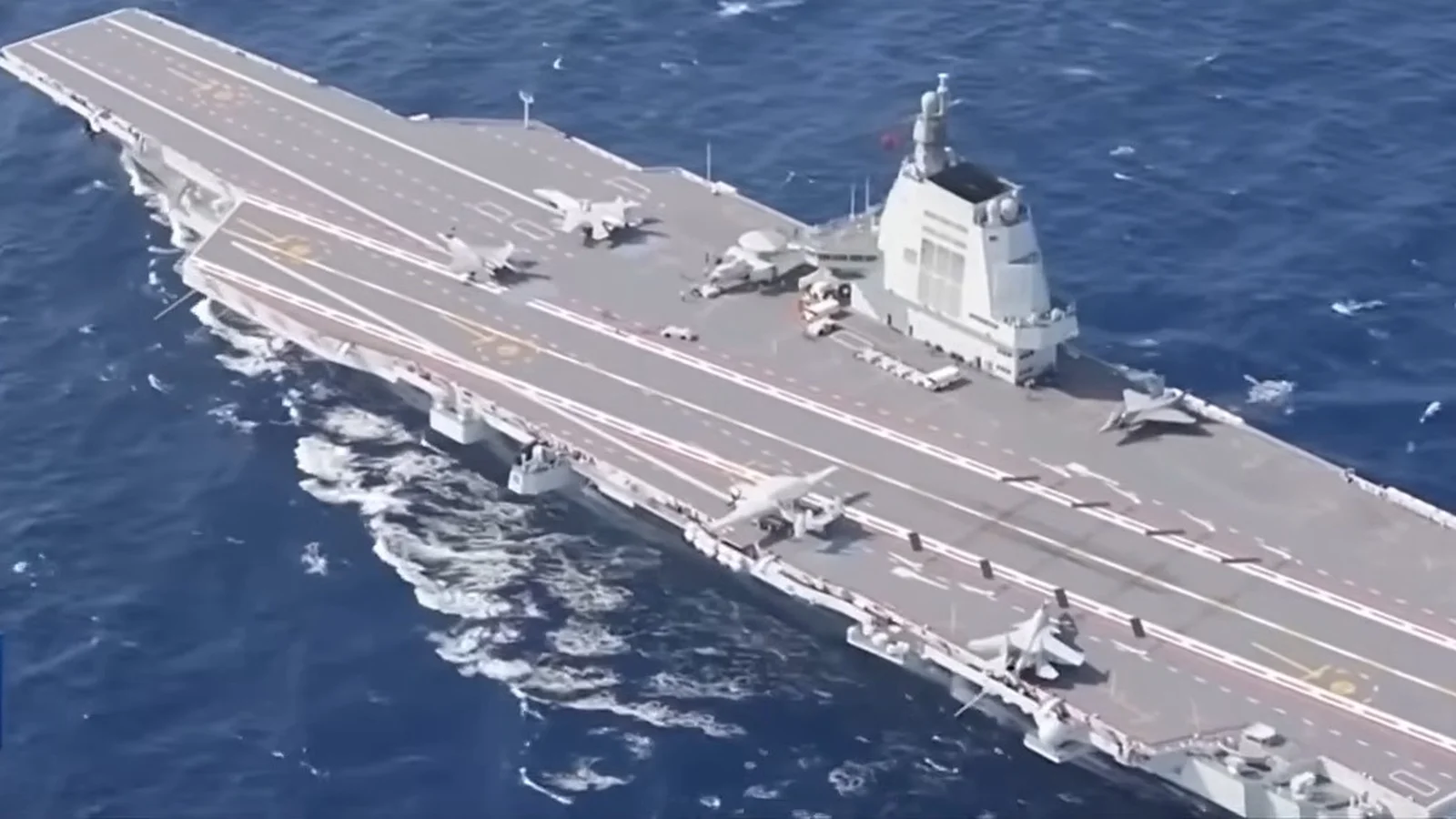
China’s fourth aircraft carrier, Type 004, is taking shape at Dalian Shipyard with ongoing hull and flight-deck construction. Based on satellite imagery taken on November 12 and reported by The Aviationist on November 16, Army Recognition’s analysis cites an October 27 assessment from the Washington-based Center for Strategic and International Studies (CSIS) identifying two roughly 15-by-15-meter compartments resembling shielded reactor spaces. CSIS rates nuclear propulsion as “likely” based on this finding, but reactor output, fuel type and electrical capacity remain unknown, and China’s Ministry of National Defense has made no official statement on the propulsion system.
More concrete data exists on the carrier’s launch systems: China’s Ministry of National Defense confirmed in September 2025 that Type 004’s predecessor, the Type 003 carrier Fujian, had completed launch-and-recovery tests using electromagnetic catapults with J-35, J-15T and KJ-600 aircraft. CSIS’s assessment says four catapults and a third aircraft elevator are “plausible” for Type 004, though neither has been confirmed. There is no official figure for aircraft capacity; secondary estimates range from 75 to 100, which the sources describe as speculative.
For comparison, the U.S. Ford-class carriers are better documented: congressional testimony states they run on two nuclear reactors driving four shafts, with an officially stated speed above 30 knots and electrical capacity about three times that of the Nimitz class. The U.S. Naval Sea Systems Command (NAVSEA) lists Ford-class capacity at 75 or more aircraft, with design targets of 160 sorties a day sustained over 30 days, rising to 270 a day during a four-day surge. USNI News reported in August 2026 that the U.S. Chief of Naval Operations said Ford had exceeded Nimitz-class sortie-generation performance.
The analysis stresses that direct comparisons remain limited. Type 004’s nuclear propulsion might eventually match Ford’s endurance and speed, but without confirmed power output, the claim cannot be tested. A similar gap applies to airborne early warning: China’s KJ-600 is compared with the U.S. E-2D Advanced Hawkeye, which carries AN/APY-9 radar and Cooperative Engagement Capability, but public data on KJ-600 performance is limited. No public evidence exists of a Chinese platform equivalent to the U.S. EA-18G Growler electronic-warfare aircraft.
The analysis also notes that nuclear propulsion alone does not guarantee sustained air power: aviation fuel, munitions, spare parts, and escort and replenishment ships are still required regardless of reactor type. On the U.S. side, F-35C launch-and-recovery testing began aboard USS John F. Kennedy in October 2026, though that does not mean an operational F-35C squadron is currently aboard Ford. According to the analysis, confirming Type 004’s real capability will require verified propulsion and deck-layout data, sea trials, and repeated operations with a full air wing.
Sources
- Alain Servaes, “China’s Fourth Aircraft Carrier Advances Toward Nuclear Propulsion to Rival U.S. Ford-Class,” Army Recognition, November 17, 2026, 19:06 — https://www.armyrecognition.com/news/navy-news/2026/chinas-fourth-aircraft-carrier-advances-toward-nuclear-propulsion-to-rival-u-s-ford-class
- Center for Strategic and International Studies (CSIS), satellite-imagery assessment, October 27, 2026 (as cited in the Army Recognition analysis)
- The Aviationist, satellite-imagery report, November 16, 2026 (as cited in the Army Recognition analysis)