U.S. Air Force Extends F-15EX Fighter Range With Additional Conformal Fuel Tanks

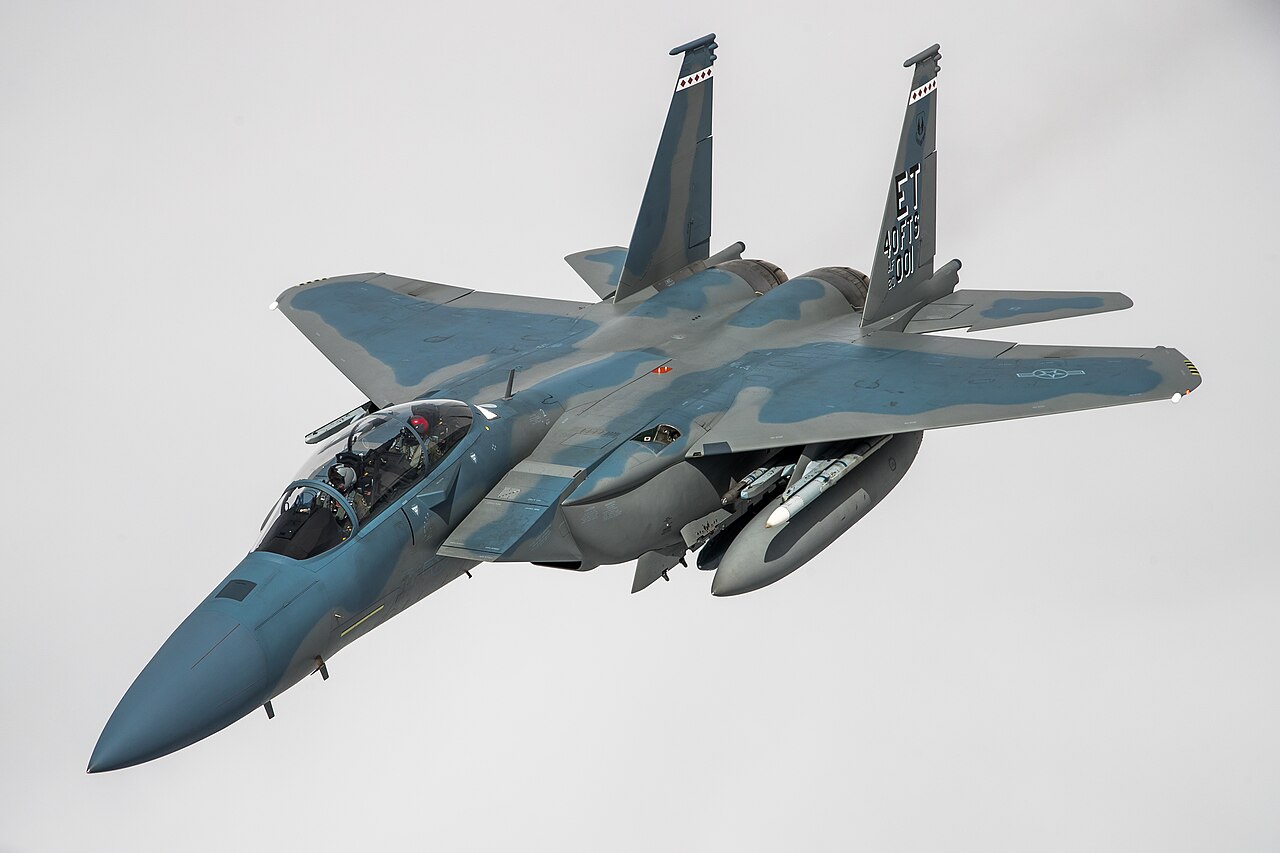
The U.S. Air Force is integrating conformal fuselage fuel tanks onto the F-15EX Eagle II to extend the fighter’s range. The new tanks are shaped to hug the aircraft’s fuselage, limiting the added aerodynamic drag.
The key advantage of conformal tanks is that they don’t occupy underwing weapon stations. That allows the F-15EX to gain extra fuel and range while keeping its underwing hardpoints fully available for munitions.
The F-15EX Eagle II, built by Boeing, is positioned as the newest and highest payload-capacity variant of the F-15 family, designed for both air-superiority missions and precision-guided munitions delivery.
The Air Force continues to expand its F-15EX orders as part of a plan to grow the fleet; earlier budget cycles had targeted doubling the annual delivery rate. The added range is a capability with direct relevance to operations over vast theaters such as the Pacific.
This stage of the program comes as F-15EX integration continues across a range of units, from Air National Guard wings to active-duty squadrons. The extended range from the new tanks is expected to strengthen the jet’s role in both deterrence and long-range patrol missions.
The F-15EX was developed primarily to replace retiring F-15C/D Eagle jets. It can carry munitions across up to 12 weapon stations under its wings and fuselage, giving it one of the highest weapons-payload capacities of any fighter in the U.S. inventory. The added range from conformal tanks extends its operational radius without sacrificing that heavy payload capacity.
The Air Force has been basing F-15EX jets primarily at Pacific-facing installations such as those in Alaska and Oregon, a pattern that points to the aircraft’s intended role in Indo-Pacific scenarios involving vast distances. While the program’s total acquisition target has been revised over time, Air Force officials emphasize that the F-15EX is meant to serve as a high-capacity “missile truck” complementing the fifth-generation F-35 fleet.
Built at Boeing’s St. Louis facility, the F-15EX also continues to draw international interest, with countries such as Israel and Indonesia among those weighing or pursuing orders. Range-extending upgrades like the conformal fuel tanks are expected to reinforce the aircraft’s competitiveness in the export market as well.
Air Force officials say flight testing of the conformal tank integration is already underway, with the first operationally tank-equipped squadrons planned to enter service in the coming years. Testing aims to measure not just the added fuel capacity but also the tanks’ effect on the aircraft’s radar cross-section and maneuverability.
The F-15EX program’s total unit cost runs above $80 million depending on configuration, positioning it near the F-35’s unit cost but with a different mission profile. The Air Force continues to present the two jets as complementary rather than competing: the F-35 for missions requiring low observability, and the F-15EX for missions demanding heavy payload and speed.
Sources
- Army Recognition — “U.S. Air Force Extends F-15EX Fighter Jet Range With Additional Fuselage Fuel Tanks” (November 9, 2026). Read source — Conformal tank integration details