Russian Drone Strikes 10-Story Apartment Block in Galați: Romania Scrambles F-16s, NATO East Flank Logs 28th Airspace Breach

According to Defence Industry Europe and Breaking Defense reports dated 29 May 2026, a Russian drone struck a 10-story apartment block in the southeastern Romanian city of Galați during overnight strikes against Ukraine. The drone’s entire payload detonated; fires broke out in two stairwells of the 10th floor and five vehicles in the parking area were damaged. The strike is the first in a densely populated Romanian neighbourhood to produce casualties since the war began.
At a Glance
- Location: Galați, southeast Romania — 650 km frontier with Ukraine
- Target: 10-story civilian apartment block, roof detonation
- Casualties: 2 minor (woman and child hospitalised), 2 panic-attack cases, 70 evacuated
- Response: 2 × F-16 + 1 military helicopter scrambled with shoot-down authority
- Tally: 28th airspace breach; 47 drone fragments on Romanian soil to date
- Date: Overnight, 29 May 2026
Background: Quiet Escalation on NATO’s Eastern Flank
Romania occupies one of NATO’s most exposed Black Sea triangles: Ukraine’s Izmail and Reni ports sit just across the Danube, Bulgaria lies to the south, and the Turkish straits open to the east. Bucharest has been recording drone debris along the Danube since 2022, but the first residential impact with injuries occurred at Galați. Defense Express puts the total fragment count since late 2024 at 47.

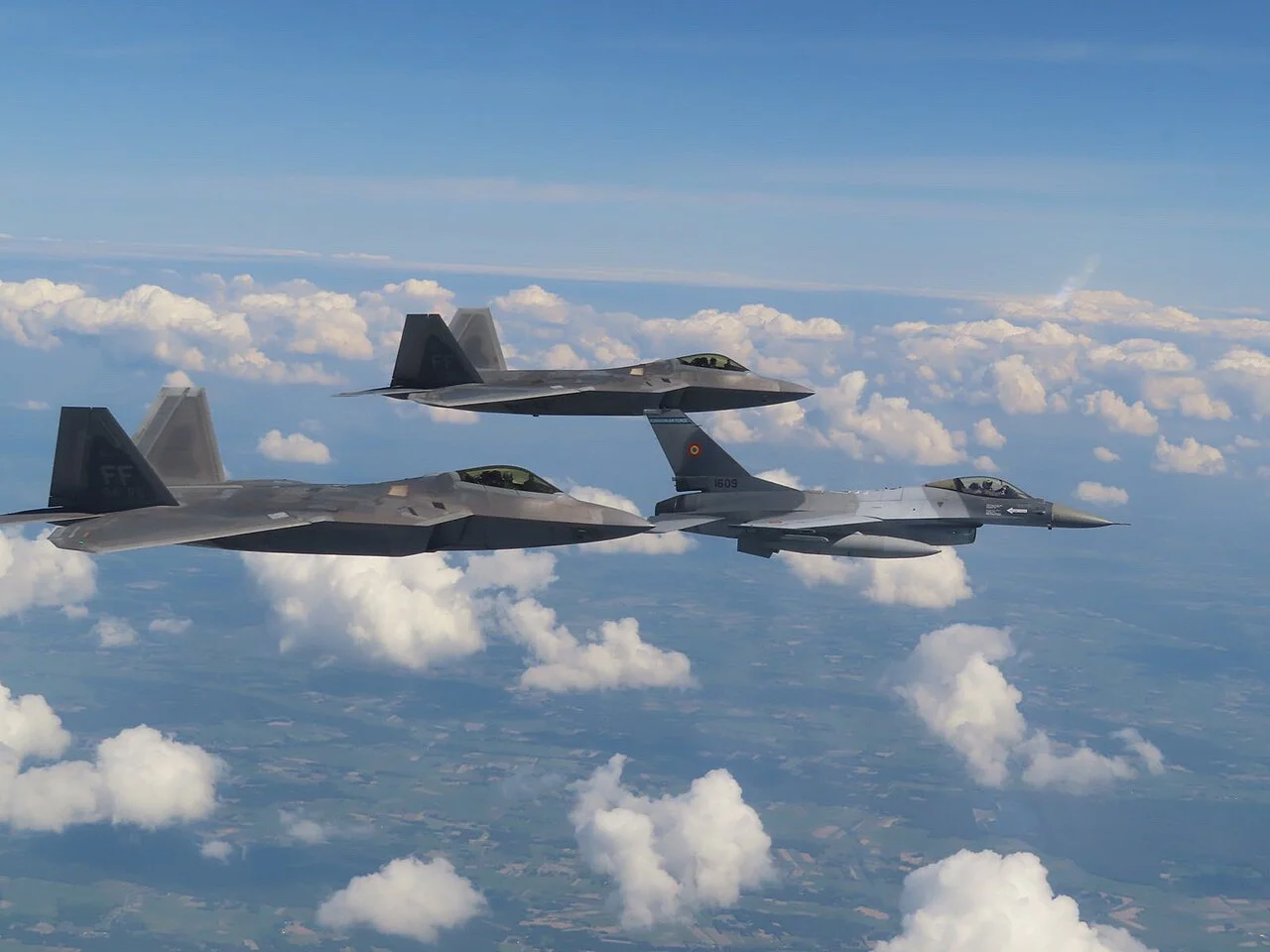
Romanian Air Force F-16s on NATO air policing duty. Photo: USAF / Wikimedia Commons.
The Strike: Sequence and Official Response
The detonation on the 10th floor injured two women and a child; two further residents were treated for panic attacks. Romania’s Ministry of National Defence confirmed that Russian drones have breached Romanian airspace 28 times since the Danube port strikes began, with 47 fragment incidents recorded. The ministry also confirmed that both F-16s and the helicopter were flying with shoot-down authority.
| Parameter | Value |
|---|---|
| Building | 10-story civilian apartment |
| Impact | Roof / 10th-floor stairwells |
| Injured | 2 minor (hospitalised), 2 panic attacks |
| Damage | 5 vehicles, two stairwell fires |
| Aircraft | 2 × F-16 + 1 helicopter |
| ROE | Shoot-down authorised |
| Total breaches | 28 airspace, 47 fragment impacts |
Eastern Flank Context
The Galați strike drew sharp reaction across EU and NATO capitals. European Commission President Ursula von der Leyen called it “another escalation of the war” and signalled additional EU sanctions. Polish Foreign Minister Radosław Sikorski stated: “Regardless of whether it was on purpose or the result of ineptitude, Russia is still dangerous and we must defend ourselves against it.”
Bucharest has already been accelerating talks on an additional Patriot battery, NASAMS, and short-range air-defence systems. Galați is likely to sharpen Romania’s requests for further NATO and EU air-defence reinforcements.
Why It Matters for Turkey
On the Black Sea’s opposite shore, Turkey is NATO’s primary southern shield. The Galați strike re-confirms the reach and circular error profile of Russian-built Shahed/Geran-derivative drones — a profile that directly informs Turkish airspace defence planning.
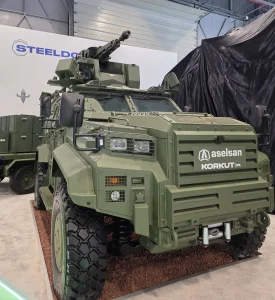
Turkey’s indigenous air-defence backbone — HİSAR-A+, HİSAR-O+, SİPER, KORKUT, GÖKDOĞAN and GÖKBORA, alongside the integrated STEEL DOME concept — is calibrated for low-altitude saturation attacks of exactly this type, particularly along Turkey’s Black Sea coast (Sinop–Trabzon). ASELSAN GORDION-based C-UAS networks, the ROKETSAN ALKA directed-energy system, and BAYRAKTAR KIZILELMA-based intercept roles offer a supply chain far more stable than imported packages.
More strategically, Galați will accelerate NATO air-defence budget demand, opening a sizeable export window for Turkish industry. Poland, Slovakia, Bulgaria and Romania are running short and medium-range air-defence tenders in which Turkish systems — NATO-compliant and unmatched on price-performance — sit firmly on the table. The HİSAR family and NATO-interoperable SİPER variants are realistic candidates in Bucharest’s likely fast-track procurement.
Frequently Asked Questions
Was the Galați drone a Shahed? Romania’s MoD has not yet confirmed the type publicly, but the majority of previous fragment incidents on the Danube were identified as Iranian-design Shahed/Geran derivatives.
Has Romania invoked Article 5? No. Bucharest is pursuing diplomatic channels, additional EU sanctions, and a NATO air-defence reinforcement request.
Did the F-16s engage? The ministry confirmed shoot-down authority; whether the aircraft actually engaged is not yet confirmed in open-source reporting.
Is this the first civilian injury in Romania? Yes. The previous 47 fragment impacts caused structural damage only; Galați is the first direct residential impact producing casualties.
How does NATO air policing work here? Romania maintains continuous QRA, with F-16s able to scramble within 15 minutes, coordinated directly with CAOC Torrejón under Allied Air Command.
Bottom Line
The Galați strike confirms that Russian low-cost drone warfare is now a persistent threat on NATO soil along the Black Sea basin. Romania’s accelerated air-defence requests will likely trigger a new procurement wave on the alliance’s south-eastern flank — placing Turkey, with both indigenous systems and geographic depth, at the centre of that wave.