





What Is THAAD? What Does It Do? Lockheed Martin’s 200 km Altitude Ballistic Missile Defense System

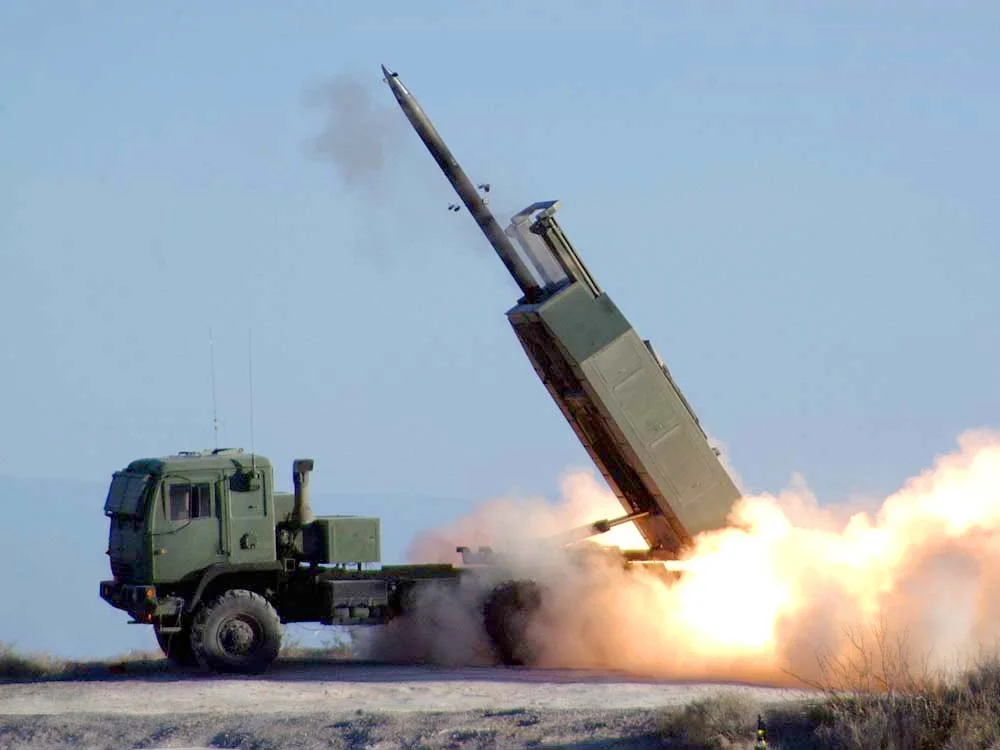
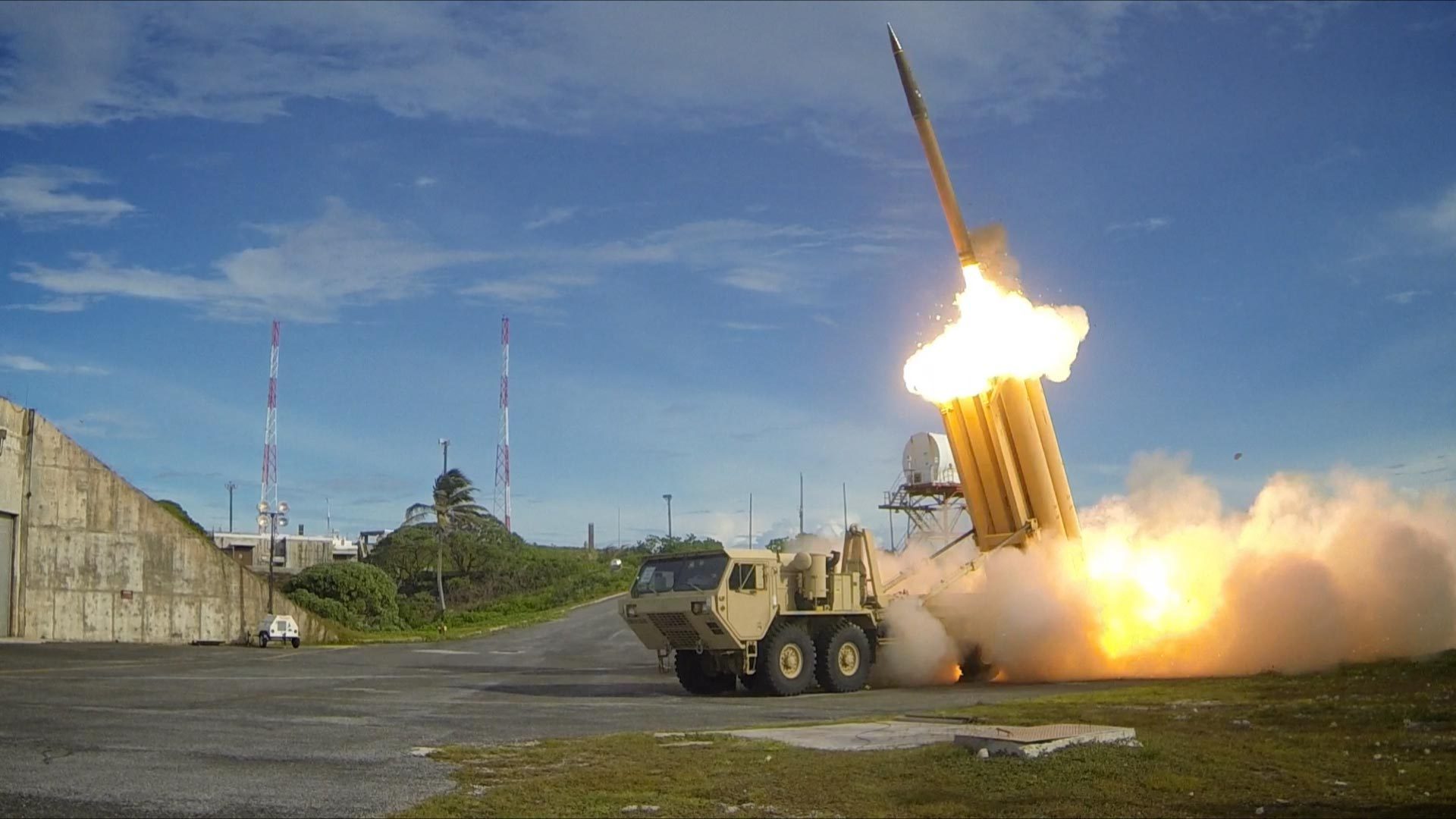
The U.S. upper-atmosphere ballistic missile defense backbone, Lockheed Martin THAAD (Terminal High Altitude Area Defense), destroys short and medium-range ballistic missiles up to 200 km altitude using kinetic impact. Operated by Saudi Arabia, UAE, South Korea, and Israel. Türkiye’s SİPER and the upcoming SİPER-2 hypersonic program are the domestic answer in the same segment.
What Is It?
THAAD is a ballistic missile defense (BMD) system developed by Lockheed Martin for the post-Cold War U.S. Army. Operating above Patriot and below GMD — i.e., the 40—200 km upper-atmosphere/lower-space band. The interceptor carries no conventional explosive warhead; it destroys targets through “hit-to-kill” kinetic impact. The AN/TPY-2 X-band AESA radar detects ballistic missiles at up to 1,000 km.
What Does It Do?
THAAD intercepts short-range (SRBM, <1,000 km), medium-range (MRBM, 1,000—3,000 km), and limited IRBM-class ballistic missiles during the terminal phase (atmospheric reentry). Patriot PAC-3 covers low-altitude (15—40 km), THAAD mid-upper altitude (40—200 km), and GMD space (300+ km) — this three-layer architecture forms the U.S. BMD doctrine.
Technical Specifications
| Specification | Value |
|---|---|
| Class | Upper-atmosphere ballistic missile defense system |
| Interceptor length | 6.17 m |
| Interceptor diameter | 340 mm |
| Interceptor weight | 900 kg |
| Motor | Pratt & Whitney solid fuel |
| Range | 200 km |
| Altitude | 40—200 km |
| Speed | Mach 8+ |
| Guidance | Inertial + GPS + IIR seeker |
| Warhead | Hit-to-kill kinetic impact (no HE warhead) |
| Radar | AN/TPY-2 X-band AESA, 1,000 km range |
Who Bought It, At What Price?
THAAD battery cost is 800 million — 1 billion USD. Each battery includes 6 launchers, 48 interceptors, 1 radar, and a command center. Interceptor unit cost is approximately 12—15 million USD. Saudi Arabia ordered 7 batteries (15B USD) in 2017, UAE 2 batteries (1.1B USD), South Korea 1 battery (political friction).
| Operator | Batteries | Interceptors | Year |
|---|---|---|---|
| U.S. Army | 7 | 480+ | 2008 |
| UAE | 2 | 96 | 2015 |
| Saudi Arabia | 7 (planned) | 360+ | 2017—2026 |
| South Korea | 1 | 48 | 2017 |
| Romania (additional site) | 1 base | – | 2020 Aegis Ashore + THAAD |
| Israel (operational support) | 1 (temporary) | – | 2024 Iran crisis |
| Türkiye (request) | – | – | Rejected, post-S-400 |
Comparison With Turkish Counterpart
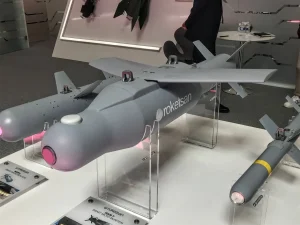
Türkiye’s THAAD equivalent is a multi-layered development: SİPER Block 2 (long-range air defense, ~150 km), SİPER-2 hypersonic development (next generation), and the HİSAR-U / SİPER-1 combination (100+ km). After S-400 sanctions and THAAD export rejection, Türkiye built a fully domestic BMD capability. ASELSAN GÖKDEMİR (space-based) and GÖKKUBBE (X-band early warning) radars are in parallel development.
| Criterion | THAAD (LM) | SİPER Block 2 (ROKETSAN) | SİPER-2 (in development) |
|---|---|---|---|
| Class | Upper-atmosphere BMD | Long-range SAM | Hypersonic interceptor |
| Altitude | 40—200 km | 30 km | 60+ km (goal) |
| Range | 200 km | 150 km | 200+ km (goal) |
| Speed | Mach 8+ | Mach 5 | Mach 6+ (goal) |
| Interceptor | Hit-to-kill | HE + proximity | Hit-to-kill (planned) |
| Radar | AN/TPY-2 X-band | EHSİM L/S band | GÖKKUBBE X-band (planned) |
| Cost | Very high | Domestic | Domestic |
Frequently Asked Questions
Why couldn’t Türkiye buy THAAD?
Does SİPER replace THAAD?
Why did Saudi Arabia pay so much for THAAD?
Does THAAD carry a nuclear warhead?
Is it effective against hypersonic threats?
Conclusion
THAAD is the mid-upper-layer product of modern BMD doctrine. After external access to S-400 and THAAD closed, Türkiye built domestic capacity through the SİPER ecosystem. The maturation of the SİPER-2 hypersonic variant in the 2030s will position Türkiye as a BMD exporter in the Europe-Asia market.
Sources
- Wikipedia: Terminal High Altitude Area Defense
- Lockheed Martin THAAD program page
- U.S. Missile Defense Agency
- ROKETSAN SİPER product page
- Janes Strategic Weapon Systems 2024