EU Extends Operation IRINI in the Mediterranean to 2029

The Council of the European Union has extended the mandate of Operation EUNAVFOR MED IRINI, which enforces the UN arms embargo on Libya in the Mediterranean, until March 31, 2029. The Council adopted Decision (CFSP) 2026/2243 on October 9, 2026, which also revises the operation’s task list.
The new decision adds a task for IRINI to help constrain Russia’s so-called “shadow fleet” — the network of tankers and cargo vessels used to evade international sanctions. Under this mandate, the operation will step up coordination with member states on detecting, tracking and sharing information about suspicious vessels.
IRINI’s mandate already covered the protection of critical maritime infrastructure, a task added in an earlier extension in March 2025. In that role, the operation gathers information on threats to undersea cables and pipelines in the Mediterranean and feeds it into member states’ contingency planning.
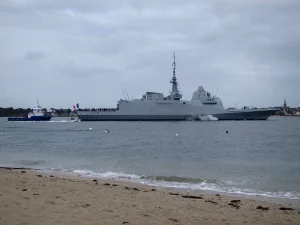
The operation was launched in March 2020 to monitor the flow of weapons and ammunition into Libya, and its mandate has since expanded to cover monitoring human-trafficking networks and curbing illicit oil smuggling. IRINI’s operational headquarters is based in Rome, and the mission typically draws frigates, patrol vessels and maritime patrol aircraft from a rotating group of EU member states.
The operation’s legal basis under the UN Security Council lapsed on May 25, 2026, when Resolution 2292 was not renewed. The EU had stated that IRINI would continue under the Council’s own mandate after that date; the decision adopted on October 9 extends that mandate by more than three additional years.
The decision’s rationale points to Russia’s growing “shadow fleet” activity in the Black Sea and Mediterranean, and the risks these vessels pose through sanctions evasion, uninsured shipping and potential environmental damage. EU member states have in recent months increasingly called for sharing registration, insurance and routing data on vessels belonging to this fleet.
IRINI’s current flagship is the Italian Navy’s amphibious support ship ITS San Giorgio. Participating nations include NATO members Italy, Greece, France and Germany; Greek Navy Hydra-class frigates have also rotated through the task force in the past.
The decision to extend the mandate for more than three years, rather than through a series of short-term renewals, is being read as a sign that the EU wants to put its Mediterranean maritime security architecture on a more predictable footing. The timing also coincides with NATO’s own counter-drone and maritime security initiatives in the Black Sea and Baltic Sea.
Analysts note practical limits to the new shadow-fleet task: IRINI’s core area of operations remains concentrated near Libyan waters, while most shadow-fleet vessels operate well outside that zone, particularly on routes originating from the Black Sea. As a result, the operation’s new task is expected to focus on information-gathering and sharing rather than direct interdiction.
Sources
- Council of the European Union, Decision (CFSP) 2026/2243, October 9, 2026 — used to verify the mandate extension date and the revised task list.
- Naval News, “EU Renews Operation IRINI to 2029, Targets Russian Shadow Fleet and CUI Protection”, October 16, 2026, navalnews.com — used to confirm the operation’s current flagship and contextual details.