
Tron TRAK-3000 antenna preamplifier and monitoring chain

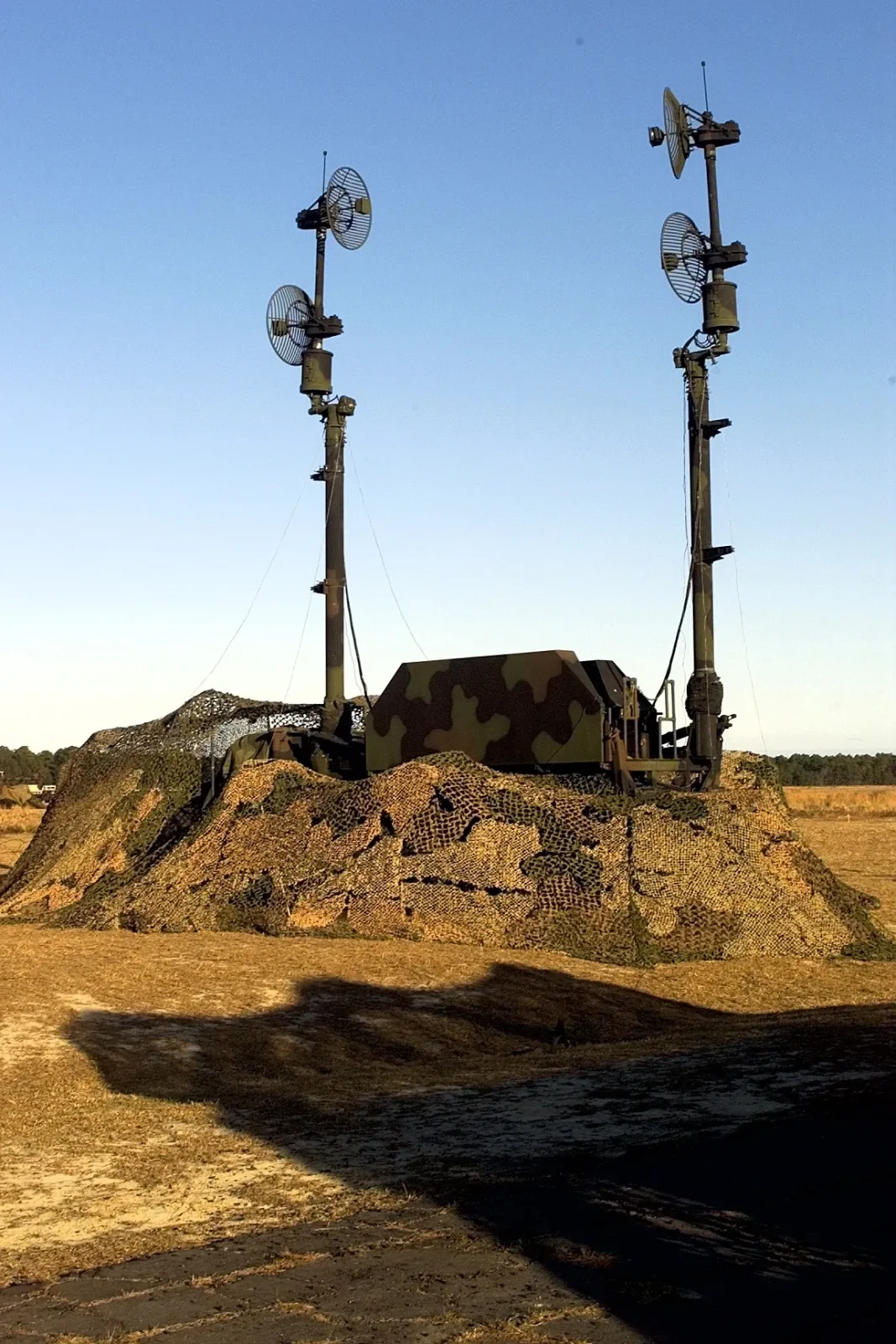
Quick answer: The TRAK-3000-2-2 is the antenna preamplifier Tron Elektronik builds for monitoring and surveillance systems. The SSB 2026 Product Catalogue entry lists the product as a monitoring system preamplifier. According to the company’s archived product page, the device is a mast antenna amplifier working over 20-3000 MHz; it supplies DC feed to a single active antenna, uses an N-type RF connector and its compact enclosure offers EMI shielding. The page also states that the customised ruggedised enclosure is fully compliant with the MIL-STD-810G environmental standard. Gain and noise figure values have not been officially disclosed.
Why does the preamplifier sit at the foot of the antenna?
The position of the preamplifier is not arbitrary; it follows from the physics of the signal processing chain. In a receive chain, total noise is set predominantly by the first element in the line. The coaxial cable between antenna and receiver is a passive loss element, and every decibel it loses is added directly to the noise.
At a fixed monitoring site the cable between the top of the antenna mast and the operator room can run to tens of metres. Over that distance, cable loss in the VHF and UHF bands reaches serious levels. Putting the amplifier in the room does not solve the problem: amplifying the signal after the cable loss has already occurred amplifies the noise along with it. The solution is to place the amplifier at the foot of the antenna, ahead of the cable. Describing the TRAK-3000 as a mast antenna amplifier expresses exactly that.

How does the supply travel down the coaxial cable?
With the amplifier sitting at the top of the mast, a problem arises: the device needs power, but running a separate power cable up the mast means cost and a lightning risk. The common solution is to send the DC feed through the same coaxial cable that carries the signal.
In that method the unit on the receiver side superimposes a DC voltage on the cable; the amplifier on the mast draws that voltage from the cable and powers itself. The RF signal and the DC feed travel in opposite directions on the same conductor without disturbing each other. The phrase “DC feed to a single active antenna” in the TRAK-3000-2-2 product description describes that function. The same feature appears in the company’s TRFMC and RFAB distribution units, where the DC feed per antenna port is stated to be remotely switchable.
Product table
| Feature | TRAK-3000-2-2 |
|---|---|
| Product type | Mast antenna preamplifier |
| Frequency range | 20-3000 MHz |
| Feed | DC feed to a single active antenna |
| Connector | N-type RF connector |
| Enclosure | Compact professional enclosure, EMI shielding |
| Environmental standard | Customised ruggedised enclosure compliant with MIL-STD-810G |
| SSB 2026 catalogue description | Monitoring system preamplifier |
| Gain / noise figure | Not officially disclosed. |
N-type connector and EMI shielding
Two details in the product description show that the device is designed to work outdoors. The first is the N-type connector: thanks to its threaded coupling and sealing arrangement it is a widely preferred interface in outdoor environments, and it works with low loss across this band.
The second is EMI shielding. The amplifier on the mast is the most sensitive point in the system: the signal is at its weakest there, and any interference entering from outside mixes straight into the chain. An enclosure that blocks electromagnetic interference keeps the device’s own electronics from being affected from outside. The company highlights that property of the enclosure in the product description.

Where the preamplifier fits in monitoring infrastructure
A monitoring or spectrum surveillance site is a layered structure. The antennas sit at the outermost layer, each chosen for a particular band and polarisation. Immediately behind the antenna comes the preamplifier, preparing the signal for its journey down the cable. At the end of the cable run, the multicoupler distributes the signal to many receivers, while the antenna switching unit determines which antenna is connected to which receiver. The receivers sit at the end of that chain.
Tron Elektronik supplies products across the whole section of that chain lying between the antenna and the receiver. In the company’s archived solutions menu, these products are positioned under spectrum and radio monitoring, direction finding, electronic warfare and radio communications.
The preamplifier’s 20-3000 MHz band covers the bulk of the traffic typically monitored at such sites: the VHF and UHF radio bands, the aeronautical and maritime communications bands and various services above them fall within that range.

Frequently asked questions
What is the gain of the TRAK-3000?
Gain, noise figure and saturation level values are not published on the public product page. Not officially disclosed.
Why is the preamplifier mounted on the mast?
The first element sets the total noise of the chain. Placing the amplifier ahead of the cable, at the foot of the antenna, prevents cable loss being added to the noise.
Does the device need a separate power cable?
According to the product description the unit supplies DC feed to a single active antenna. In that method the supply is sent over the coaxial cable that carries the signal.
What does MIL-STD-810G compliance mean?
It is a military standard defining endurance to environmental conditions such as temperature, vibration, shock, humidity and altitude. The company states that the customised enclosure is fully compliant with it.
Which frequencies does it work at?
According to the company’s product description, it works over 20-3000 MHz.
Are there other preamplifier models in the family?
In the archived sources, only the TRAK-3000-2-2 appears from the TRAK family with promotional text. Antenna preamplifiers exist as a separate heading among the company’s product categories.
Sources and verification note
Product characteristics rest on the promotional text of the company’s archived TRAK-3000-2-2 page and the SSB 2026 Product Catalogue entry. Numerical values such as gain and noise figure are not published and are therefore not given. The explanations of how a preamplifier works are general RF engineering knowledge and are not attributed to the product. Accessed: August 12, 2026.
- https://tron.com.tr/
- https://web.archive.org/web/2022/https://tron.com.tr/en/product/trak-3000-2-2
- https://web.archive.org/web/2022/https://tron.com.tr/en/product/trfmc-30-8-3
- https://web.archive.org/web/2021/https://tron.com.tr/en/defence-and-aerospace
- SSB 2026 Product Catalogue, Tron Elektronik entry