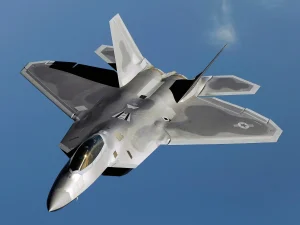
What Is the KF-21 Boramae? South Korea’s 4.5th-Generation National Fighter (2026)

SEO Title: What Is the KF-21 Boramae? South Korea’s 4.5th-Generation National Fighter (2026)
Meta Description: KF-21 Boramae speed, range, AESA radar, weapons load, comparison with KAAN and Rafale, and the current status of the Indonesia export contract. Full technical analysis.
URL Slug: kf-21-boramae-what-is-south-korea-fighter
—
What Is the KF-21 Boramae? South Korea’s 4.5th-Generation National Fighter
The KF-21 Boramae is a 4.5th-generation multirole combat aircraft developed by Korea Aerospace Industries (KAI). “Boramae” means “young hawk” in Korean. Led by South Korea’s Defense Acquisition Program Administration (DAPA), the programme represents the culmination of decades of licensed-production experience translated into an indigenous fighter design.
The aircraft’s first flight on 19 July 2022 placed South Korea among the small group of nations capable of designing and test-flying their own combat aircraft. The first prototype broke the sound barrier later that year. By 2026, the programme is transitioning to series production; the Republic of Korea Air Force (ROKAF) has issued an initial decision to procure 40 Block I aircraft.
—
Programme Background
The KF-21 programme was formally initiated in 2015. Designed as a long-term replacement for South Korea’s F-16 and F-15K fleets, the platform was partly driven by US restrictions on F-35 sales and technology transfer barriers. Indonesia committed to funding 20 percent of the programme under a 2014 memorandum of understanding, though payment disputes in subsequent years strained the partnership.
Total programme cost was announced at approximately USD 8.8 billion, with the majority covered by the South Korean government.
—
Technical Specifications
| Parameter | KF-21 Block I (Official/Estimated) |
|---|---|
| Length | 16.9 m |
| Wingspan | 11.2 m |
| Height | 4.7 m |
| Max Take-Off Weight | ~25,600 kg |
| Empty Weight | ~11,500 kg (estimated) |
| Maximum Speed | Mach 1.81 |
| Combat Radius | 900+ km |
| Ferry Range | ~2,900 km |
| Service Ceiling | ~16,800 m |
| Engines (x2) | General Electric F414-GE-400K |
| Thrust per Engine | ~22,000 lbf dry / ~26,000+ lbf afterburner |
| Radar | Indigenous AESA (ADD / Hanwha Aerospace) + IRST |
| Hardpoints | 10 (4 internal, 6 external) |
| Representative Weapons | AIM-120, IRIS-T, Meteor (planned), JDAM, GBU series |
| Known Variants | Block I, Block II, KF-21N (concept) |
—
Avionics and Weapons Systems
The most critical avionics element in KF-21 Block I is the indigenous AESA radar co-developed by ADD (Agency for Defense Development) and Hanwha Aerospace. It operates in air-to-air and air-to-ground modes, provides multi-target tracking, and features frequency-hopping resilience against electronic warfare. In Block I, weapons are carried externally. The internal weapons bay planned for Block II aims to reduce the radar cross-section (RCS) and give the platform a profile closer to a semi-stealth aircraft.
| System | Description |
|---|---|
| Radar | Indigenous AESA (ADD + Hanwha) |
| IRST | Infrared search-and-track sensor |
| EW Suite | LIG Nex1 indigenous EW package |
| Data Link | Link-16 and indigenous tactical data network |
| Cockpit | HOTAS, wide-area HUD, multi-function touchscreens |
| Internal Bay | Planned for Block II |
—
Operators and Order Status
| Country | Order Date | Target Qty | Delivery Status | Source |
|---|---|---|---|---|
| South Korea (ROKAF) | 2021 (first batch) | 40 (Block I) + 80 (Block II) | Pre-series production | DAPA |
| Indonesia | 2014 (MoU) | 50 | On hold — payment dispute | DAPA/media |
—
Competitor Comparison
| Platform | Country | Speed | Combat Radius | Internal Bay | Status |
|---|---|---|---|---|---|
| KF-21 Block I | South Korea | Mach 1.81 | 900+ km | No (Block II) | Pre-series |
| KAAN | Turkey | Mach 1.8+ (target) | 1,000+ km (target) | Planned | Prototype |
| Rafale F4 | France | Mach 1.8 | ~1,850 km | Yes | Operational |
| Eurofighter Typhoon T4 | Europe | Mach 2.0 | ~1,400 km | No | Operational |
—
KF-21 vs KAAN: Neutral Comparison
| Parameter | KF-21 Boramae | KAAN |
|---|---|---|
| Developer | KAI / ADD | TAI / TÜBİTAK |
| First Flight | 19 July 2022 | 21 February 2023 |
| Class | 4.5th Gen | 4.5+ Gen (target) |
| Engine | GE F414 (foreign) | GE F110 (interim) |
| AESA Radar | Indigenous (ADD/Hanwha) | Indigenous (ASELSAN MURAD) |
| Airframe Size | Medium | Large |
| Operators | South Korea (+ Indonesia target) | Turkey |
—
FAQ
How fast is the KF-21?
The KF-21 achieves a maximum speed of Mach 1.81 per official KAI and DAPA statements.
When will KF-21 enter service?
Block I deliveries to ROKAF target 2026–2028. Full operational capability with Block II is projected for the early 2030s.
Did Indonesia buy the KF-21?
Indonesia committed to fund 20 percent of the programme, but payment disputes have kept the deal under negotiation as of 2026. No formal purchase has been finalised.
How does KF-21 differ from KAAN?
Both are 4.5th-generation indigenous designs. The KF-21 has a smaller airframe; KAAN has a larger fuselage. They differ in engine supply, avionics, alliance requirements, and export targets.
—
References:
– DAPA: dapa.go.kr
– KAI Official Website: kai.co.kr
– Defense News, Aviation Week, SIPRI, Yonhap