Spain Fires Hornet Block 1 Interceptor from the Frigate Santa María

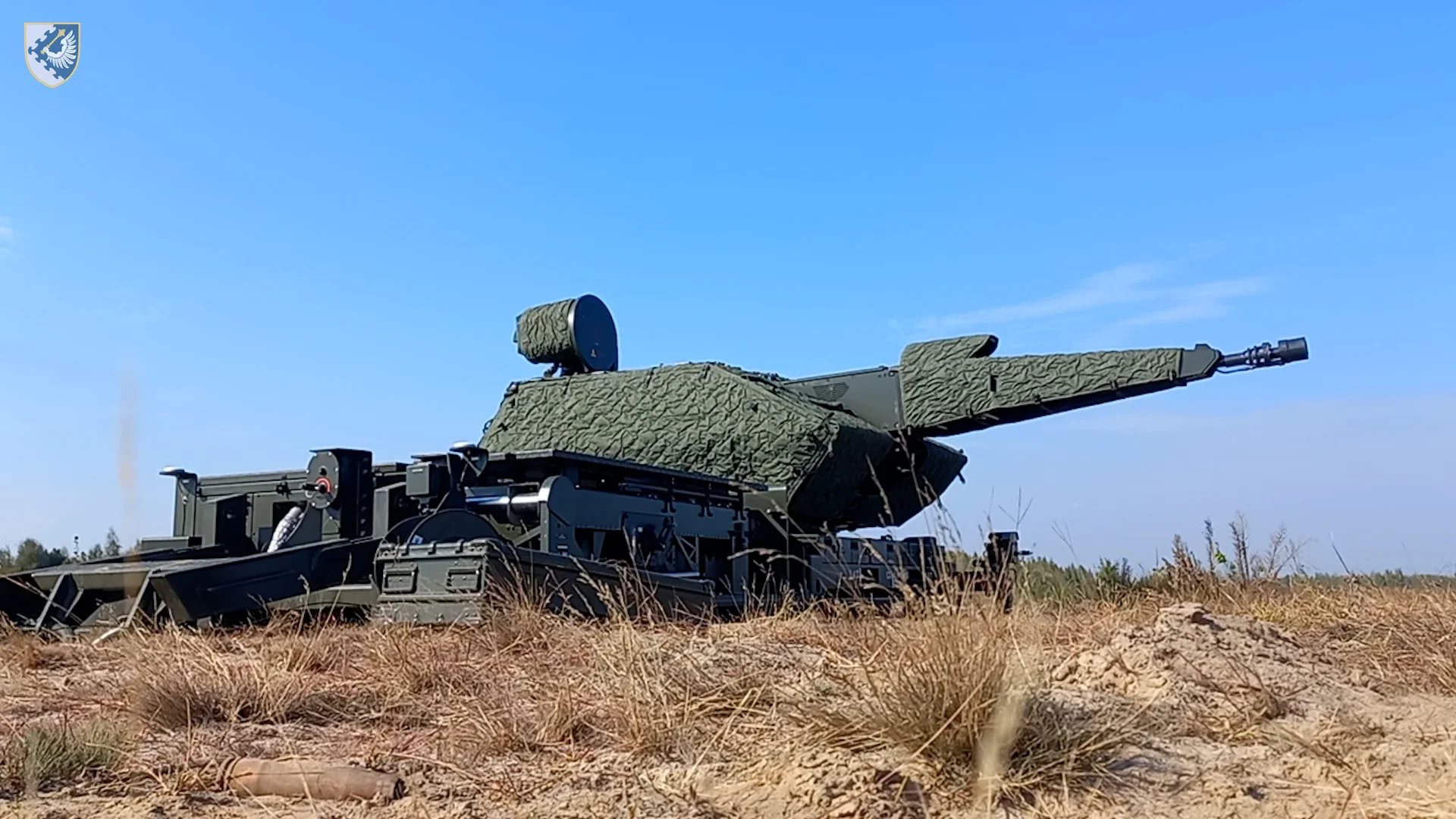
The Spanish Navy has successfully completed an at-sea launch test of the Hornet Block 1 interceptor from the Oliver Hazard Perry-class frigate F-81 Santa María. In the trial announced on June 18, 2026, the interceptor—developed by Switzerland-based Destinus—was fired from a canister-type launch unit placed on the ship’s helicopter deck.
The trial concluded with a single Hornet Block 1 launched from the ship and striking an aerial target. The demonstration, run jointly by the Spanish Navy and Destinus, was meant to test whether the system can be integrated onto existing warships without major structural modification. In that sense, the test focused less on the maturity of a new weapon program than on how quickly a ready interceptor can be adapted to a ship.
What is the Hornet Block 1?
The Hornet Block 1 is described as a canister-launched interceptor drone. The system is designed to stop subsonic uncrewed aircraft and coordinated drone swarms. Manufacturer Destinus is better known in the defense sector for its Ruta cruise missiles; the Hornet family forms the company’s interceptor line for naval and land air defense.
According to data reported by Naval News, the Hornet Block 1 has a range of more than 75 kilometers and carries a warhead of about 1.5 kilograms. Its guidance architecture is two-stage: radar guidance is used in the first phase of flight, while in the terminal phase the interceptor locks onto the target on its own using electro-optical/infrared (image-based) and radar seekers. The manufacturer also states that the system can operate in GNSS-denied environments where satellite signals are suppressed—a feature that matters in naval scenes saturated with electronic warfare.
| Specification | Hornet Block 1 |
|---|---|
| Type | Canister-launched interceptor (counter-drone) |
| Target profile | Subsonic UAVs and drone swarms |
| Range | more than 75 km |
| Warhead | ~1.5 kg |
| Guidance | Radar guidance + autonomous EO/IR and radar seeker in terminal phase |
| Manufacturer | Destinus (Switzerland) |
Why a canister-type launch?
The real message of the test lies in the platform used. The Santa María is a comparatively old frigate based on the U.S.-origin Oliver Hazard Perry design. Being able to fit the interceptor onto such a ship via a portable canister unit—without a vertical launch cell or extensive refit—means navies could rapidly harden their in-service vessels against the drone threat.
This approach targets a problem made more visible in recent years by events in the Red Sea and the Black Sea: cheap drones and cruise missiles make answering with million-dollar interceptor missiles economically unsustainable. A low-cost, canister-launched interceptor aims to turn that cost imbalance in the defender’s favor.
Next step: Block 2
Destinus is reported to be working on a second member of the family. The Hornet Block 2 is described as a dual-role system capable both of intercepting subsonic air threats and of striking sea and land targets with precision; according to relayed figures, its range exceeds 150 kilometers and its warhead rises to about 3 kilograms. That points to the idea of a single canister family taking on both defensive and offensive missions.
The Turkish perspective
The search for a low-cost answer to the drone threat in ship self-defense is a field Turkey is investing in as well. The Turkish defense industry’s gun-based GÖKDENİZ system for close-in air defense and its laser-based work represent different solution paths to the same problem as Hornet: gun and energy-based systems hit the target instantly and with effectively unlimited rounds, while interceptors like Hornet come into play at greater distances and in swarm scenarios. Rather than framing a direct rivalry, this trial is better read as a sign that ship air defense is becoming multi-layered.
Open-source verification notes
The manufacturer was consistently verified in open sources as Destinus (Switzerland-based); the “Ruta” reference appearing in some headlines is not a separate company but points to Destinus’s cruise-missile product line. The figures for range, warhead weight and guidance architecture are values shared by the manufacturer, are not independently verified and may change under operational conditions. The figures for Block 2 are statements from the development phase and have not yet been confirmed in the field.
Sources
- Naval News — “Spanish Navy Tests Hornet Block 1 Interceptor from Santa María Frigate” (June 18, 2026)
- ASD News — “Hornet Interceptor Launched from Spanish Navy Frigate” (June 18, 2026)
- Militarnyi — “Cruise Missile Manufacturer Tests Hornet Interceptor Drone From Spanish Frigate Santa María”