U.S. Army buys 82 AeroVironment P550 drones for long-range reconnaissance in $117 million deal

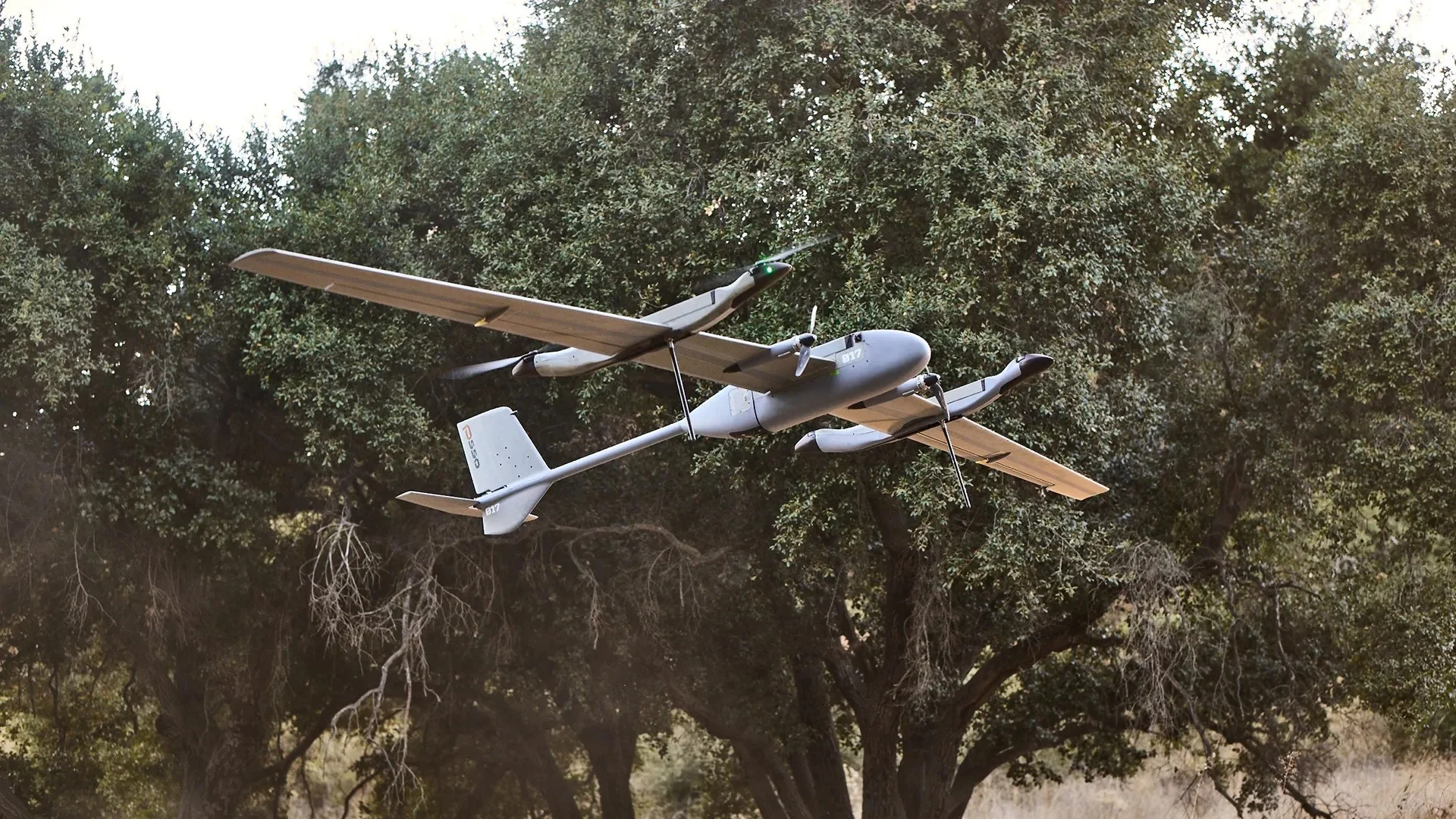
The U.S. Army has signed a roughly $117 million procurement contract with AeroVironment for 82 P550 unmanned aircraft, aiming to give its battalion-level units a direct reconnaissance capability of their own. Announced on 3 June 2026 and valued at $117.3 million, the deal is meant to meet the requirements of the Army’s Long-Range Reconnaissance (LRR) program.
The contract works out to roughly $1.43 million per system and is administered by the Army Contracting Command at Redstone Arsenal in Alabama. Deliveries are expected to be complete by 23 July 2026. AeroVironment first delivered the P550 to U.S. troops in the summer of 2025, and a separate agreement signed in December 2025 funded the system’s testing, integration and software-update work. The new contract is the serial-procurement step that follows that preparatory phase.
The battalion commander’s own eyes
The core logic behind buying the P550 is to push reconnaissance capability down to a lower echelon. Until now, battalion commanders have largely depended on brigade-level aviation assets, or on support from higher echelons, to image distant targets. With the new system, commanders will have a reconnaissance asset under their own control and will not have to wait for other units to prioritize their information needs.
As Army officials describe it, the system provides “battalion commanders and their units with long-range reconnaissance under direct tactical control.” The approach is part of a trend that has come to the fore on the battlefield in recent years: distributing small and medium-class unmanned aircraft to ever-smaller units and getting intelligence to the commander in the field as quickly as possible.
What kind of system is the P550?
The P550 is an unmanned aircraft AeroVironment positions in the Group 2 class. In the U.S. military’s classification, Group 2 covers medium-small UAVs weighing up to roughly 25 kilograms and operating at limited altitude and range—in other words, a middle class sitting between hand-launched mini drones and larger operational systems. The aircraft’s maximum takeoff weight is 55 pounds (about 24.9 kilograms), and its payload capacity is around 15 pounds (6.8 kilograms).
The system’s most distinctive feature is its vertical takeoff and landing (eVTOL) capability. Driven by a fully electric propulsion system, the aircraft can lift off and land under its own power without a runway, catapult or launch rig. That shortens setup time and lets the aircraft be brought into operation from confined spaces. According to the manufacturer, the P550 is transported in a carrying container about 1.8 meters long and can be made flight-ready in under ten minutes.
Endurance is more than five hours, a notable figure for sustained surveillance missions. The communications range varies between 40 and 60 kilometers depending on the ground control station and radio system used. The aircraft can climb to roughly 14,000 feet and has a speed profile in the 15-27 meters-per-second range.
| Feature | Value |
|---|---|
| Class | Group 2 (medium-small) eVTOL UAV |
| Max takeoff weight | 55 lb (24.9 kg) |
| Payload | 15 lb (6.8 kg) |
| Endurance | 5+ hours (battery) |
| Communications range | 40-60 km |
| Ceiling | ~14,000 ft |
| Setup time | Under 10 minutes |
A modular payload approach
Another standout element of the P550’s design is its modular payload architecture. The aircraft’s payload bays and batteries can be swapped in the field in under five minutes without any tools. That lets the same platform be rapidly reconfigured for different payloads—a reconnaissance-surveillance sensor, a communications relay or electronic warfare—depending on the nature of the mission.
That flexibility is a typical reflection of the Army’s effort to modernize its small and medium-class UAV fleet. Rather than separate systems each optimized for a single mission in the field, the preference is for platforms that can be adapted to multiple roles through open architecture. This reduces the logistics burden while increasing how quickly units can adapt to changing needs.
Competition in the small-UAV market
The P550 contract is part of a broader procurement wave by the U.S. Army for intelligence-surveillance-reconnaissance (ISR) drones. Over the same period the Army signed deals with other firms for similar needs, and the fact that the P550 solicitation drew ten separate bids shows just how intense the competition is in this space. The medium-class tactical UAV market has become a heated race shaped by both endurance and modularity.
This segment intersects indirectly with an area where Turkey, too, has developed products in recent years. Turkish defense-industry tactical and mini-class unmanned aircraft target a similar need—reconnaissance and surveillance at the lower-unit level—even if through different concepts. The P550 case can be read as a concrete sign of a shared trend among armed forces worldwide: bringing reconnaissance capability as close to the field as possible.
Open-source verification notes
- The contract value ($117.3 million), quantity (82 systems), date (3 June 2026) and completion date (23 July 2026) have been confirmed through reports based on AeroVironment and U.S. Army sources.
- The P550’s technical specifications (Group 2, eVTOL, 55 lb max weight, 15 lb payload, 5+ hours endurance, 40-60 km range) have been confirmed from AeroVironment’s official product page.
- As the precursor to this procurement, the first delivery in summer 2025 and the December 2025 integration agreement have been confirmed in open sources.
- The system is not a “backpackable” mini drone; it is a medium-class platform carried in a roughly 1.8-meter container and capable of vertical takeoff.
Sources
- AeroVironment official P550 product page (avinc.com/solution/p550)
- AeroVironment investor relations press releases
- U.S. Army Contracting Command contract announcement (3 June 2026)
- The Defense Post — US Army AeroVironment P550 drone contract