Ukraine’s Homegrown Flamingo Missile Strikes Russian Military Plant 1,000 km Behind the Border

“Last night, Ukrainian FP-5 Flamingos struck a military plant in Cheboksary that supplies the occupier’s army with components for drones and missiles,” President Volodymyr Zelensky announced, as reported by The Defense Post. Chuvashia governor Oleg Nikolayev confirmed the city “came under rocket attack.” The same night, Ukraine’s General Staff reported strikes on an oil refinery in Samara and a Russian tanker in the Black Sea.
- Weapon: FP-5 Flamingo, built by Ukraine’s Fire Point
- Target: VNIIR-Progress plant, Cheboksary, Chuvashia
- Distance: ~1,000 km from the Ukrainian border
- What it makes: Kometa jam-resistant CRPA navigation antennas
- Salvo: ~5 missiles fired; 1-2 reached the target (OSINT analysis)
- Confirmation: Zelensky, the regional governor and independent OSINT
Background: Why Flamingo Matters
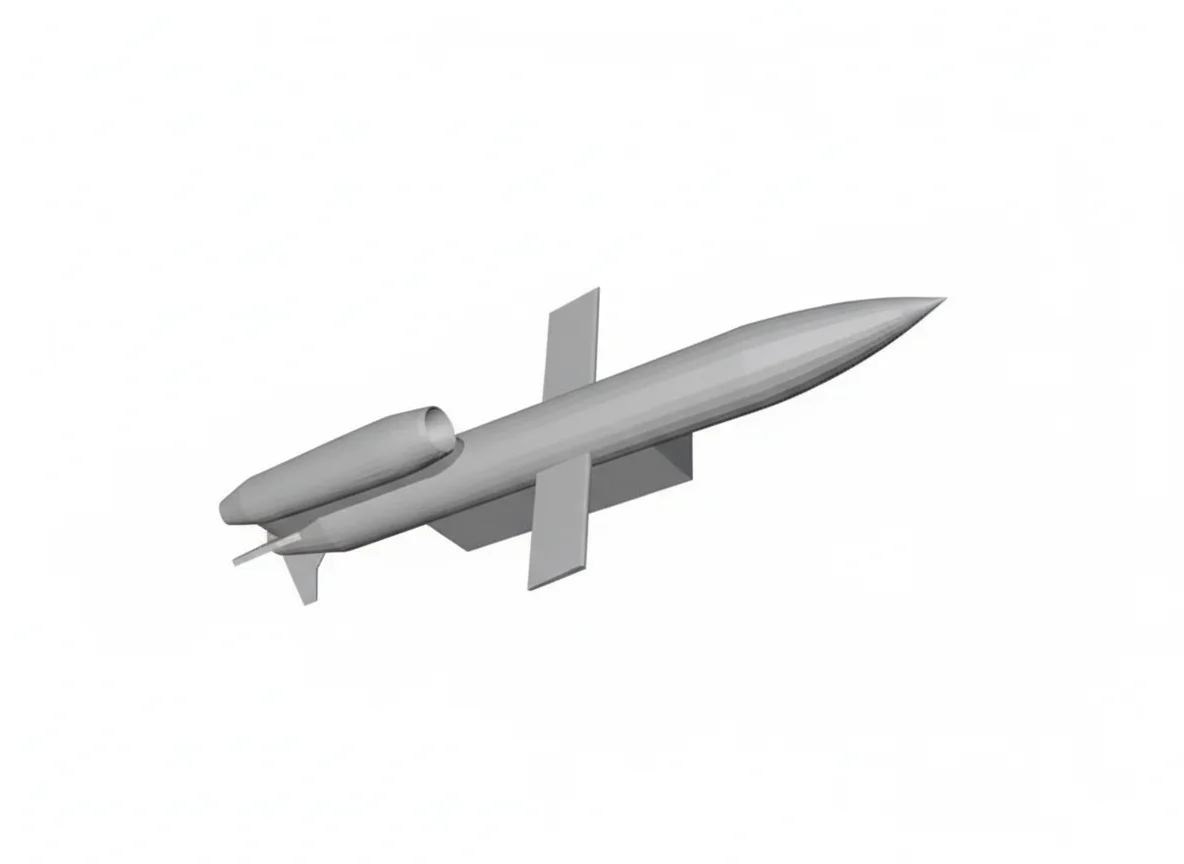
The FP-5 Flamingo is the flagship of Ukraine’s wartime push for sovereign deep-strike capability: a declared range of up to 3,000 km and a warhead of roughly 1,150 kg. Western political limits on long-range weapons pushed Kyiv to build its own strike family rather than wait for Storm Shadows or ATACMS — and with last week’s unveiling of the 800-km Bars drone-missile, that family is growing fast.
Anatomy of the Strike
Defense Express, citing the OSINT collective CyberBoroshno, reports that about five Flamingos were launched. The missiles flew actively maneuvering routes, swinging roughly 170 km around the city before turning onto the final attack axis. Russian air defenses intercepted two missiles on approach to Chuvashia and one near Cheboksary itself; one or two reached the plant. The analysis notes the maneuvering profile means the missiles covered well over 1,000 km in flight, with earlier strikes suggesting effective ranges of 1,600-1,650 km or more.
| Parameter | Value |
|---|---|
| Manufacturer | Fire Point (Ukraine) |
| Declared range | Up to 3,000 km |
| Warhead | ~1,150 kg |
| This strike | ~5 missiles, active maneuvering, 1-2 hits |
| Target’s product | Kometa CRPA jam-resistant GNSS antennas (Shahed/Geran, glide bombs, Iskander) |
Why This Plant: The Kometa Antennas
Kometa controlled-reception-pattern antennas are the component that lets Russian guided weapons survive Ukrainian jamming — fitted to everything from Geran/Shahed one-way drones to glide bombs. Striking the factory rather than chasing each drone in the air marks the war’s shift into a mutual hunt for production chains: kill the antenna line, and every weapon that depends on it gets blinder.
Why It Matters for Turkey
The Flamingo case validates two lines Turkey has pursued for years. First, sovereign deep strike: with the SOM family, the KARA ATMACA naval strike missile, Çakır and the developmental GEZGİN, Turkey builds cruise missile technology in a domestic chain — the capability Ukraine is improvising under fire matured in Turkish inventory in peacetime. Second, the navigation war: the duel between jam-resistant antennas like Kometa and the jammers trying to defeat them sits exactly where ASELSAN’s GPS-independent navigation, jamming and spoofing portfolio operates. The lesson is blunt: a deep-strike stockpile and the industrial line that replenishes it are non-negotiable components of deterrence.
Frequently Asked Questions
Is the 3,000 km range real?
Was the strike independently verified?
What is the practical effect on Russia?
Bottom Line
Cheboksary is the most concrete evidence yet that Flamingo is a working weapon rather than a publicity piece. As Ukraine localizes deep strike, the geography Russia must defend — and the cost per defended target — keeps expanding.