





NATO goes to the “cost war”: a new air-surveillance architecture takes shape by year-end

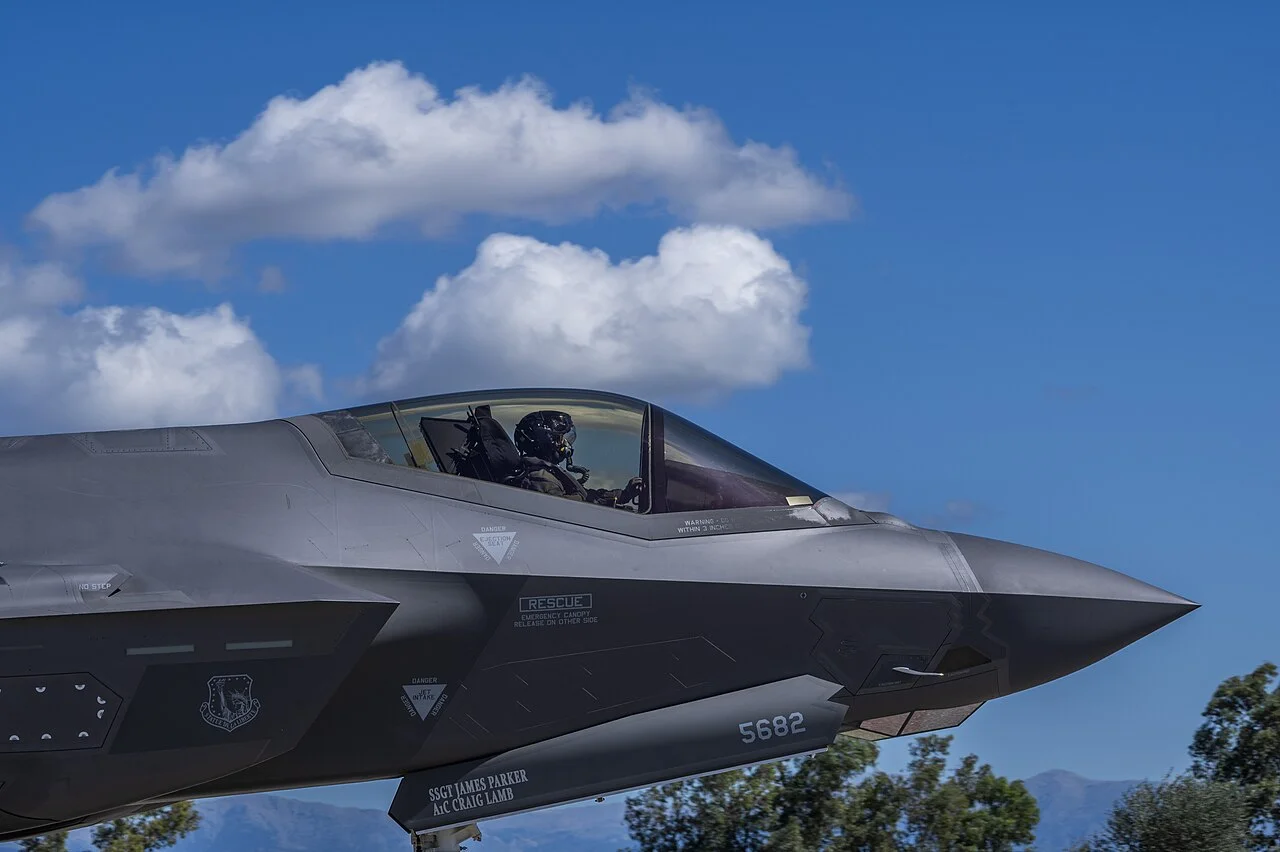
One phrase coming out of Ukraine and Iran is now keeping NATO capitals awake at night: the “cost war.” Shooting down a thousand-dollar kamikaze drone with a million-dollar interceptor is, simply, not sustainable. The alliance is now building a new air-surveillance architecture in answer.
At a Glance
- What: A new NATO ACT air-surveillance capability programme plan
- Threat: Low-altitude drones + cruise missiles (“cost war”)
- Target: First increment to be ready before end-2026
- Lessons: Ukraine (Shahed siege) + Iran front
- Structural issue: Classic AWACS/E-3 economics no longer scale
- Pieces of the answer: Layered sensors + cheap interceptors + C2
A Shahed in Ukraine costs between twenty and fifty thousand dollars. Knocking it down with an IRIS-T or Patriot-class interceptor costs from five hundred thousand to four million. The arithmetic is brutal: hundreds of drones each night burn through the defender’s stockpiles and budget. NATO has reframed that equation as the “cost war,” and the alliance’s Allied Command Transformation (ACT) is preparing to issue a first increment of a new air-surveillance capability programme plan before the end of this year. The goal is not “more AWACS” but to redesign the geometry — to catch low-flying, low-radar-cross-section, cheap, fast threats at an affordable price.
The legacy architecture was built around the E-3 Sentry: high altitude, rotating radar, long range. Those radars were sized for a Soviet bomber threat in the upper air. Today’s threat board is different. Russian Shahed/Geran swarms cloak Ukrainian skies; Iran has used ballistic and cruise missiles to strike Gulf infrastructure; a Russian drone crossed into NATO-member Romania’s airspace just last month over the Black Sea. The low-altitude threat is no longer in dispute. The problem is intercepting it at an economically viable price.
“More sensors fixes it” is the obvious instinct — and the wrong one. The bottleneck is not the number of radars but the geometry of the architecture. A classical long-range search radar simply cannot see a drone flying low fifty to eighty kilometres out, because the curvature of the Earth puts the target in its blind zone. Low-altitude coverage demands either tower-mounted sensors, aerostat-tethered surveillance, or unmanned-aircraft-based relays. NATO’s plan rebalances all three — and lays an AI-supported data-fusion layer on top, stitching distant AWACS/Wedgetail platforms into the local picture.
The other half of the answer sits on the interceptor side. Anduril won a US Army prototype command-and-control contract last month — a Lattice-software backbone that fuses information across distinct missile-defence systems. That is precisely what NATO needs: a way to wire separately operated national systems into one decision picture. On the cheap-interceptor side, the US Army’s FY27 budget asks for $994 million for small counter-drone capability, including 800 kinetic effectors, 29 non-kinetic and 24 Next-Generation C-UAS Missiles (NGCM). Europe is moving in the same direction industrially: the European Defence Industry Programme (EDIP) has earmarked €240 million in joint procurement for counter-drone, air- and missile-defence systems.
What NATO is really reforming: from one picture to a network
The legacy NATO air picture was fed from a single locus — for instance the E-3 fleet at Geilenkirchen in Germany. The new structure rests on a distributed and networked surveillance layer: a Hungarian site, a Black Sea aerostat, an Icelandic radar, a Wedgetail aircraft — all wired into one data-fusion backbone. The technical name is “joint all-domain command and control” (JADC2); the practical translation is a Romanian radar operator, a Latvian F-16 pilot and a Norwegian submariner seeing the same tactical picture in the same second. NATO ACT’s first-increment target by year-end is, in essence, putting the skeleton of that backbone in place.
Worth remembering is that the alliance made its E-7A Wedgetail choice along exactly these lines. But Wedgetail alone does not solve the Shahed problem; Wedgetail is sized for high-to-mid altitudes. The low-altitude side needs the cost equation rebuilt from cheap-and-many sensors to cheap-and-many interceptors. Anduril Lattice is queued up to walk into that architecture on the software side; new interceptors like Coyote, Roadrunner and IRIS-T SLM-X on the hardware side. NATO’s “first increment” will likely seed an architecture that becomes alliance-wide doctrine within years.
The Turkish angle: ÇELİK KUBBE sits right in the centre of this equation
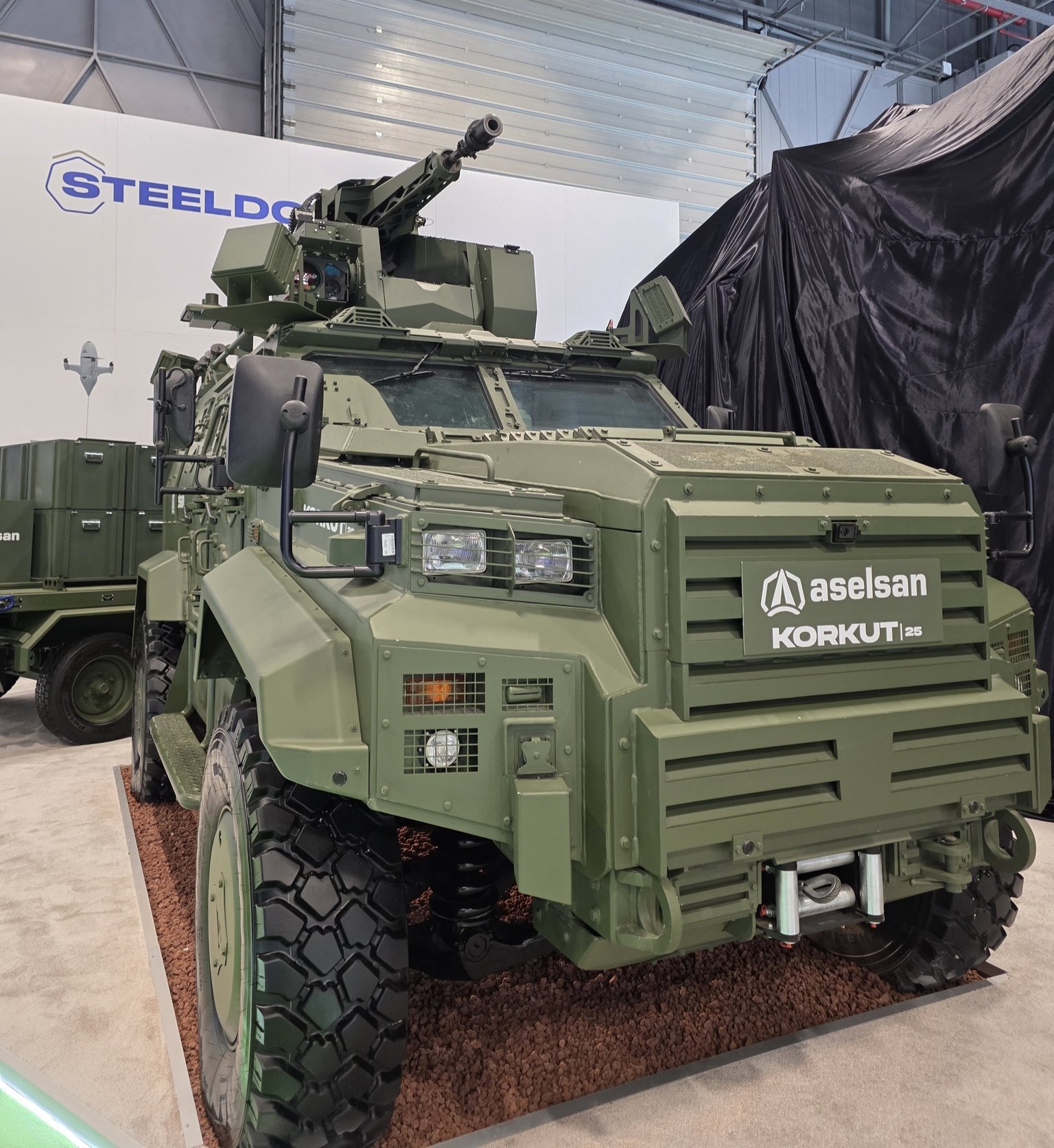
Turkey began living the “cost war” long before NATO Brussels coined the phrase. Russian Shahed swarms over the Black Sea and a multi-vector threat profile on the eastern borders pushed Turkey’s defence industry to build layered and cheap answers. The result, accelerating these past three years, is the ÇELİK KUBBE integrated air-defence concept. It rests on four indigenous pillars: ASELSAN KORKUT and GÖKBERK gun systems plus SUNGUR for close defence; HİSAR A+ / HİSAR O+ at short-to-medium range; SİPER at long range; and the HAKİM command-and-control backbone tying it all together.
The wider picture is striking: NATO’s design search and Turkey’s already-built architecture overlap meaningfully. With İHTAR and GÖKBERK on the low-altitude counter-drone side, STEEL DOME command integration on the software side and the HİSAR-SİPER family on the interceptor side, Turkey’s defence industry offers a package that could serve as an authentic technical supplier to the alliance’s next-generation air-surveillance and counter-drone architecture. On the export side, the same capability is now genuinely competitive against Chinese systems in the Gulf and Africa. The “cost war” framing NATO has adopted is, paradoxically, the strongest thesis Turkey’s defence industry has on the global stage: cheap, scalable, indigenous answers to expensive problems.
Sources
- Breaking Defense — “NATO revamps air surveillance approach for the ‘cost-war’ of low-flying drones, missiles”
- Defence Industry Europe
- Army Recognition
- NATO ACT (Allied Command Transformation) statements
- Wikipedia — NATO AWACS / E-7 Wedgetail / Anduril Lattice
Related Coverage
- US Army earmarks $1 billion for counter-drone: a “system of systems” across eight lines
- Pentagon’s $53.6 billion drone push: more than 200,000 unmanned aircraft
- Congress blocks the Pentagon: US Air Force pushes E-7A Wedgetail buy to seven aircraft