US Air Force Withdraws 12 B-1B Bombers From RAF Fairford After Iran-Linked Threat

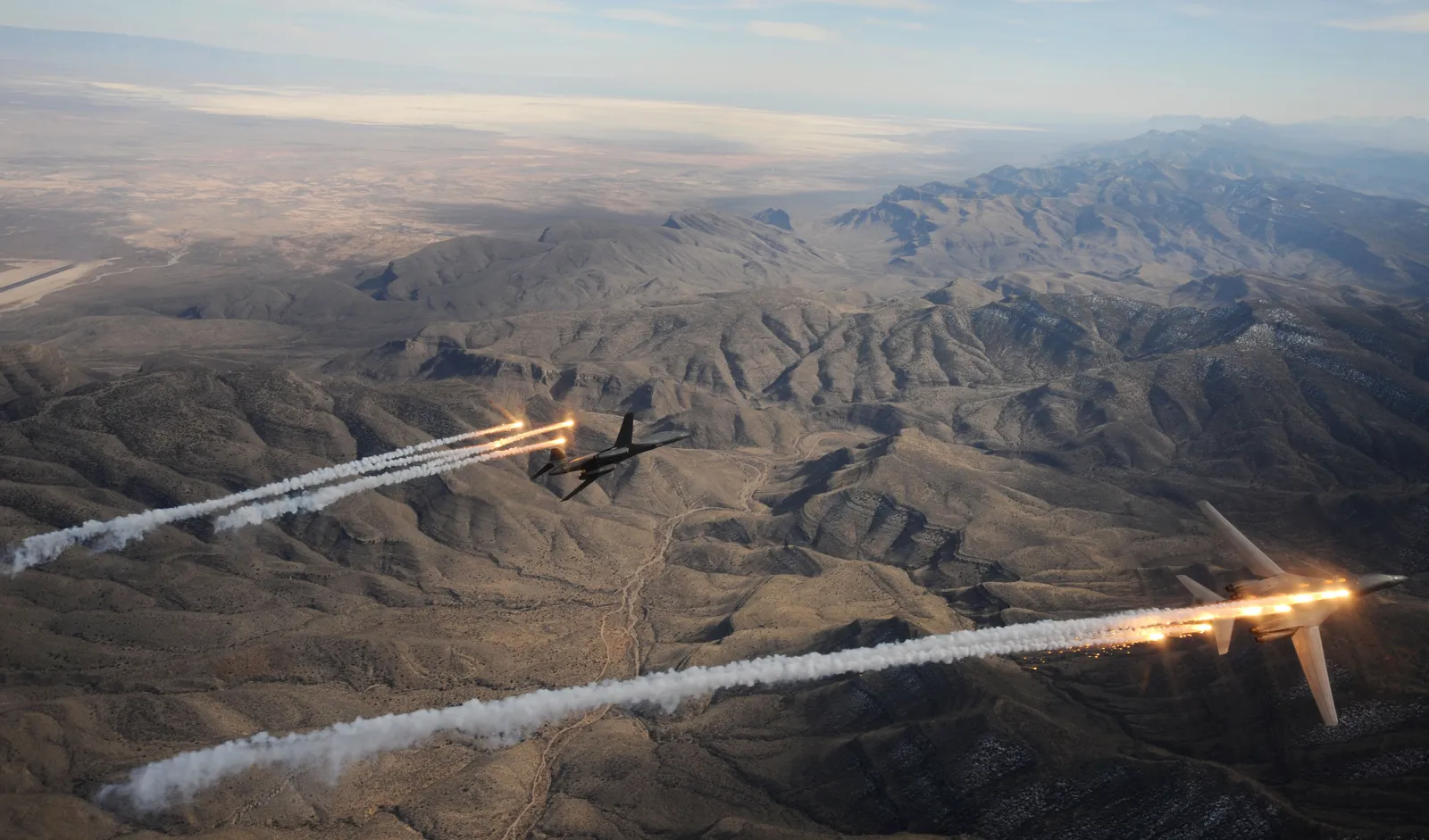
The U.S. Air Force has withdrawn all 12 B-1B Lancer strategic bombers deployed to RAF Fairford in Gloucestershire, England, following a security threat British investigators have linked to Iran. The Pentagon confirmed on October 4-5 that “all bombers deployed to RAF Fairford have returned to their home stations.”
The pullout followed two separate security incidents near the base. On September 27, five British nationals aged 22 to 25 were arrested on suspicion of planning to drive explosive-laden vehicles toward the installation. On October 1, a British-Iranian dual national was detained on suspicion of preparing an act of terrorism.
British Prime Minister Andy Burnham said the investigation had produced “solid indications” of an Iranian connection. The Pentagon did not publicly detail the nature of the threat, saying only that all deployed bombers had returned to their bases of origin and that the matter remained under British jurisdiction.
A Pentagon statement stressed that the broader U.S. bomber fleet, including B-1s, B-2s and B-52s, “remain ready to deliver precision global strike capabilities — including through operations that launch and recover from the continental United States — anywhere, anytime.” The framing suggests the withdrawal is being presented as a precaution rather than an operational setback, though no timeline for a return to Fairford has been given.
RAF Fairford has served as one of the U.S. Air Force’s principal forward-deployment hubs in Europe since the Cold War. Under the Bomber Task Force rotation model, the base regularly hosts temporary deployments of B-1B, B-2 and B-52 fleets rather than a permanent American unit, giving NATO’s deterrence posture both symbolic and operational weight on British soil.
The B-1B Lancer remains the U.S. inventory’s heaviest conventional-payload bomber and the fastest of the three types, though it no longer carries nuclear weapons. Its rotations through Europe are a significant piece of NATO’s conventional long-range strike posture, which makes any disruption to Fairford operations relevant well beyond the UK.
The episode revives a broader discussion about the vulnerability of high-value, forward-deployed strategic assets concentrated at a single installation. Several NATO members have reviewed base perimeter security in recent years after drone incursions and other breaches; the Fairford case stands out for involving an alleged vehicle-borne explosive plot rather than aerial intrusion.
Key developments to watch include the outcome of the British investigation, the charges ultimately brought against the suspects, and whether the Air Force schedules a new Bomber Task Force rotation to Fairford. How the Pentagon adjusts base-security protocols — and whether similar measures extend to other forward-deployment sites in Germany, Poland or Romania — will also be watched closely across the alliance.
Sources
- The War Zone, “B-1B Bombers Make Hasty Departure From England”, October 4, 2026 — used for confirmation of the withdrawal, aircraft count and the Pentagon statement. twz.com
- Infodefensa, “EEUU retira todos sus bombarderos de la base británica de Fairford tras el incidente de seguridad vinculado a un posible complot iraní”, October 5, 2026 — used for arrest dates and the UK Prime Minister’s statement. infodefensa.com