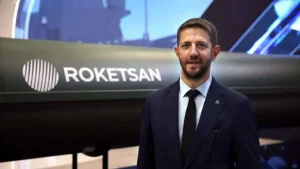
SSB Head Görgün at NATO EDGE 26: “We Must Move Faster, Widen Our Ecosystem and Produce More”

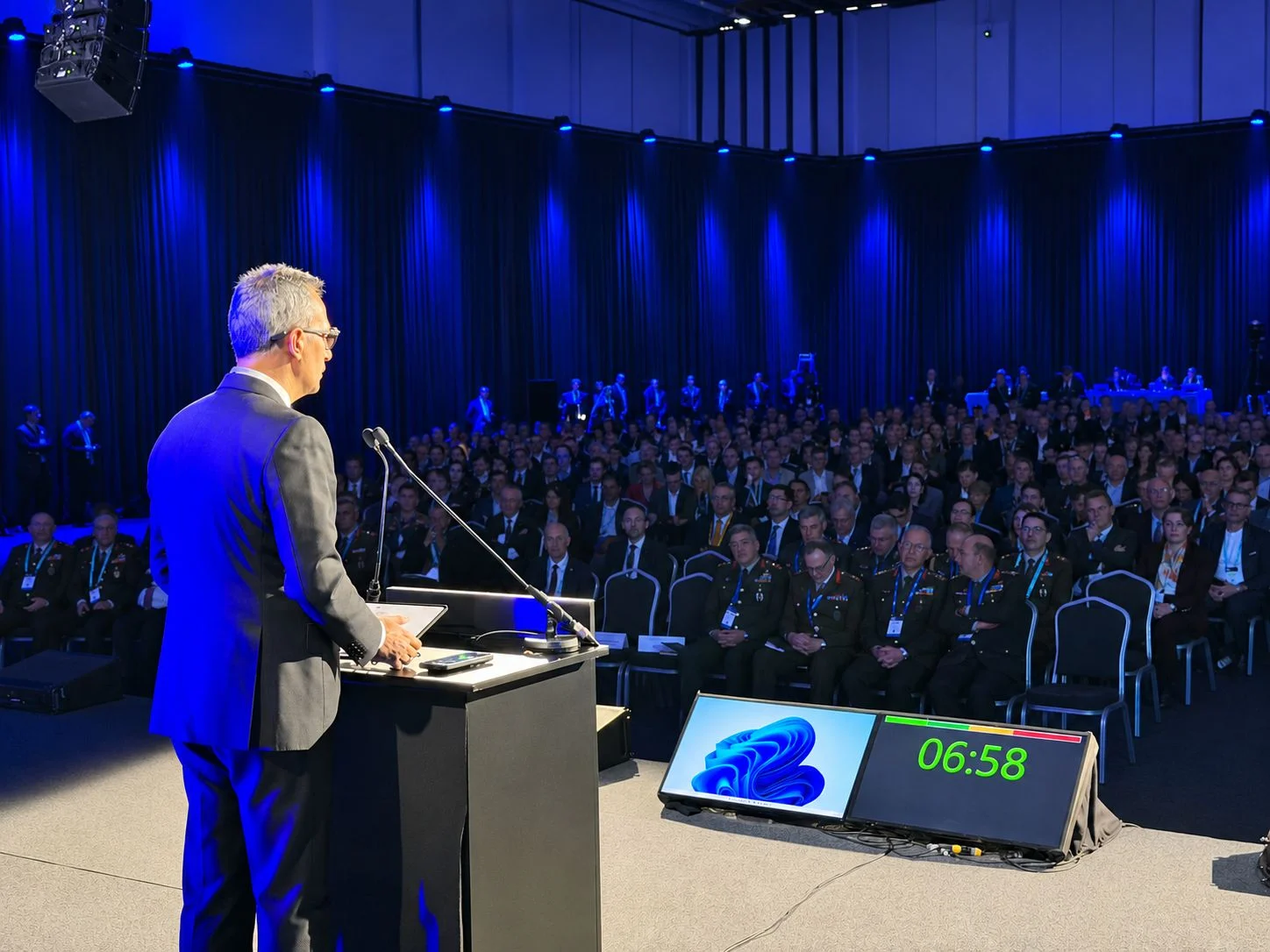
Prof. Dr. Haluk Görgün, head of Türkiye’s Presidency of Defence Industries (SSB), spoke at the opening of NATO EDGE 26, NATO’s largest technology and industry gathering. The event is being organised in Türkiye for the first time by the NATO Communications and Information Agency (NCIA). Görgün said the Alliance’s security needs call for faster decisions, a broader industrial base and higher production capacity.
Who is attending?
NATO EDGE 26 runs from 17 to 19 November 2026 at Fuar İzmir. It brings together NATO decision-makers, military authorities, public bodies of allied countries, defence industry representatives and academia. According to SSB, 284 companies from 25 countries are taking part and more than 2,000 participants are expected. With 30 organisations, Türkiye is among the best-represented countries. The 30 Turkish organisations, attending under SSB coordination, are presenting their engineering know-how and production capability to allied decision-makers.
“Türkiye is ready to be one of the drivers of the Alliance’s industrial transformation”
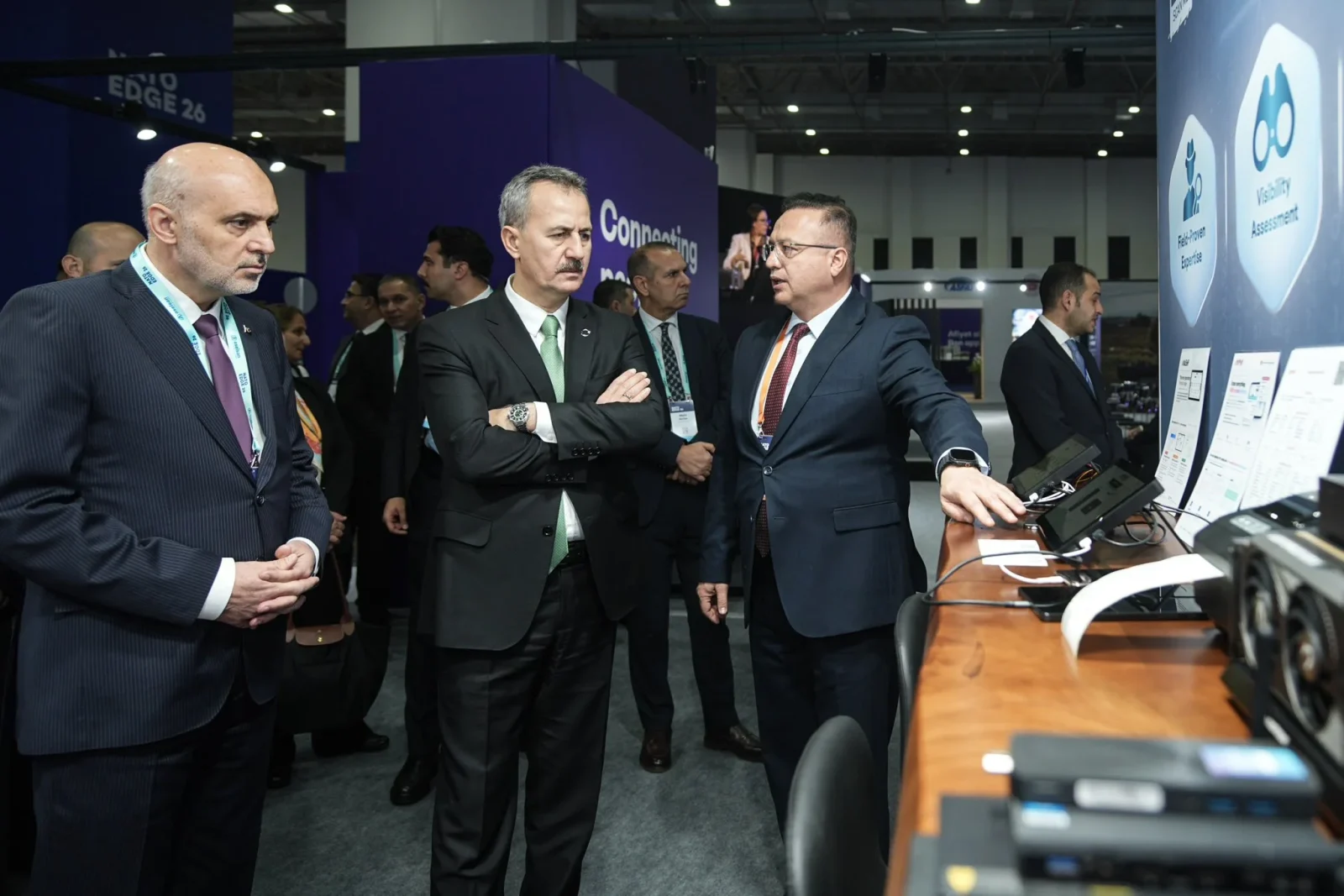
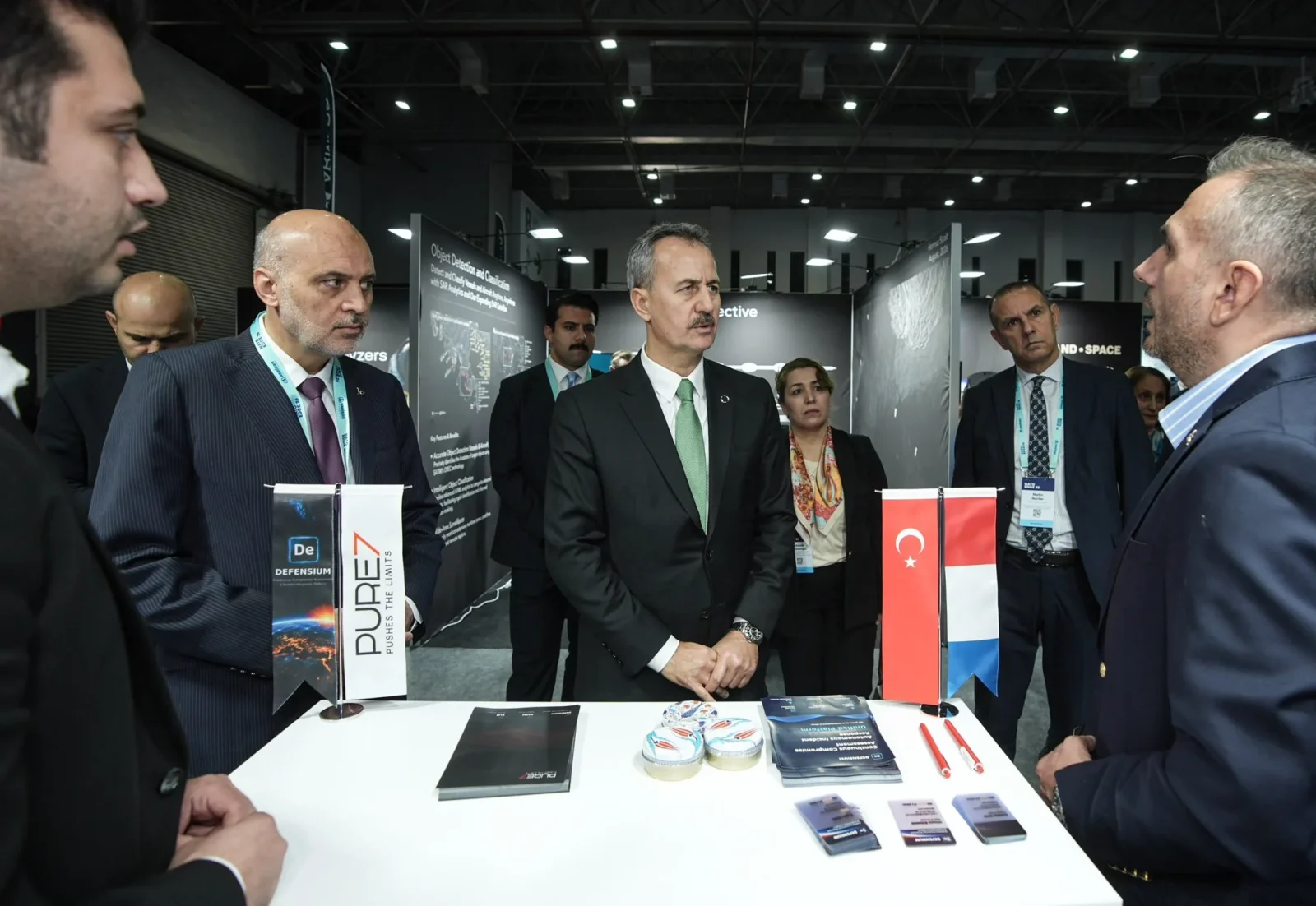
After the opening, Görgün toured the stands of Turkish companies. He noted that 56 percent of Türkiye’s defence and aerospace exports go to NATO countries. He said the Turkish defence industry ecosystem is ready to be one of the driving forces behind the Alliance’s industrial transformation, and that under President Recep Tayyip Erdoğan’s leadership Türkiye will keep contributing to the Alliance’s shared defence capabilities.
A run of NATO events in two years
Görgün listed the NATO events Türkiye has hosted over the past two years:
- February 2025: SPARK in Istanbul launched NATO’s Innovation Continuum.
- May: the Multi-Domain Operations Conference in Ankara.
- September: Turkish Industry Day, bringing NCIA and the NATO Support and Procurement Agency (NSPA) together with Turkish firms.
- October: SHINE, the final event of the Innovation Continuum, was again held in Istanbul.
- 2026: the Defence Industry Forum during the NATO Ankara Summit in July, and the national technology showcase ALFA 2026 alongside SHINE in October.
In Görgün’s view these events strengthened cooperation between Turkish industry and the Alliance, and important steps have been taken to turn the commitments made at the Ankara Summit into results. The NATO-Industry Cooperation Strategy sets three priorities: work more closely with industry, support innovation and improve interoperability, and increase defence production capacity. Görgün said:
“Today’s security problems demand faster decisions and concrete results. For us, this means we must move faster, widen our industrial ecosystem and produce more.”
“Developing new systems is not enough”
Görgün said that in command and control, communications, cyber, electronics and data, technology changes in months rather than years, so new systems must be fielded as fast as they are developed. He recalled NATO Secretary General Mark Rutte’s assessment that Türkiye is going through a “defence industry revolution”. He added that allied leaders acknowledge Türkiye is shaping global trends in unmanned aerial systems and electronic warfare, and that Türkiye’s medium- and low-altitude air defence systems offer cost-effective solutions whose capabilities have been proven in operational use.
According to Görgün, a unit has been set up within SSB to meet urgent operational needs, with the aim of delivering solutions to end users within 12 months. Türkiye is the first ally to adapt NATO Allied Command Transformation’s (ACT) Innovation Continuum approach at national scale. Under this programme, called ALFA, 28 Turkish companies worked on six scenarios at ALFA 2026 in October. Three of those scenarios were shared live with the SHINE event in Halifax, Canada, and a memorandum of understanding was signed with ACT.
More than 4,000 companies, 110 technoparks, 204 universities
Görgün said the defence industry cannot rely only on traditional suppliers; firms working on new and related technologies must be brought in too. He said SSB coordinates an ecosystem covering more than 4,000 defence companies, 110 technoparks, 204 universities and many industrial clusters. Contracts require prime contractors to pass part of their work share to SMEs, which builds a broader and stronger industrial base.
Recalling that Rutte at the Ankara Summit pointed to Türkiye’s defence industry model as an example of effective coordination, Görgün said:
“We welcome this interest. We are ready to carry this approach to the Alliance and put it into practice with our allies. Together we can strengthen NATO’s defence industrial base.”
“To produce more, we must pool requirements”
Görgün stressed that allied requirements should be pooled and communicated openly to industry. For firms to plan and invest, they need to know the needs of coming years and hold firm contracts. For that reason, he said, Türkiye supports the REPEAD process and favours joint development, production and procurement among allies, with High Visibility Projects as an example of that approach.
He said the NATO Innovation Scale-up Package announced at the Ankara Summit can support all three priorities, and that Türkiye strongly backs the NATO Engine initiative, which helps SMEs and start-ups raise production and grow. 35 Turkish companies took part in the pilot programme’s first call.
A call to industry
Closing his speech with a message to industry representatives, Görgün said:
“Türkiye’s dynamic defence industry offers important opportunities for the Alliance. My message to the industry representatives here today is clear: get to know our companies. Look for ways to develop and produce together. Build partnerships that reach far beyond this event. Let us move faster, widen our ecosystem and produce more together.”
At the end of his speech, Görgün thanked NCIA and the Turkish General Staff for their contribution to organising the event.
Source: Presidency of Defence Industries press release, 17 November 2026.
Photos: SSB