ASELSAN’s GÖKDENİZ Shoots Down Jet-Powered Drone in Black Sea Test, Eyes Export Growth

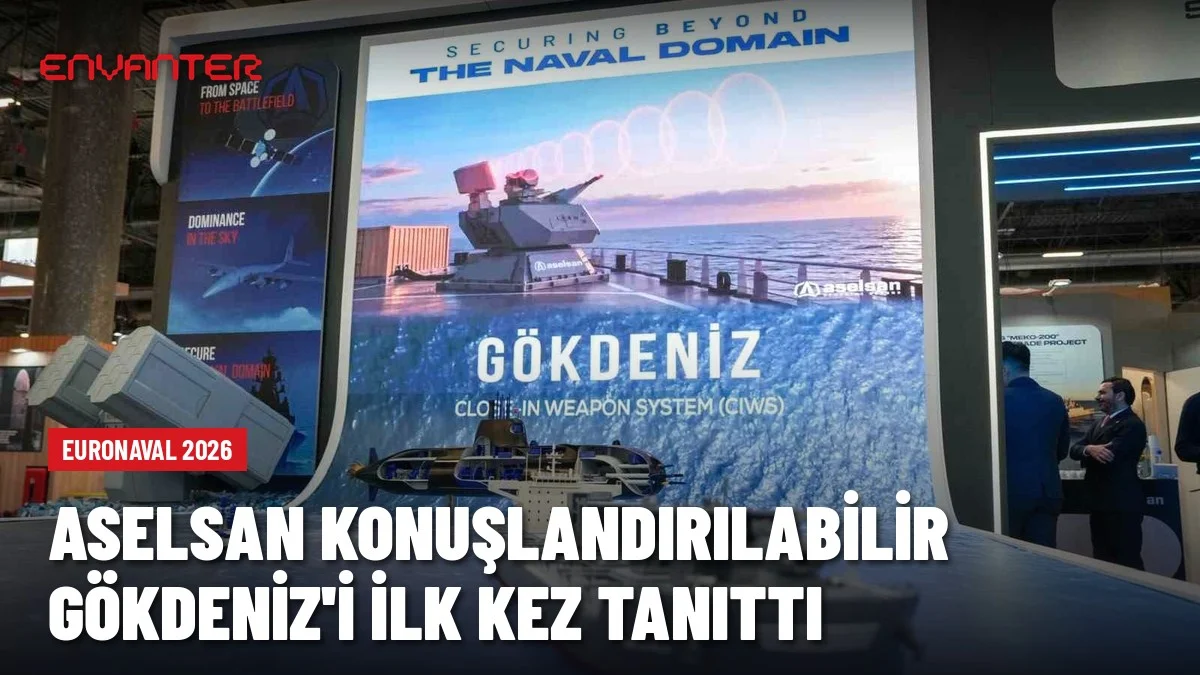
Turkish defence manufacturer ASELSAN says its GÖKDENİZ naval close-in weapon system detected, tracked and destroyed a high-speed, jet-powered drone target during a live-fire demonstration in the Black Sea on November 23. The test, watched by international delegations, adds a fresh data point to a wider shift in naval air defence: using relatively cheap, gun-based systems to counter drones instead of burning through expensive interceptor missiles.
According to ASELSAN, the target flew a low-altitude maneuvering profile meant to simulate a fast, jet-engined unmanned threat. The demonstration took place aboard a vessel moving at 5 to 10 knots, a detail the company says was chosen to reflect realistic sea conditions rather than a static test-range setup.
Semi-autonomous now, fully autonomous if needed
In the mode used for the demonstration, GÖKDENİZ handled detection, tracking and threat prioritization on its own, while a human operator authorized the actual shot with a single button press. ASELSAN also confirmed the system has a fully autonomous mode, in which the entire engagement sequence, firing included, runs without an operator’s input at all.
That distinction matters in naval combat, where an incoming threat can close the distance in seconds. Automating the sensor-to-shooter chain while keeping a human in the loop for the trigger is the kind of middle ground several navies are experimenting with as drone threats multiply.
Twin 35mm guns, programmable ammunition
GÖKDENİZ is the naval variant of ASELSAN’s land-based KORKUT air defence system. It fires from twin 35mm automatic cannons with a combined rate of 1,100 rounds per minute, using ASELSAN’s programmable airburst ATOM ammunition, rated with an effective range of up to 4 kilometers against aerial targets.
A linkless feed mechanism lets the gun load ATOM airburst rounds and conventional high-explosive incendiary ammunition at the same time, so the operator can switch munition type depending on the target. ASELSAN frames this as a way to save costlier guided missiles for longer-range or higher-priority threats, while handling cheaper drone swarms with gun rounds.
Why low-altitude targets are the hard case
Hitting a target flying close to the sea surface is harder than it sounds: the radar horizon shrinks, sea clutter interferes with tracking, and the window to react gets compressed. ASELSAN’s own technical reporting also references a separate qualification firing against a sea-skimming target exceeding 180 meters per second, giving some additional context on how the system performs against fast, low threats.
The Black Sea and Red Sea have both produced recent examples of cheap drones threatening far more expensive warships, pushing several navies to reconsider gun-based point defence rather than relying only on missile interceptors for every incoming threat.
Part of a layered system, and an export pitch
ASELSAN pairs GÖKDENİZ with GÖKSUR, its longer-range naval missile system, as a layered air defence package. Army Recognition reported on November 4 that ASELSAN unveiled containerized versions of both systems at EURONAVAL 2026, aimed at extending the technology beyond warships to commercial vessels and other maritime assets.
ASELSAN also said GÖKDENİZ has already been selected by six foreign navies in addition to the Turkish Naval Forces — a detail the company is clearly using to make its case in the export market. The test did not involve a full saturation attack or an actual anti-ship missile, a limitation ASELSAN itself acknowledged. Even so, a confirmed kill against a fast, low-flying jet drone is a meaningful data point as navies reassess their close-in defences against a growing mix of UAV and missile threats.
Sources:
– Army Recognition, “Türkiye’s ASELSAN GÖKDENİZ Naval Close-In Weapon System Destroys High-Speed Jet Drone in Black Sea Test,” November 23, 2026 — used for test details, system specifications and ASELSAN’s official statement.
– ASELSAN’s official announcement of November 23, 2026 (as relayed by Army Recognition) — used for test conditions, autonomous-mode details and the six-navy export claim.
– Army Recognition, EURONAVAL 2026 coverage, November 4, 2026 — used for context on the containerized GÖKDENİZ/GÖKSUR configuration.