UK Grounds Hawk Trainer Fleet After RAF Valley Crash as Replacement Race Heats Up

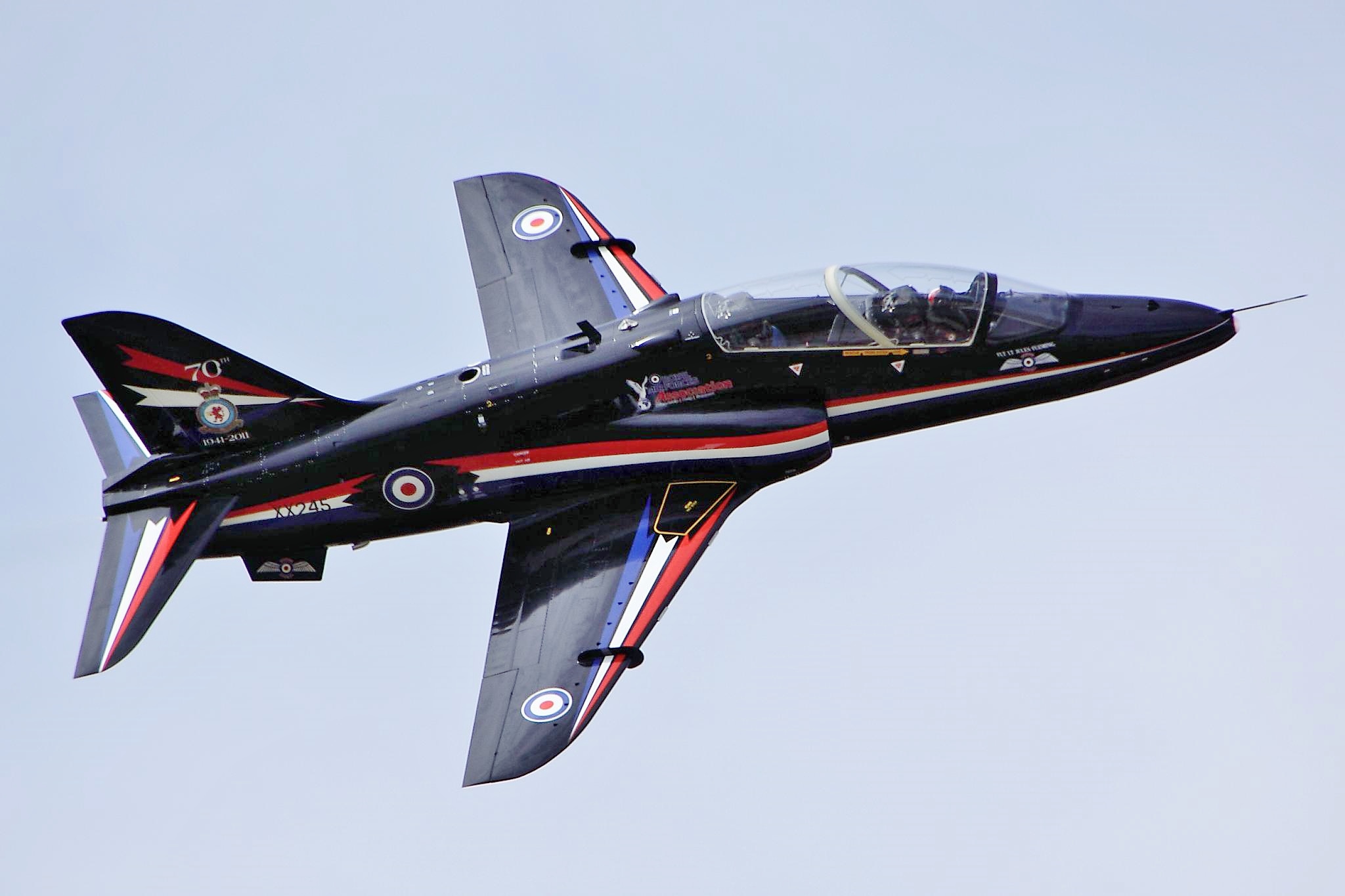
The UK Royal Air Force has grounded its entire Hawk T1 and Hawk T2 training fleet after a Hawk T2 crashed shortly after take-off from RAF Valley in north Wales. Both crew ejected, and the RAF says they are expected to make a full recovery. The pause halts the final jet stage of Britain’s fast-jet pilot pipeline — and puts fresh urgency behind the search for a Hawk replacement that London launched only in August.
At a Glance
- What: A Hawk T2 crashed on Wednesday, 23 September, shortly after departing RAF Valley. The RAF has “temporarily paused” all Hawk T1 and T2 flying.
- Where: Near RAF Valley on Anglesey, north Wales. The jet was seen nosediving and came down near houses.
- Crew: Both pilots ejected and are “doing well,” according to the RAF.
- Fleet: 28 Hawk T2s support RAF and Royal Navy fast-jet training; the Hawk T1 still equips the Red Arrows.
- Next: A formal investigation is under way. The MoD issued a request for information for a Hawk successor in August.
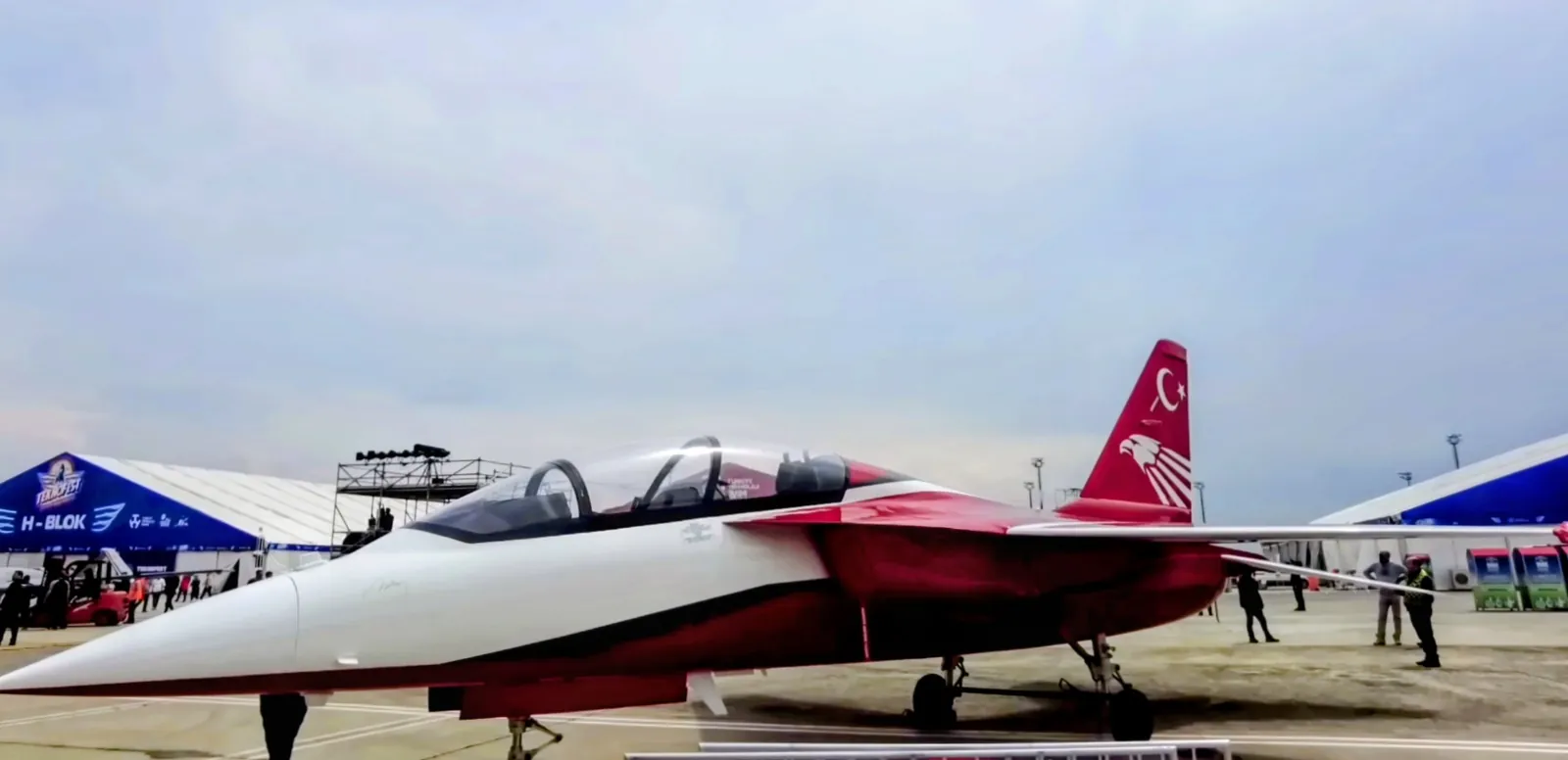
- Türkiye angle: Turkish Aerospace’s HÜRJET is named alongside the T-7A, M-346 and TF-50 as a likely contender.
Ejection moments after take-off
The accident happened on Wednesday at RAF Valley on the island of Anglesey. According to Breaking Defense, both crew members of the Hawk T2 ejected shortly after take-off, after which the aircraft was seen nosediving toward the ground and crashing close to houses.
The RAF said on social media that it had temporarily paused flight operations of both Hawk variants and that a formal investigation was in motion. It gave no cause, saying only that both pilots were doing well and expected to make a full recovery.
Speaking at the UK space power conference that evening, Defence Secretary Wes Streeting said: “We’re investigating how and why this happened.” BAE Systems, which builds the Hawk, said it was aware of the incident but that it would be inappropriate to comment further, directing enquiries to the RAF.
The location matters. RAF Valley is home to No 4 Flying Training School, the last step before students move to Typhoon and F-35 conversion. A fleet-wide pause there is not a single-squadron problem; it stalls the top of the whole training funnel.
A fleet that was already short of hours
The crash hits a fleet with a troubled record. The Hawk T2 programme has long wrestled with engine and support issues. In 2025, then-Chief of the Air Staff Air Chief Marshal Sir Richard Knighton told the Freeman Air and Space Institute that the Hawk was “the pinnacle of our flying training” but that the service was getting “about half” of what it should from the aircraft.
BAE did not respond directly at the time, though in January 2025 it told FlightGlobal it was supporting analysis with customers around the world, including the RAF. The practical meaning was clear enough: the constraint was not airframe numbers but available aircraft and flying hours.
The 28-strong T2 fleet was ordered in 2006 under a £450 million ($581 million) contract. The older T1 remains the mount of the Red Arrows, so the pause touches Britain’s most visible aviation shop window as well as its students.
Training delays compound. A course that slips a few weeks pushes graduates into front-line squadrons late, which in turn thins the pool of experienced pilots available per cockpit. How long the investigation takes is therefore a capacity question as much as a safety one.
The replacement competition just got more urgent
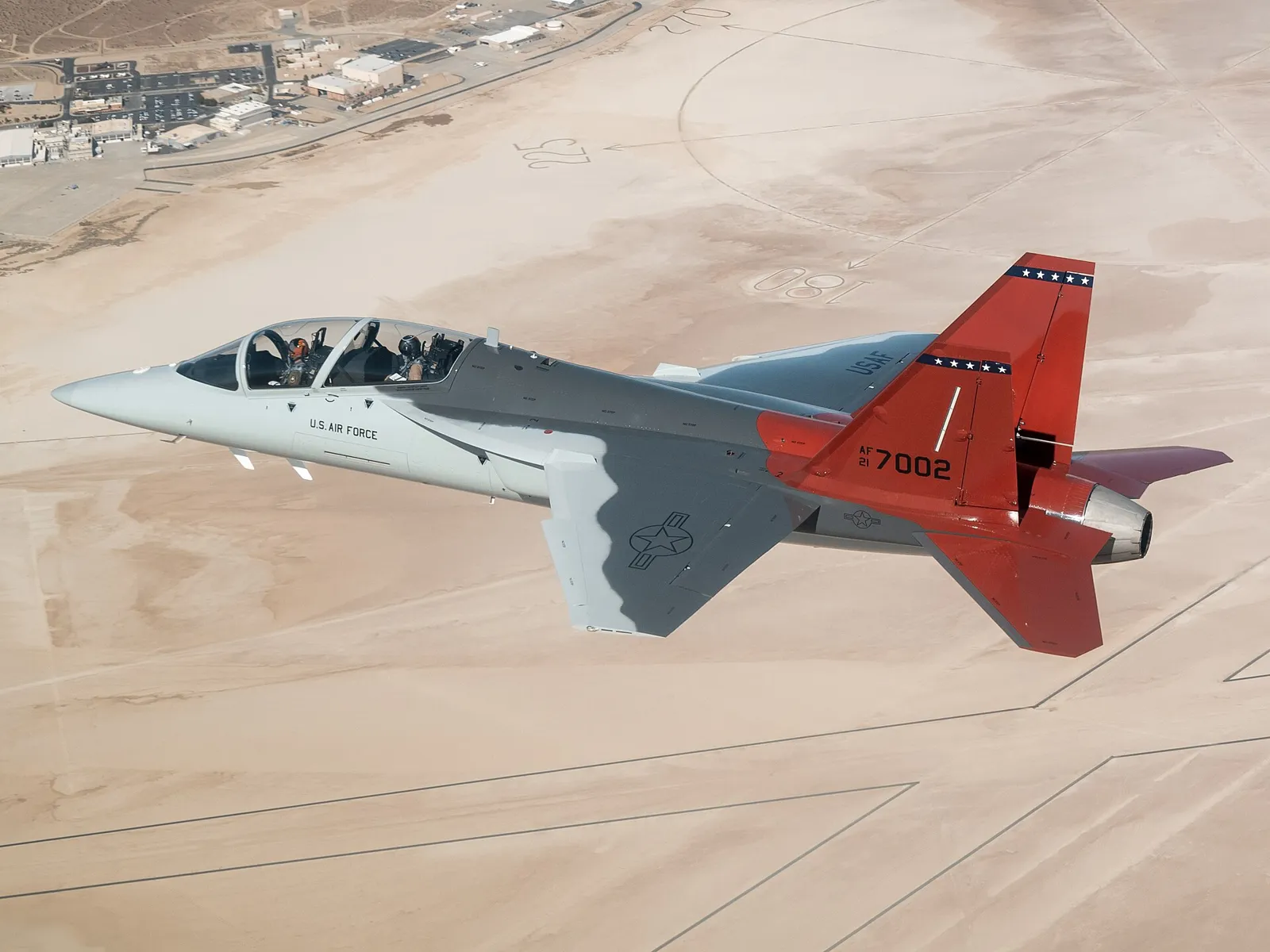
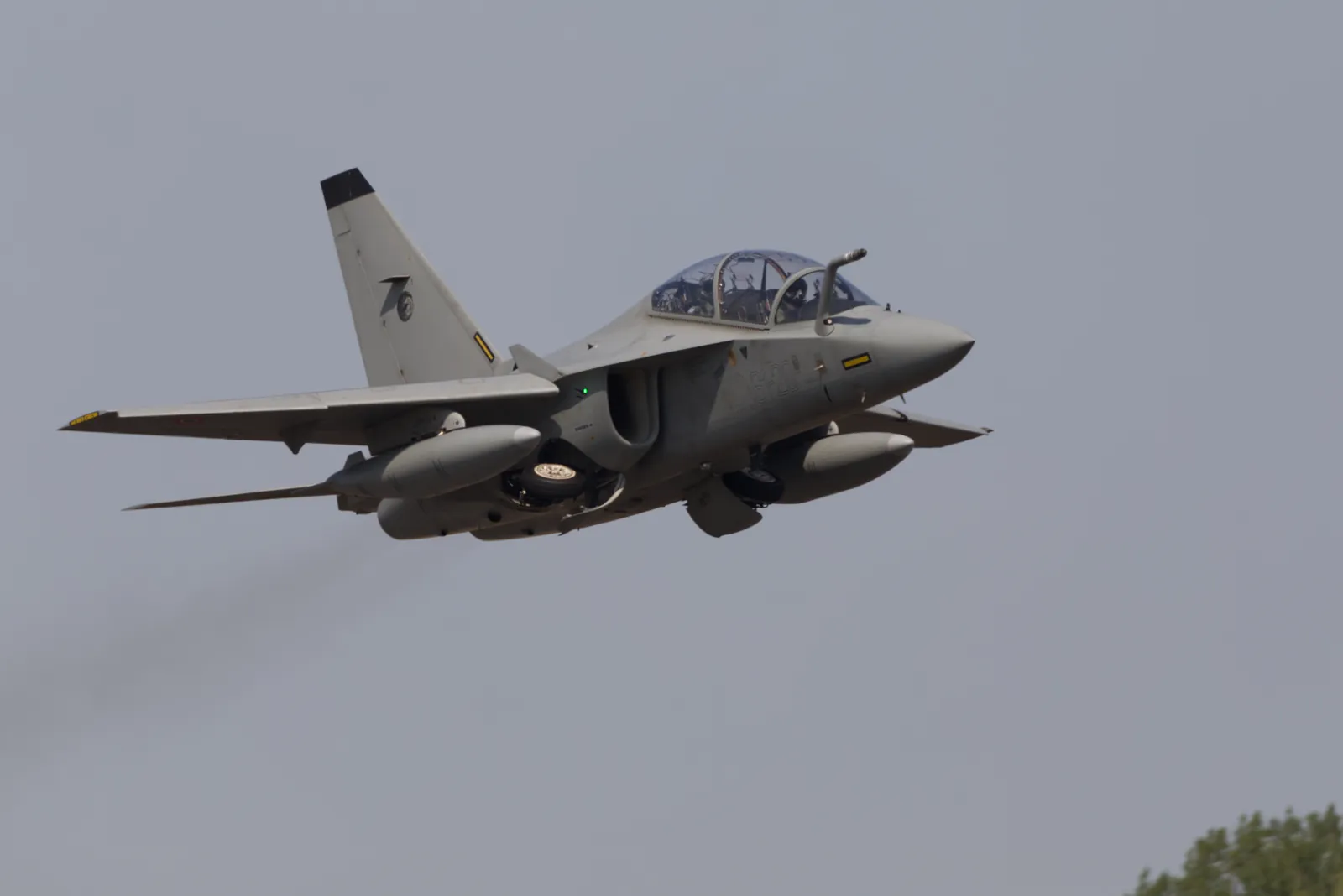
In August the Ministry of Defence issued a request for information as the first formal step toward replacing both Hawk types. Breaking Defense lists the likely field: BAE Systems pitching the T-7A with Boeing and Saab, Leonardo offering the M-346, Lockheed Martin proposing the TF-50 derived from KAI’s T-50 family, and Turkish Aerospace with HÜRJET.
That BAE is fronting a US-Swedish design to succeed its own jet is a quiet admission that Britain will not develop a new trainer of its own. The contest is therefore likely to turn on workshare, local assembly and through-life support rather than on the spec sheet alone.
If the grounding drags on, London faces a choice between another round of investment to stabilise the T2 or an accelerated transition. The second option favours mature designs with production lines already running.
How the contenders compare
| BAE Hawk T2 | HÜRJET | T-7A Red Hawk | M-346 | |
|---|---|---|---|---|
| Maker | BAE Systems (UK) | Turkish Aerospace (Türkiye) | Boeing–Saab (US/Sweden) | Leonardo (Italy) |
| Engine | Single Rolls-Royce Adour | Single GE F404 | Single GE F404 | Twin Honeywell F124 |
| Speed class | Subsonic | Supersonic | High subsonic | High subsonic |
| First flight | 2005 (T2 variant) | April 2023 | 2016 | 2004 |
| Known users | RAF plus many export air arms | Turkish Air Force; selected by Spain | US Air Force | Italy, Israel, Singapore, Poland, Greece, Turkmenistan |
| Status in UK race | Aircraft to be replaced | Contender | Contender (with BAE) | Contender |
Half a century of Hawk
The Hawk is one of British aerospace’s longest-running export successes. It entered RAF service in the mid-1970s and went on to equip air forces from Oman and Saudi Arabia to India and Australia, with Hawk 100 and 200 light-attack derivatives stretching it beyond training.
The T2 added a glass cockpit and synthetic radar and weapons simulation to prepare students for fourth- and fifth-generation sensor environments, but its airframe and engine architecture remain those of the original family — the root of the availability problems Knighton described.
What it means for Türkiye
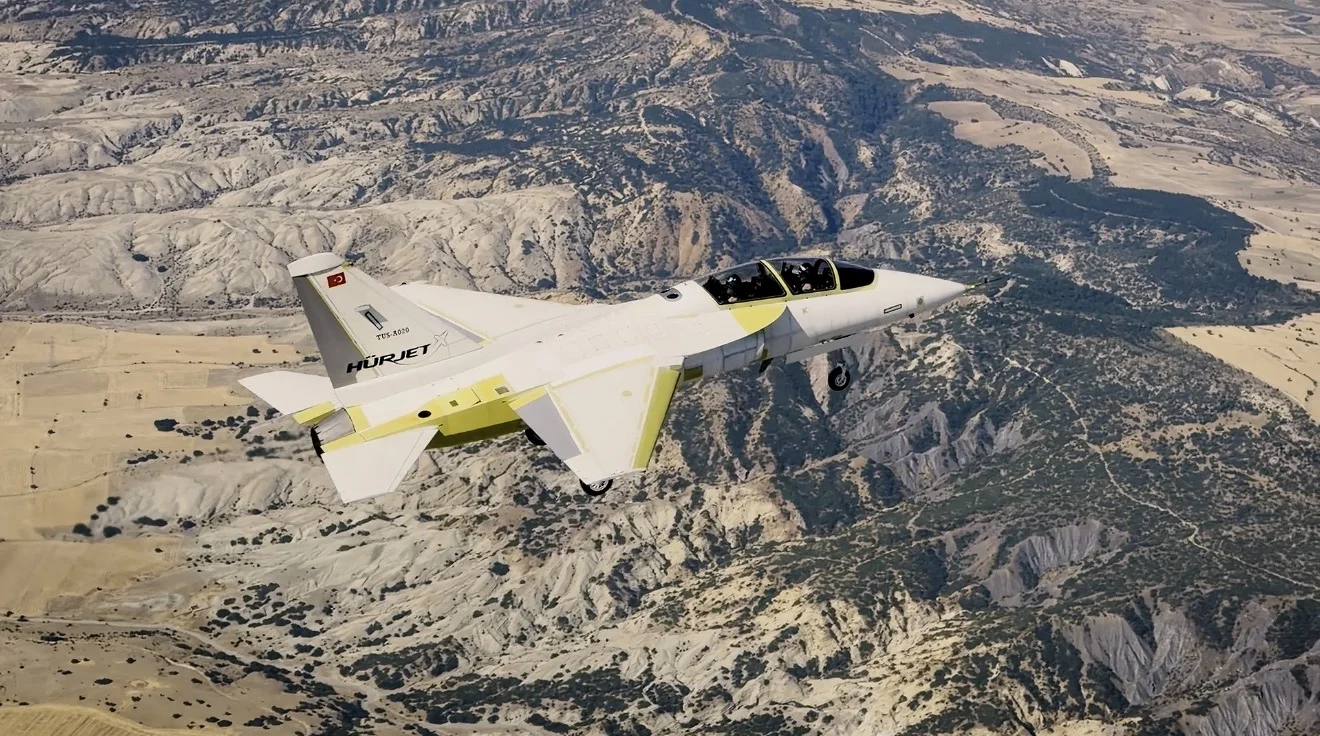
HÜRJET’s appearance on the UK shortlist shows how quickly the jet has moved from a national programme to a product European air forces take seriously. Spain’s selection of the aircraft to renew its jet-training fleet is the strongest evidence; a NATO air force choosing it carries obvious reference value for a customer working to the same standards.
On paper, HÜRJET’s differentiator is speed: it is the only supersonic aircraft in the field, which lets students experience high-speed regimes before they reach Typhoon or F-35. Its F404 engine comes from the same family as the T-7A’s, so the propulsion support chain would be familiar to the UK.
The decisive factors, though, will be industrial. BAE’s home-team position with the T-7A and Leonardo’s large UK footprint are serious advantages. HÜRJET’s prospects likely depend on replicating in Britain the kind of local partnership built with Airbus in Spain — and on doing so quickly.
Türkiye itself is building its training chain end to end on domestic platforms — HÜRKUŞ for basic training, HÜRJET for advanced jet training and KAAN at the fifth-generation end — a useful contrast with an air force whose whole pipeline now hinges on one ageing type.
Sources
- Breaking Defense — “Hawk trainer crash prompts UK to ground fleet”, 24 September 2026
- Royal Air Force statements, 23–24 September 2026
- BAE Systems spokesperson statement (via Breaking Defense)
- Freeman Air and Space Institute, remarks by Air Chief Marshal Sir Richard Knighton, 2025
- Official product pages: BAE Systems Hawk, Boeing T-7A, Leonardo M-346, Turkish Aerospace HÜRJET