What is BrahMos? The Indo-Russian Supersonic Cruise Missile, Explained
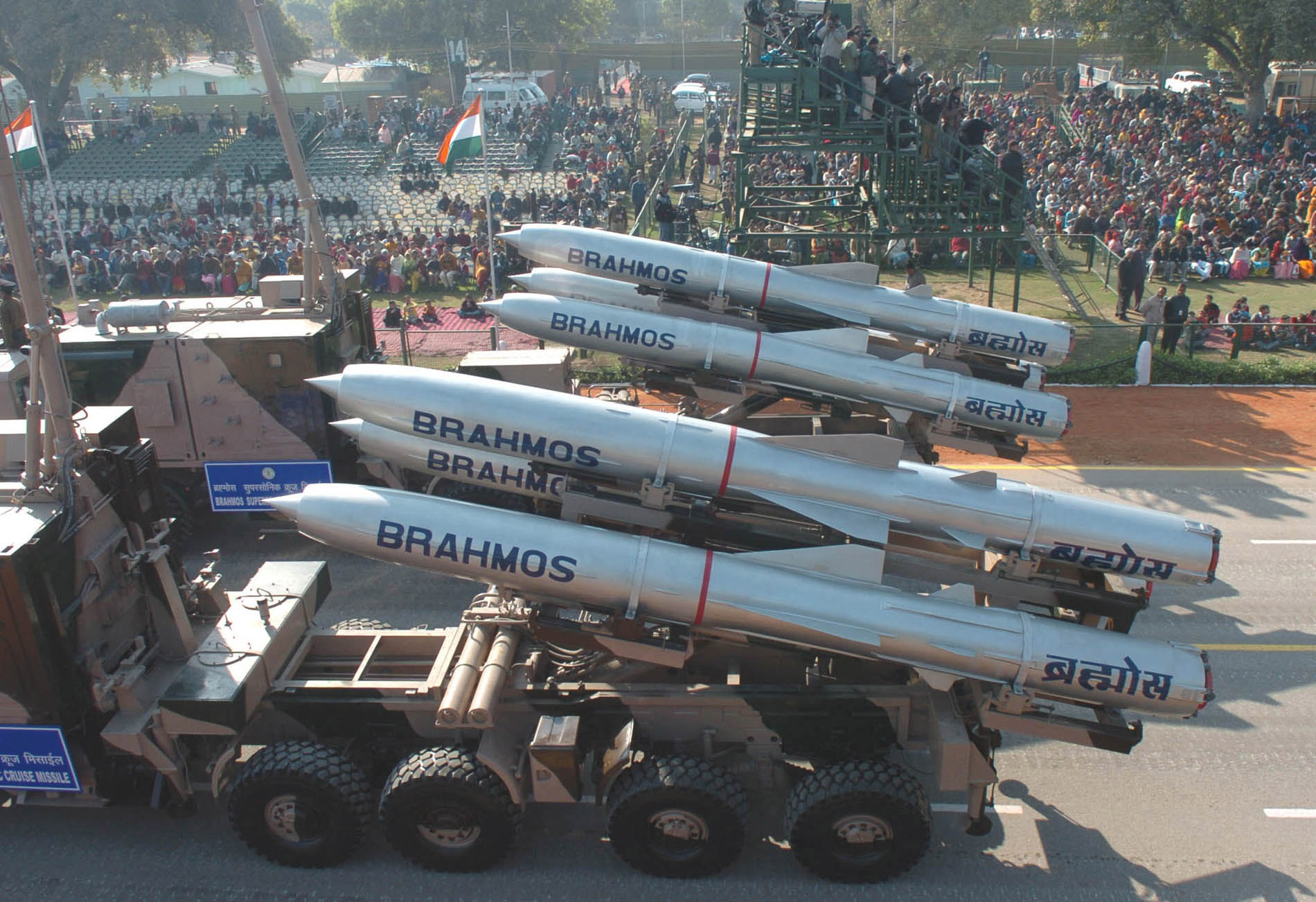
BrahMos is a supersonic cruise missile co-developed by India’s DRDO and Russia’s NPO Mashinostroyeniya through the BrahMos Aerospace Private Limited joint venture established in 1998. The name is a portmanteau of the Brahmaputra and Moskva rivers. With a cruise speed of Mach 2.8–3.0 and a publicly stated range of 290–500 km (range-extended Indian variant), BrahMos is the fastest cruise missile in series production anywhere in the world, and the centerpiece of the Indian Navy and Army’s stand-off strike doctrine. The January 2022 sale of BrahMos Shore-Based Anti-Ship Missile System batteries to the Philippines — a USD 375 million contract — marked India’s largest single defense export and the missile’s first foreign operator.
Key facts at a glance
| Attribute | Value |
|---|---|
| Type | Supersonic anti-ship and land-attack cruise missile |
| Origin | India + Russia (joint venture) |
| Manufacturer | BrahMos Aerospace |
| In service | 2005 (Indian Navy ship-launched); 2007 (Army); 2020 (air-launched) |
| Length | 8.4 m (Block I); 8.0 m (Block III air-launched) |
| Diameter | 670 mm |
| Launch weight | 2,500 kg (ship-launched); 2,400 kg (Block III) |
| Warhead | 200–300 kg HE penetrator or fragmentation |
| Range | 290 km (export); 500 km (Indian extended-range, BrahMos-ER); 800 km (BrahMos-NG planned) |
| Cruise speed | Mach 2.8–3.0 |
| Terminal speed | Mach 3.0+ |
| Cruise altitude | Sea-skimming (5–10 m) or high-altitude (14 km) |
| Propulsion | Solid-fuel booster + liquid-fuel ramjet sustainer |
| Operators | India (Navy, Army, Air Force), Philippines (Marine Corps) |
| Unit cost | ~ USD 3 million per missile |
The Yakhont lineage and the joint venture
BrahMos’s parent design is the Russian P-800 Oniks / 3M55 Yakhont anti-ship missile developed by NPO Mashinostroyeniya in the 1980s. Russia and India signed the BrahMos joint-venture agreement on 12 February 1998, with India taking 50.5 percent ownership and Russia 49.5 percent. The first BrahMos test flight took place at the Chandipur range on 12 June 2001. Series production began in 2005, with primary integration aboard the Indian Navy’s Talwar– and Rajput-class frigates and destroyers.
Variants
| Variant | Launch platform | Key feature |
|---|---|---|
| BrahMos Block I | Ship, submarine, ground | 290 km baseline; sea-skimming terminal |
| BrahMos Block II | Ship | Land-attack variant with target-discrimination logic |
| BrahMos Block III | Ground | Mountain-launch capability; steep-dive attack |
| BrahMos-A | Air (Su-30MKI) | Reduced length and weight; 400 km range; first launched 2017 |
| BrahMos-ER | Ship, ground | 500 km range (treaty-extended after India joined MTCR in 2016) |
| BrahMos-NG (planned) | All platforms | 1,500 kg; 800 km; compatible with smaller carriers including Tejas and AMCA |
| BrahMos-II (concept) | Hypersonic | Mach 7 scramjet; 1,000 km; ~2030s |
Combat record
BrahMos’s combat record is limited but consequential. The most-discussed event was the 9 March 2022 unintended launch from an Indian Air Force facility in Sirsa, Haryana that flew into Pakistani territory, traveling 124 km before crashing harmlessly at Mian Channu in Pakistan’s Punjab province. The incident — attributed by India to a maintenance error — was the first time a BrahMos missile crossed an international border and triggered diplomatic protests but no military escalation.
During the May 2025 India-Pakistan crisis, BrahMos missiles were reportedly used by the Indian Air Force in coordinated strikes against Pakistani targets. Independent verification of the strikes and their precise effects remains limited.
Philippine export
The Republic of the Philippines signed a USD 375 million contract on 28 January 2022 for three batteries of the Shore-Based Anti-Ship Missile System for the Philippine Marine Corps. The first battery was delivered on 19 April 2024 and inducted into service later that year, becoming the first non-Indian operator of any BrahMos variant. The Philippine acquisition is widely understood as a direct response to Chinese coercion in the South China Sea around Scarborough Shoal and the Spratly Islands. Negotiations with Indonesia, Vietnam and several Gulf states are at varying stages.
BrahMos vs. its peers
| BrahMos Block I | P-800 Oniks (Russia) | YJ-12 (China) | NSM (Norway) | |
|---|---|---|---|---|
| Speed | Mach 2.8–3.0 | Mach 2.5 | Mach 3.0 | Mach 0.93 |
| Range | 290–500 km | 300 km | 400 km | 250 km |
| Cruise altitude | 5–10 m (sea-skim) / 14 km (high) | Sea-skim | Sea-skim | Sea-skim |
| Warhead | 200–300 kg | 250 kg | 500 kg | 125 kg |
| Stealth shaping | Limited | Limited | Moderate | Extensive |
| Operators | India, Philippines | Russia, Indonesia, Syria, Vietnam, Egypt | China | USA, UK, Norway, Australia, Poland, Romania, Latvia, Germany |
The Su-30MKI integration
The air-launched variant — BrahMos-A — is integrated only with the Indian Air Force’s Su-30MKI. Each aircraft carries one missile on the centerline pylon. The first air-launched test of BrahMos from a Su-30MKI was conducted on 22 November 2017 over the Bay of Bengal. As of 2025, the IAF maintained roughly 40 Su-30MKIs equipped for BrahMos carriage, providing India with a deep-strike anti-ship and land-attack capability matched by few air forces outside the United States, Russia and China.
BrahMos-NG and future variants
BrahMos Aerospace is currently developing the BrahMos-NG (Next-Generation): a smaller, lighter variant weighing roughly 1,500 kg with the same 800 km range as BrahMos-ER. The reduced cross-section allows carriage by the indigenous HAL Tejas Mk 1A light combat aircraft and the in-development AMCA fifth-generation fighter. First flight is forecast for 2026; production in 2028. Further out, a BrahMos-II hypersonic variant is in concept-development, but has been postponed multiple times.
Why BrahMos matters
BrahMos is the world’s first and only supersonic cruise missile in continuous series production. Its sea-skim approach at Mach 2.8 leaves engagement-window calculations for defensive Aegis-class SAM systems significantly compressed compared to subsonic threats. With the Philippine acquisition, BrahMos has crossed from being a regional Indian-Russian capability to becoming a market-shaping export weapon. As the BrahMos-NG enters service and additional Southeast Asian and Middle Eastern buyers materialize, the missile family is likely to remain the most-discussed Indian defense export product of the 2020s and 2030s.