What is the Tor-M2? Russia’s Short-Range Air Defense System, Explained

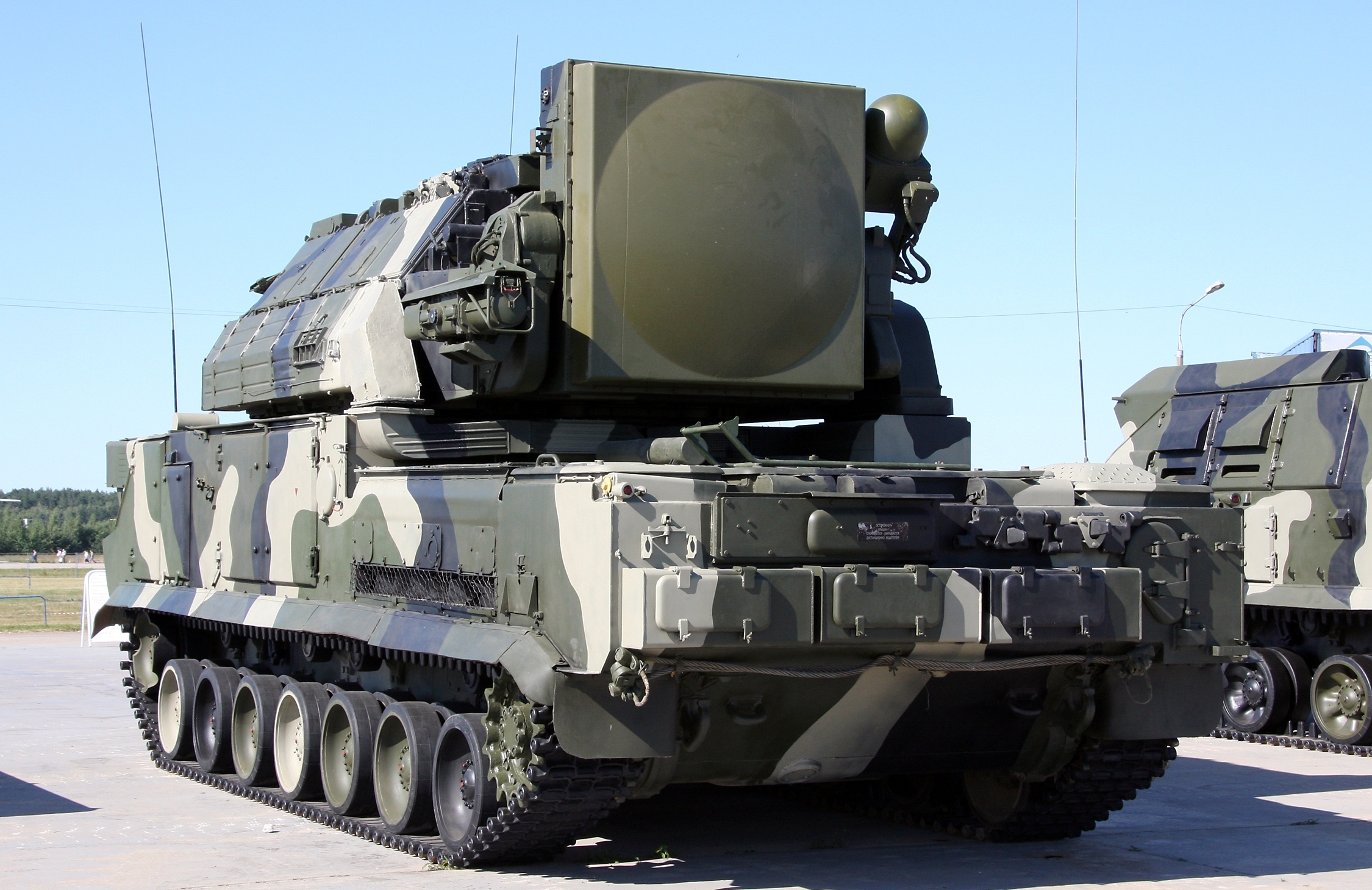
The Tor-M2 – NATO reporting name SA-15 Gauntlet – is Russia’s standard tracked short-range battlefield air-defense system, designed by the Almaz-Antey Air and Space Defence Corporation and produced at the Izhevsk Electromechanical Plant Kupol. First entering Soviet service in 1991 as the Tor (9K330), the system was extensively modernized in the 2000s and 2010s, with the current Tor-M2 introduced in 2012 and the further-improved Tor-M2U following in 2016. Designed to escort armored formations against cruise missiles, precision-guided munitions, helicopters and UAVs, the Tor-M2 carries 16 ready-to-launch missiles in vertical launch cells and can engage four targets simultaneously – a significant capability advantage over Western point-defense systems like the U.S. Avenger or German Ozelot.
Key facts at a glance
| Attribute | Value |
|---|---|
| Type | Tracked short-range battlefield air-defense system |
| Manufacturer | Almaz-Antey / Izhevsk Kupol |
| In service | 1991 (Tor); 2012 (Tor-M2) |
| Chassis | GM-355 tracked (legacy); MZKT-6922 wheeled (Tor-M2K); KAMAZ truck (Tor-M2KM modular) |
| Crew | 3-4 |
| Missiles | 16x 9M338K (vertical-launch canister) |
| Range | 16 km (Tor-M2); 20 km (Tor-M2DT Arctic) |
| Altitude | 10 km |
| Reaction time | 5-8 seconds |
| Radar | F-band acquisition; G-band engagement; 25 km detection range |
| Targets simultaneously | 4 |
| Operators | Russia, Belarus, China, Cyprus, Egypt, Greece, Iran, Ukraine (legacy), Venezuela |
| Unit cost | ~ USD 25 million per system |
Variants
| Variant | Year | Key feature |
|---|---|---|
| Tor (9K330) | 1991 | Initial Soviet baseline; 8 missiles, 12 km range |
| Tor-M1 | 1997 | Improved fire-control, 16-target tracking |
| Tor-M2 | 2012 | 16 missiles in canisters; 16 km range; new digital FCS |
| Tor-M2U | 2016 | Improved EW resistance; better target classification |
| Tor-M2K | 2016 | Wheeled MZKT chassis for export |
| Tor-M2DT | 2018 | Arctic / two-segment articulated DT-30 chassis; cold-weather optimized |
| Tor-M2KM | 2019 | Modular variant; container-mountable on any 8×8 truck or ship |
Vertical launch
The Tor’s defining feature is its vertical-launch cold-eject system. The 9M338K missile is ejected by a small gas charge from its launch canister to roughly 20 m altitude before the main rocket motor ignites. The missile then pitches over toward the target using its solid-fuel sustainer and small reaction-control thrusters. This vertical-launch architecture gives the Tor 360-degree engagement coverage without needing to slew the launcher and significantly reduces ready-to-fire time compared to slewing horizontal-launch systems.
Combat record
- 2015-present – Syria. Russian Tor-M2 batteries deployed to Khmeimim airbase have engaged unidentified incoming threats; Russian sources claim multiple intercepts of opposition rockets and small UAVs.
- 2022-present – Ukraine. Russian Tor-M2 has been one of the most-engaged Russian air-defense systems against Ukrainian Bayraktar TB2 drones, Storm Shadow / SCALP cruise missiles, Switchblade loitering munitions, and Tochka-U tactical ballistic missiles. Russian sources claim hundreds of successful intercepts; verified Ukrainian successes include several destroyed Tor-M2 systems, most by HIMARS strikes and Ukrainian artillery.
The 2022 Russian air-defense priority
The Tor-M2 has become Russia’s most-deployed front-line tactical air-defense system in Ukraine – the system most likely to engage Western precision munitions before they can complete their attack profile. Russian officials have specifically credited Tor-M2 with multiple Storm Shadow / SCALP intercepts, although Ukrainian and British sources challenge the kill-rate claims. Russia significantly increased Tor-M2 production after February 2022, with Izhevsk Kupol producing roughly 30 units per year by 2025 – the highest sustained production rate in the system’s history.
Tor-M2 vs. its peers
| Tor-M2 | Pantsir-S1 | NASAMS 3 | IRIS-T SLS | |
|---|---|---|---|---|
| Class | SHORAD | SHORAD + gun | Mid-range SAM | SHORAD |
| Range | 16 km | 20-30 km | 25-40 km | 25 km |
| Missiles ready | 16 (vertical launch) | 12 | 6 per launcher | 8 |
| Simultaneous targets | 4 | 4 | 4 | 4 |
| Combat-proven against cruise missiles | Yes (Ukraine, contested) | Yes | Yes (Ukraine, heavy) | Yes (Ukraine) |
Operators
| Country | Status |
|---|---|
| Russia | ~125 systems (multiple variants) |
| Belarus | 12 Tor-M2K |
| China | ~35 (operated alongside indigenous HQ-17, the Tor copy) |
| Egypt | ~16 Tor-M2E |
| Iran | 29 Tor-M1 (pre-sanction); HQ-17 follow-on under negotiation |
| Greece, Cyprus, Venezuela | Small fleets |
| Ukraine | Tor-M1 legacy + captured Russian Tor-M2 (limited) |
The Chinese HQ-17
China operates a domestic Tor copy designated HQ-17, developed by CASIC after Beijing acquired Russian Tor-M1 systems in the late 1990s. The HQ-17A is the current PLA variant and the HQ-17AE is offered for export. Iran has reportedly ordered HQ-17AE under a 2024 agreement.
Why the Tor-M2 matters
The Tor-M2 is Russia’s most-deployed front-line battlefield air-defense system and the platform engaging Western precision munitions in Ukraine. Its combination of vertical launch, 16-round magazine and 4-target simultaneous engagement makes it the technologically most-advanced Russian SHORAD in series production. Combat-effectiveness assessments are contested, but the system is sufficiently relevant that Russian industry has accelerated production to its highest historical rate. As Russia continues to refine integration between Tor-M2 and electronic warfare systems against Western precision strike, the platform’s role at the heart of Russian battlefield air defense will continue through at least 2030.