Is the Neptune the right coastal defence missile for the Baltic states?

What does the country actually need?
The Baltic is a textbook case for coastal missile defence. The basin is narrow, sea lines of communication are short and there is no alternative route. None of the three Baltic states can field a surface fleet at meaningful scale, so deterrence at sea is generated from the shore rather than from ships. Sea denial of this kind is among the most cost-efficient capabilities a small force can buy.
Survivability, not range, is the binding constraint. Strategic depth is minimal, so a static battery is a targeted battery. What the region actually needs is a truck-mounted system that can hide in forest, shoot and displace. The third requirement is integration: Estonian and Latvian batteries only add up if they share a targeting and command picture, which is why NATO C2 interoperability is the first test any new system faces.
What is the system?
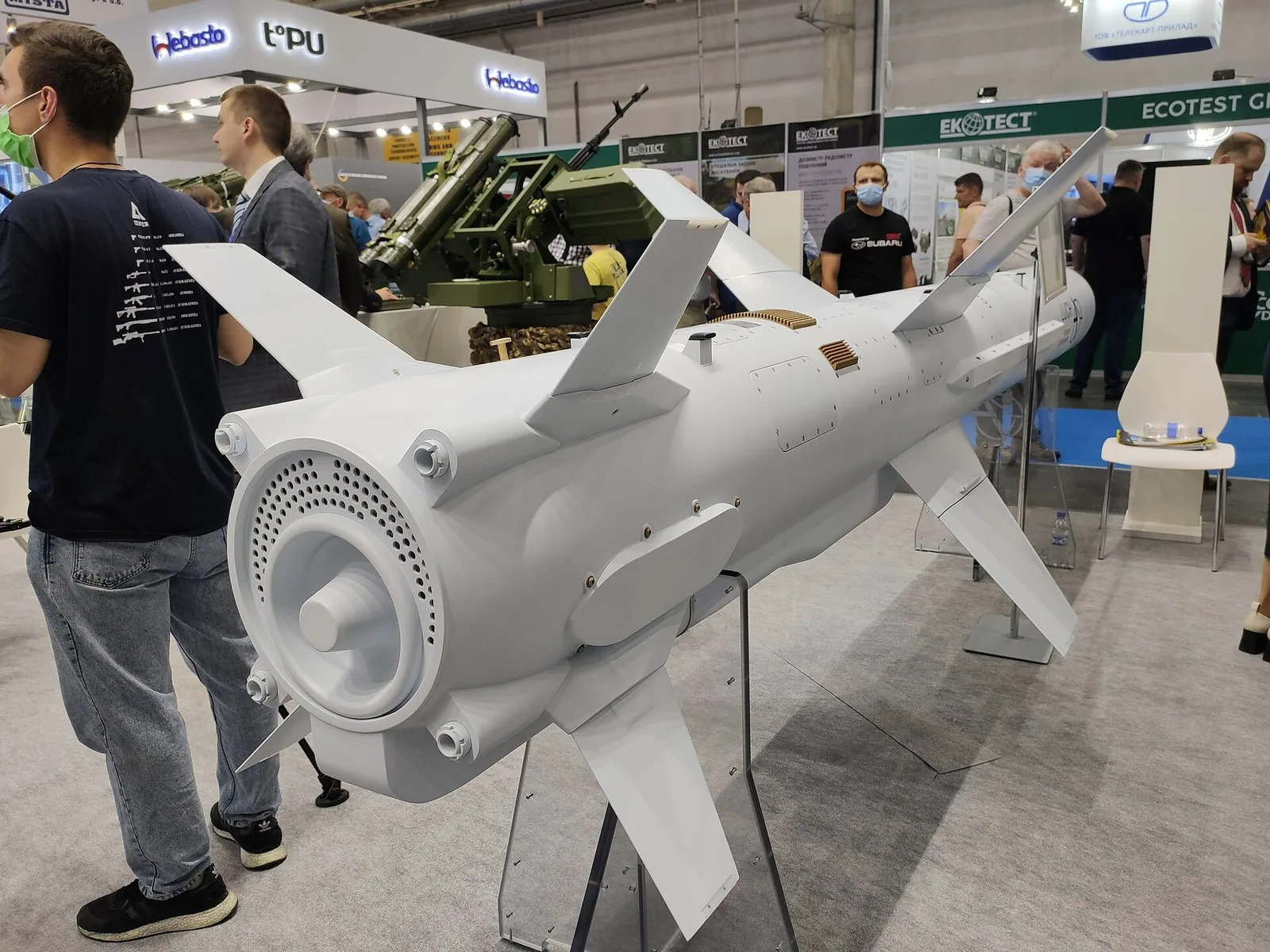
The R-360 Neptune is a coastal anti-ship cruise missile developed by the Luch Design Bureau in Kyiv. It was first shown in 2015, tested from 2016 and entered Ukrainian Navy service in March 2021. The missile weighs 870 kg, measures 5.05 m by 38 cm and carries a 150 kg warhead, powered by a Motor Sich MS-400 turbofan at subsonic speed in a sea-skimming profile. Guidance combines inertial navigation with terminal active radar.
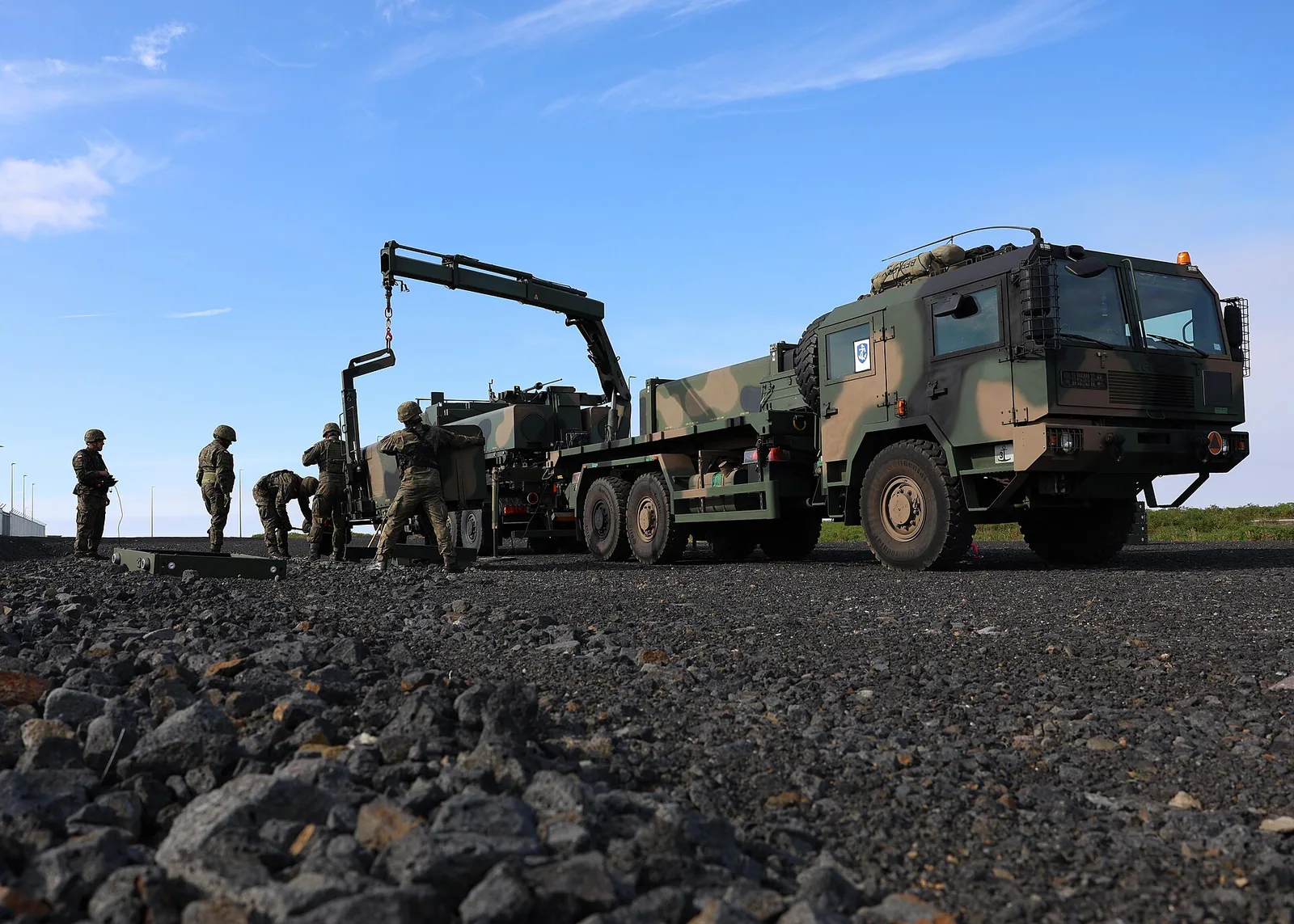
A coastal battery comprises the USPU-360 launcher with four missiles, the TZM-360 transloader and the RCP-360 command vehicle, and can be sited up to 25 km inland. The family has not stopped at 280 km: an extended-range variant announced by Ukrainian officials in 2025 claims up to 1,000 km with a 260 kg warhead, moving the system from anti-ship into deep strike. On 16 June 2026 at Eurosatory, MBDA and Luch signed a memorandum of understanding covering development of Neptune-2, which for the first time places the family inside a European industrial framework.
| Technical data | |
|---|---|
| Manufacturer | Luch State Design Bureau, Ukraine |
| Class | Coastal anti-ship cruise missile |
| Missile weight | 870 kg |
| Dimensions | 5.05 m length, 38 cm diameter |
| Warhead | 150 kg; 260 kg on the extended-range variant |
| Propulsion | Motor Sich MS-400 turbofan |
| Range | over 280 km; up to 1,000 km claimed for the extended-range variant |
| Guidance | Inertial navigation with terminal active radar seeker |
| Battery components | USPU-360 launcher with four rounds, TZM-360 transloader, RCP-360 command vehicle |
| Siting | up to 25 km inland from the coastline |
| In service | March 2021, Ukrainian Navy |

Geography and climate fit
On range the Neptune is more than adequate. The Gulf of Finland is roughly 120 km at its widest, and the Gulf of Riga is comparable. A missile exceeding 280 km fired from the Estonian coast covers the entire basin, which means range stops being a discriminator above a certain threshold and survivability takes over.
Climate raises two questions: winter conditions and salt-air corrosion. Neptune operates in Ukraine’s Black Sea and northern coastal environment, which is a broadly comparable cold-weather regime, so there is no obvious mismatch. What is missing from open sources is Baltic-specific data on long-term cold storage and mobility on iced roads. Terrain, by contrast, favours the system: dense coniferous forest 25 km inland is close to ideal concealment for a truck-mounted launcher.
Existing fleet, munitions and logistics
The regional picture is settled. Estonia contracted Blue Spear 5G SSM from Proteus Advanced Systems, the Israel Aerospace Industries and ST Engineering joint venture, in 2021; the system reached initial operational capability in February 2024 with a reach of around 290 km. Latvia declined the joint procurement route and selected the Kongsberg NSM coastal defence system, with the US Department of Defense contracting Kongsberg for Latvian production in 2026 and deliveries planned through 2030.
Adding a third family would mean three test regimes, three storage standards and three training pipelines across armed forces of this size. That is administrative load, not capability. Sustainment settles the argument: certified maintenance facilities and a NATO munitions regime exist for Blue Spear and NSM and do not exist for Neptune anywhere in the region. Periodic test, software update and life extension would all route back to Ukraine, which is not an acceptable dependency in wartime conditions.
Cost and value for money
No export unit price for Neptune has been published. Ukrainian systems are generally assessed as cheaper than Western equivalents, but that is not contract data. The available reference points are Latvian: a 105 million dollar agreement in 2023 and a 45.5 million dollar production contract in 2026, both package values covering missiles, launchers, command and control and support rather than per-round pricing.
The decisive figure is lifecycle cost, and this is where Neptune is weakest. Without a certified maintenance facility, a spares agreement and a training package, total cost of ownership can rise far above acquisition price. Baltic defence budgets are growing quickly, but coastal defence competes with air defence, artillery and munitions stockpiles for the same money; the criterion is not lowest price but lowest risk per euro of delivered capability.
Comparison table
- Range above 280 km covers the whole Baltic basin, so range is not a constraint here.
- Siting up to 25 km inland combined with dense forest cover gives strong concealment.
- Truck-mounted architecture supports shoot-and-scoot employment.
- Combat-proven in operational use.
- The June 2026 MBDA memorandum opens a long-term development path.
- Production is committed to Ukraine’s own forces; no delivery schedule can be offered.
- Estonia fields Blue Spear and Latvia has selected NSM; a third family fragments the architecture.
- There is no certified integration into NATO command and control.
- No Baltic storage, periodic test or life-extension infrastructure exists.
- Critical subsystems including the MS-400 turbofan are single-sourced.
- No published export price or lifecycle cost model.
Alternatives
What the region actually bought. Estonia’s Blue Spear came with roughly 290 km of reach and a ready integration package, and moved from contract to initial operational capability in a reasonable span. Latvia’s NSM decision follows a different logic: a family used by Norway, Poland and the United States that creates a shared munitions pool across coastal and shipborne launchers. Both choices deliver what Neptune cannot, namely a predictable delivery schedule and an established support chain.
The Turkish option. ATMACA offers over 220 km of range and a 220 kg warhead from a NATO member producer, which removes most of the integration and munitions-sustainment obstacles Neptune faces. There is no Baltic ATMACA operator today, but if the region opens another coastal defence competition it is a more realistic answer to the same requirement than Neptune is.
Other Western options. Land-based derivatives of the RBS-15 Mk4 and Harpoon are long established in the region, and RBS-15 in particular has gained weight as a regional common-pool option following Swedish and Finnish NATO accession. Neither leads on range, but both are ahead on integration and sustainment.
When it makes sense, when it does not
Scenarios where it works
- Ukraine becomes able to allocate export production and offer a binding delivery schedule.
- The system evolves through the MBDA partnership into a NATO-certified variant.
- A regional sustainment centre for storage, periodic test and life extension is established.
- A country wants a second source alongside an existing coastal defence architecture.
Scenarios where it does not
- No coastal defence programme can be planned today without a delivery commitment.
- The country has already fielded Blue Spear or NSM and a third family adds only overhead.
- Certified NATO command and control integration is a precondition.
- Lifecycle cost and a spares guarantee are the decisive contract terms.
Frequently asked questions
Is the Neptune’s range sufficient for the Baltic?
Which coastal defence systems did the Baltic states choose?
Does Ukraine export the Neptune?
What is Neptune-2?
Neptune or ATMACA?
Sources
- MBDA announcement on developing NEPTUNE 2 with Luch, 16 June 2026
- Naval News, Estonia’s Blue Spear reaches IOC
- Latvian Ministry of Defence on the NSM coastal defence agreement
- DSCA notification, Latvia Naval Strike Missile Coastal Defense System