Russian Economy News: Investment Slumps for Fifth Quarter as Rates Stay High

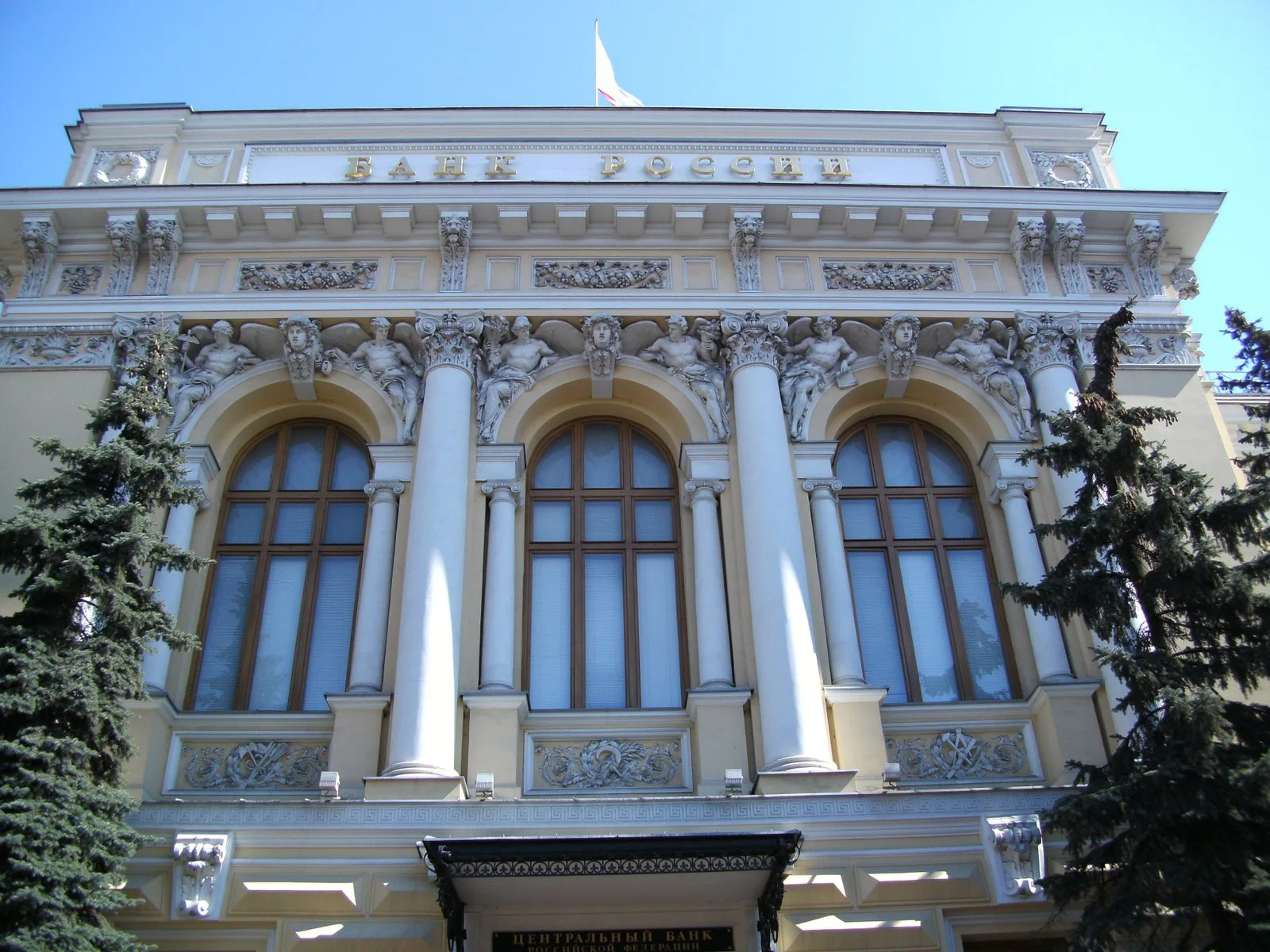
Investment in Russia’s economy has fallen for five straight quarters, and Moscow is now drafting a plan to restart it. Fixed capital investment dropped 9.9% year on year in real terms in the first half of 2026, to RUB16.2 trillion, according to Rosstat.
The Economy Ministry has drawn up an eight-point plan to revive investment, the business daily Vedomosti reported on November 18. The plan would make state development bank VEB.RF the single provider of support for projects, according to the report, as summarised by bne IntelliNews.
Russian economy news: how deep is the investment slump?
Rosstat data show the decline easing but not ending. Investment fell 14.3% in the first quarter and 6.6% in the second, after a 2.3% drop over 2025 as a whole.
| Period | Fixed capital investment, real change year on year |
|---|---|
| 2025 (full year) | -2.3% |
| Q1 2026 | -14.3% |
| Q2 2026 | -6.6% |
| H1 2026 | -9.9% (RUB16.2 trillion) |
Large export projects carried investment through the war years, bne IntelliNews noted. Putin acknowledged in August that big chemicals, metals and gas plants had passed their main investment phase, and ordered a new investment cycle aimed at domestic demand, the outlet reported.
Why money is scarce: a 14% key rate
The Bank of Russia held its key rate at 14% on October 23. It was the second pause after ten cuts, and the central bank also raised its projected rate path.
The bank now expects the key rate to average 14.6% in 2026, 12.5–13.5% in 2027 and 9.0–10.0% in 2028. It forecasts a return to 7.5–8.5% only in 2029, provided inflation stays on target.
Governor Elvira Nabiullina told State Duma committees in November that, under the baseline scenario, the rate would decline gradually in 2027 but stay in double digits throughout the year, Vedomosti reported.
The central bank’s reasons are on the inflation side. Seasonally adjusted price growth averaged 8.0% in annualised terms in the third quarter, up from 4.8% in the second, it said. It blamed a temporary reduction in production capacity in some industries, especially motor fuel, and an October rise in utility tariffs.
The bank raised its 2026 inflation forecast to 7.1–7.6%. It still expects inflation to return to its 4% target in 2027.
The eight-point plan to restart investment
According to Vedomosti, as reported by bne IntelliNews, the ministry’s plan covers eight areas:
- A national model of target business conditions, with indicators and road maps to 2030.
- A taxonomy of priority projects that would filter all state support, from central bank lending incentives to Industrial Development Fund loans and National Wealth Fund co-financing.
- A separate bill widening research and development incentives through to production and a first customer.
- Continued budget co-financing of infrastructure.
- Project support through VEB.RF.
- Sector packages.
- The platform economy.
- Regional investment.
Indicative investment to 2030 includes RUB9.1 trillion in manufacturing, about RUB2.4 trillion in transport, RUB2.7 trillion in IT and RUB1.9 trillion in construction, the report said.
What Novak and Reshetnikov said
The plan was presented to the State Council’s investment commission on November 16. Deputy Prime Minister Alexander Novak chaired the meeting, the Russian government said.
“Today the main task set by Russian President Vladimir Putin is to relaunch the investment cycle,” Novak said, according to RIA Novosti. “It must be backed by a different quality of investment: technology, domestic demand, return on invested capital.”
Novak said the groundwork was in place. GDP grew 1% in the third quarter, manufacturing 2.5% and machine building almost 12%, he said. Unemployment stood at a record low of 2.2%, and real disposable incomes rose almost 3.5%.
Economy Minister Maxim Reshetnikov said non-commodity projects would drive investment. Their share should rise from 18.3% in 2025 to 26.8% in 2030, he said, as mid-sized technology projects replace large resource developments.
The national target is to lift investment 60% above its 2020 level by 2030, commission chair Valery Limarenko said, according to bne IntelliNews.
Where the Russian economy stands now
The Bank of Russia estimates GDP grew 1.0% year on year in the third quarter. It forecasts growth of 0.5–1.0% for 2026 and has cut its 2027 forecast to 1.0–2.0%, citing tighter monetary conditions.
Gross fixed capital formation is projected at -1.0% to 0.0% this year and 1.0–3.0% in 2027. Spending on restoring and protecting damaged production capacity will add to investment in the second half of 2026, the bank said.
Fiscal room is tight as well. The federal deficit reached RUB5.23 trillion in January–October, and the Finance Ministry expects 3.2% of GDP for the full year. Read our full report: Russia’s budget deficit hits RUB5.2 trillion as oil and gas revenue falls 14%.
For the longer view, see our analysis Is Russia finished? War economy, demographics and a shrinking sphere of influence, and our look at Russia’s arms factories after the war.
What to watch next
- December 18: the Bank of Russia’s next key rate decision.
- Rosstat’s nine-month investment data, which will show whether the third quarter brought the rebound the central bank describes.
- Details of the eight-point plan, including how the project taxonomy will steer state support.
Frequently asked questions
Is the Russian economy in recession?
No, according to official data. The Bank of Russia estimates GDP grew 1.0% year on year in the third quarter and expects 0.5–1.0% growth for 2026. Investment, however, has fallen for five straight quarters.
What is Russia’s key interest rate?
The Bank of Russia’s key rate is 14%. Nabiullina has said it will stay in double digits throughout 2027.
Sources: Rosstat; Bank of Russia (key rate decision of October 23, 2026, and medium-term forecast commentary); Russian government; RIA Novosti; Vedomosti; Kommersant; bne IntelliNews.