Elbit Shows Its First Underwater Drone at Euronaval, Completing an Air-Surface-Subsea Autonomy Set After the ISE Deal

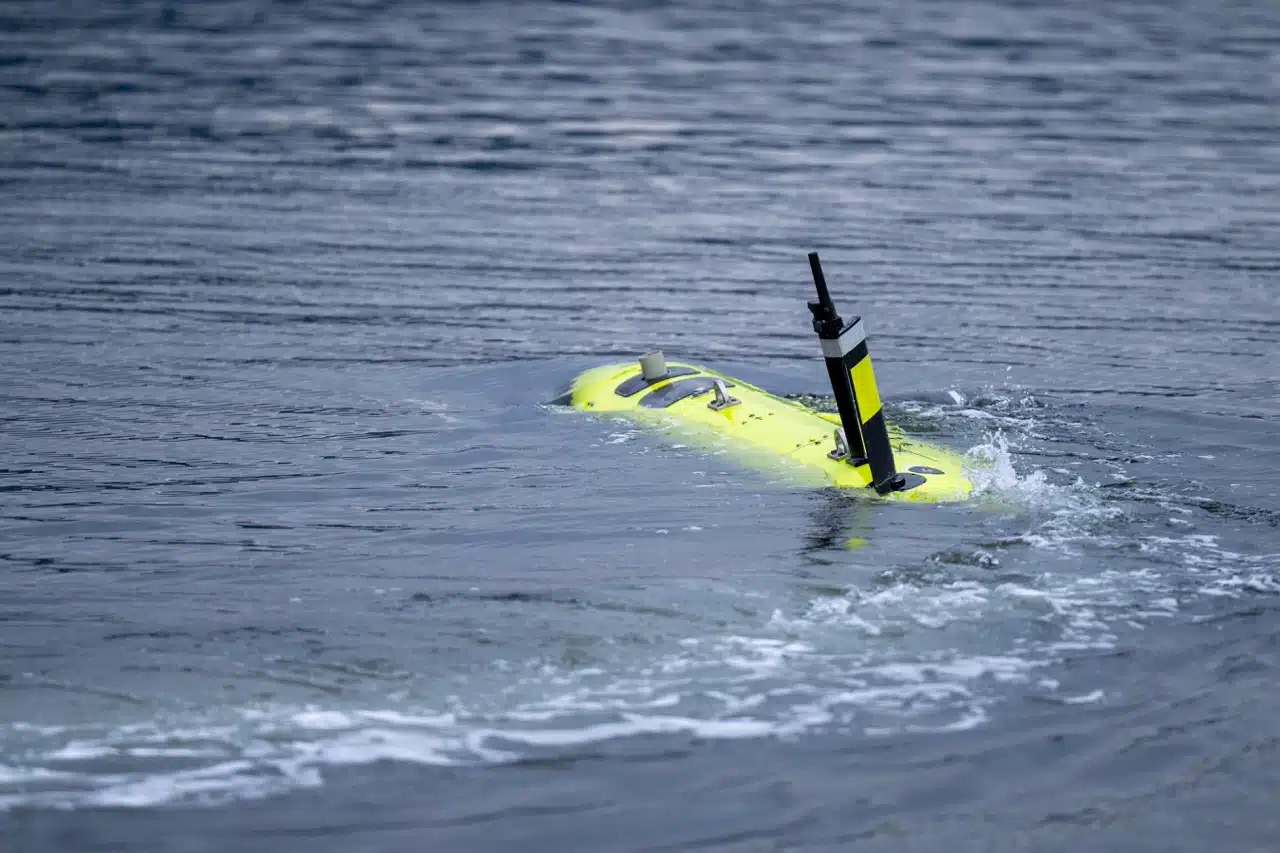
Weeks after completing its acquisition of Canada’s International Submarine Engineering, Elbit Systems paired the newly acquired underwater technology with its Seagull surface drones at Euronaval 2026, folding mine-hunting, reconnaissance and anti-submarine missions into one autonomous architecture.
Israeli defence company Elbit Systems presented unmanned underwater vehicle (UUV) capabilities for the first time at Euronaval 2026, the naval exhibition held in Paris from November 3 to 6. The move follows Elbit’s acquisition of International Submarine Engineering (ISE), a Canadian company, which closed on October 20, 2026.
Founded in 1974 and based near Vancouver, ISE designs and builds autonomous underwater vehicles, remotely operated vehicles and robotic control systems. According to Elbit, ISE has delivered more than 250 underwater vehicles to customers in over 20 countries. The purchase price was not disclosed; Elbit said the amount was not material to the company’s finances.
ISE’s Explorer family, in production since 2003 and preceded by the company’s earlier ARCS and Theseus vehicles, is a modular autonomous underwater vehicle (AUV) line whose swappable payload section lets the same hull carry different sensor packages. One Explorer sold to China’s COMRA in 2018 became the first version rated to operate at depths of 6,000 metres. That engineering base now underpins Elbit’s new underwater line.
Elbit said the ISE technology extends its reach into underwater intelligence, surveillance and reconnaissance (ISR), mine countermeasures (MCM), anti-submarine warfare (ASW), seabed mapping and the protection of critical maritime infrastructure. At the show, the UUVs stood alongside Elbit’s Seagull unmanned surface vessel (USV) family, offered in 12-metre and 20-metre hull variants. The company points to more than 40 years of experience in autonomous systems and over a decade specifically in the naval domain.
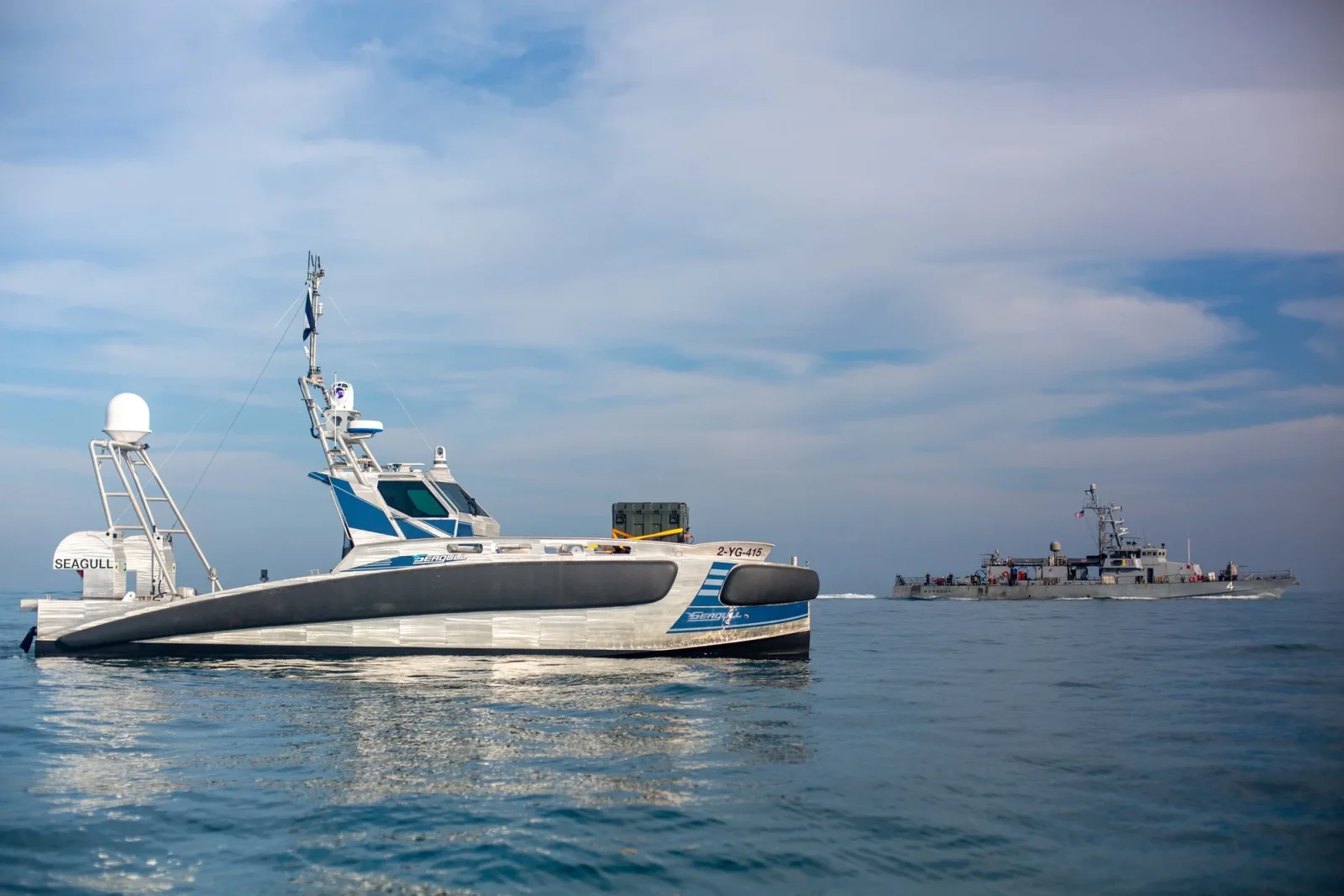
The Seagull line is not new to this kind of showcase. It has already taken part in a joint exercise between the British Royal Navy and the Israeli Navy and completed a live, remotely operated anti-submarine warfare demonstration. Attaching the freshly acquired underwater technology to a surface platform with that operational track record suggests Elbit is pairing the new UUV line with an already proven system rather than introducing it on its own.
Elbit frames the combination as a step toward manned-unmanned teaming (MUM-T) concepts, with a single command architecture covering mission planning, launch and recovery, and coordinated surface-and-subsea operations. Saar Koursh, Senior Vice President and General Manager of Elbit Naval Systems, called the maritime domain “an important growth area” for the company and said the deal gives navies a multi-domain autonomous system spanning UAVs, USVs and AUVs. Oren Sabag, General Manager of Elbit Systems ISTAR & EW, said navies are increasingly seeking comprehensive autonomous solutions for complex maritime missions, and that the UUV addition expands the company’s autonomous maritime portfolio. Elbit CEO Bezhalel Machlis said ISE’s technology will strengthen the company’s position as a global provider of integrated maritime solutions.
The acquisition builds on other recent naval moves: in February 2026 Elbit and Germany’s TKMS opened a submarine-component production line in Israel, followed by a May 2026 memorandum of understanding on naval defence cooperation between the two companies. Elbit’s second-quarter results, reported in August, showed revenue of $2.3 billion and a record order backlog of $32 billion.
The Euronaval debut matters less for any single new sensor than for what it signals about how unmanned-system builders are consolidating their portfolios. Rather than selling surface and underwater drones as separate products, Elbit is now pitching a combined air-surface-subsea package — a strategy mirrored, through a different path, in Turkey: STM unveiled its shallow-water, mine-hunting-focused NETA 300 AUV at SAHA EXPO in October 2024, then showed the larger TENGİZ class at SAHA 2026, rated past 400 metres with more than 20 days of endurance and a torpedo-launch capability. Elbit built its underwater line through acquisition; STM is building a comparable small-and-large AUV family through indigenous development — two different routes toward the same kind of layered underwater portfolio.
Which contracts and customers follow from Elbit’s Euronaval showcase will depend on how navies respond to the combined package in the coming months.
Sources
- Army Recognition, “Elbit Systems Unveils New Unmanned Underwater Vehicle (UUV) at Euronaval 2026” (late October–early November 2026) — used for the show debut, mission scope and Seagull pairing.
- Ocean News, “Elbit Systems Debuts UUV Capabilities at Euronaval 2026 Following ISE Acquisition” (October 29, 2026) — used for the product portfolio and the Oren Sabag quote.
- Breaking Defense, “Israel’s Elbit acquires Canadian company focused on autonomous underwater systems” (October 21, 2026) — used for deal terms, the Machlis and Koursh quotes, financial figures and the TKMS cooperation background.
- Naval News, “Elbit Systems Expands Underwater and Maritime Autonomy Capabilities with Acquisition of ISE” (October 2026) — used for ISE’s Explorer AUV family and company history.
- Elbit Systems official press releases (elbitsystems.com) — used for the Seagull USV’s Royal Navy–Israeli Navy exercise and live ASW demonstration history.