Dutch F-35s Train for Night Combat, Dispersed Basing

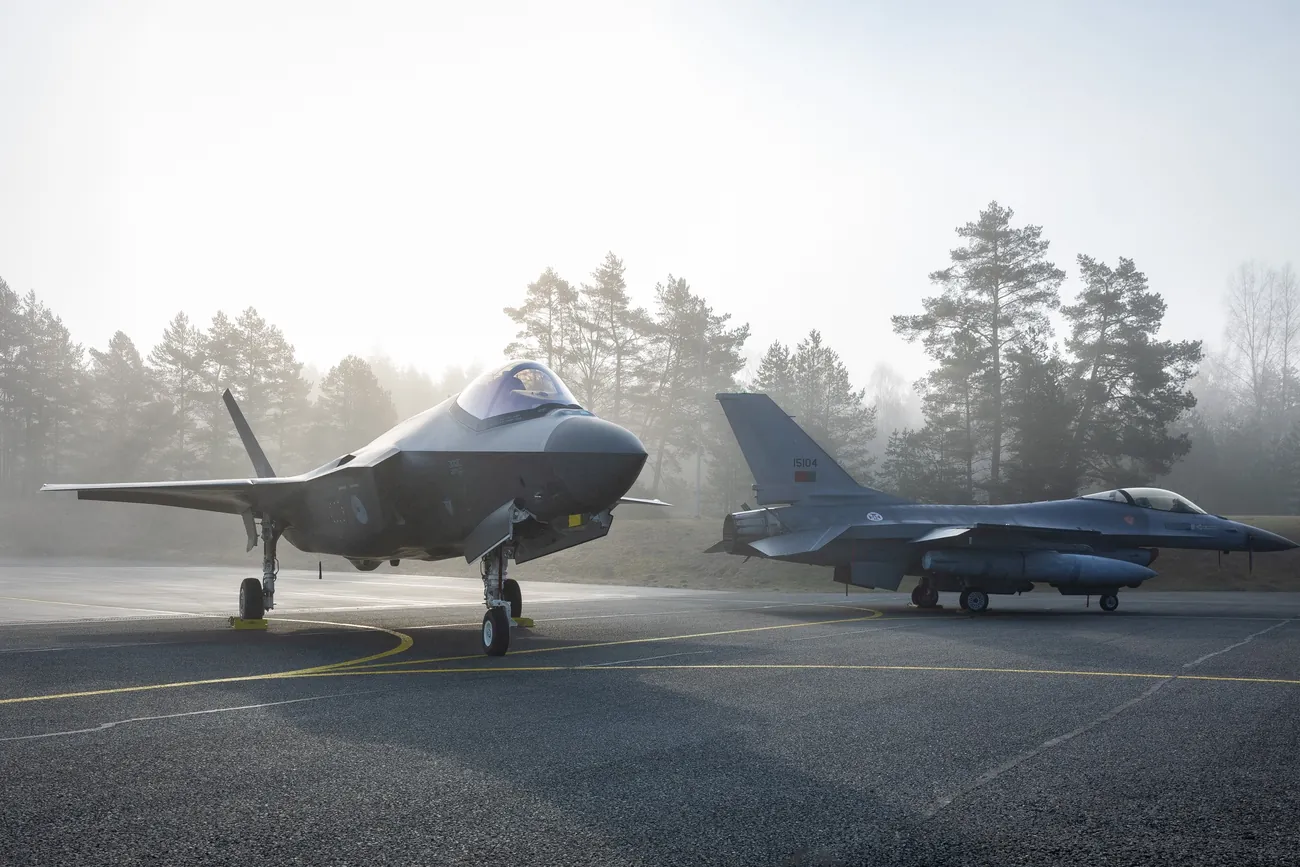
Evening sorties began at Leeuwarden and Gilze-Rijen on 23 November, part of a push to keep jets flying if main airbases are knocked out.
The Royal Netherlands Air Force is training its F-35 fleet for night combat, rapid refueling, weapons loading and operations from alternative airfields, the Dutch Ministry of Defence announced on 23 November, in activities reported by Army Recognition the next day. The drills are framed as preparation for scenarios in which primary airbases are disrupted or attacked.
Tied to Exercise Agile Tiger, evening flights run at Leeuwarden and Gilze-Rijen from 23 to 27 November, with Gilze-Rijen cleared for operations until 23:15 in the exercise’s second week. From 30 November, flying continues from Leeuwarden and Volkel, with evening sorties through 3 December; Fridays are limited to daylight hours. Volkel serves as an alternate landing site, and most flights occur over the sea, with some military airspace used over Friesland, Drenthe, Overijssel and North Brabant.
The Finland connection
The exercise connects to a parallel Dutch deployment in Finland, Exercise Protective Fence. On 20 November, Dutch F-35s landed on Highway 9 near Kuopio; one squadron operated in Finland while another trained from Gilze-Rijen. The commander of 322 Squadron, Lt. Col. Pascal “Smiley” Smaal, said the exercise draws directly on lessons from Finland’s experience with dispersed operations.
Why it’s being done
The drills support the Dutch air force’s Agile Combat Employment (ACE) concept, which aims to reduce reliance on fixed bases and operate from dispersed sites — a capability that matters if long-range missiles, drones or other threats take conventional airfields offline. Sustaining operations from temporary sites requires fuel, munitions, maintenance crews, equipment and secure command-and-control links, and the night-flying component reflects the reality that real operations often cannot wait for daylight.
The activities are tied explicitly to NATO’s 2025 Integrated Air and Missile Defence Policy, which emphasizes all-weather, day-and-night readiness, dispersed deployment and resilience. The reasoning holds that credible resilience complicates an adversary’s targeting calculations and strengthens deterrence — though successfully landing on a highway or flying from a secondary base does not by itself prove the ability to sustain combat operations over time under contested conditions. For broader context, NATO’s Ramstein Flag 2026 exercise reportedly involved more than 200 aircraft across 20 operational locations, including highway strips, and the Netherlands contributes to continuous allied air-defense readiness through the Benelux Quick Reaction Alert framework.
Why it matters
Though framed as a national training schedule, the exercise is part of a broader NATO shift to reduce F-35 fleets’ dependence on single, fixed bases as threat perceptions rise along the alliance’s eastern flank — and the parallel Finland deployment suggests allies are working to standardize highway and dispersed-site operations rather than treat them as one-off demonstrations.
Sources
- Army Recognition, “Netherlands prepares F-35 stealth fighters for night combat and dispersed airbase operations,” 24 November 2026.
- Netherlands Ministry of Defence (Ministerie van Defensie), statement of 23 November 2026.