

Why Turkish Armoured Vehicles Sell Abroad: Four Makers, Six Rungs, One Pattern (2011–2026)

The export success of Turkish armoured vehicles has no single cause. Four makers — Otokar, BMC, Nurol Makina, FNSS — sell a class range from mine-protected 4×4 to 8×8 combat vehicle and medium tank, on six industrial rungs from direct purchase to co-development. Delivery in twelve months in the Baltic, 1,059 vehicles built locally in Romania, a joint company in Abu Dhabi, a fifteen-year licensed line in Pahang, a mine-protected fleet in the Sahel. This file puts twelve buyers in one table and extracts the pattern.
This is the series’ twenty-fourth file and its first thematic one. The previous twenty-three examined buyers one by one; the data in the Estonia, Romania and UAE files (Turkish) and the Qatar, Indonesia and Malaysia files is linked, not repeated. This file’s job is different: to read the armour line as a product line and name the components that drive exports. The rules are the same: contract, agreement, donation and report are written apart; rival lines are separate layers; no superiority claim. The Turkish original is here.
Short answer: four makers, six rungs, one pattern
Armour is the only product line in the series with an example on every rung of the six-rung cooperation scale. Direct purchase in Estonia and Kenya, local production in Romania and Malaysia, an equity joint venture in the UAE, co-development in Indonesia; in between, the NMS whose first customer was Qatar, the Ejder Yalçın bought by Senegal’s gendarmerie and the Kirpi II donated to Bosnia. Two things sit behind that breadth: four makers offering different hulls by threat class, and contract models that can be shaped to the buyer’s expectation of industrial share. In one sentence: the buyer describes its threat, its budget and its industrial expectation; the line answers all three. The component this file adds to the Turkish package is class breadth × rung breadth.
| Buyer | Vehicle | Maker | Quantity · value | Date | Rung / status |
|---|---|---|---|---|---|
| Romania | COBRA II 4×4 | Otokar | 1,059 · ~€857m | 27 Nov 2024 | Local production (781 in Mediaș); first delivery 17 Jan 2026 |
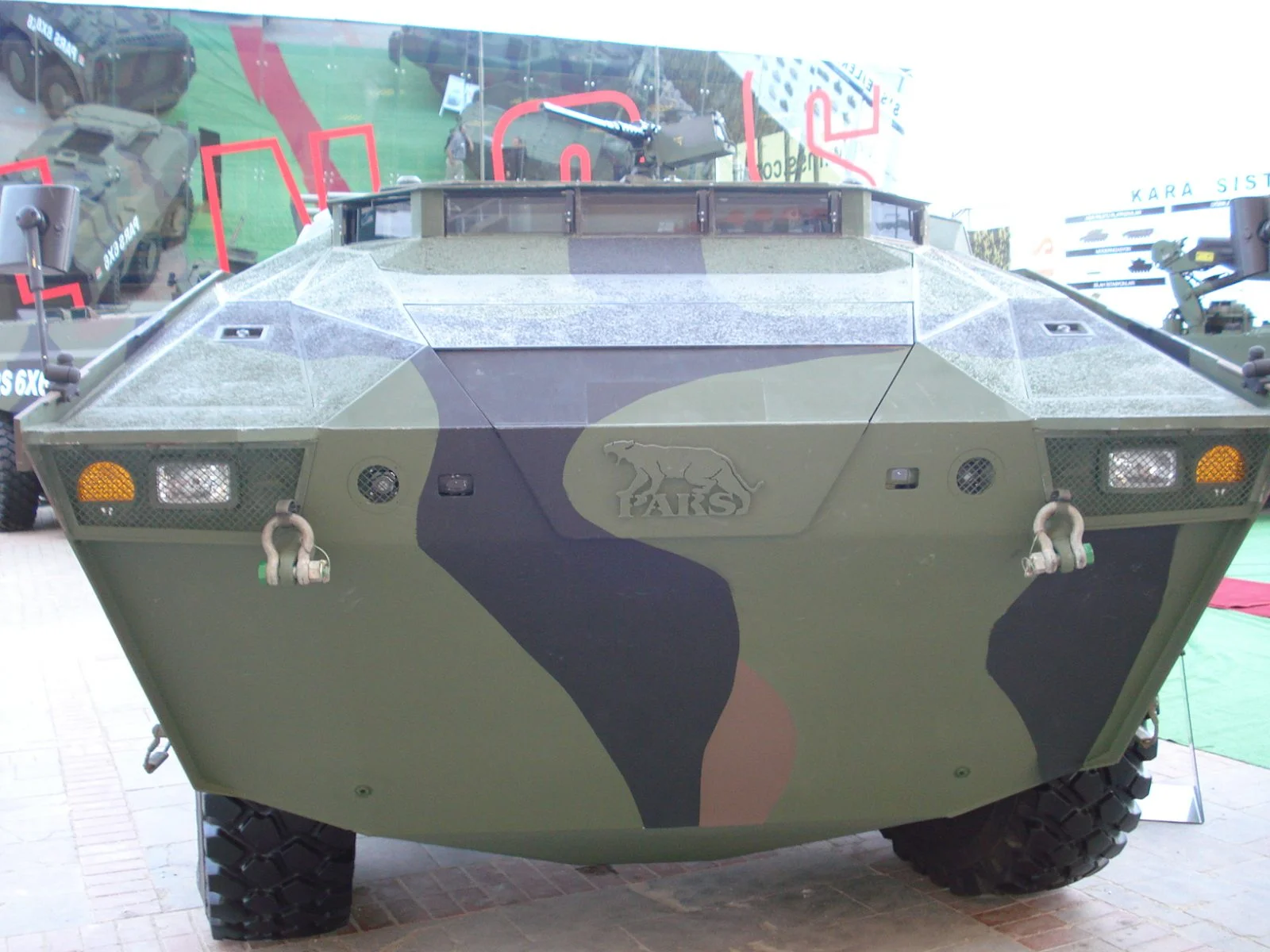
| Malaysia | AV8 Gempita 8×8 | FNSS / DEFTECH | 257 · $559m (LoA) | Jun 2011 | Licensed local production; Pahang since 2014 |
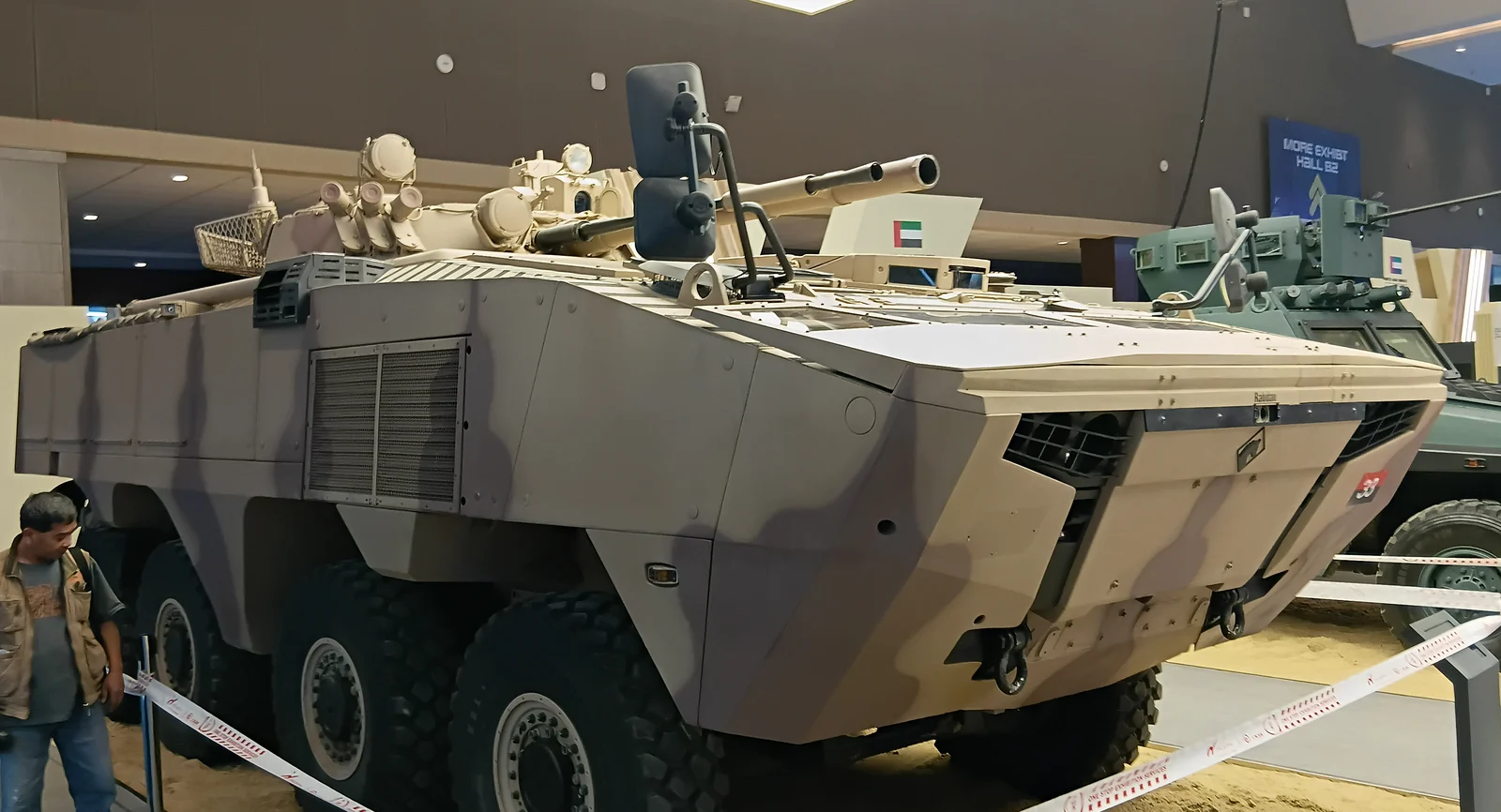
| UAE | Rabdan 8×8 | Otokar / Al Jasoor | 400 · ~AED 2bn | IDEX 2017 | Equity joint venture; Tawazun Industrial Park |
| Oman | PARS III 6×6/8×8 | FNSS | 172 · undisclosed | — | Contract; delivery |
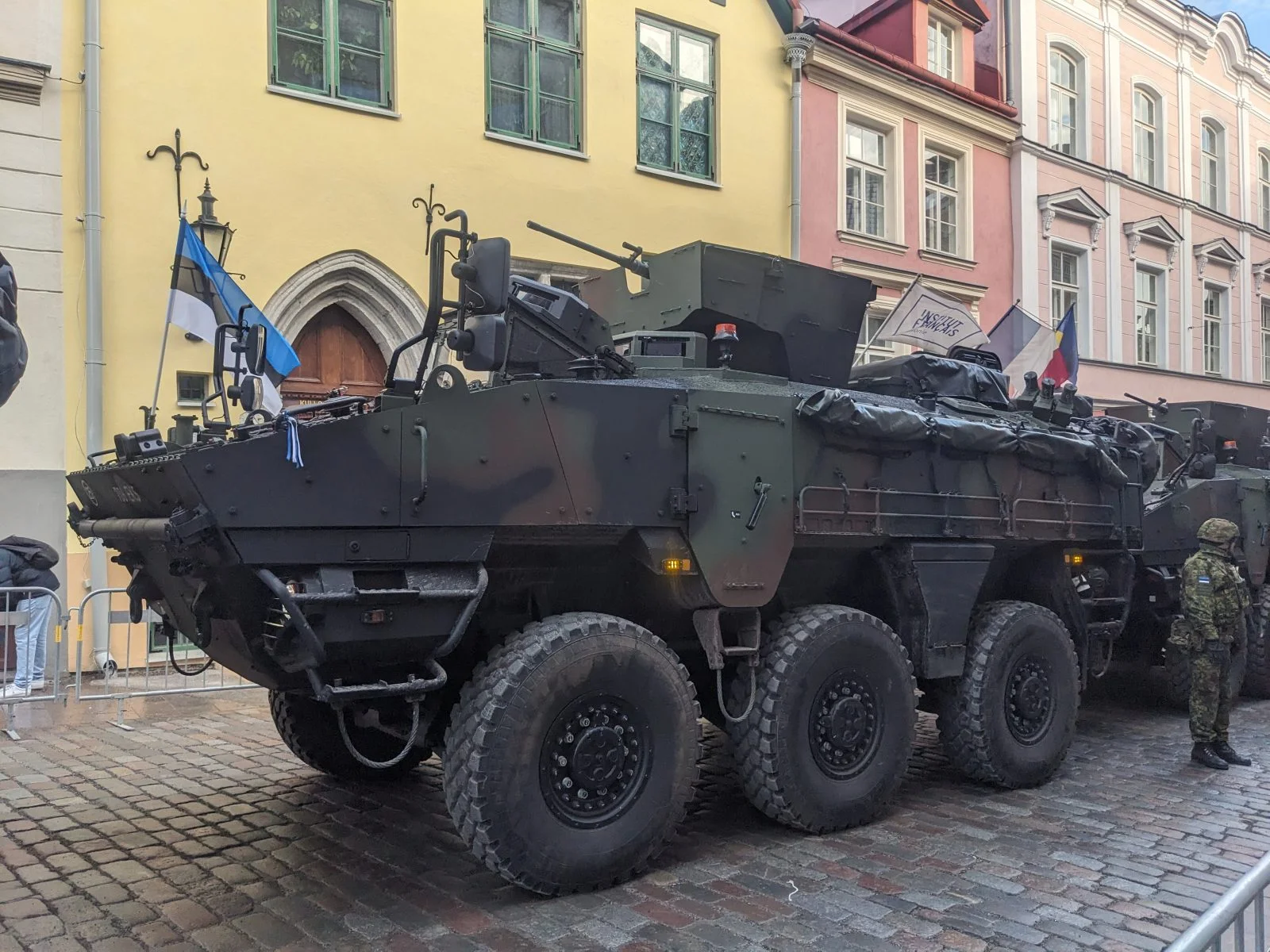
| Estonia | ARMA 6×6 + NMS 4×4 | Otokar; Nurol Makina | quantity undisclosed · ~€130m | 18 Oct 2023 | Direct purchase; ~50 vehicles Mar 2025; 230-vehicle follow-on line |
| Kenya | HIZIR 4×4 | — | 118 · $91.4m | Jan 2021 | Direct purchase; delivered 2022–2023 |
| Qatar | Kirpi II, Amazon; Ejder Yalçın, NMS | BMC; Nurol Makina | 50 + 35; 342 + 214 · undisclosed | DIMDEX 2018 | Contract; delivered number undisclosed |
| Indonesia | KAPLAN MT medium tank; KAPLAN APC | FNSS / PT Pindad | 18 · undisclosed | 2019; Jun 2025 | Co-development; 18 complete in 2024; APC delivery planned end-2026 |
| Chad | NMS 4×4, Ejder Yalçın | Nurol Makina | over 150 (2024) | 2018→ | Direct purchase |
| Tunisia | Kirpi, Ejder Yalçın, Vuran | BMC; Nurol Makina | Kirpi 233 (first export 2014) | 2014→ | Direct purchase; Vuran deliveries 2022 |
| Senegal | Ejder Yalçın, Ejder Toma | Nurol Makina | 25 (2018) | 2018 | Direct purchase; buyer the National Gendarmerie |
| Kosovo | Cobra (SARP turret), Vuran, Kirpi | Otokar; BMC | Kirpi 14 ordered; Vuran press | 2021→ | Contract; Vuran = press |
| Bosnia and Herzegovina | Kirpi II | BMC | 32 | 2025 | Donation; 4 delivered 29 Jun 2025 |
| Saudi Arabia | 4×4/6×6/8×8 and turret production (SLIC) | Nurol Makina, FNSS, Aselsan | undisclosed | 24 Jul 2025 | Technology transfer agreement; production not started |
Three things the table says. Scale: three contracts — Romania, Malaysia, the UAE — account for more than 1,700 vehicles, each on a different rung. Geography: Baltic, Balkans, Gulf, North and West Africa, Sahel, Southeast Asia; from Tallinn’s winter to N’Djamena’s dry heat. Status: of fourteen rows, ten are contracts, one a donation, one an agreement, two open-source reports. Some buyers do not publish quantities and the file does not invent them.
First reason: class by threat
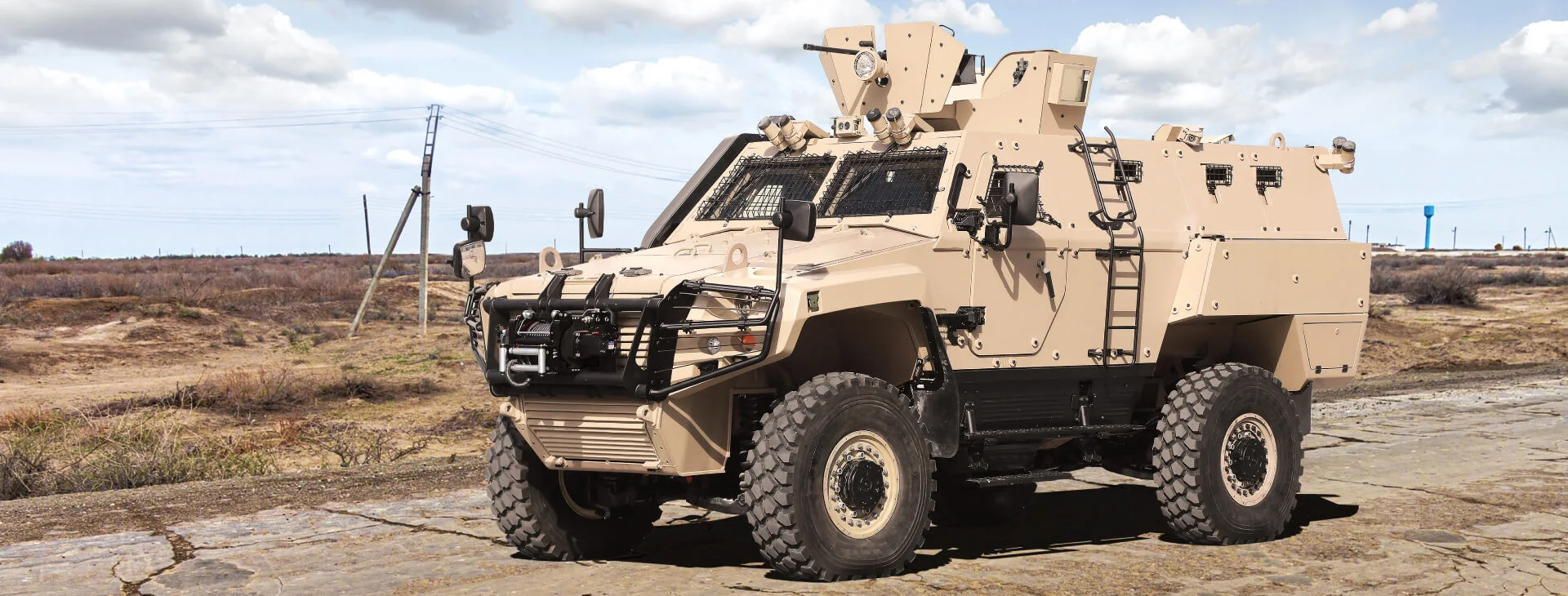
The Africa guide tabulated how threat type sets vehicle class: roadside bombs demand a V-hull, ambush demands ballistic protection and a remote weapon station, long moves demand wheels, heavy armour demands a gun. The Turkish line’s first advantage is a hull on all four rows. In the mine-protected 4×4 class, Kirpi, HIZIR, Ejder Yalçın and Vuran; in tactical 4×4, Cobra II and NMS; in wheeled 6×6/8×8, ARMA, PARS, AV8 and Rabdan; in tracked, Tulpar; in medium tanks, KAPLAN MT. Kenya buying a mine-protected 4×4 for counter-terrorism, Estonia buying a 6×6 to move a brigade from trucks to armour, Indonesia developing a medium tank for inter-island mobility are three classes of the same line.
| Threat / task | Feature sought | Class | Turkish product | Buyer example |
|---|---|---|---|---|
| Roadside bomb, ambush | V-hull, shock absorption, ballistic protection | Mine-protected 4×4 | Kirpi, HIZIR, Ejder Yalçın, Vuran | Kenya, Tunisia, Chad, Senegal |
| Patrol, reconnaissance, command | Speed, modular armour, turret | Tactical wheeled 4×4 | Cobra II, NMS | Romania, Estonia, Qatar, Kosovo |
| Infantry transport, long moves | Capacity, range, wheels | Wheeled APC/IFV 6×6–8×8 | ARMA, PARS, AV8, Rabdan | Estonia, Oman, Malaysia, UAE |
| Heavier opponent, terrain | Gun, tracks, protection | Tracked IFV, medium tank | Tulpar, KAPLAN MT | Indonesia |
| Engineering | Blade, winch, protection | Armoured engineer vehicle | KUNDUZ | — |
The table also shows the limit: there is no main battle tank export in the series and the file does not write one. The tactical-vehicle ranking and the COBRA II delivery guide are Envanter Medya’s class-based readings; this file reads buyer decisions, not classes.
Second reason: speed
The intervals measured in the series are close together: Estonia about twelve months from contract to first delivery, Romania fourteen, Kenya about two years. The Estonia file was titled “buying speed”: in RKIK’s 2023 option set the Turkish line’s delivery row read “~12 months from contract”, the Finnish line’s “tied to the programme schedule”, the German-Dutch line’s “long”. The source of the speed is no secret: all four makers export from lines in serial production for the Turkish Armed Forces. Over 2,000 Kirpi serve at home; the Cobra and PARS families are in service. The buyer takes vehicles from a running line, not a design in a queue. The file names this the user reference component.
Speed has a limit, and it is in the table too: local production stretches the calendar. Romania’s first 278 vehicles come from Türkiye; the remaining 781 depend on the Mediaș line reaching capacity, and deliveries run over five years. The Romania file scored delivery 7/10 for that reason; Estonia scored 9/10. Speed and industrial share pull in opposite directions, and the buyer chooses which it wants.
Third reason: industrial-share options
The six-rung scale was completed in the UAE file. Armour is the only product line with an example on every rung. The table below rebuilds the scale with armour examples only.
| Rung | What happens | Armour example | Where built | Calendar |
|---|---|---|---|---|
| 1. Direct purchase | Product is bought | Estonia ARMA/NMS; Kenya HIZIR; Chad, Senegal, Tunisia | Türkiye | 12–24 months |
| 2. Maintenance rights | Buyer does defined maintenance | No published armour example; Estonia has maintenance equipment in the package | Türkiye | — |
| 3. Co-/local production | A line is set up in the buyer’s country | Romania COBRA II (781 Mediaș); Malaysia AV8 (Pahang); Saudi SLIC (agreement) | Buyer’s country | 5 years (Romania) |
| 4. Equity joint venture | A shared company is founded | UAE Al Jasoor (Otokar + Tawazun), 400 Rabdan | Abu Dhabi | 2017→ |
| 5. Design transfer | Design knowledge handed over | No published armour example (MİLGEM in the series) | — | — |
| 6. Co-development | Product designed together | Indonesia KAPLAN MT (FNSS + PT Pindad) | Both countries | 2015–2024 |
Rungs two and five have no armour example, and the file leaves them empty. The other four are full and all were built in the last decade: Al Jasoor 2017, KAPLAN MT 2015–2024, the Mediaș line 2025, the Pahang line 2014. A buyer with an offset expectation finds an answer on rungs three and four; a buyer that wants speed stays on rung one. The third reason exports grew is that the same product sells under two contract models: Cobra II went to Kosovo as a direct purchase and to Romania with local production. The Gulf 8×8 guide reads the same choice from the buyer’s side.
Fourth reason: published prices and whole packages
Four of the big contracts have public values: Estonia about €130 million, Romania about €857 million, Kenya $91,415,182, FNSS’s Malaysian letter of acceptance $559 million; the UAE about AED 2 billion. The openness comes from the buyer’s procurement system, not the maker; Qatar and Oman values were not published. Beside the price sits the package: Estonia’s contract covers maintenance equipment and training, Romania’s integrated logistic support, Kenya’s spares and maintenance. No contract disclosed a per-vehicle price and the file does not compute one.
Fifth reason: turret and subsystem fit
The Rabdan’s BMP-3 turret preserved the UAE’s ammunition and training continuity; the UAE file scored inventory fit 9/10. The Aselsan SARP turret on Kosovo’s Cobras, COBRA II’s NATO-standard fit in Romania and the AV8’s twelve configurations in Malaysia are examples of the same component: a Turkish hull, a turret and subsystems to the buyer’s specification. It also shows the line can export with a third-country turret; the Turkish subsystem is an option, not a bundled requirement.
The buyers’ option sets
Three buyers’ option sets were documented in the series. The file writes these lines as separate layers, not rivals; the buyer’s decision is in the table as “selected / not selected”, with no superiority claim.
| Buyer | Turkish offer | Other lines | Criterion the buyer wrote | Outcome |
|---|---|---|---|---|
| Estonia (2023) | ARMA 6×6 | Patria (Finland, Common Armoured Vehicle System); German-Dutch heavy 8×8; used vehicles | Delivery speed, package | ARMA selected, ~€130m |
| Romania (2024) | COBRA II 4×4 | Oshkosh JLTV; Arquus Sherpa | Local production offer | COBRA II selected, ~€857m; 781 built in Romania |
| UAE (2017) | Rabdan 8×8 (joint venture) | Enigma 8×8; Patria AMV; Piranha family | In-country production, BMP-3 turret | Rabdan selected, 400 vehicles |
| Malaysia (2011) | PARS-based AV8 | European and South African 8x8s | Local production (DEFTECH) | AV8 selected, 257 vehicles |
| Kenya (2021) | HIZIR 4×4 | Western and South African MRAPs | Personnel protection in counter-terrorism | HIZIR selected, 118 vehicles |
What the five rows share: the criterion the buyer wrote was speed, local production or inventory fit; firepower appears in none. The Turkish line answered those three. Oshkosh passing 25,000 JLTVs and Patria’s Norwegian order show the rivals’ own scale; the file makes no claim about those lines. Morocco and Nigeria show the same buyer-side reading elsewhere in Africa; Kenya’s military strength puts the HIZIR fleet in context.
What changed in fifteen years?
The timeline shows three phases: 2011–2018 licensed production (Malaysia) and Gulf–Africa direct purchases; 2017–2021 the joint company (UAE) and co-development (Indonesia); 2023–2026 NATO buyers in Europe (Estonia, Romania) and local production moving to Europe. The turning point is 2024: the Romanian contract put the line’s largest item in Europe and the completion of KAPLAN MT put co-development into service.
What is official and what is a report
| Item | Source | Status | Note |
|---|---|---|---|
| Romania 1,059 COBRA II | Romanian MoD, Otokar | Official contract | €857m; first delivery 17 Jan 2026 |
| Estonia ARMA 6×6 + NMS | RKIK, Otokar | Official contract | ~€130m; quantity undisclosed; ~50 vehicles Mar 2025 |
| UAE 400 Rabdan | UAE General Staff, Al Jasoor | Official contract | ~AED 2bn; IDEX 2017 |
| Malaysia 257 AV8 | Malaysian government, FNSS, DEFTECH | Official contract | Total delivered undisclosed |
| Kenya 118 HIZIR | Kenyan MoD | Official contract | $91,415,182; delivered 2022–2023 |
| Oman 172 PARS III | FNSS | Contract | Value undisclosed |
| Qatar Kirpi/Amazon/EY/NMS | BMC, Nurol Makina, DIMDEX 2018 | Contract | Delivered number undisclosed |
| Indonesia 18 KAPLAN MT | FNSS, PT Pindad | Official contract | Complete 2024; APC delivery planned |
| Chad 150+, Tunisia Kirpi 233, Senegal 25 | Nurol Makina, BMC, Africa file | Contract / open source | Values undisclosed |
| Bosnia 32 Kirpi II | Turkish MoD | Donation | 4 vehicles 29 Jun 2025 |
| Saudi SLIC agreements | SAMI Land, IDEF 24 Jul 2025 | Technology transfer agreement | Production not started |
| Libya, Somalia Kirpi | Open source | Reported | Numbers not official |
The blanks in the table mark the next rung: if production starts at the Saudi SLIC, the line gains a second local-production case in the Gulf; if Estonia’s 230-vehicle follow-on line becomes a contract, a second Baltic contract. Today one is an agreement, the other an announcement.
EM-PFI assessment
Here the score measures the whole product line, not one buyer. Country scores in the series are spread: Kenya 72, Estonia 76, Romania 82, UAE 84, Indonesia 85. The line score is a weighted reading of that spread and does not replace the country scores.
| Criterion | Weight | Score | Rationale |
|---|---|---|---|
| Operational need | 20 | 18 | Direct match to threat class; hulls in four classes |
| Technical fit | 15 | 13 | From 4×4 to medium tank; no main battle tank in the line |
| Geography and climate | 10 | 9 | Baltic winter, Sahel heat, tropics; twelve buyers |
| Inventory compatibility | 10 | 8 | BMP-3 turret, SARP turret, NATO standard |
| Logistics | 10 | 7 | Maintenance in package; in-country depot rights rare |
| Cost-effectiveness | 10 | 8 | Four big values public; no unit breakdown in any contract |
| Delivery and production | 10 | 8 | 12–24 months for direct purchase; five years for local production |
| Technology transfer | 5 | 3 | Romania production capability, UAE integration, Indonesia co-design; none in Africa |
| Local production | 5 | 3 | Mediaș, Abu Dhabi, Pahang; SLIC agreement |
| Modernisation path | 5 | 4 | Rabdan variants, KAPLAN APC, Estonia follow-on |
| Total | 100 | 80 | Strong preference |
The breakdown follows the series’ backbone: fast delivery, medium industrial share. It differs from the naval line in class breadth and buyer count, from the drone line in wider local production. The line’s lowest criteria are technology transfer and local production; the weight of African purchases pulls the average down.
Risks and limits
This section exists not to weaken the Turkish product but to make the file usable.
| Item | Status | What it means |
|---|---|---|
| Component dependence | Engines and some turrets third-country sourced | Exposure in the supply chain — assessment |
| Local-production calendar | Romania five years; Mediaș capacity | Delivery score falls under local production |
| African financing | Defence budgets compete with other items | Order calendars can slip |
| Depot-level maintenance | No in-country rights for most buyers | Availability depends on the maker |
| Undisclosed quantities | Qatar, Oman, Estonia contract quantity | Line cannot be measured; the file invents no numbers |
| Main battle tank | No export | Line has no example in the heavy class |
| Donations and open source | Bosnia; Libya, Somalia | Not contracts; separate status |
Where is this line going?
Back to the opening definition: four makers, six rungs, one pattern. The Turkish armour line gave twelve buyers the class that matched their threat, the price that matched their budget and the contract model that matched their industrial expectation. Estonia wanted speed and got it in twelve months; Romania wanted a line and will build 781 vehicles in its own plant; the UAE wanted a partner and founded a company; Indonesia wanted to design together and built its medium tank. No other product line in the series fills this many rungs; the naval line is further in design transfer and the drone line in scale, but neither is this wide. Twelve buyers, fifteen years, four makers and three contracts above 1,700 vehicles: that is the line’s measure.
The next rung depends on three items: production starting at the Saudi SLIC, Estonia’s follow-on line becoming a contract, and Mediaș reaching capacity. If all three happen, the line gains two new local-production cases in the Gulf and Europe by 2029; if not, it stays as it is — four makers, four full rungs, twelve buyers — and that is an upper-middle rung in the series. This file wrote only what was signed or delivered.
Reading the line beside Oshkosh, Arquus and Patria
For a reader who follows the American, French and Finnish lines, the Turkish line is neither a replacement nor a rival. Oshkosh has passed 25,000 JLTVs; Patria runs a multinational 6×6 programme with Norway among its buyers; Arquus supplies Chad’s logistics fleet. The Turkish line entered where buyers wrote speed, local production or inventory fit as their criterion, and it did so with published prices in four of its five largest contracts. Several lines coexist in one market, each in its own segment, and the file makes no claim about which is superior. The one sentence to take away: the Turkish armour line is the only product line in the series where four makers cover four threat classes and four industrial rungs at once, and that breadth, not any single vehicle, is why it sells.
Frequently asked questions
Which countries operate Turkish armoured vehicles?
Buyers verified in this series: Estonia (Otokar ARMA 6×6, Nurol NMS 4×4), Romania (1,059 COBRA II), the UAE (400 Rabdan 8×8, Al Jasoor), Malaysia (257 AV8 Gempita, DEFTECH), Oman (172 PARS III), Indonesia (18 KAPLAN MT), Qatar (Kirpi, Amazon, Ejder Yalçın, NMS), Kenya (118 HIZIR), Chad (NMS and Ejder Yalçın), Senegal (gendarmerie, Ejder Yalçın), Tunisia (Kirpi, Ejder Yalçın, Vuran), Kosovo (Cobra, Vuran) and Bosnia and Herzegovina (Kirpi II donation). Kirpi use is reported in Libya and Somalia; numbers are not official.
What is the largest Turkish armoured-vehicle export contract?
By quantity and value, Romania: the 1,059-vehicle COBRA II contract signed on 27 November 2024, about €857 million excluding VAT. Before it the largest single item was Malaysia’s 257 AV8 Gempita programme (FNSS letter of acceptance $559 million, June 2011). The UAE’s 400-vehicle Rabdan contract was about AED 2 billion. The three sit on different rungs: local production in Romania, licensed local production in Malaysia, an equity joint venture in the UAE.
Why are deliveries fast?
Intervals measured in the series: Estonia about twelve months from contract to first delivery (October 2023 to the second half of 2024), Kenya about two years (January 2021 to 2022/2023), Romania fourteen months (November 2024 to January 2026). The common reason is that all four makers export from lines already in serial production for the Turkish Armed Forces: over 2,000 Kirpi in Turkish service, the Cobra and PARS families in use. The file calls this the ‘user reference’ component: buyers get a running line, not a design in a queue.
What is the difference between direct purchase and local production?
On the series’ six-rung scale, direct purchase (Estonia, Kenya) buys the product; there is no industrial share and delivery is fastest. Local production (Romania: about 781 of 1,059 vehicles in Mediaș; Malaysia: AV8 in Pahang) sets up a line in the buyer’s country and stretches the calendar. An equity joint venture (UAE: Al Jasoor) creates a shared company. Co-development (Indonesia: KAPLAN MT) designs the product together from the start. Armour is the only product line in the series with examples on every rung.
Which Turkish companies export armoured vehicles?
Four makers: Otokar (Cobra, Cobra II, ARMA 6×6/8×8, Tulpar; Estonia, Romania, UAE via Al Jasoor, Kosovo), BMC (Kirpi, Kirpi II, Amazon, Vuran; Tunisia, Qatar, Bosnia, Kosovo), Nurol Makina (Ejder Yalçın, NMS 4×4, Ejder Toma; Qatar, Chad, Senegal, Tunisia, Estonia) and FNSS (PARS family, KAPLAN MT, KUNDUZ; Malaysia, Oman, Indonesia). HIZIR is the vehicle of the Kenyan contract. SAMI Land’s 2025 agreements with Nurol Makina and FNSS are technology transfer agreements.
What threat are Turkish armoured vehicles designed for?
The Africa file’s table: V-hull mine-protected 4x4s (Kirpi, HIZIR, Ejder Yalçın, Vuran) for roadside bombs and ambush; wheeled 6×6/8×8 carriers and combat vehicles (ARMA, PARS, AV8, Rabdan) for long moves and infantry transport; tracked combat vehicles and the medium tank (Tulpar, KAPLAN MT) for heavier opponents. When a buyer describes its threat, the line has a hull for it; class breadth is the first reason exports grew.
Which alternatives did buyers weigh?
In Romania, 4x4s such as the Oshkosh JLTV and Arquus Sherpa; in Estonia, Finland’s Patria line, German-Dutch heavy 8x8s and used vehicles; in the UAE, Patria AMV and the Piranha family under licence. The file writes these as separate layers, not rivals, and makes no superiority claim; the buyer’s decision appears in the table as ‘selected / not selected’.
Why are the prices public?
Because buyer procurement systems publish them: Estonia’s RKIK ~€130 million, Romania’s MoD ~€857 million (RON 4.26 billion), Kenya’s MoD $91,415,182, FNSS’s Malaysian letter of acceptance $559 million, the UAE General Staff ~AED 2 billion. No contract disclosed a per-vehicle price; Qatar and Oman values were not published. The file writes only published figures.
Is there technology transfer?
Yes, by buyer: Romania receives serial-production capability, not design rights; the UAE’s Al Jasoor received production and integration competence; Indonesia’s KAPLAN MT was co-designed; Malaysia’s AV8 is licensed local production. Estonia and the African purchases have no published transfer clause. The Saudi SLIC agreements with Nurol Makina and FNSS carry a technology-transfer heading; production has not started.
What are the risks?
The file’s risk table: third-country dependence for engines and some turret subsystems; the time a local line needs to reach capacity (Romania five years); financing fragility and the absence of in-country depot maintenance in African purchases; undisclosed delivered numbers in Qatar and Oman. These limit what the file can measure, not the product.
What does the EM-PFI score measure here?
Not one country but the whole product line: on need, delivery, industrial share and modernisation, the Turkish armoured-vehicle export line scores 80/100, ‘Strong preference’ band. Country scores differ: Kenya 72, Estonia 76, Romania 82, UAE 84, Indonesia 85. The line score is a weighted reading of that spread and Envanter Medya’s editorial assessment.
Are Kirpi and Cobra II the same class?
No. Kirpi is BMC’s mine-protected MRAP-class vehicle; Cobra II is Otokar’s 4×4 tactical wheeled armoured vehicle. Both serve with the Turkish Armed Forces and both were exported: Kirpi to Tunisia and Qatar, Cobra II to Romania.
Why does the Rabdan carry a BMP-3 turret?
The UAE army already operated the BMP-3; giving the Rabdan 8×8 the same turret preserved ammunition and training continuity. The file calls this ‘turret and subsystem fit’: a Turkish hull with a turret matched to the buyer’s inventory. Kosovo’s Cobras with the Aselsan SARP turret are the same logic with a Turkish subsystem.
Do donations count as exports?
The file keeps donations in a separate status: 32 Kirpi II to Bosnia and Herzegovina and 12 Kirpi to Somalia are donations, not contracts. The Balkans file read the donation pattern together with the in-alliance reference component; this file keeps donations on a separate row of the portfolio table.
What comes next?
On the verified calendar: Romania’s Mediaș line building 781 vehicles to 2029, Estonia’s 230-vehicle follow-on NMS and ARMA line, the start of production at the Saudi SLIC, and Indonesia’s KAPLAN APC delivery (planned end-2026). No new contract announcements for Oman or Qatar. The file wrote only what was signed or delivered.
Other files in the series
The “Why They Chose the Turkish Defence Industry” series goes beyond individual export headlines to examine the buyer’s need, the alternatives on the table and the contract structure. The armour files this one rests on:
- Why did Estonia choose Turkish armoured vehicles? (Turkish)
- Why did Romania buy the COBRA II? (Turkish)
- Why does the UAE invest in the Turkish defence sector? (Turkish)
- Turkish armoured vehicles in Africa: full guide
- Qatar–Türkiye defence industry relations
- Indonesia–Türkiye defence industry relations
- Malaysia–Türkiye defence industry relations
- Why is the Turkish defence industry growing in the Balkans?
- Saudi Arabia–Türkiye defence industry relations
- Why do Gulf states choose Turkish drones?
The full series and regional breakdowns are on the Türkiye defence exports hub (Turkish).
Sources and method
- Romanian Ministry of National Defence and Otokar statements — COBRA II contract (27 November 2024), Automecanica joint venture (2025), first delivery (17 January 2026)
- Estonian Centre for Defence Investments (RKIK) and Otokar — ARMA 6×6 contract (18 October 2023), deliveries (2024–2025)
- UAE General Staff and Al Jasoor statements — 400 Rabdan 8×8 (IDEX 2017)
- Malaysian government, FNSS and DEFTECH statements — AV8 Gempita letter of acceptance (June 2011), first delivery (December 2014)
- Kenyan Ministry of Defence — 118 HIZIR contract (January 2021), deliveries (2022–2023)
- FNSS and PT Pindad statements — KAPLAN MT co-development (2015), production contract (2019), delivery (2024)
- BMC and Nurol Makina statements; DIMDEX 2018 — Qatar contracts; Tunisia, Chad, Senegal deliveries
- SAMI Land statement, IDEF 2025 — Nurol Makina, FNSS, Aselsan agreements (24 July 2025)
- Turkish Ministry of National Defence — Kirpi II donation to Bosnia and Herzegovina (29 June 2025)
- Envanter Medya inventory files — Kirpi and PARS delivery chronologies; series files 4, 5, 6, 11, 12, 16, 20–23
Method note. This file produced no new country data; it re-read items verified in the series’ country files at product-line level. Every item carries its status — contract, agreement, donation, open source; no numbers were assigned to buyers that publish none; no unit price was computed. Claims about combat use were left out. Rival lines (Oshkosh, Arquus, Patria, GDELS/Piranha) are given as separate layers; no superiority claim. The regional security climate and political context are written as assessment, not cause. EM-PFI for the whole line is Envanter Medya’s editorial assessment and does not replace the country scores.