The Country With the World’s Longest Railway Network Will Surprise No One — But the Gap Might

The Country With the World’s Longest Railway Network Will Surprise No One — But the Gap Might
GlobalFirepower 2026 data ranks the ten nations whose rail infrastructure dominates global logistics, power projection, and strategic mobility. The numbers at the top defy comprehension.
France
France punches well above its geographic weight in railway terms. The SNCF-operated network is one of Europe’s most electrified and technologically mature, anchored by the TGV high-speed lines that knit Paris to every major metropolis in under three hours. Strategically, this matters: France can move military materiel rapidly across a densely populated continent without relying on road convoys. Within NATO’s eastern-flank deterrence posture, rapid rail deployment to forward positions in the Baltic or Balkans is an increasingly rehearsed scenario. The network is also central to France’s civilian energy doctrine — with approximately 75% of power generated by nuclear plants, electrified rail reduces dependence on fossil fuels far more efficiently than road logistics. Rail freight, though historically underdeveloped relative to Germany, is expanding under post-COVID supply-chain rethinks. Paris has committed multi-billion-euro investments to expand regional and freight lines by 2032. France’s inclusion at #10 signals that European compact density can rival continental sprawl — for now.
| Metric | Value |
|---|---|
| Total Railway (km) | 27,860 |
| Electrification | ~52% |
| High-Speed Lines | Yes (TGV) |
| Operator | SNCF |
Brazil
Brazil’s 29,850 km of rail is paradoxical: the world’s fifth-largest country by area has one of the most underdeveloped rail systems proportionally among major economies. The network is overwhelmingly freight-focused — designed by 19th-century mining and agriculture interests to funnel iron ore and soybeans to Atlantic ports, not to connect citizens or project military power inland. The absence of meaningful passenger rail in a country the size of a continent is both a strategic vulnerability and a latent military logistics challenge. The Amazon basin, covering roughly 40% of national territory, has near-zero rail penetration. Brazil’s defense planners have repeatedly flagged the difficulty of inland troop deployment without road alternatives. Politically, the Lula administration has revived rail investment pledges, including a North-South Railway expansion and new Midwest corridors. Whether those projects translate to operational lines or remain on planning documents will determine whether Brazil climbs or drops in this ranking by the decade’s end.
| Metric | Value |
|---|---|
| Total Railway (km) | 29,850 |
| Primary Use | Freight (ore, agriculture) |
| Passenger Network | Minimal |
| Coverage Gap | Amazon basin |
South Africa
South Africa’s 30,400 km railway network is the most extensive on the African continent by a significant margin — and its very existence tells a story of colonial extraction that has never fully been repurposed for sovereign development. Built primarily to move gold and diamonds from interior mines to coastal ports during British colonial rule, the Transnet-operated system still follows those corridors today. The famous Sishen-Saldanha iron ore line, among the heaviest-haul freight railways in the world, is a technological marvel but serves one specific industrial corridor. The passenger commuter network, particularly in Gauteng and around Cape Town, has suffered chronic infrastructure decay, vandalism, and service collapse over the past decade. From a defense logistics perspective, South Africa’s rail infrastructure could theoretically support SADC regional peacekeeping supply chains, but its deterioration undermines that potential. Rehabilitation is underway but faces deep funding and governance headwinds that no administration has fully resolved.
| Metric | Value |
|---|---|
| Total Railway (km) | 30,400 |
| Operator | Transnet |
| Regional Rank | #1 in Africa |
| Key Line | Sishen-Saldanha (ore) |
Australia
Australia’s 32,606 km rail network spans a continent where a single freight train can stretch over two kilometers and haul 100,000 tonnes of iron ore across desert terrain. The Pilbara iron ore railways — operated by BHP and Rio Tinto as private, dedicated freight lines — are engineering achievements without peer in the southern hemisphere. The Indian Pacific passenger service connects Sydney and Perth across 4,352 km, one of the longest scheduled rail journeys on the planet. Strategically, rail is central to Australian defense logistics: moving heavy equipment, fuel, and ammunition from southern industrial centers to northern bases — particularly around Darwin, upgraded under AUKUS commitments — requires reliable overland infrastructure. Gauge inconsistency, a legacy of colonial-era state railways built to different specifications, remains a logistical friction point that the Australian federal government has spent decades standardizing. In the Indo-Pacific security calculus, Australia’s interior rail spine is as much a defense asset as its naval ports. Every kilometer of inland track is a contingency corridor that planners cannot afford to ignore.
| Metric | Value |
|---|---|
| Total Railway (km) | 32,606 |
| Longest Route | Indian Pacific (4,352 km) |
| Key Freight Operator | BHP / Rio Tinto (Pilbara) |
| Defense Relevance | Darwin corridor (AUKUS) |
Germany
Germany’s 39,379 km Deutsche Bahn network is the engineering spine of European logistics — and one of the most strategically scrutinized rail systems in the world, both because of its NATO central-front role and because of its well-publicized operational failures. Passengers and freight share tracks in a congested, aging infrastructure that Deutsche Bahn has promised to overhaul through an 86-billion-euro investment program running through 2030. Militarily, Germany sits at the geographic heart of NATO’s reinforcement calculus: any rapid deployment of forces from the Atlantic coast to Poland or the Baltic states transits German rail. The Bundeswehr’s own logistics documents identify rail as critical to meeting Article 5 obligations. Yet the civilian network’s chronic delays — often 30-40% of long-distance trains running late — raise serious questions about wartime reliability. Berlin has created a dedicated military rail traffic coordinator embedded with Deutsche Bahn precisely to address this gap. The network’s density per square kilometer still surpasses almost every country on this list.
| Metric | Value |
|---|---|
| Total Railway (km) | 39,379 |
| Operator | Deutsche Bahn (DB) |
| NATO Role | Central-front reinforcement hub |
| Investment Program | 86 billion euros (2030) |
Canada
Canada’s 49,422 km railway network is almost entirely freight — and among the most profitable freight railway operations on Earth. Canadian National (CN) and Canadian Pacific Kansas City (CPKC) operate transcontinental corridors that move grain, potash, coal, and containers in volumes that make Canada a tier-one global logistics power despite its sparse population. The passenger picture is bleaker: VIA Rail operates intercity service over a shrinking route map, and no high-speed rail project has yet survived political cycles. From a defense standpoint, Canada’s rail geography follows its population: concentrated along the southern border, leaving the vast Arctic and sub-Arctic interior essentially unserved. This is a significant strategic gap as Arctic sovereignty becomes a front-line issue in the 2020s. The CPKC merger in 2023 created the first true tri-national US-Canada-Mexico freight railway, adding an entirely new dimension to North American supply-chain security. Under NORAD modernization discussions, Canadian rail’s role in continental defense logistics is receiving renewed attention from planners on both sides of the border.
| Metric | Value |
|---|---|
| Total Railway (km) | 49,422 |
| Key Operators | CN, CPKC |
| Primary Use | Freight (grain, potash, coal) |
| Arctic Coverage | Near zero |
India
Indian Railways is not merely a transport system — it is a nation-state function. With 65,554 km of track, it is the world’s fourth-largest railway network and one of the largest employers on the planet, carrying over eight billion passengers annually. Strategically, Indian Railways serves as a critical military mobilization instrument: under the Indian Army’s operational planning, designated rail lines classified as strategic routes enable rapid redeployment of armored formations from the western Pakistan front to the northeastern China theater and vice versa. The 2017 Doklam standoff and the 2020 Galwan Valley clash accelerated investment in Himalayan border connectivity, including strategic tunnels and rail extensions toward Arunachal Pradesh. India’s Vande Bharat Express fleet represents a domestically manufactured high-speed upgrade, consistent with the Atmanirbhar Bharat self-reliance industrial doctrine applied across defense and civilian sectors simultaneously. Rail electrification, now over 90%, also reduces dependence on diesel imports — a strategic energy benefit for a nation that imports significant oil volumes and needs to keep border supply lines immune from fuel disruptions.
| Metric | Value |
|---|---|
| Total Railway (km) | 65,554 |
| Annual Passengers | ~8 billion |
| Electrification | ~90%+ |
| Strategic Routes | China/Pakistan border corridors |
Russia
Russia’s 85,494 km rail network — operated almost entirely by the state monopoly Russian Railways (RZD) — is the strategic nervous system of Eurasia. No country on this list has used rail as a military instrument more deliberately, more recently, or with more studied intent. The Trans-Siberian Railway remains the world’s longest single railway line at 9,289 km, a corridor that moves resources from Siberia’s resource basin westward and reinforcements eastward. The Ukraine war since 2022 has produced the most significant real-time study of rail’s military value since World War II: Russian logistics planners depended entirely on rail to sustain armored operations across hundreds of kilometers of front. Ukrainian drone and special-forces attacks on Russian rail nodes behind the front lines — and Ukrainian defense of its own network to receive Western military aid — have demonstrated that railway infrastructure is now a primary target in modern high-intensity conflict. Russia’s eastern pivot following Western sanctions has also made the Trans-Siberian a critical Chinese trade conduit, adding new economic-strategic dimensions that planners in Beijing and Moscow are both exploiting.
| Metric | Value |
|---|---|
| Total Railway (km) | 85,494 |
| Longest Line | Trans-Siberian (9,289 km) |
| Operator | Russian Railways (RZD) |
| Time Zones Covered | 11 |
China
China’s 150,000 km railway network is the largest, fastest-growing, and most strategically leveraged rail system in the world — after one nation whose lead remains formidable. China operates more high-speed rail than all other countries on Earth combined: its HSR network alone exceeds 45,000 km as of 2026, connecting every provincial capital and most prefecture-level cities. The Belt and Road Initiative has externalized this rail-building capacity across Central Asia, Southeast Asia, East Africa, and beyond — making Chinese railway construction a geopolitical instrument of the first order. Militarily, PLA logistics doctrine explicitly designates the HSR network as a military mobilization asset: civilian high-speed trains can be requisitioned for troop and materiel movement, and dedicated military rail corridors link major garrison cities and strategic missile launch zones. The Qinghai-Tibet Railway, crossing terrain at over 5,000 meters above sea level to reach the Tibet Autonomous Region, is simultaneously a civilian achievement and a direct military supply line to the Indian border — a dual-use infrastructure investment with no equivalent anywhere on the planet.
| Metric | Value |
|---|---|
| Total Railway (km) | 150,000 |
| High-Speed Rail | ~45,000 km (world’s largest) |
| Strategic Lines | Qinghai-Tibet; BRI corridors |
| Annual Growth | ~3,000-5,000 km/year |
United States of America
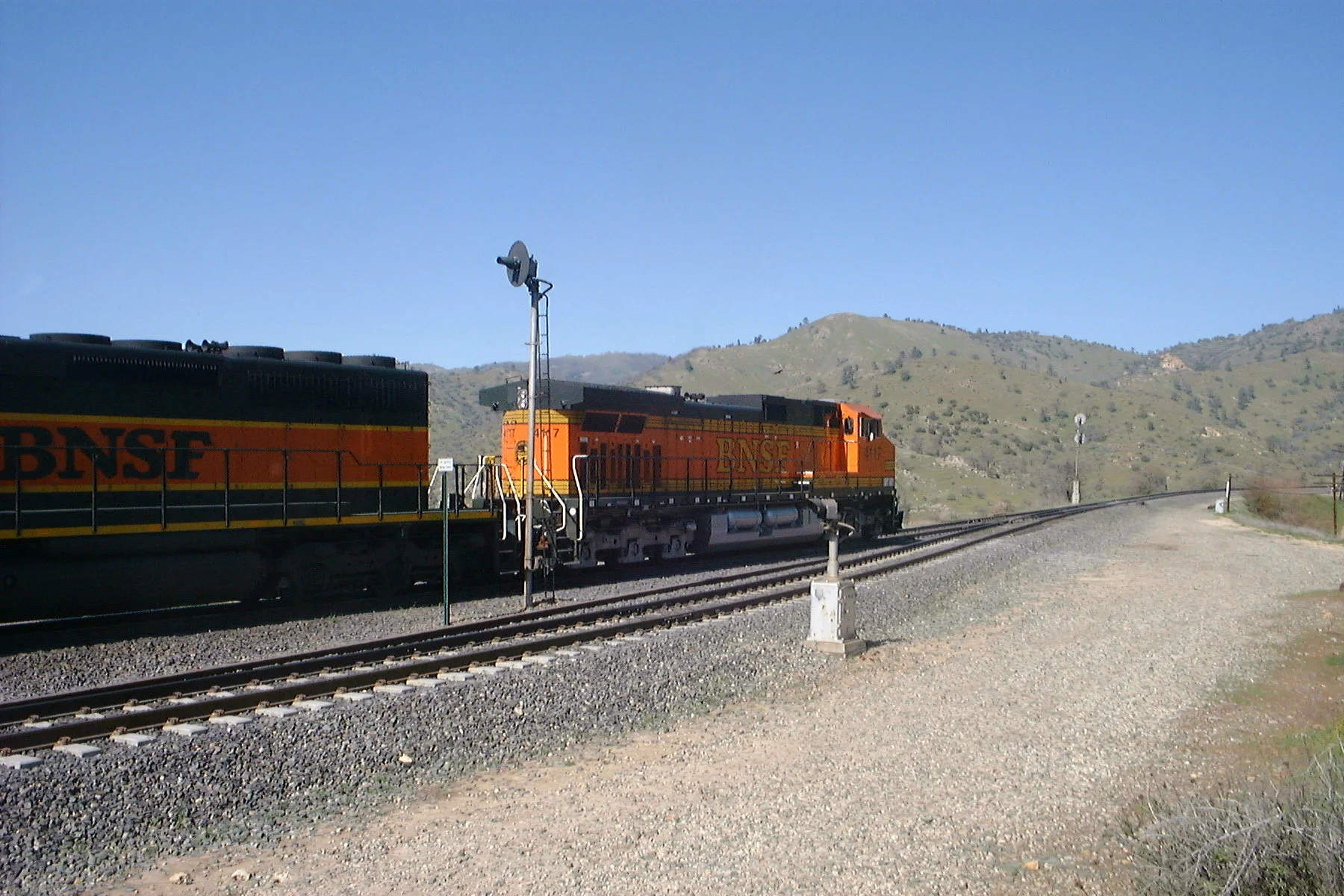
The United States operates 293,564 km of railway — nearly double China’s total, nearly triple Russia’s, and almost eleven times France’s. The scale is not incidental: it is the product of 19th-century Manifest Destiny economics, 20th-century industrial mobilization across two world wars, and a cold-eyed cost calculation that put road and air ahead of passenger rail from the 1950s onward. The U.S. network is almost entirely freight-dominated. Seven Class I railroads — BNSF, Union Pacific, CSX, Norfolk Southern, CPKC, CN, and Kansas City Southern — operate privately owned corridors that move coal, grain, chemicals, and intermodal containers with an efficiency that makes American freight rail the most cost-effective in the world by volume-ton-kilometer. Amtrak, the national passenger carrier, runs over this freight infrastructure as a guest — explaining why its intercity trains regularly yield to freight and run hours late. Militarily, the network supports the Defense Transportation System: in a major mobilization scenario, the U.S. Military Surface Deployment and Distribution Command would commandeer civilian freight corridors to move armored divisions, ammunition, and fuel from inland depots to coastal ports. The sheer density of track — covering every major industrial corridor, port, and military installation — makes this the most redundant, survivable overland logistics network on the planet. No adversary could degrade it sufficiently to prevent strategic mobilization without attacking thousands of individual targets simultaneously. The United States does not lead this ranking by a small margin. It leads by a civilization-scale margin that no other nation is positioned to close within a generation.
| Metric | Value |
|---|---|
| Total Railway (km) | 293,564 |
| Class I Operators | 7 (BNSF, UP, CSX, NS, etc.) |
| Primary Use | Freight (private ownership) |
| Passenger Carrier | Amtrak (over freight tracks) |
| Lead over #2 (China) | +143,564 km (+96%) |
Comprehensive Analysis: What Railway Size Actually Tells Us About Global Power
Raw railway kilometers are a deceptively simple metric for a deeply complex strategic variable. A nation’s rail network reflects, simultaneously, its industrial history, its geography, its governance model, and its strategic doctrine — all compressed into a single number that GFP renders as a ranking. Understanding what lies beneath that number is more valuable than the ranking itself.
The United States’ dominance at 293,564 km is the product of a specific historical moment: the 1860-1920 period when private capital, federal land grants, and continental ambition drove the fastest railway construction in human history. American freight rail today is a direct institutional descendant of that era — privately owned, profit-optimized, and oriented toward moving bulk commodities over long distances at minimal cost. It has no peer in efficiency. But this same system produced the paradox of the world’s largest railway network also having some of the developed world’s most dysfunctional intercity passenger rail — a deliberate policy choice, not an oversight.
China’s 150,000 km represents state-directed modernization at a pace and scale that is historically unprecedented. No country has added as many kilometers of functional, high-speed, electrified railway in as short a time as China has between 2000 and 2026. The political and military implications are profound: the PLA’s ability to rapidly redeploy forces between theaters — Taiwan Strait, India border, Korean Peninsula — is directly enhanced by this infrastructure. China is not merely building trains; it is building strategic mobility at a rate no other power is matching.
Russia’s 85,494 km has been combat-tested in ways no other network on this list has been since 1945. The Ukraine war is the first major conflict to place railway infrastructure at the center of operational logistics in the satellite-surveillance, drone-interdiction age. Both sides have discovered that railways are simultaneously indispensable and vulnerable — indispensable because no other system moves the tonnage required to sustain armored operations, and vulnerable because a precision strike on a bridge or junction can halt that tonnage for days. Russia’s experience is already reshaping NATO’s railway hardening investments in Poland, Romania, and the Baltic states.
India at 65,554 km represents perhaps the most underappreciated strategic railway story. The Atmanirbhar transformation of Indian Railways — domestic manufacturing of trains, electrification at scale, border connectivity expansion — mirrors India’s broader defense indigenization program. A country that once depended on foreign locomotive manufacturers is now exporting railway engineering expertise. The network’s role in two-front deterrence makes every kilometer of new Himalayan track a military-strategic statement as much as a civil infrastructure investment.
The middle tier — Germany, Canada, Australia — illustrates the tension between geography and density. Germany’s 39,379 km in an area the size of Montana is so densely woven that its strategic mobility per square kilometer rivals any nation on this list. Canada’s 49,422 km across the world’s second-largest country leaves entire provinces unserved. Australia’s 32,606 km spans a continent but follows colonial extraction corridors never repurposed for national territorial coverage. Size alone does not confer strategic advantage; distribution and redundancy matter equally — and that distinction, invisible in a simple kilometer count, is what operational planners study when they look past the headline rankings.
2026 Full Rankings: Railway Network Size
| Rank | Country | Railway (km) | vs. USA (%) | Primary Use |
|---|---|---|---|---|
| #1 | United States | 293,564 | 100% | Freight (private) |
| #2 | China | 150,000 | 51% | Freight + HSR |
| #3 | Russia | 85,494 | 29% | Freight + military |
| #4 | India | 65,554 | 22% | Passenger + freight |
| #5 | Canada | 49,422 | 17% | Freight |
| #6 | Germany | 39,379 | 13% | Mixed |
| #7 | Australia | 32,606 | 11% | Freight (ore) |
| #8 | South Africa | 30,400 | 10% | Freight (mining) |
| #9 | Brazil | 29,850 | 10% | Freight (agriculture) |
| #10 | France | 27,860 | 9% | Mixed (TGV + freight) |
Track Every Military Power Ranking
Explore the complete 2026 GlobalFirepower index — army size, air power, naval strength, logistics, and more — updated across all major nations.
Frequently Asked Questions
Why does the United States have the world’s largest railway network if it is known for poor passenger rail?
The U.S. network is almost entirely freight-focused and privately owned. Seven Class I freight railroads operate the bulk of the 293,564 km for moving commodities — not passengers. Amtrak runs on this freight infrastructure as a secondary user, which explains chronic delays. The U.S. made a deliberate policy choice from the 1950s onward to invest in highways and aviation for passengers, while leaving freight rail to market forces. The result is the world’s most efficient freight rail system and one of the developed world’s least convenient passenger rail systems — both artifacts of the same decision.
How does China plan to close the gap with the United States in total railway kilometers?
China is adding approximately 3,000-5,000 km of new railway annually, overwhelmingly in high-speed rail. At the current pace, China could approach the United States in total track length within several decades — but the U.S. lead of 143,564 km as of 2026 is so substantial that even aggressive Chinese expansion will not close it quickly. More strategically significant is that China already leads in high-speed rail, electrification rate, and annual passenger-kilometers — metrics where U.S. dominance does not apply.
What role does railway infrastructure play in military strategy today?
Railway networks are a primary factor in strategic logistics — the movement of troops, ammunition, fuel, and heavy equipment at operational scale. No other land-based system matches rail’s ton-kilometer efficiency for bulk military cargo. In NATO’s eastern-flank deterrence, dedicated rail lines are being hardened to move armored formations from Western Europe to Poland and the Baltic states. Russia’s reliance on rail to sustain operations in Ukraine, and Ukrainian use of rail to receive Western military aid, have made railway infrastructure one of the defining logistical lessons of the 2020s. Railway nodes are now primary targets for precision strikes in any high-intensity conflict.
Why does India rank so high despite being a developing economy?
Indian Railways is one of the largest railway networks in the world precisely because India’s economic and social integration has depended on rail since British colonial construction in the 19th century. With over 1.4 billion people and no viable alternative for mass inter-city mobility at scale, India has maintained and expanded its rail network as a national priority. The system’s strategic role — enabling rapid military redeployment between the Pakistan and China borders — has also driven continued government investment, accelerating under the Atmanirbhar Bharat self-reliance doctrine.
Are any countries likely to change their ranking significantly by 2030?
China is the most likely to rise, adding thousands of kilometers annually. India is expanding Himalayan border connectivity and high-speed corridors. Germany’s 86-billion-euro rail program will modernize rather than dramatically expand its network. Brazil has ambitious plans but significant execution risk. Australia’s Inland Rail project — a 1,700 km freight corridor connecting Melbourne to Brisbane — will add modestly to its total. The United States’ number is unlikely to change significantly: American freight rail investment goes into capacity and technology, not new track construction at scale.
Source: GlobalFirepower 2026 Military Strength Ranking | Data reflects 2026 published figures.