The World’s Fastest Tanks (2026): The Record Doesn’t Belong to a Main Battle Tank

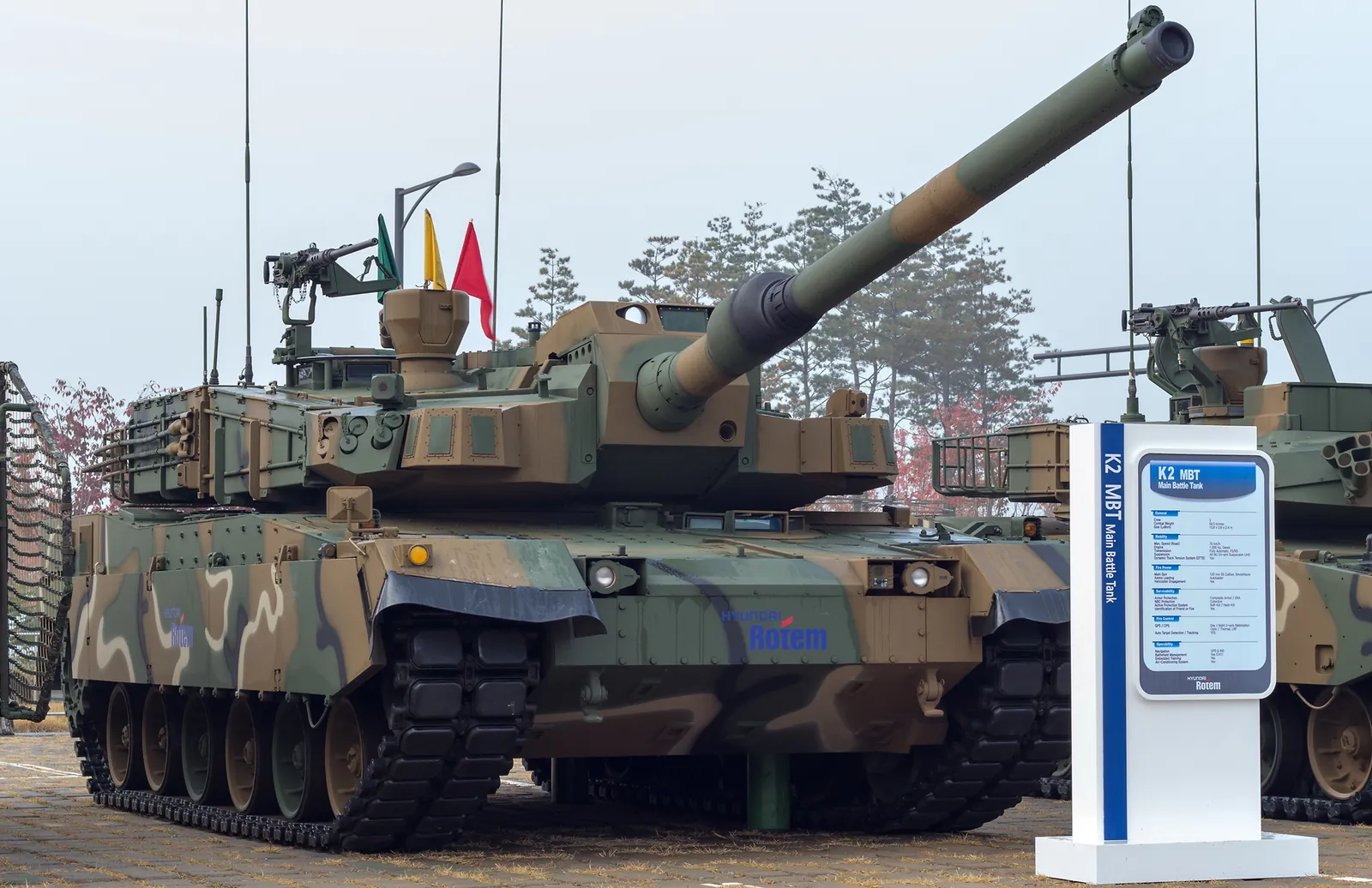
Figures are drawn from manufacturer and official defence-agency statements; cross-country speeds are typically about half the road figure.
Tank speed is one of the most consistently misread numbers in defence reporting. The figure printed in a brochure is a maximum road speed measured on hard surface, at full fuel, under ideal conditions — that is, in an environment where no tank has ever fought. Three other things decide what happens in the field: how much engine power the vehicle carries per tonne, how much of that speed survives mud and gradient, and how fast the tank can reverse out of a firing position. This file measures all three separately.
Methodology: which speed are we talking about?
A published speed figure for an armoured vehicle is incomplete unless the measurement condition is stated. Open sources give us three distinct kinds of number:
| Type of figure | What it means | How we treat it here |
|---|---|---|
| Maximum road speed | Ceiling speed on hard surface under ideal conditions | The basis of the main table — manufacturer or army stated |
| Cross-country speed | Speed sustainable over mud, gradient and broken ground | Rarely published by any army; where disclosed, noted in the text |
| Record or trial speed | A one-off value measured on a controlled test track | Kept in a separate section — never mixed into the ranking |
Table one: maximum road speed of main battle tanks
The list below covers main battle tanks currently in service or in series production, with maximum road speeds as stated by manufacturers and official sources. That the entire field fits inside a 12 km/h band is not a coincidence: for a 60-tonne vehicle, road handling, suspension travel and the vibration a crew can physically tolerate impose a natural ceiling.
| # | Tank | Country | km/h | Engine (hp) | Weight (t) | Note |
|---|---|---|---|---|---|---|
| 1 | Leclerc XLR | France | 71 | 1500 | 57,4 | Hydropneumatic suspension; among the lightest in its armour class |
| 2 | Type 10 | Japan | 70 | 1200 | 44,0 | Hydro-mechanical transmission; identical forward and reverse speed |
| 3 | K2 Black Panther | South Korea | 70 | 1500 | 55,0 | Active hydropneumatic suspension; deep-fording capability |
| 4 | Leopard 2A7/2A8 | Germany | 70 | 1500 | 66,0 | 72 km/h on the 2A4; capped on later variants as weight grew |
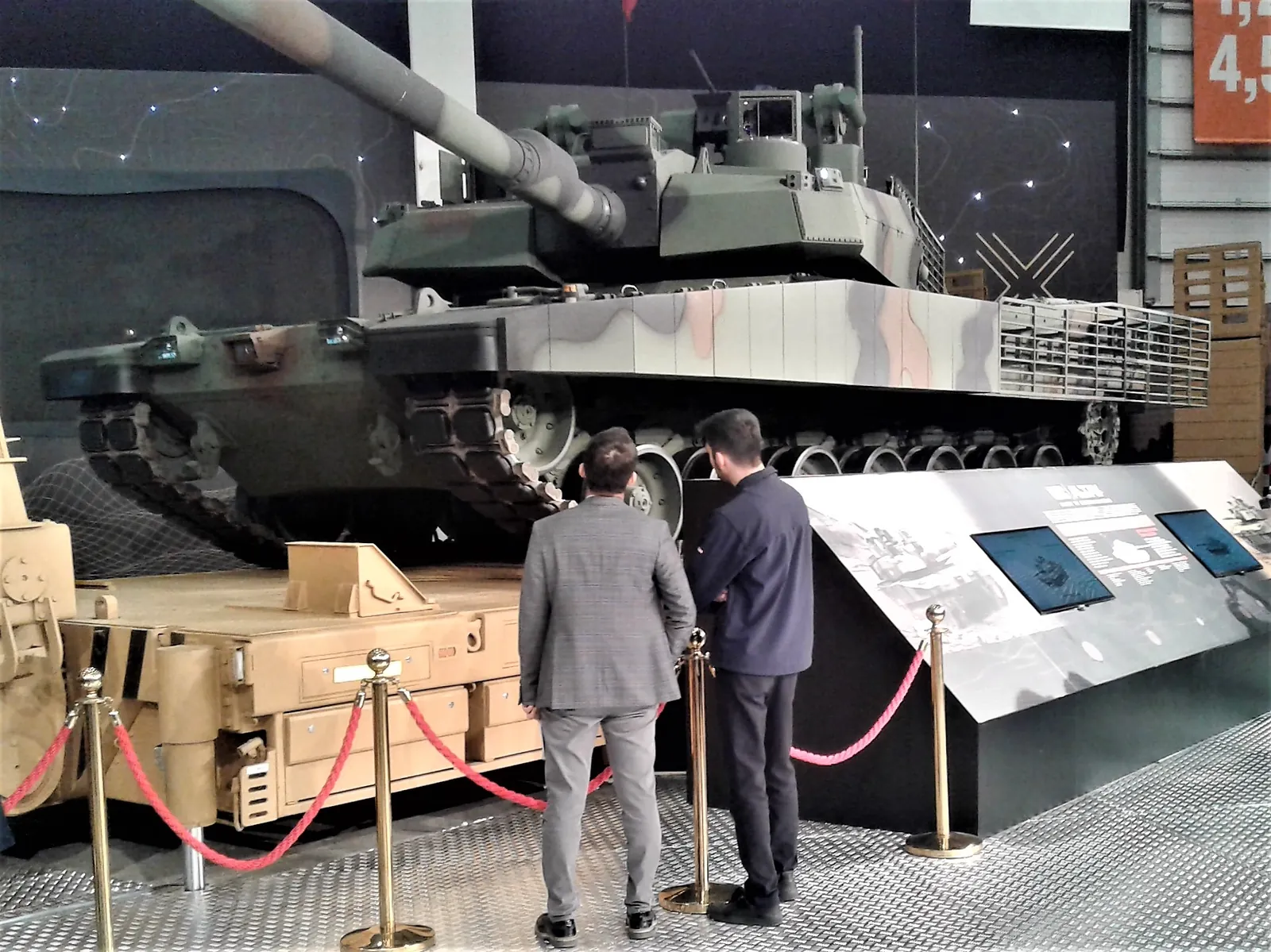
| 5 | ALTAY | Türkiye | 70 | 1500 | 65,0 | Series production under way; first T1 deliveries made in 2025 |
| 6 | M1A2 SEPv3 | USA | 67 | 1500 | 66,8 | Gas turbine; top speed electronically governed |
| 7 | C1 Ariete | Italy | 65 | 1300 | 54,0 | One of the lowest-powered Western tanks in its class |
| 8 | Merkava Mk.4 Barak | Israel | 64 | 1500 | 65,0 | Front-mounted engine; different weight distribution |
| 9 | T-90M Proryv | Russia | 60 | 1130 | 46,5 | Inherits the classic T-72 driveline |
| 10 | Challenger 2 | UK | 59 | 1200 | 62,5 | Lowest power-to-weight ratio on this list |

The record: the world’s fastest tank is not a main battle tank
The official answer to “what is the fastest tank in the world” appears nowhere in the table above. According to Guinness World Records the title belongs to the British FV101 Scorpion reconnaissance vehicle. The reason is simple arithmetic: the Scorpion weighs 8 tonnes, roughly an eighth of the tanks listed here.
| Vehicle | km/h | Class | Why it is not in the main table |
|---|---|---|---|
| FV101 Scorpion | 82,23 | Tracked recce vehicle, CVR(T) | Guinness-certified record holder; not a main battle tank |
| Centauro II | 110 | Wheeled 8×8 tank destroyer | Wheeled rather than tracked; outside the MBT class |
| Sprut-SDM1 | 70 | Tracked airborne assault gun | Light class; armour level is not comparable |
| Kaplan MT | 70 | Medium-weight tank | Turkish-Indonesian joint programme; medium class, not an MBT |
What really decides it: power-to-weight ratio
Top speed tells you how fast a tank can go. Power-to-weight tells you how fast it gets there and how much of that speed survives broken ground. In combat the second number matters more: a tank rated at 70 km/h on a road is still a target if it bleeds momentum on every gradient.
Two things become visible here. First, the Type 10 tops the list on just 1,200 hp — because at 44 tonnes it is the lightest main battle tank in the field. Second, the Challenger 2 finishing last is not a design failure but a stated preference: British doctrine spent its weight budget on protection and accepted hauling 62.5 tonnes with a 1,200 hp engine.
The axis nobody discusses: reverse speed
One of the most critical manoeuvres in tank combat is backing out of a firing position after shooting. Forward speed is irrelevant to it; reverse speed is everything. And unlike the tight 12 km/h band in forward speed, the spread here is enormous:
| Tank | Reverse (km/h) | Driveline | Note |
|---|---|---|---|
| Type 10 | 70 | Hydro-mechanical (HMT) | Forward and reverse speeds are equal, via continuously variable drive |
| K2 Black Panther | 50 | Automatic, multi-speed reverse | Retains high speed in reverse |
| M1A2 SEPv3 | 40 | Allison X-1100 | Reverse speed above the Western norm |
| Leopard 2A7/2A8 | 31 | RENK HSWL 354 | Four reverse gears |
| T-90M Proryv | 5 | Classic T-72 lineage | Single reverse gear; lowest value in the class |
| ALTAY | Not disclosed | SNT Dynamics EST15K | Reverse speed not publicly disclosed |
| Challenger 2 | Not disclosed | David Brown TN54 | Reverse speed not publicly disclosed |
Four things that set a tank’s speed
Weight — and where the weight goes
Most of a main battle tank’s mass is armour. Adding armour buys protection and costs speed and range. The Type 10 stays at 44 tonnes because Japanese bridge and tunnel infrastructure imposed that ceiling deliberately; the Challenger 2’s 62.5 tonnes reflect how heavily British doctrine weighted protection.
Engine architecture: diesel or gas turbine?
The M1 Abrams gas turbine delivers strong torque and runs quietly, but consumes markedly more fuel than diesel equivalents. Its top speed is electronically governed: the engine will give more, but the suspension and the crew will not take it.
Suspension: what protects speed in the field rather than on paper
Hydropneumatic suspension keeps the hull stable over broken ground. The K2 and the Leclerc both use it, which is why the gap between their brochure speed and their real cross-country speed is narrower than on most rivals.
Driveline and reverse gear
A continuously variable hydro-mechanical drive gives the Type 10 a reverse speed equal to its forward speed. On conventional stepped gearboxes reverse is close to an afterthought, and typically lands near a third of forward speed.
Where does Türkiye sit in this table?
With a stated maximum road speed of 70 km/h, the ALTAY sits in the top band of this list, in the same group as the Type 10, K2 and Leopard 2A7/2A8. That is not the result of bending data toward Türkiye: the ALTAY uses the same powerpack family as the K2, and at a 65-tonne combat weight it works out to 23.1 hp per tonne.
Not disclosed: reverse speed, cross-country speed and gradient performance do not appear in open sources. We have not estimated them; this page will be updated when they are published.
Türkiye’s second vehicle in this space is the Kaplan MT, developed by FNSS jointly with Indonesia. That 30-tonne medium tank also reaches 70 km/h, but because it does not belong to the main battle tank class it appears in the light and medium vehicle table rather than in table one.
Frequently asked questions
What is the fastest tank in the world?
Do tanks actually reach their brochure speed?
How does the ALTAY compare on speed?
Why is the Challenger 2 the slowest on the list?
Why does reverse speed matter?
Why is the T-14 Armata not on the list?
Sources
- Presidency of Defence Industries (SSB) — official statements on the ALTAY programme
- BMC and FNSS official product documentation
- KNDS / Krauss-Maffei Wegmann — Leopard 2 product literature
- Hyundai Rotem — K2 Black Panther technical data
- Japan Ministry of Defense — Type 10 programme documents
- US Army technical publications — M1 Abrams series
- Guinness World Records — fastest production tank certification
- International Institute for Strategic Studies (IISS) — The Military Balance