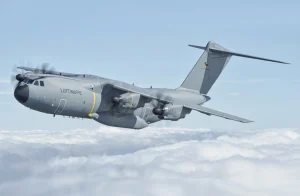






World’s First: Uncrewed Surface Vessel Airdropped from an A400M Aircraft

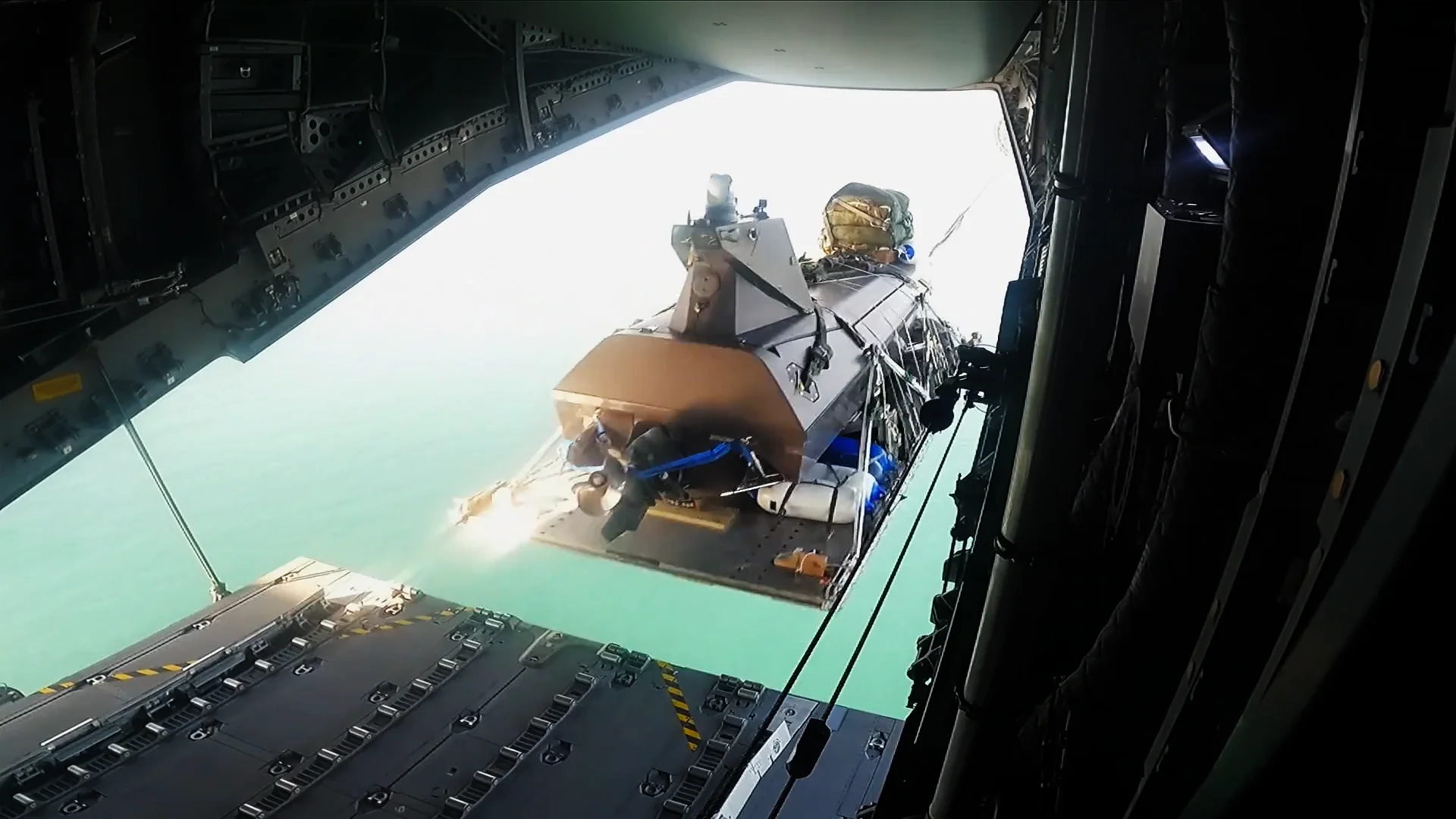
Kraken Technology Group and Capewell, backed by the UK Royal Navy’s Project Beehive, successfully airdropped a K3 Scout uncrewed surface vessel (USV) from an Airbus A400M Atlas transport aircraft into the North Sea on 8 July 2026. It is recorded as the world’s first extracted-load airdrop of a USV from an aircraft.
Technical details of the trial
Released from an altitude of 1,300 feet, the K3 Scout was deployed into waters of up to Sea State 4. The trial combined Kraken’s optional airdrop kit for the K3 Scout with Capewell’s reconfigurable Type V parachute-based UMCADS (Universal Maritime Craft Aerial Delivery System). It also validated, for the first time, a new electro-mechanical “IN-Release” system that synchronizes safe separation of the payload from the aircraft ahead of water entry.
Four drops in six working days
The team completed four live airdrops in six working days using the same boat and delivery platform, demonstrating the system’s ability to adapt to different mission requirements. Kraken’s CEO said the trial proved the K3 Scout “can be rapidly deployed directly from a military transport aircraft into contested or difficult-to-access waters, ready for operation.”
Why it matters
The capability opens the door to delivering uncrewed surface vessels directly into an operational area without needing a mother ship or port infrastructure. Traditionally, getting a USV into theater required either a host vessel or a nearby port; airdropping removes that dependency, potentially cutting deployment time from hours to minutes.
Strategic context
As uncrewed maritime systems take on an increasingly central role in reconnaissance, mine detection and surveillance, capabilities that deepen air-sea integration offer NATO navies added logistical flexibility. Given the A400M’s multinational fleet — a platform Turkiye also operates — similar airdrop capabilities are likely to spread across the alliance.
Turkiye and regional context
With its own uncrewed surface vessel programs (such as ULAQ and MARLIN) and its A400M fleet, Turkiye stands to find the air-delivered rapid-deployment concept relevant to its own defense industry. Rising use of uncrewed surface vessels in the Black Sea further underscores the regional relevance of such rapid-deployment capabilities.
The broader scope of Project Beehive
The Royal Navy’s Project Beehive is part of a wider program testing rapid deployment of uncrewed maritime systems from various platforms. The K3 Scout airdrop stands out as the initiative’s most visible success to date. Kraken’s K3 Scout family already runs on a modular hull usable for reconnaissance, electronic intelligence gathering and communications relay; adding the airdrop kit now folds an “emergency deployment” capability into that mission set.
Comparison with similar trials
The US and UK militaries have previously tested parachute drops of large uncrewed aerial vehicles or cargo pallets, but lowering a fully functional boat into water intact presents a distinct engineering challenge: the hull must retain structural integrity on water impact and its sensors must remain operational. Completing four consecutive successful trials within six days demonstrates that the system is not a one-off demonstration but a repeatable operational capability.
What comes next
Kraken and Capewell plan to continue testing the system across different sea states and from higher release altitudes. The Royal Navy has not yet said when this capability will be folded into its operational inventory, but the success under Project Beehive sets a precedent for other NATO navies to evaluate similar air-delivered deployment concepts.
Sources
Kraken Technology Group official statement (July 2026); Naval News; The Defense Post.