KAAN and the KF-21: The Timelines of Two National Fighter Programmes

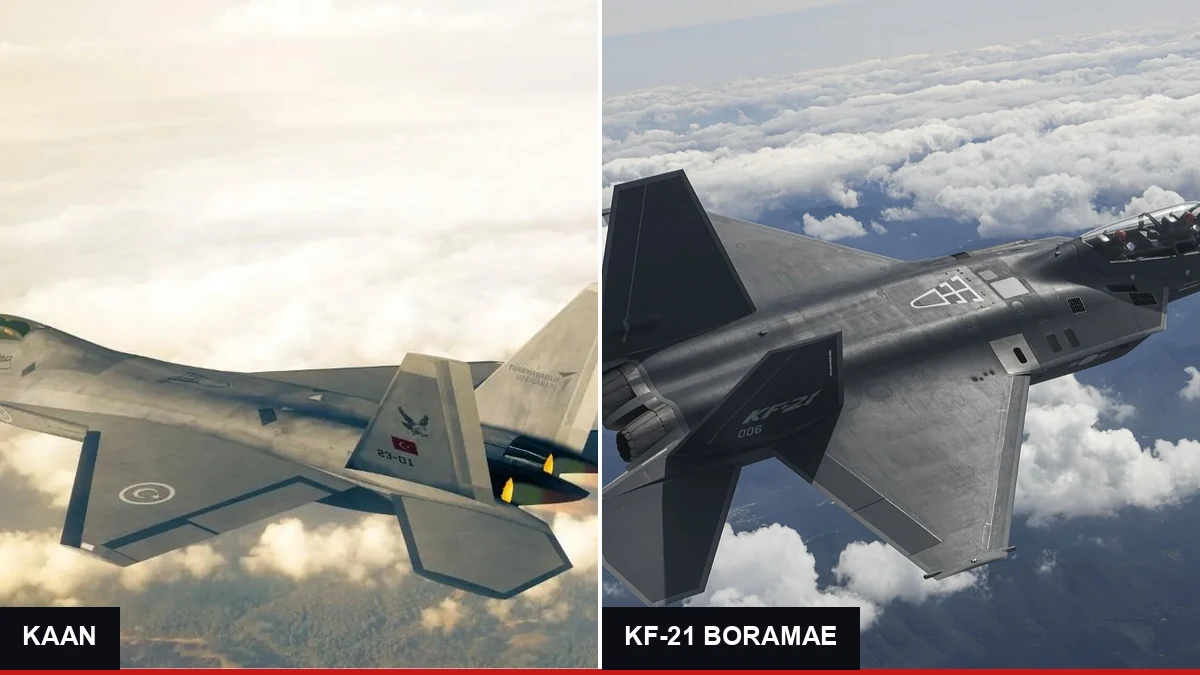
For the first time in this series we leave the unmanned line. KAAN and South Korea’s KF-21 Boramae are two national fighter programmes running in the same period. Both have flown, both are advancing — but their sequences differ. One went to serial production first, the other found an export customer first. This file asks what that difference of order means.
The unmanned files built a frame: six thresholds, the channel effect and the demonstrator-versus-product distinction. In fighter programmes some of those steps carry over unchanged and some change scale. A fighter programme is an order of magnitude more expensive and longer than an unmanned platform.
The argument
The two programmes chose two different distributions of risk. The KF-21 moved early into serial production on a broad domestic order, solving the production risk first; export came later. KAAN signed a binding export contract before serial production, solving the demand risk first; production scale came later. There is no single answer to which is better — but it is clear that both are problems that must eventually be solved.
What this file compares
Fighter comparisons usually turn into capability debates: which is faster, whose radar is better, which is less visible. This file does not hold that debate and could not — no comparable, verified performance data is public for either programme. What is compared is the programme calendar and the programme model.
Excluded from this file
- Unit costs and total programme budgets not published by a manufacturer or state.
- Unverifiable radar cross-section, range and manoeuvre performance claims.
- Rankings based on an undefined «fifth generation» criterion.
- Delivery schedules that have not been officially announced.
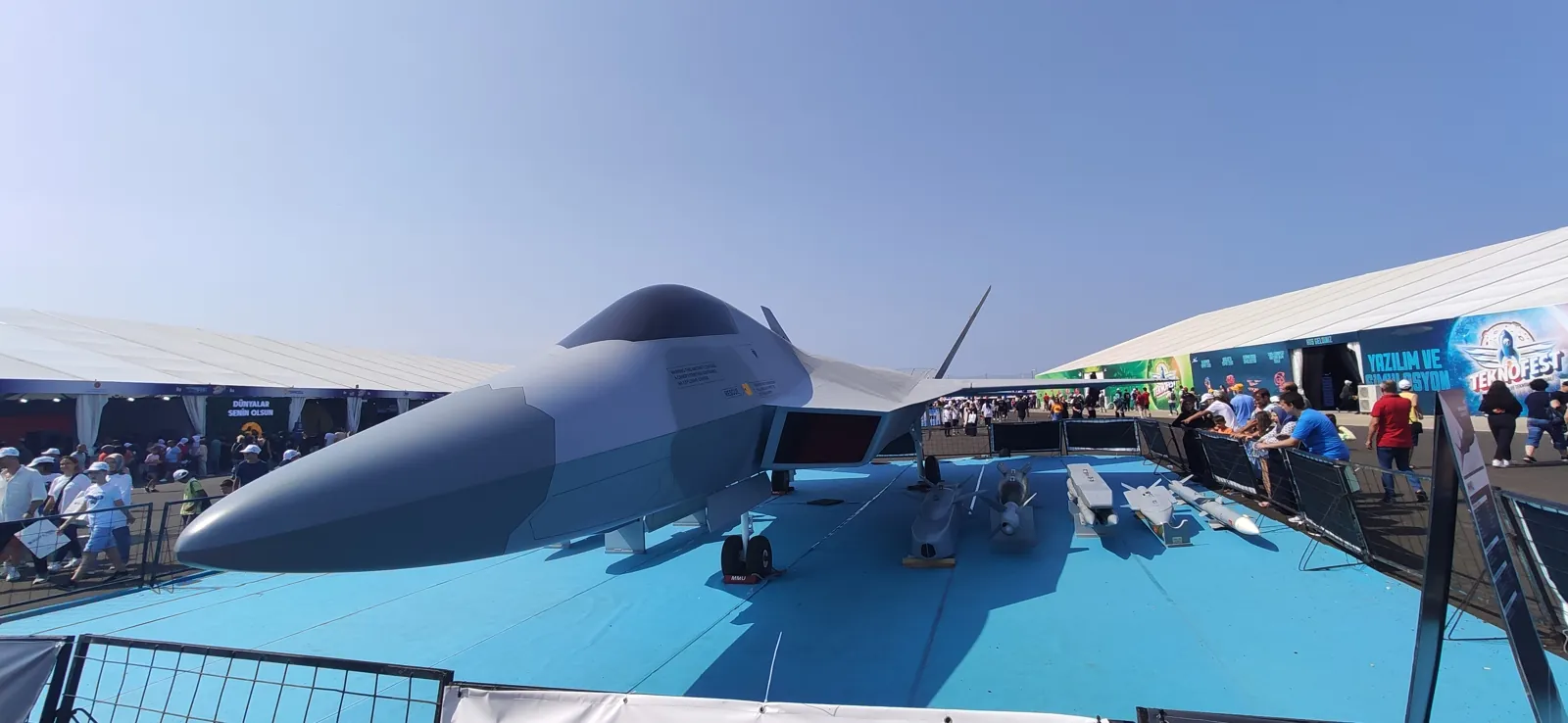
When did they start?
Given the series title, the first yardstick is the start. In fighter programmes the start cannot be pinned to a single day: concept work, requirement definition and the development contract spread across different years. The table therefore gives periods.
| Programme | Country | Start period | First flight | Serial production |
|---|---|---|---|---|
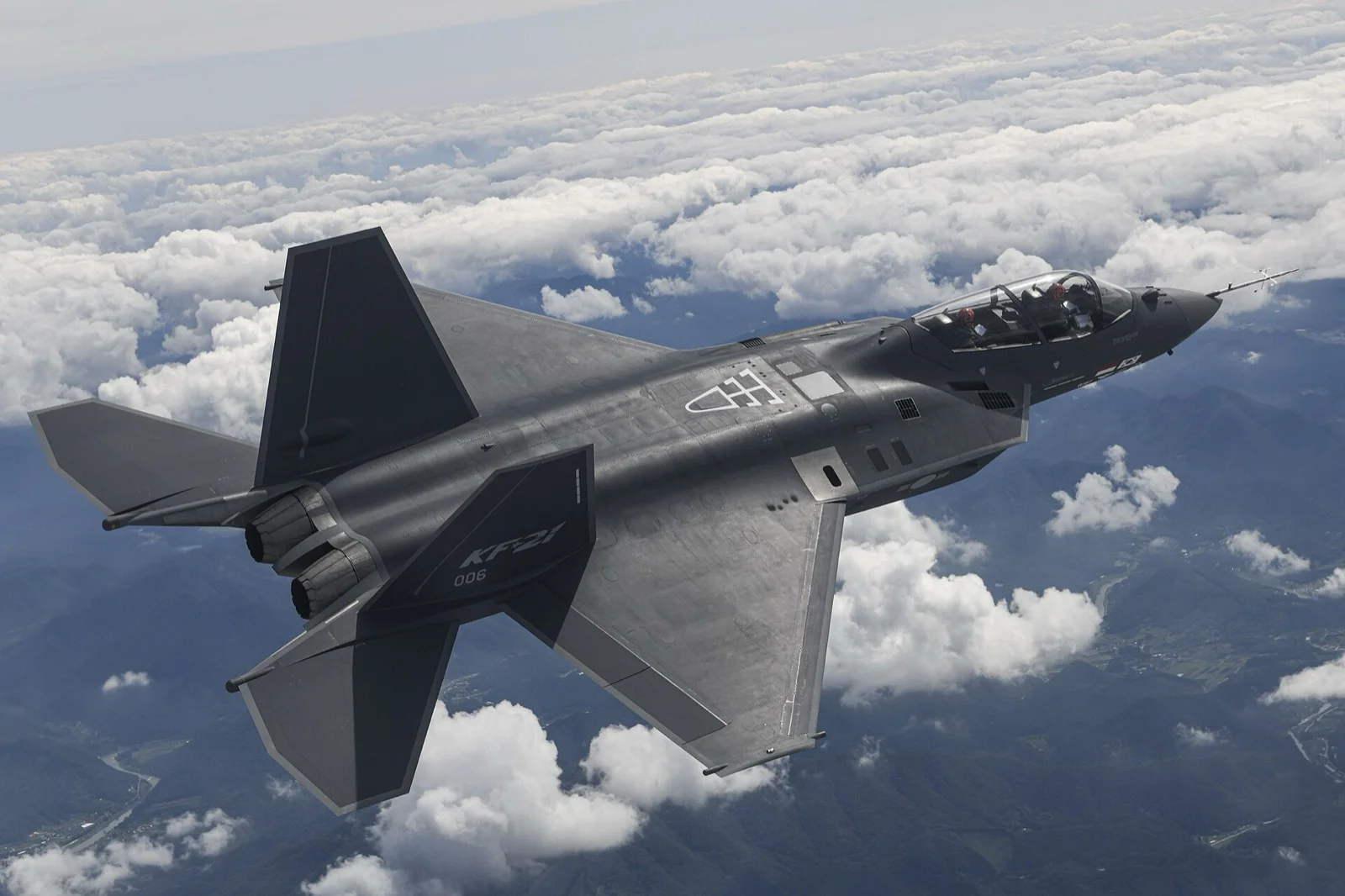
| KF-21 Boramae | South Korea | early 2010s | 19 July 2022 | began July 2024 |
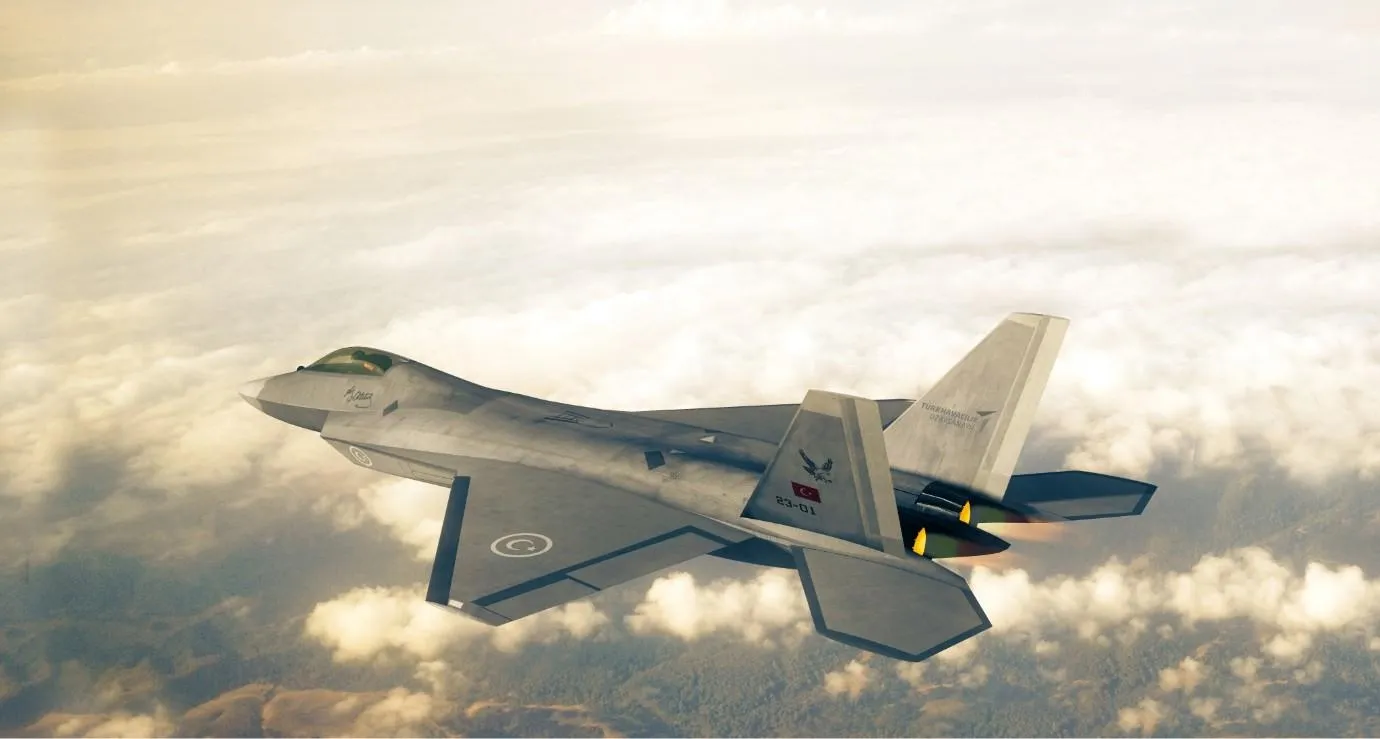
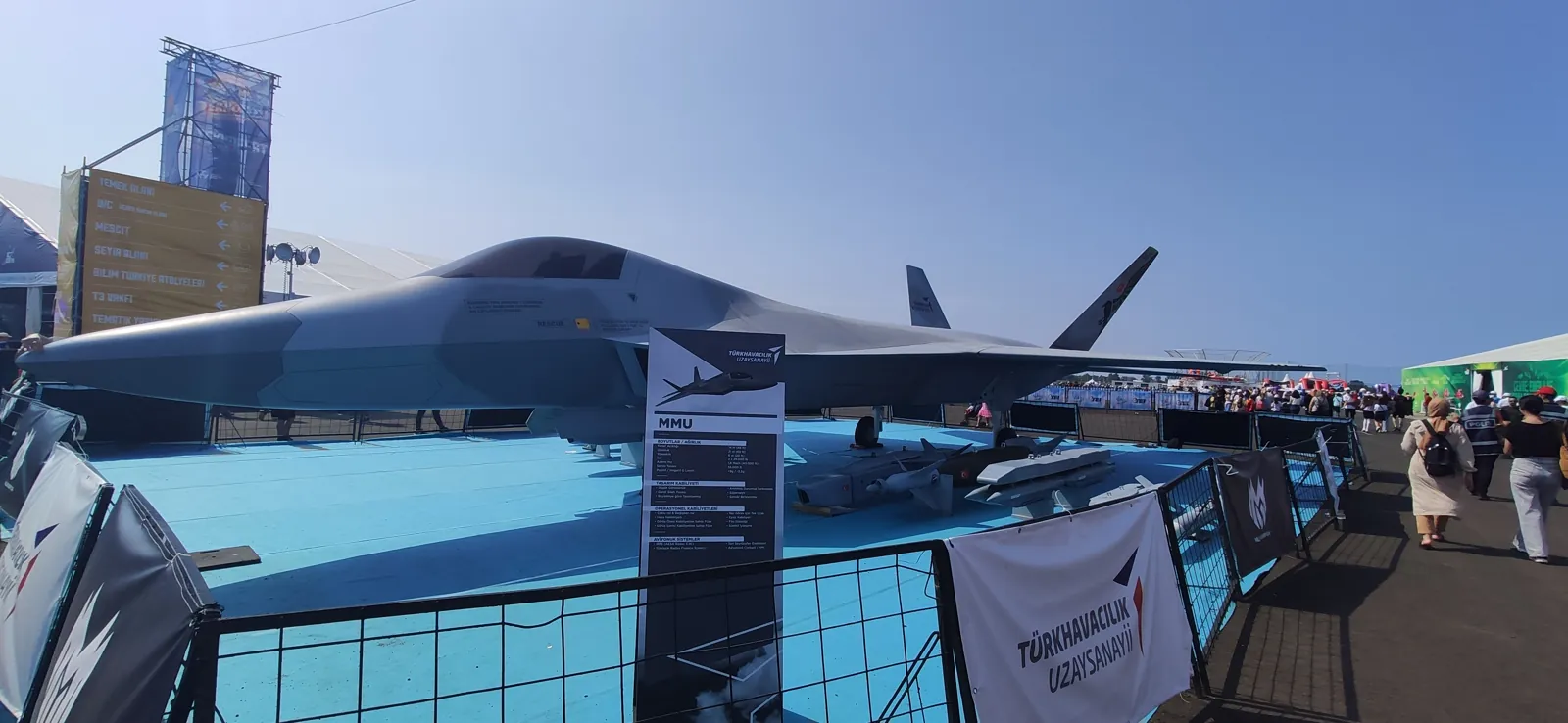
| KAAN | Türkiye | mid-2010s | 21 February 2024 | no announced start |
| AMCA | India | mid-2010s | not reached | not reached |
The third row is another reminder of the series’ central pattern: programmes that start in the same period do not all reach the same stage. India’s AMCA programme stands where the frame built in the first file would place it — awaiting its first flight. That comparison is the subject of the next file.
The two programmes on one timeline
The chart below places both programmes’ public records on the same axis. The left column is KAAN, the right the KF-21.
Two distinct patterns appear. The KF-21 rows are production-axis: first flight, serial production, contract, rollout. The KAAN rows are flight-test and export-axis: first flight, second flight, engine tests, export contract. Two programmes running in the same period have ordered their priorities differently.
The fourth bar is not a forecast; it is dashed only to show that the step has not been announced.
Two programme models
A fighter programme has two great uncertainties to resolve: will I be able to build it and will I be able to sell it. Both demand commitments worth billions and neither can be settled at the same time as the other. Programme management has to choose which to resolve first.
| Metric | KAAN | KF-21 |
|---|---|---|
| First flight | 21 February 2024 | 19 July 2022 |
| Serial production decision | No announced start of serial production | Began in July 2024 |
| First large order | Indonesia, 48 aircraft (export) | Domestic: 20 aircraft (2024) + 20 (2025) |
| Risk solved first | Demand risk | Production risk |
| Left for later | Production scale | Export |
The advantages and drawbacks of the two models are symmetrical. Early serial production matures the supply chain and the workforce quickly; but if orders stay confined to the domestic market, unit cost stays high. An early export contract brings both revenue and legitimacy; but the delivery commitment lands on a production line that has not yet matured.
Why «which is better» is the wrong question
Whether a programme model is right depends on the country’s industrial structure and market position. For a manufacturer with a broad domestic order, solving the production risk first makes sense; for one with a limited home market but an open export channel, solving the demand risk first makes sense. As this series has shown repeatedly, programme architecture is the consequence of a constraint rather than a preference.
What does the Indonesia contract say?
According to Turkish Aerospace, a definitive sales contract for the export of 48 KAAN fighters was signed in Istanbul during IDEF 2025. The manufacturer describes it as the formal and binding stage following an earlier memorandum signed in Jakarta.
The most notable part of the contract is not the quantity but the scope. In the manufacturer’s words the agreement is not procurement alone; it encompasses a comprehensive cooperation model including the development of local manufacturing capabilities and training support. That repeats, one scale up, the pattern defined for the heavy class in the seventh file: in the upper band a sale is not built without a co-production dimension — a logic also visible in the Saudi co-production arrangements.
No delivery schedule is given in this file: the Turkish Aerospace statement contains no figure for a delivery period. Durations circulating in the press could not be verified against an official source and are therefore not written into a table.
Block development: spreading capability over time
One of the KF-21 programme’s distinguishing features is its block approach: the aircraft is delivered not at full capability but incrementally, with capability added in later blocks. It is a risk-management method increasingly common in defence programmes.
| Metric | Block development | Delivery at full capability |
|---|---|---|
| First delivery | Early | Late |
| Initial capability | Limited | At the targeted level |
| Production line | Matures early | Idle for a long period |
| User training | Starts early | Starts with delivery |
| Risk | Capability delay | Schedule delay |
The most concrete benefit of the block approach is that the production line and user training do not wait for the aircraft’s full capability. The acceptance steps we listed for KIZILELMA in the eighth file — training, maintenance chain, munition stock, doctrine — take far longer on a fighter; blocks pull them forward.
The engine: the shared constraint
The hardest subsystem in a fighter programme is the engine. KAAN made its early flights on two General Electric F110-GE-129 engines on an interim basis; the same engine is used on Turkish Air Force F-16s. In early December 2024 both engines’ afterburners were activated and tested.
The domestic engine: why we give no date
Work on a domestic engine for KAAN continues. But no model, thrust figure or integration schedule is given in this file: no verifiable official serial-production announcement could be found. The same rule applied to the TB2’s engine in the sixth file holds here — an unverified item is not written into a table as a claim.
Why the engine matters so much is explained by the fifth threshold in the sixth file: if a critical component arrives under another state’s export licence, the system is not an export product but a conditional assembly line. On a fighter that constraint has far heavier consequences than on an unmanned platform, because an export contract carries decades of delivery and support commitment.
What an early export contract does to a programme
It is unusual for a fighter programme to sign a binding export contract before serial production. That has four concrete effects on the programme, and they do not all point the same way.
| Effect | Direction | Explanation |
|---|---|---|
| Financing | Positive | Part of programme revenue comes from outside the domestic budget; dependence on the budget cycle falls |
| Scale | Positive | Production numbers grow and unit cost tends downwards |
| Schedule pressure | Risky | A delivery commitment lands on a production line that has not yet matured |
| Configuration | Risky | The buyer’s requirements can affect the design; managing two customers is harder |
The first two rows explain why the model is chosen. A fighter programme’s cost is a line item occupying a single country’s defence budget for many years; export revenue shares that load and moves the programme one step outside political budget cycles.
The last two rows are the part to watch. A delivery commitment creates a date, and that date runs independently of how fast the production line matures. As we said for the heavy class in the seventh file, the co-production dimension partly distributes that risk: when the buying country takes on part of the manufacturing, capacity rises and responsibility is shared. The local-manufacturing element of the Indonesia contract is therefore not a technical detail but part of the programme’s risk architecture.
Why is a fighter programme so long?
In this series’ unmanned files, seven to ten years from programme start to first flight was normal. On a fighter the durations are similar but the workload is not. The difference is in the number of subsystems that must mature at once.
| Line | Why it is critical |
|---|---|
| Engine | Determines thrust, range and export independence together |
| AESA radar and electronic warfare | Much of a fighter’s combat value comes from here |
| Flight control and mission software | Flyability and capability growth both depend on it |
| Weapons integration | Every new weapon opens a separate validation cycle |
| Materials and airframe production | Sets serial production rate and unit cost |
| Training and simulation | The condition of operational readiness after delivery |
Each of these lines requires its own supplier network. That is exactly where industrial depth is measured: without a base able to produce advanced radar, a fighter programme cannot be run. What the ninth file said about the flying wing applies even more here — the real barrier to entry is not the airframe but the subsystem network, a depth visible across the manufacturer’s product range.
Does the series’ frame work on a fighter?
The six-threshold model was built for unmanned platforms. Which steps carry over unchanged to a fighter, and which change?
| Threshold | Equivalent on a fighter | Status |
|---|---|---|
| 1. Home inventory | Applies unchanged and weighs more: the scale is far larger | Not completed in either programme |
| 2. Weaponisation / operational use | Weapons integration is far broader | Ongoing |
| 3. First export contract | Applies unchanged | KAAN: Indonesia |
| 4. Allied customer | Applies unchanged | Not established |
| 5. Supply-chain independence | Concentrates on the engine | Ongoing |
| 6. Production abroad | Becomes part of the contract | KAAN: within the cooperation model |
The most interesting row is the third. On the unmanned line, export came after the home inventory; in KAAN’s case the order reversed. That shows the six-threshold model cannot be applied to a fighter exactly as written: at this scale an export contract can become part of the programme’s financing.
EM-PDI assessment
The Envanter Medya Programme Development Index (EM-PDI) is used across the series to score programmes against common criteria. It is an editorial assessment, not an official ranking; the weightings are set out in the first file. Both fighter programmes are at an early stage, so the scores sit in a low band; the index weights operational service and production scale.
The gap comes from calendar, not capability: the KF-21 scores on production scale because it reached serial production and rolled out its first production aircraft. KAAN scores on the export item. Neither yet scores on operational service.
The limits of this comparison
This file compares programme calendars and programme models; it does not rank the aircraft. The limits need stating plainly:
- The KF-21 is ahead in production. Serial production began in July 2024 and the first production aircraft rolled out in March 2026. There is no announced start of serial production for KAAN. This is a verified fact and is recorded as such.
- Test accumulation. The KF-21 has run an extensive flight-test programme with six test aircraft since its first flight. KAAN’s flight-test count is not at that scale.
- No capability data. No comparable radar, range or manoeuvre data is public for either programme; this file makes no capability ranking.
- The generation label is contested. «Fifth generation» has no standard criterion; no generational ranking is made here.
Conclusion: two different sequences, two different risks
KAAN and the KF-21 represent two valid routes through a fighter programme. The KF-21 solved the production risk first and left export for later; KAAN solved the demand risk first and left production scale for later. Both must eventually solve the same two problems.
The series’ central argument holds here too: the difference appears not in the first flight but in the decisions after it. The pattern seen in the ANKA and TAPAS comparison repeats in a class an order of magnitude more expensive — the accumulation visible in the manufacturer’s global standing is what makes that jump possible.
Next in the series
File 11 — KAAN and AMCA. This time the comparison is with India’s fifth-generation programme. Both countries turned to a similar goal in a similar period; where do the programme architectures diverge? The full series sits on the Türkiye and World Defence Programmes page.
Frequently asked questions
When did KAAN first fly?
The maiden flight took place on 21 February 2024 and lasted 13 minutes, reaching 8,000 feet and 230 knots. The second flight followed on 6 May 2024, reaching 10,000 feet.
What engine does KAAN use?
The early flights used two General Electric F110-GE-129 engines on an interim basis; the same engine is fitted to Turkish Air Force F-16s. Work on a domestic engine continues. No model or schedule for it is given in this file: no verifiable official serial-production announcement could be found.
What does the Indonesia contract for KAAN cover?
According to Turkish Aerospace, a definitive sales contract for the export of 48 KAAN fighters was signed in Istanbul during IDEF 2025. The agreement is not procurement alone; it encompasses a cooperation model including the development of local manufacturing capabilities and training support. The manufacturer describes it as the formal and binding stage following an earlier memorandum signed in Jakarta.
When did the KF-21 Boramae fly and enter serial production?
The maiden flight was on 19 July 2022. Serial production began in July 2024; a first batch contract for 20 aircraft was signed in 2024 and a second contract for 20 more followed on 27 June 2025. The first production aircraft rolled out in March 2026.
What is the core difference between the two programmes?
A difference of sequence. The KF-21 went to serial production first, with export a later stage. KAAN signed a binding export contract before serial production. Both are valid programme models with different risks and different advantages.
Are KAAN and the KF-21 the same generation?
They do not target the same band. The KF-21 was set up as a programme carrying weapons on external stations and advancing through incremental development, with capability rising by block. KAAN is defined around a fifth-generation target. This file does not rank the two on capability; it compares them on calendar and programme model.
Why is no unit price given in this file?
Neither for KAAN nor for the KF-21 has a verifiable unit price been published by a manufacturer or a buying state. Under the rule applied across this series, an undisclosed cost claim is not written into a table.