ANKA III and the Low-Observable UCAV Programmes: Why Is a Flying Wing Hard?


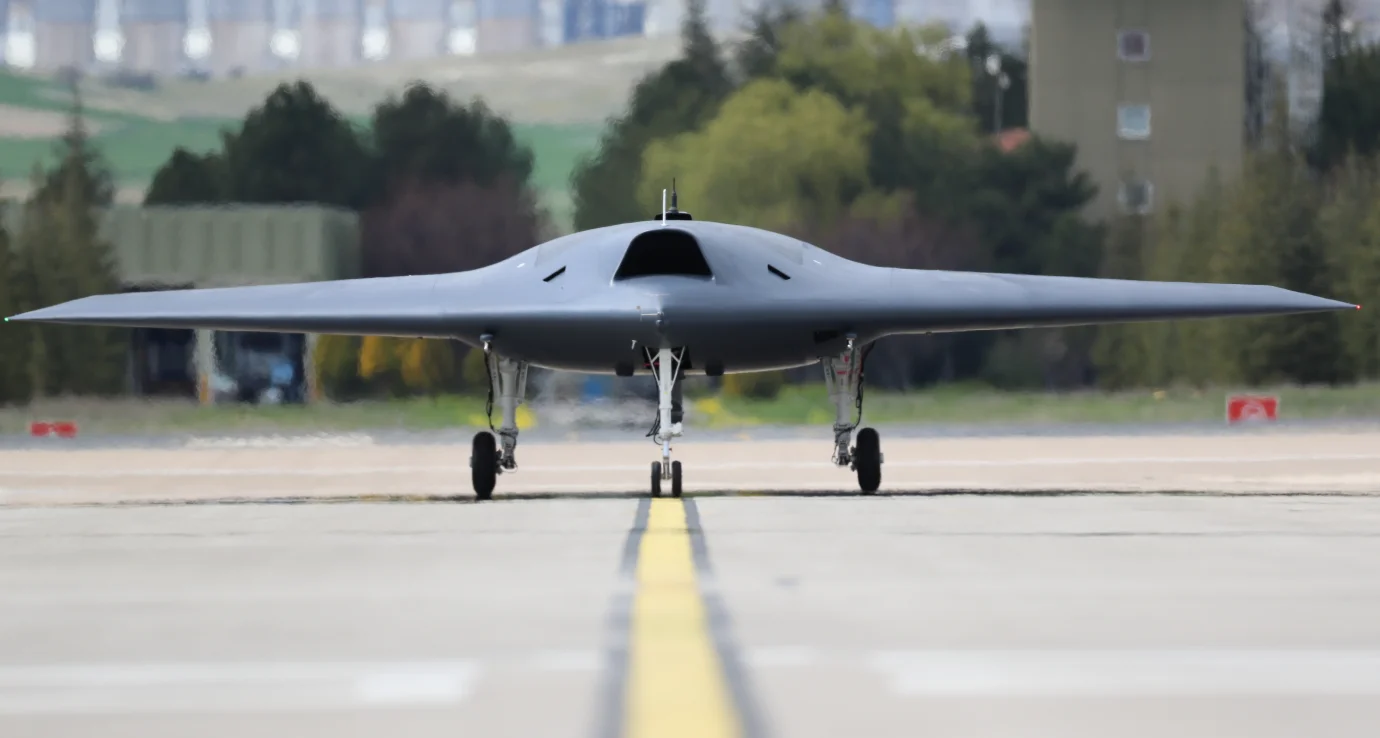
The flying wing is one of aviation’s most elegant and most troublesome designs. It has no vertical tail, so it shows up poorly on radar; it has no vertical tail, so it is hard to fly. The European and British programmes that tried this line in the 2010s stopped at the demonstrator stage. ANKA III is on the same design line but runs on a different programme architecture. This file asks where the difference lies.
The eighth file established the distinction between a demonstrator and a product in the unmanned combat aircraft class. Here we follow the same distinction along a single design line: the low-observable flying wing. That line was defined as a separate class in the first file and carries its own technical problems.
The argument
The real difficulty on the flying-wing line is not aerodynamics but integration. A design that wants a low radar cross-section must carry weapons internally; internal stations eat fuselage volume; fuselage volume competes with fuel; fuel determines endurance. Every gain is paid for from another line item. The demonstrators never had to solve that equation — they carried no weapons. ANKA III, as a product programme, has to solve all of it.
Why is a flying wing hard?
On a conventional aircraft the vertical tail provides natural stability in yaw: when the aircraft is pushed sideways by wind it straightens itself. A flying wing has no such surface. Good news for radar, bad news for flight: stability is left entirely to the flight-control software and the control surfaces on the wing. That makes the software part of the aircraft.
The second problem is weapons. A bomb hung under a wing single-handedly cancels every effort spent on lowering radar cross-section. Low-observable designs therefore carry weapons on internal stations. Internal stations demand volume inside the fuselage, and that volume is stolen from fuel.
| Gain | Its price |
|---|---|
| Removing the vertical tail | Yaw stability is lost; flight-control software becomes a critical component |
| Moving weapons to internal stations | Fuselage volume is shared between fuel and weapons; range and load compete |
| Concealing intake and exhaust | Engine efficiency and thermal management get harder |
| Surface continuity | Maintenance access and panel joins constrain the design |
The table also explains why few countries advance on this line. Among manufacturers with a product range in this sector, the number with a record of flying a flying-wing configuration is far below the number producing tactical-class systems.
ANKA III: the manufacturer’s published figures
This section uses only the values published by the manufacturer on its own product page. There is a specific reason: some figures circulating in the press about ANKA III do not match the manufacturer’s data.
| Metric | Value |
|---|---|
| Length | 7.9 m |
| Wingspan | 12.5 m |
| Height | 2.5 m |
| Maximum take-off weight | 6,500 kg |
| Payload | 1,200 kg |
| Payload stations | 2 internal + 5 external |
| Service ceiling | 40,000 ft |
| Endurance | 10 hours at 30,000 ft |
| Maximum speed | 425 kts / 0.7 Mach (30,000 ft) |
| Cruise speed | 250 kts / 0.42 Mach (30,000 ft) |
| Engine | Turbofan |
| Observability | Low radar observability through the flying-wing configuration |
The gap with press figures
Two values often seen in secondary sources for ANKA III do not match the manufacturer’s data: the wingspan is 12.5 metres, not 17.5, and the payload is 1,200 kilograms, not 750. This file uses the manufacturer’s published figures. The difference is not a small detail: wingspan shapes how the class is perceived and payload directly changes the mission profile.
Having two internal stations shows the design takes the low-observability target seriously. Five external stations imply a second usage mode: carrying more weapons on missions where observability is not the priority. That dual arrangement is a flexibility the demonstrators on this line did not have.
The arithmetic of internal stations
Placing two of the manufacturer’s numbers side by side shows the balance the design strikes: 6,500 kg maximum take-off weight and 1,200 kg payload. Roughly a fifth of maximum weight is set aside for payload. The rest is shared between airframe, engine, systems and fuel.
The critical part of that split is that the 10-hour endurance at 30,000 ft comes out of the same fuel budget. A turbofan burns markedly more per hour than a propeller-driven MALE platform; in exchange it offers speed up to 0.7 Mach and a 40,000 ft ceiling.
| Mission set-up | Station usage | Its cost |
|---|---|---|
| Low-observable penetration | Two internal stations only | Limited quantity of weapons carried |
| Mixed mission | Internal stations plus a restricted external load | Radar cross-section rises in part |
| High-load strike | 2 internal + 5 external stations | The observability advantage is largely lost |
What the table says is simple but often skipped: low observability is not a fixed property of a platform but the result of its configuration on that mission. The same aircraft flying with full external stations is a different aircraft. Phrases such as «stealth drone» therefore describe a usage mode, not the whole platform.
ANKA III’s timeline
What distinguishes the chart is again the density after the first flight. The section that stays empty in the demonstrator programmes of the eighth file is populated here.
The fourth row deserves the most attention. A flying-wing platform starting munition flight tests within months of its first flight is not the usual tempo on this line. Striking the target with a TEBER-82 guidance kit on the 12th sortie shows the programme did not defer weapons integration to a later stage.
From propeller to turbofan
ANKA III’s most basic difference from earlier platforms on the line is engine type. ANKA and AKSUNGUR are propeller-driven; ANKA III is turbofan. That transition is not merely a gain in speed but a set of new engineering problems.
| Metric | Propeller MALE | Jet-powered UCAV |
|---|---|---|
| Typical cruise speed | Low | 0.42 Mach (ANKA III) |
| Fuel burn | Low | High |
| Endurance | Long (20+ hour band) | 10 hours (ANKA III) |
| Time to target | Long | Short |
| Observability | Propeller and fuselage raise radar cross-section | Intake and exhaust can be concealed |
The table shows the two classes do not substitute for each other. On long-duration surveillance the propeller platform is clearly superior; on missions demanding quick arrival and low observability, the jet-powered one. Comparing ANKA III with a tactical-class system is simply wrong: they neither perform the same mission nor sit in the same budget band — a point the heavy-class comparison makes in its own way.
Where is each programme on the flying-wing line?
The table below shows the public record of programmes that have flown in a flying-wing configuration. The columns compare where the programme got to, not technical merit.
| Programme | Country | First flight | Munition testing | Programme status |
|---|---|---|---|---|
| X-47B | USA | 4 February 2011 | — | Main test programme completed May 2015, programme ended |
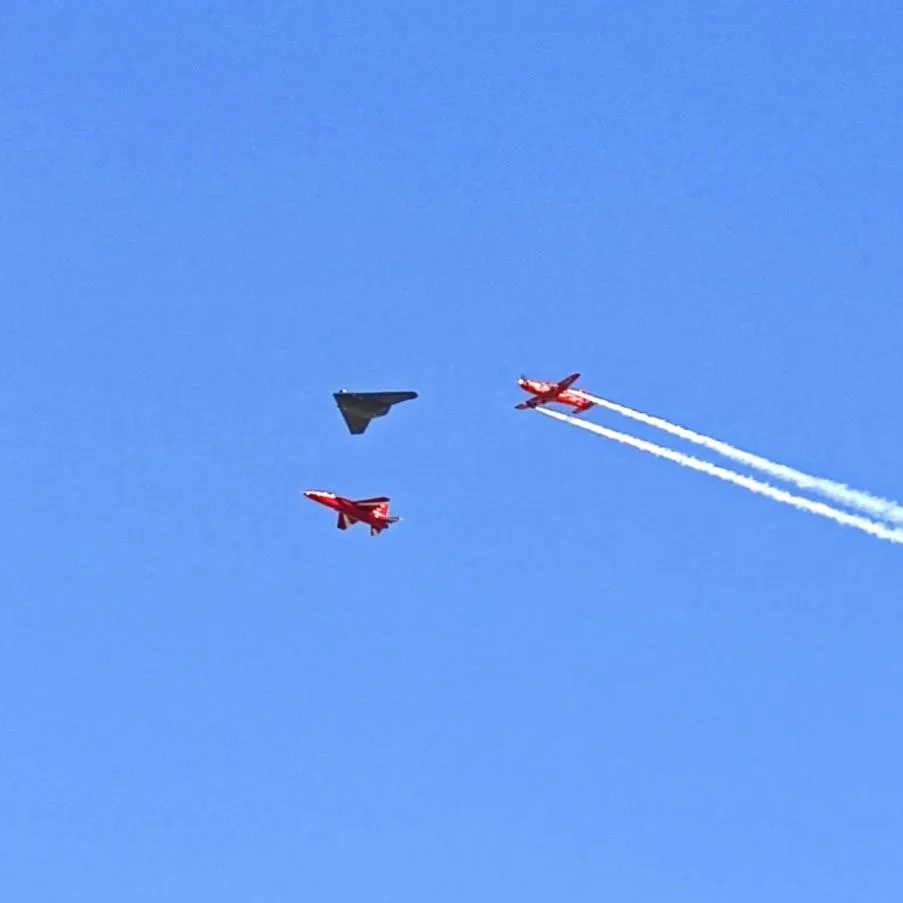
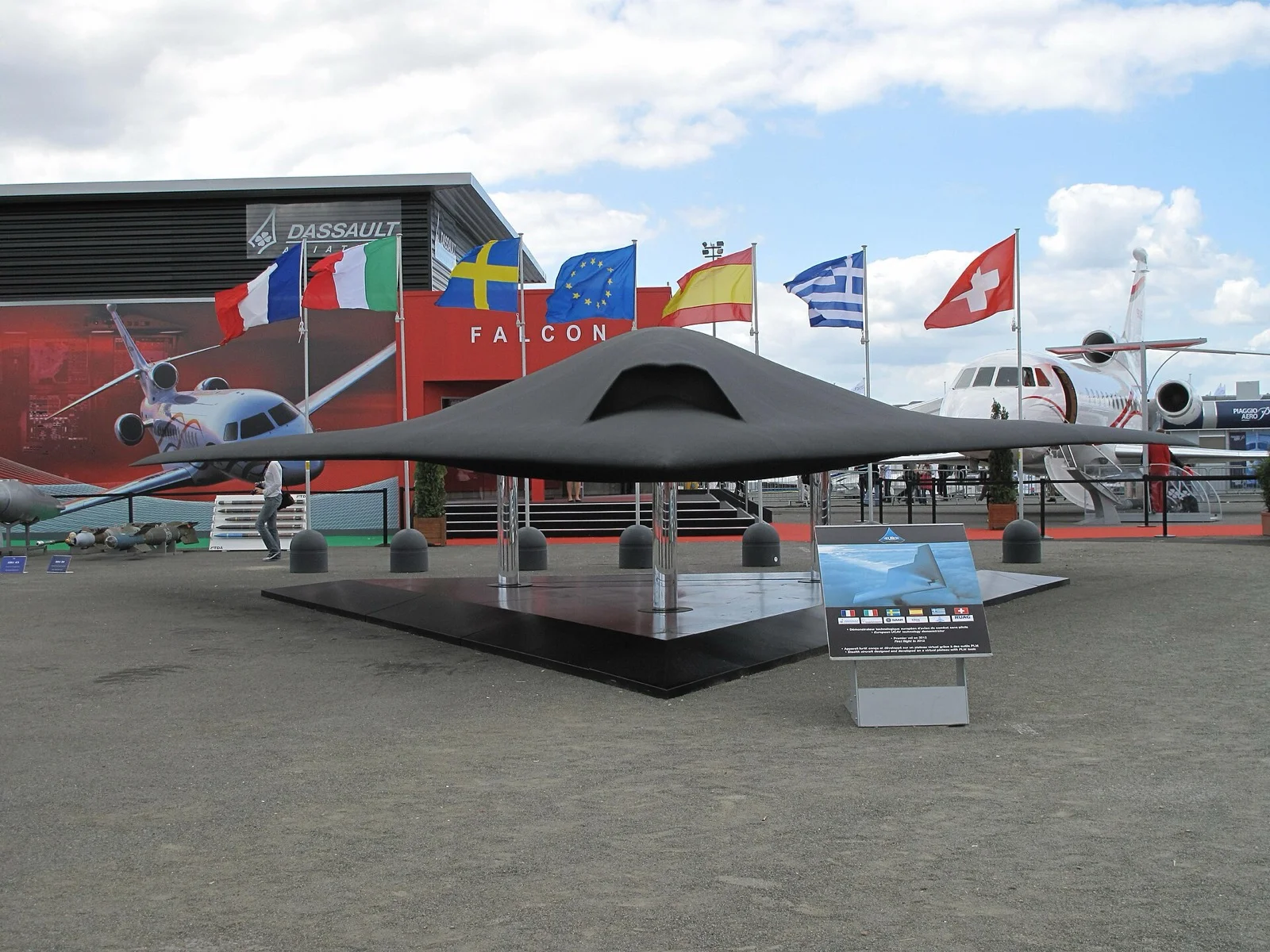
| nEUROn | Europe | 1 December 2012 | — | Test flights between 2012 and 2022; remained a demonstrator |
| Taranis | United Kingdom | 10 August 2013 | — | Moved back after the 2015 test round |
| S-70 Okhotnik | Russia | August 2019 | — | Did not reach serial production |
| ANKA III | Türkiye | 28 December 2023 | Began in 2024 | Continuing as a product programme |
The fourth column is the file in summary. None of the demonstrators has munition testing — because it was not in the programme definition. This is the flying-wing equivalent of the distinction built in the eighth file: a demonstrator validates a technology, a product must marry it to a weapon.
Where does ANKA III sit in its manufacturer’s line?
ANKA III did not appear from nowhere. It is the next step on the same manufacturer’s unmanned aircraft line, which began with ANKA. That is another form of the channel effect defined in the seventh file: airframe, flight-control and ground-system experience is carried across the steps.
| Platform | Class | Distinguishing feature |
|---|---|---|
| ANKA | MALE, propeller | The line’s first platform; a satellite-controlled derivative exists |
| AKSUNGUR | Heavy MALE, twin propeller | High payload and endurance |
| ANKA III | Flying wing, turbofan | Low radar observability, internal stations |
The logic of the sequence is clear: each step does not re-solve the problem the previous one solved. With AKSUNGUR the payload and endurance side was worked out; ANKA III adds observability and jet propulsion on top of that accumulation, a depth also visible in the manufacturer’s global standing.
Two Turkish programmes, two different problems
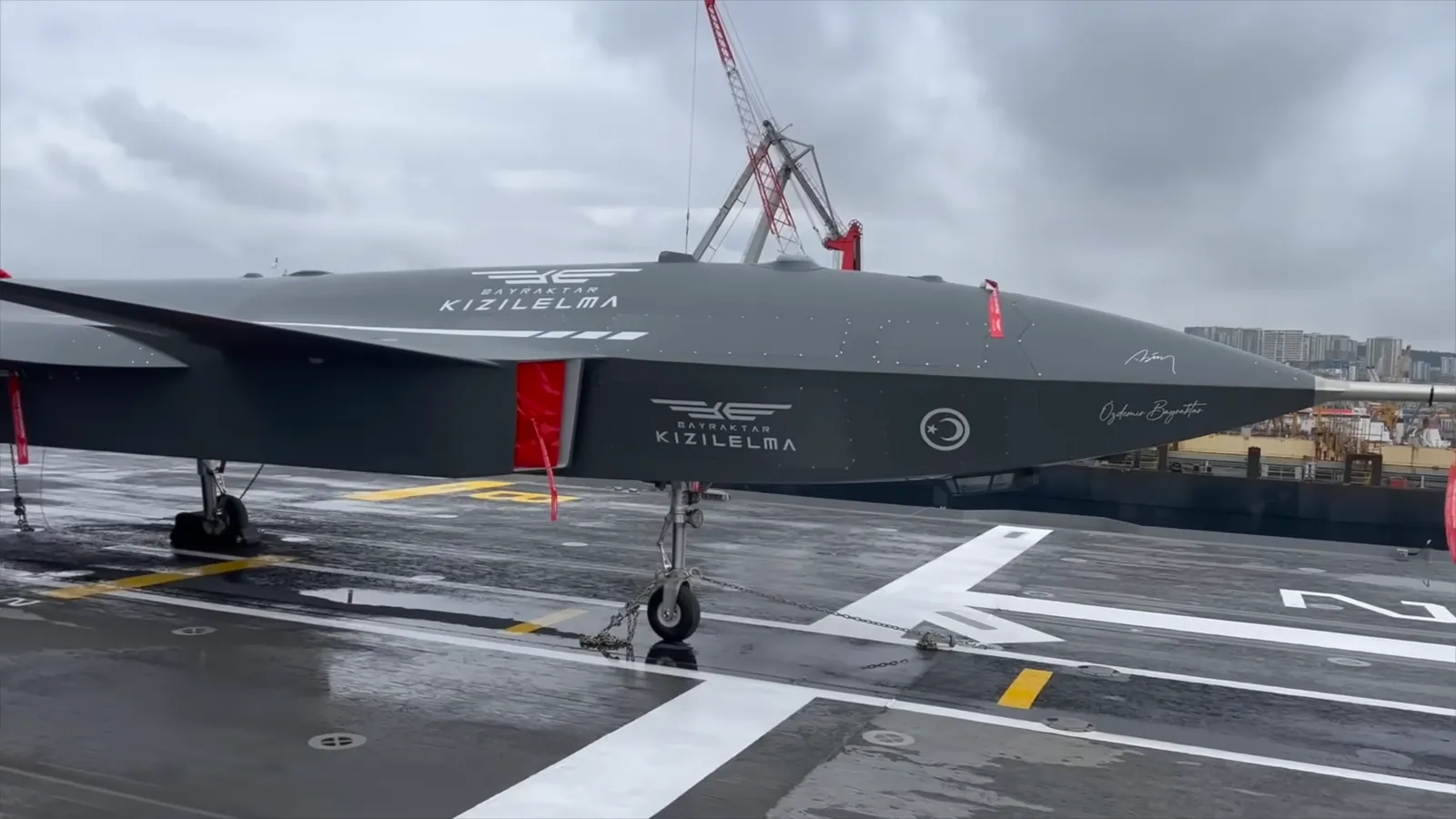
ANKA III and KIZILELMA are often named in the same sentence but they solve different problems. Separating them is also what keeps this file distinct from the eighth.
| Metric | ANKA III | KIZILELMA |
|---|---|---|
| Design axis | Low radar observability | Air-combat capability |
| Configuration | Flying wing, tailless | Conventional tailed jet |
| Weapons carriage | 2 internal + 5 external stations | Internal-station concept |
| Distinguishing test | TEBER-82 strike (12th sortie) | Beyond-visual-range air-to-air shot |
| Mission axis | Air-to-ground, low observable | Includes air-to-air |
The distinction matters because the two programmes have different measures of success. For ANKA III the measure is carrying a meaningful weapon load while preserving low observability; for KIZILELMA it is performing the air-combat mission. They can be scored on the same index, but calling them «rivals» in the same sentence is wrong.
Flight-control software is not a subsystem
The least-discussed component on the flying-wing line is software. With no vertical tail the platform is naturally unstable; its ability to fly at all depends on control surfaces making corrections dozens of times a second. That takes flight-control software out of the supporting role and makes it the condition of the aircraft’s flyability.
The practical consequences are twofold. First, the software cannot be procured abroad: a flying wing’s control laws are specific to that airframe’s aerodynamics and cannot be taken off a shelf. Second, testing lengthens; every new configuration — a new weapon, a new external load, an open internal bay door — changes the flight envelope and requires revalidation.
That makes ANKA III’s munition strike on the 12th sortie more meaningful. A munition test shows not only that the weapon works but that flight control has been validated in the weapon-carrying configuration.
Why there is no software data in this file
No public technical data is published on flight-control software, autonomy level or mission management for any of these programmes. This file therefore treats the software side at the level of problem definition; it makes no comparison. The rule that an unverified item is not written into a table applies here too.
Invisibility is not one-sided: the radar half
Most of the low-observability debate is conducted from the platform side, when the other half of the equation sits with radar. How visible a platform is depends on how good the other side’s radar is. The flying-wing line and the advanced-radar line are two specialisms feeding each other.
The practical consequence: low observability is not an absolute property but a relative one. «Invisible to radar» is technically wrong; the correct statement is that detection range shortens. This file accordingly uses «low observability» rather than «invisible», following the manufacturer’s own phrasing, «low radar observability».
EM-PDI assessment
The Envanter Medya Programme Development Index (EM-PDI) is used across the series to score programmes against common criteria. It is an editorial assessment, not an official ranking; the weightings are set out in the first file. ANKA III scores above the demonstrators for moving early to munition integration, and below KIZILELMA because the serial-production and inventory items have not yet opened.
The limits of this comparison
This file compares the programme architectures of a design line; it does not measure radar cross-section and could not. The limits need stating plainly:
- There is no radar cross-section data. No measured figure has been published for any of these programmes. Observability is discussed here only at the level of configuration.
- The demonstrators were advanced technology. The nEUROn’s decade-long test programme and the X-47B’s autonomous carrier landing in 2013 were capabilities no other programme had reached at the time.
- ANKA III is not yet in serial production. Munition testing has begun, but no verified record of serial production or inventory steps existed when this file was prepared.
- The supersonic derivative claim is excluded. Reports of a twin-engine supersonic variant could not be verified against official product data and are not written into a table.
Conclusion: on a flying wing the hard part is not flying but arming
On this line the first flight is not a threshold. All five programmes flew. The divergence lies in whether the platform can carry a meaningful weapon load while preserving low observability. That is not an aerodynamic problem but an integration one: fuselage volume, fuel, internal stations and range all draw on the same budget.
ANKA III moving to munition testing months after its first flight, and scoring a hit on the 12th sortie, shows the programme did not postpone that integration problem. Serial production and inventory steps have not yet opened, so the story is not complete; but it is clearly an example on this line that departs from the demonstrators.
Next in the series
File 10 — KAAN and the KF-21: the timelines of two national fighter programmes. We move from the unmanned line to the manned one. KAAN and South Korea’s KF-21 Boramae represent two different programme models: one found an export customer before serial production, the other reached serial production first. The full series sits on the Türkiye and World Defence Programmes page.
Frequently asked questions
When did ANKA III first fly?
The maiden flight took place on 28 December 2023. The aircraft took off at 08:38 Turkish time and flew for 1 hour 10 minutes, reaching 8,000 feet and 150 knots.
What are ANKA III’s official specifications?
By the manufacturer’s published figures: 7.9 m length, 12.5 m wingspan, 2.5 m height, 6,500 kg maximum take-off weight, 1,200 kg payload, 40,000 ft service ceiling, 10 hours endurance at 30,000 ft, 425 knots (0.7 Mach) maximum and 250 knots (0.42 Mach) cruise speed at 30,000 ft. It is turbofan-powered with two internal and five external payload stations.
Is ANKA III’s wingspan really 17.5 metres?
No. The 17.5 m wingspan and 750 kg payload figures that circulate in secondary sources do not match the manufacturer’s published data. Turkish Aerospace’s own product page gives a 12.5 m wingspan and 1,200 kg payload. Only the manufacturer’s figures are used in this file.
Has ANKA III begun weapons testing?
Yes. The air-to-ground mission aircraft began munition flight tests and struck its target accurately with a TEBER-82 guidance kit on its 12th sortie. On 20 August 2024 it performed an in-flight landing gear retraction test.
Why is a flying wing hard?
With no vertical tail surface there is no natural stability in yaw; control is left entirely to the flight-control software and the surfaces on the wing. A low radar cross-section also requires weapons to be carried on internal stations, which constrains fuselage volume and payload distribution. Concealing the engine intake and exhaust is a separate design problem.
Are ANKA III, nEUROn and Taranis in the same class?
They are on the same design line: all three are flying-wing configurations targeting low radar observability. But their programme purposes differ. The nEUROn and Taranis were set up as technology demonstrators and remained demonstrators; ANKA III runs as a product programme with an inventory target and began munition testing months after its first flight.
Which class does ANKA III belong to?
A turbofan-powered unmanned combat air vehicle with a 6,500 kg maximum take-off weight and 0.7 Mach maximum speed. That is a band distinct both from propeller-driven MALE platforms such as ANKA and AKSUNGUR and from the tactical-class TB2, and it is kept separate in this file’s tables.