Spain’s BAM Audaz Tracks Convoy Escorted by Zircon-Capable Russian Frigate

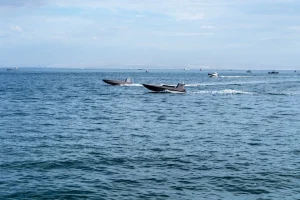
The Spanish Navy’s offshore patrol vessel (BAM) Audaz tracked two separate merchant convoys escorted by Russian naval units, following them from waters on the Spain-Portugal maritime border to the limit of Spain’s Exclusive Economic Zone (EEZ) in the western Mediterranean. The operation was carried out under Spain’s Presence, Surveillance and Deterrence Operations (OPVD) framework, with the ship reporting its findings directly to the Maritime Operational Command (MOM).
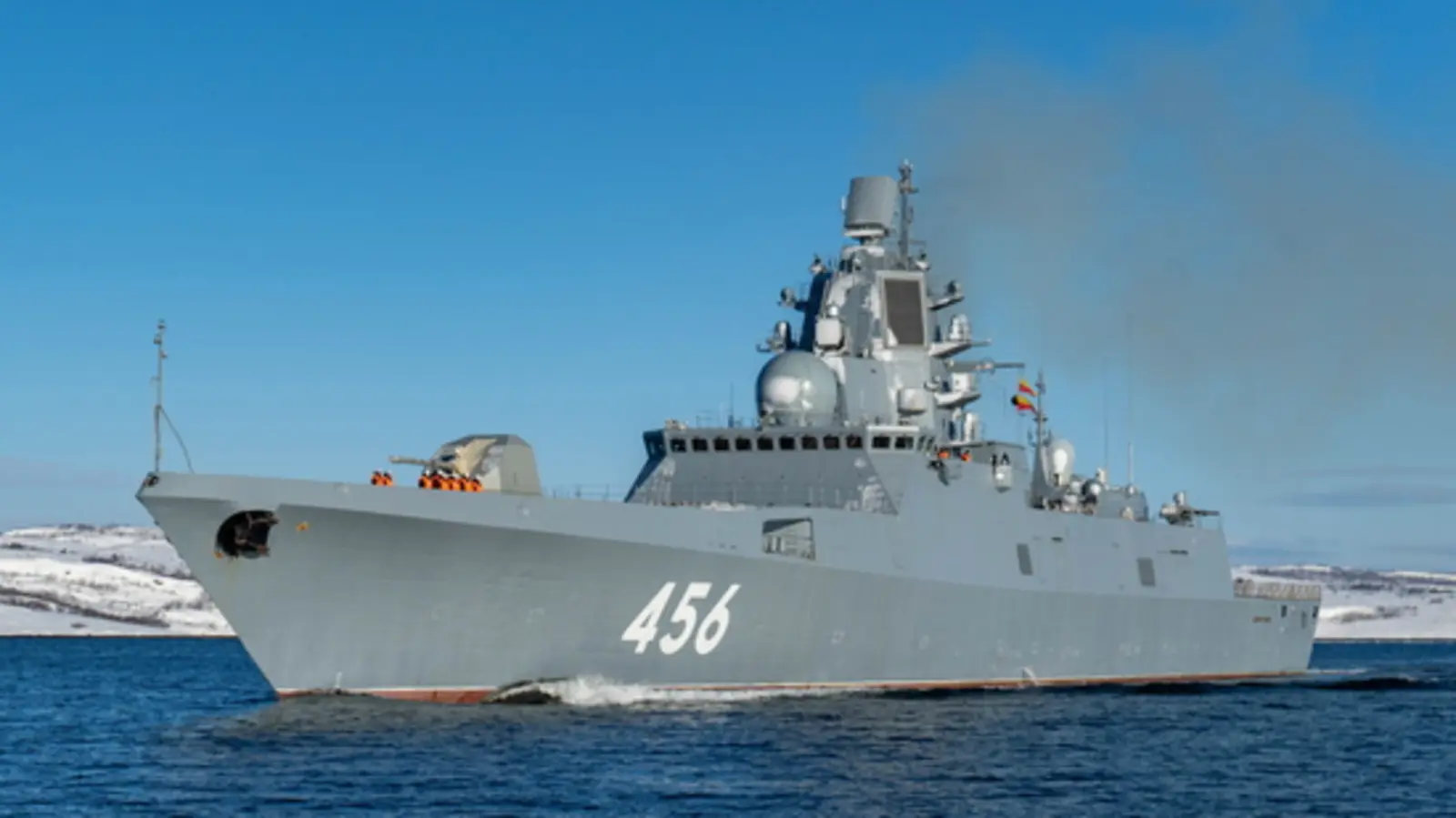
According to Spanish defence outlet infodefensa.com, which published the report on Monday, 23 November 2026, one of the convoys was escorted by the Project 22350 (Admiral Gorshkov-class) frigate Admiral Golovko. Frigates of this class are designed to carry Zircon hypersonic cruise missiles, with an estimated range of up to 900 kilometres, making the ship’s movement through the western Mediterranean a matter of particular interest for NATO’s maritime surveillance posture. The escort for the second convoy was identified only as unspecified “Russian Federation naval units,” with no vessel named.
Citing imagery credited to Spain’s Defence Staff (EMAD), the report said the Audaz had covered more than 5,000 nautical miles over 20 days at sea in the course of the mission to date. The ship operated off Ceuta during the initial phase of its patrol before calling at the ports of Las Palmas and Rota, continuing its route from the Atlantic into the Mediterranean while shadowing the two Russian-escorted convoys in succession.
OPVD operations form a standing framework under which Spain systematically monitors foreign naval units transiting its coastal waters and the area around the Strait of Gibraltar. Such tracking missions are not new: Spain’s Defence Staff has previously documented cases in which BAM-class vessels monitored Russian-flagged convoys as they moved from the Strait into the Atlantic before handing off surveillance to another patrol ship. In the current case, tracking continued until the convoy reached the edge of Spain’s EEZ.
While the episode involves no Turkish unit directly, it illustrates a pattern relevant to NATO’s broader maritime surveillance architecture, including on its southeastern flank. Russia’s deployment of Zircon-capable frigates across a wide arc from the Baltic to the Mediterranean reinforces the need for NATO coastal states — as Spain did in this instance — to maintain continuous maritime domain awareness within their own areas of responsibility. Türkiye conducts comparable naval monitoring in the Eastern Mediterranean and the Black Sea, which is one reason allied navies pay close attention to how such operations are executed elsewhere in the alliance.
The Zircon missile carried by Admiral Golovko-class frigates is among the hypersonic weapon systems most closely watched by Western intelligence services in recent years. According to statements from Russia’s Ministry of Defence, the missile can travel at variable speeds above the speed of sound, a characteristic that significantly compresses the reaction time available to existing air-defence systems. NATO maritime commands therefore continue to track the movements of Project 22350 vessels as an operational, not merely symbolic, priority.
The Spanish Navy’s statement describes the tracking as purely a surveillance and intelligence-gathering activity, with no confrontation or interception involved. No independent confirmation or comment from the Russian side had surfaced publicly at the time of writing. The Audaz is expected to continue its mission under the OPVD framework, with Spain’s patrol vessels rotating through similar assignments to keep both the Strait of Gibraltar and the country’s Atlantic and Mediterranean coasts under continuous watch.
Sources:
infodefensa.com — “La Armada despliega el BAM Audaz para vigilar dos convoyes mercantes escoltados por buques rusos,” 23 November 2026, 10:30 (author: Benjamín Carrasco) — used for the core facts and route details of the report.
Spain’s Defence Staff (EMAD) — image credit and official context on the OPVD framework.